
Basketball & the Reminder of a Grim Reality


Amina Seck’s detainment is indicative of a country no longer living up to its ideals
The 1992 Summer Olympics was a seminal moment for global basketball. The NBA sent their stars after years of exclusively sending college players and failing to win gold in 1988. That team featured some of the greatest players the NBA had ever seen, dubbed the “Dream Team”, and they dominated the competition. But their lasting impact wasn’t in their on-court dominance, but rather opening the floodgates to more international players in basketball.
In 1992, the NBA featured 23 international players—today there are 135 players from 43 different countries. In the WNBA, 51 international players were on rosters this season—the highest amount in 25 years. What the Dream Team did was establish basketball as an international game, as a vehicle of culture and shared identity through sport.
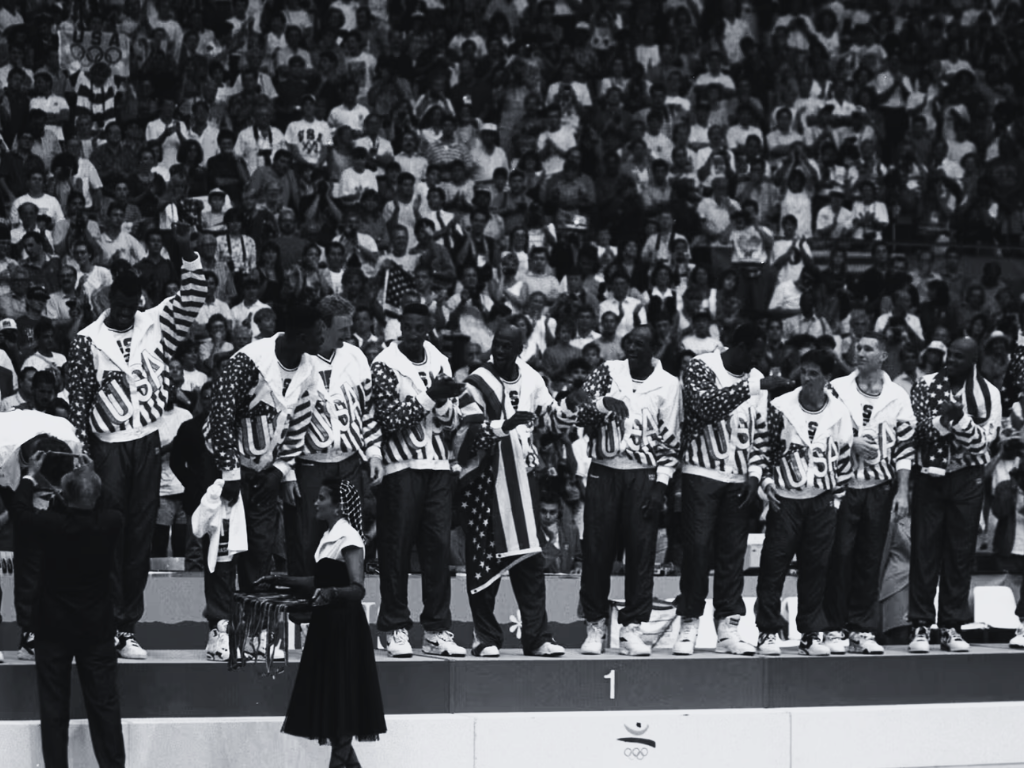
We saw the fruits of these labors recently in women’s basketball in seeing how much talent other countries have developed in the FIBA World Cup. And while there is hope to be derived in the connective power of basketball, sometimes reality strikes and reminds us of the nature of the world. What is happening to Amina Seck is that reminder.
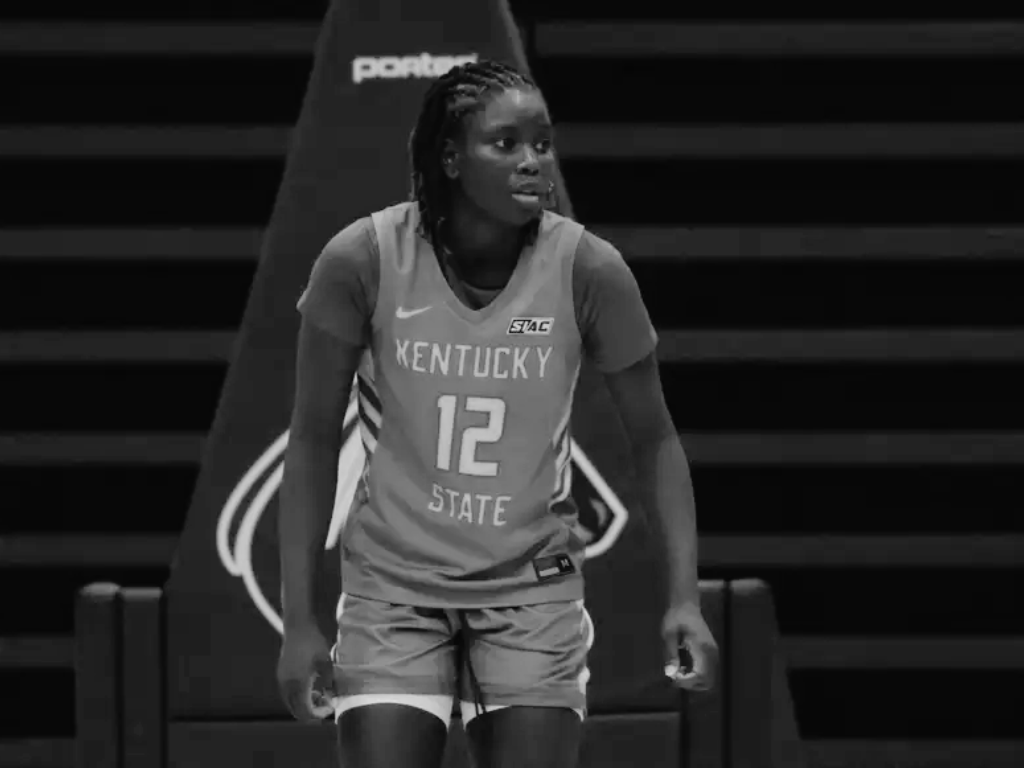
Seck plays center for Division II Kentucky State and is from Dakar, Senegal. Last season, she averaged 11.7 points and 7.3 rebounds per game while being selected to the All-SIAC (Southern Intercollegiate Athletic Association) third team. Seck was also named the SIAC Women’s Basketball Elite 16 award recipient.
The Elite 16 is the SIAC’s highest academic achievement—presented to student-athletes who demonstrate exemplary performance in athletics and the classroom. Seck represented everything we love about the student-athlete experience; she excelled on the court while showing herself to be an exceptionally bright student.
On August 7, 2026, Seck was living a story that many college athletes are dealing with. She was traveling with her team to a tournament while recovering from an injury. She was a part of the collective, a shared lived experience that comes from being on a team. But before she could get on a plane her life changed radically.
While at the Louisville Muhammad Ali International Airport, she was taken into custody by ICE (Immigration and Customs Enforcement) and has been transported between four different facilities since then. Recovering from an ACL injury, Seck has had difficulty getting access to ice for her recovery, is constantly in pain, and is receiving little medical attention.
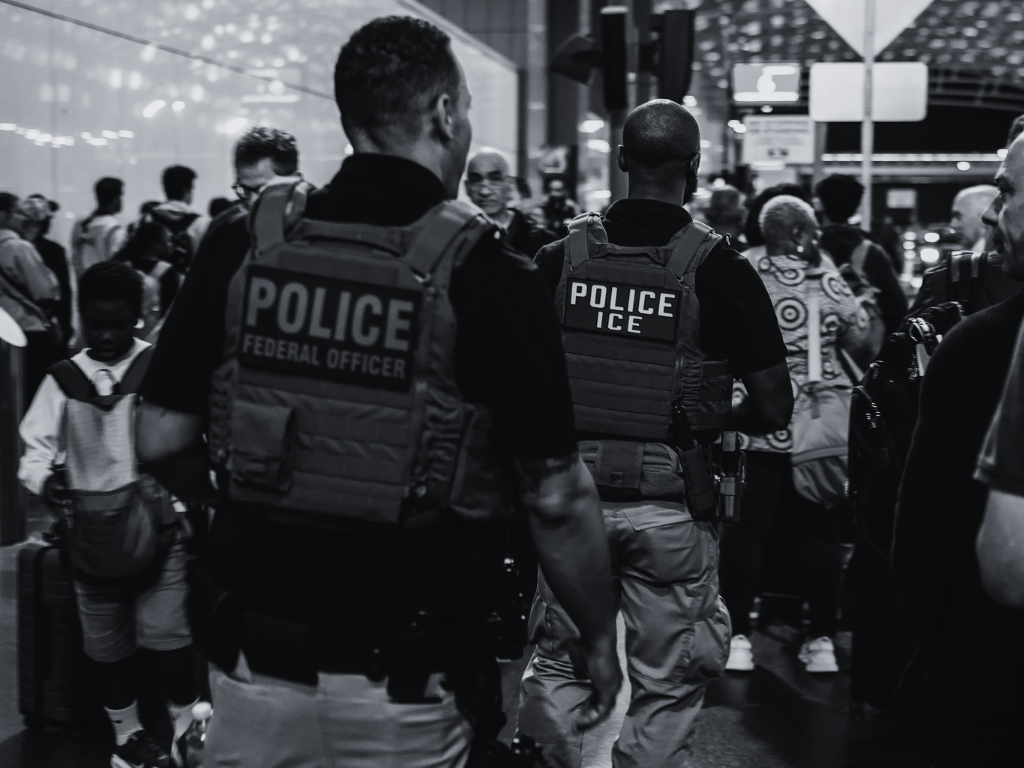
Sadiqa Reynolds, a lawyer helping coordinate Seck’s case, has said that Seck needs medical attention and surgery. The reason for Seck’s detainment seems to stem from her missing a student visa deadline because she was having back surgery. She is not the first athlete to have her visa status in jeopardy in 2026.
Daniel Adongo, a Kenyan national and linebacker for the Indianapolis Colts, was deported due to an expired visa. Mehdi Torabi, an Iranian soccer player, had a single-entry visa during the 2026 FIFA World Cup which necessitated the Iranian Football Federation to take action on his behalf to secure a visa.
These issues have presented themselves as a result of changes in immigration policies that has led to various holdups in student-athletes getting renewed visas. In the past, an issue like Seck’s would have been viewed as a low-priority offense and not worthy of detainment since she has no known criminal offenses.

In Donald Trump’s second term as US president, a lot has changed. Under his immigration overhaul, the concept of low-priority offenses has been eliminated. In this new interpretation of US immigration, any visa violation is now a direct target for active tracking, detention, and fast-track removal from the United States. To support this draconian policy, detention budgets have quadrupled and enabled ICE to bypass courts entirely.
What is happening to Seck is reflective of the rising enforcement and power of ICE in Trump’s latest vision of America. In August 2026, nearly 51,000 people were arrested by ICE—something that the Department of Homeland Security has framed as record-breaking and as a way to “protect” the American populace. In one year alone, Trump’s DHS policies have led to three million people leaving the United States, with nearly one million deportations executed by DHS.
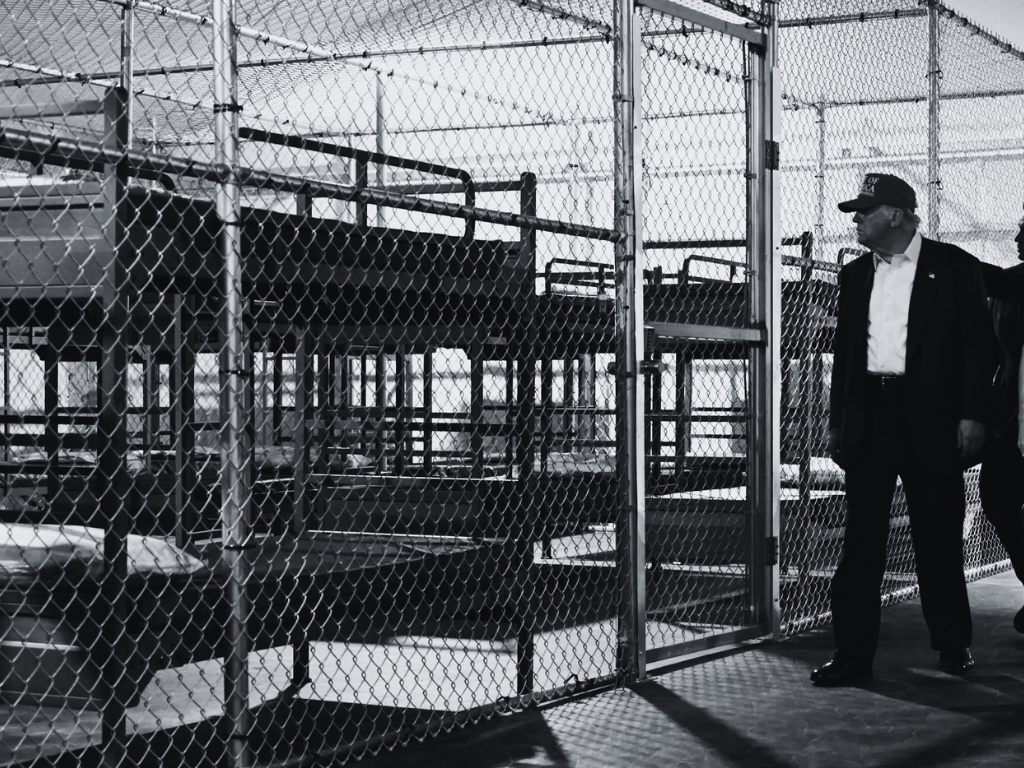
At the root of these occurrences, and specifically highlighted by Seck’s case, is a flagrant lack of humanity. ICE has repeatedly targeted groups of color and marginalized groups, leading many to advocate for the abolishment of the agency.
ICE has come to be defined by harassment, wrongful detention, and overtly targeted racial dynamics. And yet despite this, a recent Harvard CAPS Harris Poll found that 39% of Americans still have a favorable view of ICE and what they are doing—with 20% of Americans deeming the agency “very favorable”.
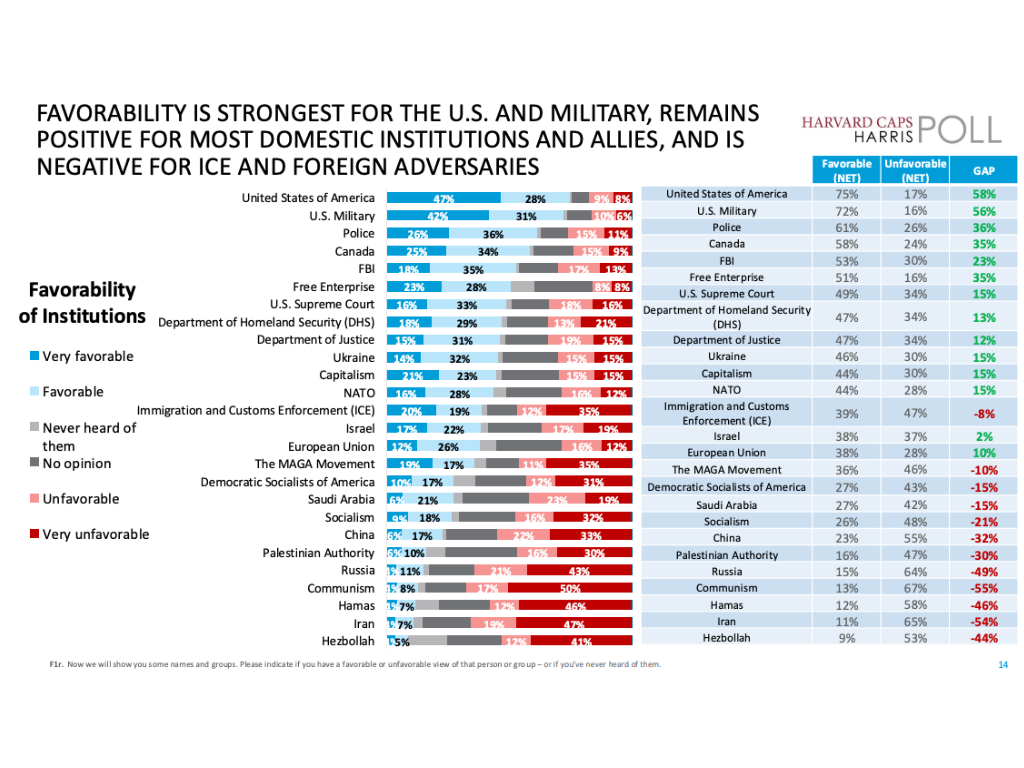
It is telling that nearly 40% of Americans don’t have a negative view of the agency when they see community members imprisoned, attacked, and even killed. It speaks to a level of American nationalism that has taken root in this country to poisonous levels.
With that nationalism has come a rise in hate groups in the United States. In 1999, there were an estimated 457 recorded hate groups nationwide—in 2021 that number grew to 733. As these trends continue, there has been a subsequent rise in isolationist views in the country—which has been a tentpole of Donald Trump’s messaging that got him elected a second time. The implication being that America is increasingly weary of immigrants and has become more okay with expressing that disdain.

For generations, the United States has represented a melting pot, or at least the ideal of one. The American dream was posited as a credo, where people can come to this country and find success and happiness. My father came to this country as a Palestinian immigrant living in Jordan with that same idea, fueled by the mystique of “the land of opportunity”.
And yet, in that same land of opportunity, a militarized police force has been given carte blanche to harass communities and rip any semblance of opportunity away from people trying to build a life for themselves. Donald Trump frequently says things like “taking our country back” with the tenor of a dictator. ICE has become his blunt instrument of choice in enforcing that vision.
Amina Seck’s story is one of what the American dream is supposed to be. An immigrant comes to this country, pursues an education, excels athletically and academically. And yet in this warped reality of America is punished for pursuing that dream. She was on her way to an HBCU All-Star Game, to support her teammates, and continue building her life.
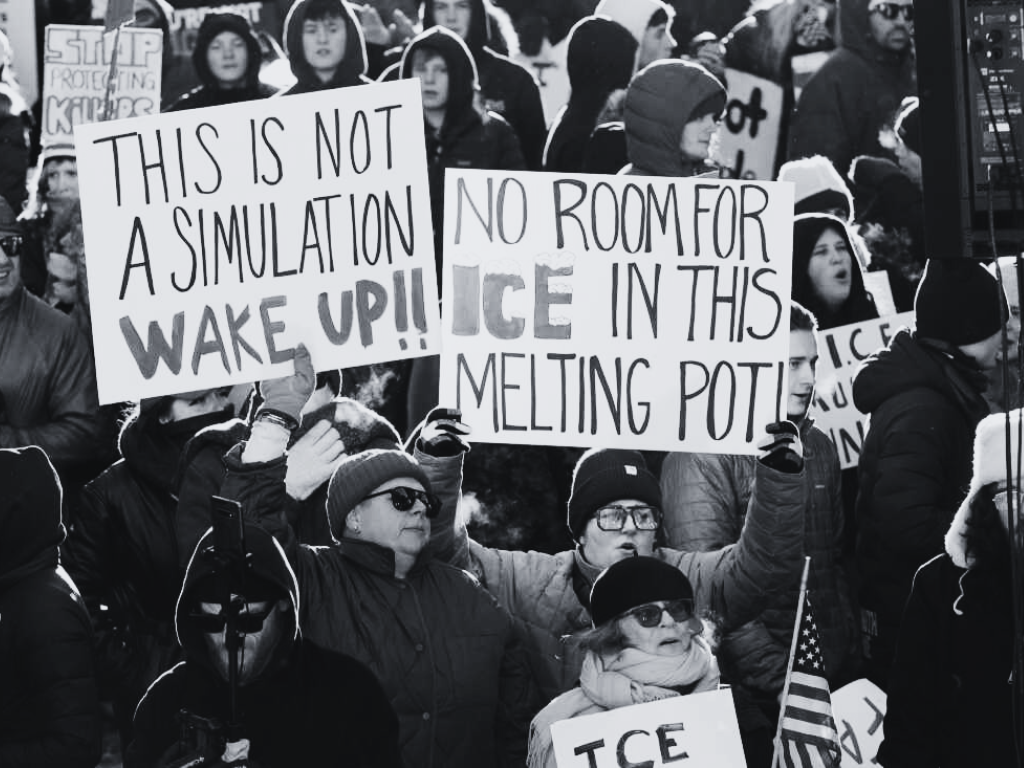
Instead, she is subjected to inhumane conditions by a country that no longer views her as a human. Where she is denied medical care and attention, at the direction of a regime that would be more than comfortable with every immigrant from Africa, the Middle East, and Latin America being expelled from the country. The idea of America is supposed to be so much better than this, but the reality is much different.
In 1963, James Baldwin said this about being Black in America:
“You were born into a society which spelled out with brutal clarity, and in as many ways as possible, that you were a worthless human being. You were not expected to aspire to excellence: you were expected to make peace with mediocrity.”
It seems that in 2026, America has taken this to heart and has made an enemy of any immigrant that is trying to make it in this society. The country that was once considered the refuge of those seeking better opportunity, has now become the thief of said opportunity.
In 1992, basketball truly became a global sport and it has skyrocketed in the years since. Those moments in Barcelona helped to inspire future generations with basketball as the connective tissue. What recent political developments have shown us is that in this version of America, that ideal is a mirage.

At the very least, Amina Seck deserves to be treated like a human being. Instead, her life has been turned upside down and she is living her days in pain and uncertainty. She deserves better, and we as a collective society should all see what is happening to her and thousands of others and demand a tomorrow where these sorts of tactics are villainized as opposed to being ruthlessly normalized.
Enjoy this essay? Please consider sharing it with your family and friends and thank you for reading Deep Cover!