The False Fantasy of Basketball Universalism

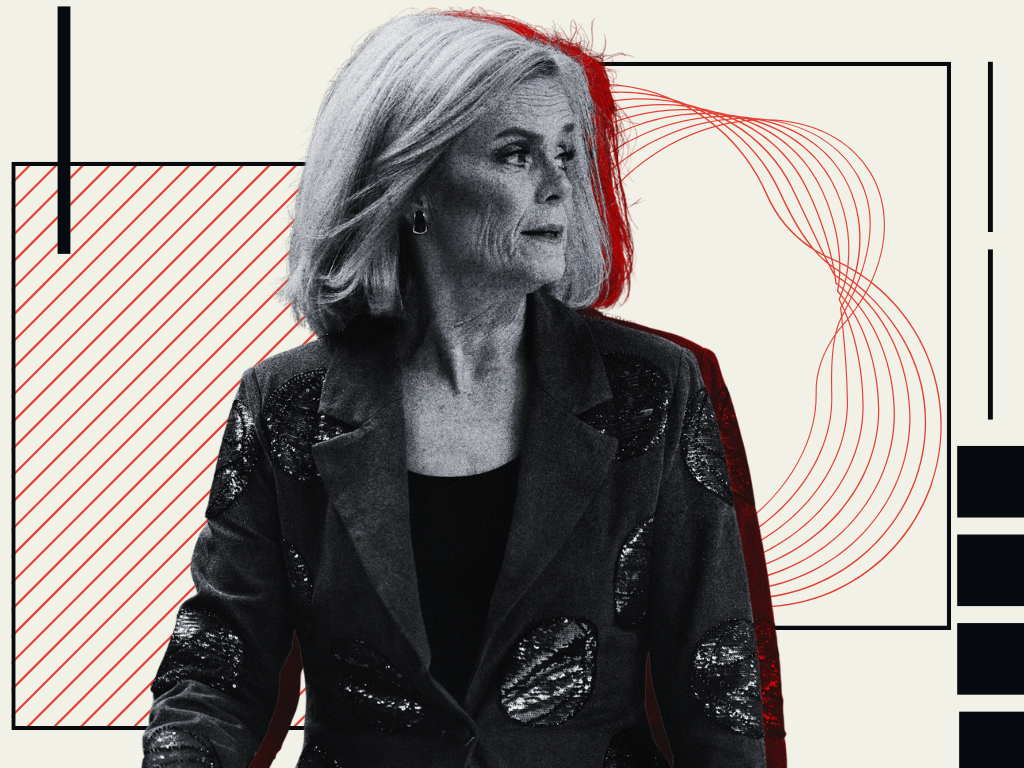
Kim Mulkey tested the limits of the connective power of sports and lost, reminding us of the importance of culture and identity along the way
Kate Koval was supposed to be the starting center for the LSU women's basketball team this upcoming season. A talented player who was the number one ranked post player prospect in 2024, Koval averaged 8.3 points, 6.3 rebounds, and 1.2 blocks for LSU last season in 16.6 minutes per game. She was slated for a bigger role, until LSU head coach Kim Mulkey signed Anna Minaeva. Minaeva, like Koval, is a talented post player. The issue with the signing is not that they would have competed for minutes, but a question of heritage. Minaeva is Russian, while Koval is Ukrainian and her father, Oleksandr Koval, is actively serving in the Ukrainian military defending his country against the ongoing Russian invasion.
Despite a clear conflict of interest, Mulkey continued to pursue Minaeva anyway, signing her after the transfer portal window had closed—effectively trying to force Koval's hand to co-exist with a player that represents the ongoing pain of her homeland. Koval has since left the program, understandably, for this reason and is left to bargain with the NCAA to grant her an exception to be able to play elsewhere this season. Mulkey has described the decision as one of business, saying that "I cannot make a decision to not recruit somebody that can help our program because of a conflict between two countries".

Mulkey went further to express some wishful thinking, suggesting that the two players could be "ambassadors for kinship amid international conflict" and that "you never know, perhaps they could help end the war." Mulkey's vision of a frontcourt of Minaeva and Koval has backfired, but her comments reflect a philosophy in sports that has often been expressed in movies and storytelling. The idea that sports is the great unifier that can bring people together, to look past their differences, and exist in harmony. Mulkey has bought, and is trying to sell, the idea of sports universalism, where all of her players are LSU Tigers first, and everything else is secondary. It's a utopian idea, but in the case of a country at war it is a fruitless fantasy.
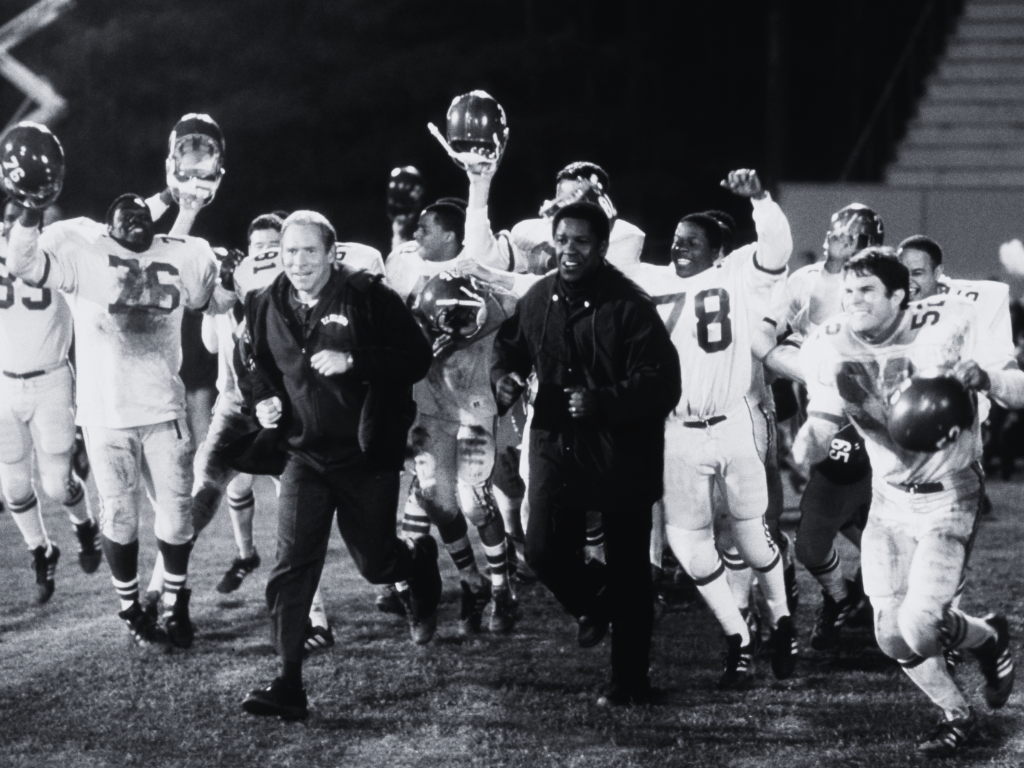
In the 2000 film Remember the Titans, Denzel Washington stars as Herman Boone, football coach at T.C. Williams High School in Virginia attempting to racially integrate the school in 1971. The movie is based loosely on a true story and take various liberties with the truth, as most sports film adaptations do. Throughout the film an overarching message is being sent: football, and sports at large, are a great unifier—capable of allowing us to overlook our differences and prejudices and to be bonded over one common goal. It's an incredibly distilled message that ultimately ignores the complexities of socioeconomical disparities of race in America, but it delivers a hopeful message that it is possible for hate to lose and for compassion and togetherness to win.
This idea of unity and collectivism is abundant in sports, especially at the college level. Coaches recruit players that fit into their system from a variety of backgrounds and ask them all to mesh under the shared identity of the team. Class, race, religious beliefs, and political ideology are all asked to be put aside for the betterment of the team. Coaches call it sacrifice, doing something bigger than yourself, and other coach speak platitudes. What it is in truth, is a micro version of universalism that we have seen exercised in politics.
The thesis of universalism is that values, rights, and principles apply to all human beings everywhere, regardless of culture, nationality, or background. The most well-known example of this politically is in France. The European nation has taken a "color-blind" approach to public policy, suggesting that citizens are French first before anything else. The roots of France's ideology can be traced back to Middle Ages, stemming from the idea that human nature is not influenced by cultural distinctions or historical variations.

Mentioning race in French politics is often considered taboo, dating back to the nation's actions in World War II that led to the deportation of French Jews to concentration camps. In the years since then, French culture has had a strong insistence on assimilation, expecting citizens to adopt French values, language, and public norms above their group identity. Despite those efforts, race issues still persist in France and the country has had to reckon with the discontent of its minority population.

Despite all of its attempts to eliminate race and racism from the discussion, France has been unable to be fully successful in its pursuit of universalism. Studies regarding French employment have revealed that job applicants with North African or African names are less likely to get called for an interview as opposed to those with traditionally French names. Black French citizens still worry about racism, even when the society that they live in has tried to erase it from policy decisions. That is to say, it is easier to claim color blindness, but it is much more difficult to execute.
Kim Mulkey has attempted the same tactic as France in the way she builds her teams. Everything is about her team, her university, and in essence, her identity. In her stops at both Baylor and LSU, Mulkey has recruited a wide array of players that were brought in to compete for titles and have a chance to play professionally after college. Her teams often dealt with her ruthless intensity and high expectations, pushing them both mentally and physically. Everything was done on Mulkey's terms, she operated a castle and was the sole controller.
In her memoir, future basketball hall of famer and former Mulkey player at Baylor Brittney Griner noted that Mulkey often encouraged players to keep their "business behind closed doors". There is a sense that Mulkey has taken the premise of sacrificing for the good of the team to extremes that result in the loss of that player's identity, or at the very least the suppression of it. This approach has had mixed results. Some of Mulkey's former players, like Flau'jae Johnson, have maintained excellent relationships with Mulkey despite her abrasive style. Others, like Kelli Griffin, have felt discriminated against (Griffin has commented on her feelings of Mulkey treating her differently upon learning that she is gay).

Mulkey's authoritarian presence is not unusual in the world of college team sports. Countless coaches bloviate about the culture that they build, and that culture typically involves an all-powerful figure wielding an iron fist. Players are expected to adhere to the standards, because team culture is part of the deal that comes with big time college sports.
Where that logic falls apart is when a player's identity is directly questioned. Kelli Griffin noted that Mulkey treated her differently when she learned about her sexuality. Her feeling was that her identity, the thing that defined her, was a bad thing in Mulkey's eyes. The signing of Anna Minaeva is reflective of a similar feeling of dismissal for Kate Koval. Koval had made her feelings on Russia clear, and Mulkey signed Minaeva anyway and did so when Koval had very little leverage in terms of transfer eligibility.
In an Instagram post announcing her departure from LSU, Koval made her perspective on the war between Russia and Ukraine very clear:
"For me, this war is not distant or abstract. People close to me have been killed and wounded in Russian attacks, and places where I grew up and first began playing basketball have been destroyed by missile strikes"
For Koval, the signing of a Russian player is a stark reminder of what has and continues to happen in her homeland. The war hits very close to home due to her father actively serving in the military—being Ukrainian is an inseparable part of her identity. What Mulkey asked of her in this situation was to suppress that identity like she has asked so many other players over the years.

The issue is that Koval cannot every truly suppress or compartmentalize her Ukrainian heritage. As a Palestinian American myself, my social feeds are often filled with posts of the devastation in my ancestral homeland, and with it a sense of dread and helplessness thinking of all the people without homes and the constant loss of life. Surely, Koval experiences the same whenever she talks to her family or logs on to Instagram. It's impossible to simply turn that off for the betterment of a team.
For anyone in a situation where an ancestral homeland is being ravaged and torn apart, it never leaves your mind. You may try to operate in a normal fashion, but everything else becomes secondary. Once you are exposed to the atrocities of war, it becomes one of the constant thoughts in your mind.
Beyond that, in a global landscape where we have more access to information than ever, finding community in your culture has never been more important. After decades of assimilation and code-switching, there has been a return to cultural authenticity. Generations of immigrants came to the United States in first half of the 20th century and simply tried to blend in. This was done to escape racism and prejudice. But after decades of the establishment being pitted against minorities a realization was made that all that assimilation didn't accomplish much.
There is a beauty in embracing culture and letting it define who you are as an athlete. Koval is the type of player she is because she was molded by her experience as a Ukrainian. Players are often products of their environment in a stylistic sense and in the way they approach the game. All of that is part of the deal when they are being recruited. The coach gets the player and their skills, but they also get their culture and their sense of self that is molded by their background. To ask a player to disregard that is to ask them to not be themselves.
Remember the Titans asks us to consider a world where people can be brought together by the unifying bond of sports. That all the injustices can be overcome by the power of the collective. And in some applications that is true—white and Black American players meshing their experiences for the sake of a common goal does indeed happen at every level of team sports. But it is naive and destructive to assume the same methodology could be applied universally for players on opposite sides of an ongoing war.
Mulkey's thought that it could be done is indicative of a person that doesn't understand the magnitude of war and the way it impacts our psyches. She has sold herself on the idea of basketball universalism, that everything melts away in between the lines, that at their most fundamental states, Koval and Minaeva are simply two basketball players. It ignores that both their cultures have molded them and that at this point in history those cultures are at odds with one another. The magical elixir of sports that the movies have described have always then been a bit of a fallacy in that way. And Kim Mulkey trying to use them for cover on a thoughtless recruiting venture is indicative of the sort of ruthless opportunist that she is.