
The Achievement Ideology of the Washington Mystics


Washington is back in the playoffs after a two-year absence and are testing how far a team can go with a backbone of culture, tenacity, and cohesion
In achievement ideology, there is a belief that one reaches a socially perceived definition of success through hard work. It's a thought system that has long defined the American ideal of the rewards of diligence. Many would argue that the modern state of American capitalism defies this theory, making it more of a pipe dream than an attainable reality.
Achievement ideology has also permeated the world of basketball through the years, where just enough team culture and hustle can lead to success. As the game has changed, those tenants, once foundational, have lost importance in favor of spacing and efficiency prioritization. But there are still some purveyors of the old ways. This season's Washington Mystics are such a team, and their success this season forces us to wonder how far a team can go when fueled by effort and culture.
Modern basketball has leaned into a few specific play style aesthetics and trends that every WNBA team seems to be adopting. Teams are playing faster with increased pace, taking and making more threes, and trying to minimize turnovers. The perplexing thing about the Washington Mystics this season is that they are a playoff team and do all these things poorly.
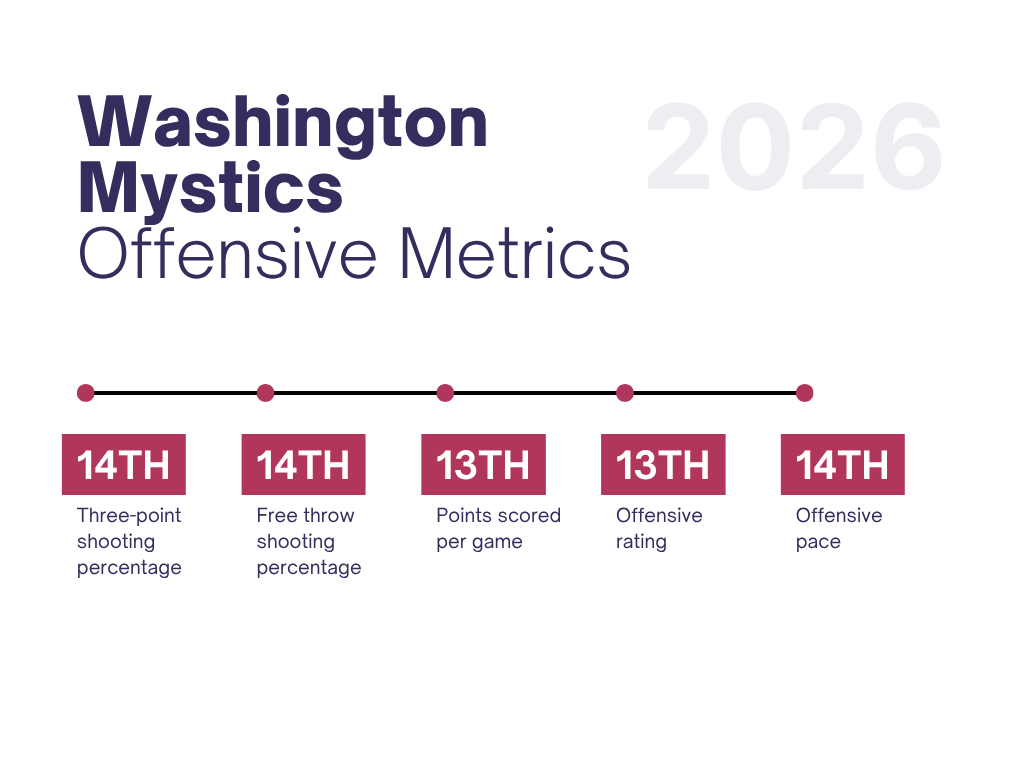
The Mystics are not a good three-point shooting team relative to the rest of the league. They rank 14th in three-point efficiency, 14th in three-point attempt rate, and are 13th in effective field goal percentage. They have the worst turnover rate in the league and have turned the ball over more than any other team this season. In a league more offensively dominant, they are 13th in points per game, 12th in assists per game, and 13th in offensive rating. They are also the only playoff team with a negative net rating—by all offensive measures; they shouldn’t be in the position they are in.
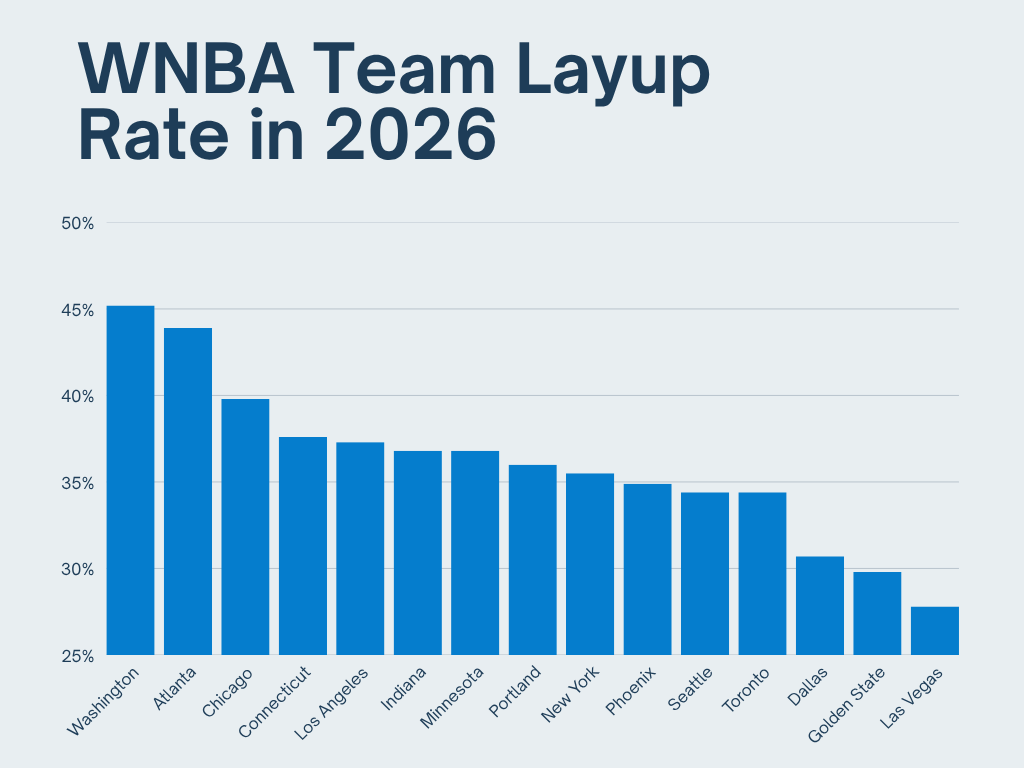
What the Mystics lack in offensive elegance; they make up for it in a ruthless attacking mentality at the rim. 45.2% of the Mystics shot attempts this season have been layups—the most in the WNBA. This need to attack the rim has led to the best free throw rate and free throws per field goal attempt rate in the WNBA. The Mystics have made the determination this season that they will repeatedly attack downhill and force defenses to stop it. And they have struggled to do so, as Washington has made the most layups in the league this year.
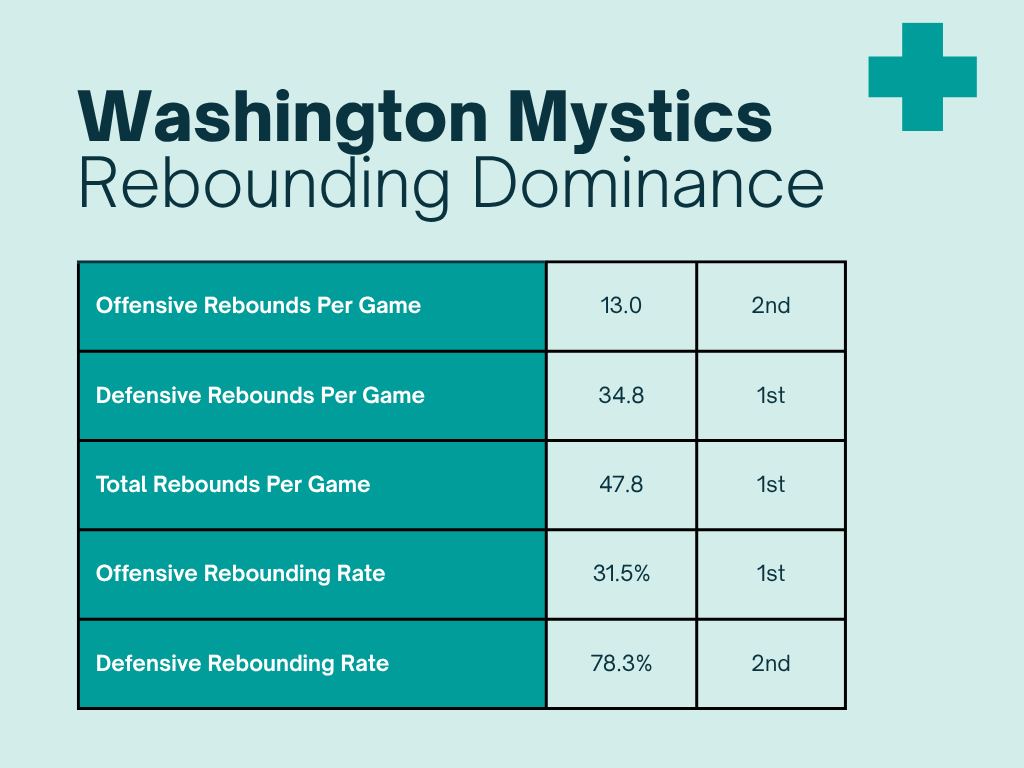
The intensity doesn’t stop with scoring, however. The Mystics are also one of the top rebounding teams in the league. They are first in rebounds per game, first in defensive rebounds per game, and second in offensive rebounds per game. When opponents miss, the Mystics are cleaning up the mess and minimizing extra possessions.
And on offense, they are rebounding at a high enough rate to maximize scoring opportunities. Both Shakira Austin and Kiki Iriafen have been prolific in this regard, with both players averaging 9.4 rebounds per game and ranking 5th and 7th in total rebound rate among players with 25 games played or more.
In short, the Mystics are out-hustling their opponents to victory. They are mucking games up with slower pace, defense, attacking the rim, and relentless rebounding. Playing this way takes a lot of energy and boundless motivation. That energy and spirit can greatly be attributed to head coach Sydney Johnson. Johnson, in his second season in Washington, has often emphasized togetherness, joy, and accountability as core to his coaching philosophy.
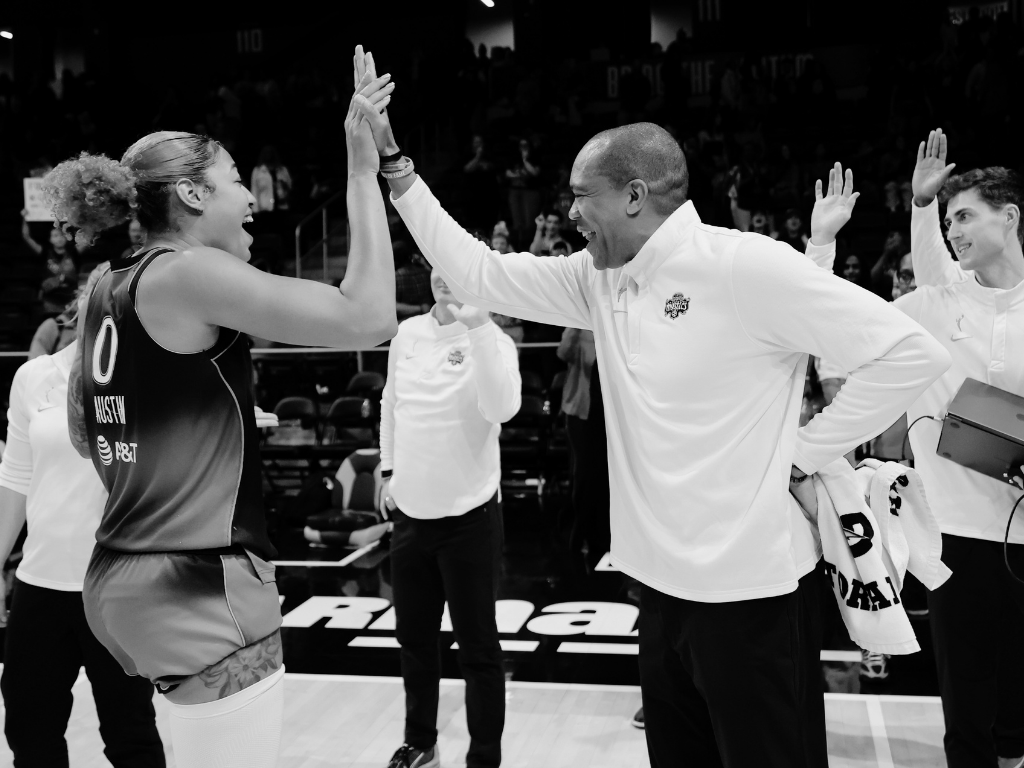
What makes the pairing of the Mystics style of play and Johnson’s coaching style so curious is that teams that usually have this sort of hard-nosed style are usually accompanied by a bristly, gruff coach. On the contrary, however, Johnson is the opposite extreme of a player’s coach—an entity that inspires his team through love, motivation, and energetic postgame locker room dances.
If this was a video game, there is little doubt that the Mystics would have a 100% morale and chemistry rating. It is that level of buy-in that has led to the team’s success. Basketball teams, much like other businesses, rely on positive team culture to be effective. According to a 2026 Workplace Culture Statistics report by Worldmetrics, authentic leadership correlates to 90% higher team performance, and 82% of employees say leadership directly impacts culture. Sydney Johnson is taking what works in the modern office and applying to his basketball team, and it is clearly working.
The question that the Mystics force us to ask is if this sort of high-intensity, culture-driven approach to winning basketball games translates to playoff success. It is a modern basketball correlation of achievement ideology. If there is a team that embodies the ideal of hard work leading to success, it is Washington. It’s a novel concept in a sport like basketball, that so often tends to favor raw talent more than it does effort. The Mystics present a reality where hard work does pay off in the most rewarding way.
At the time of this writing, the Mystics and New York Liberty are both 24-16. The way they got there and the feelings around their teams are vastly different. The Mystics are a ball of positive energy and togetherness, exceeding expectations to be a playoff team. The Liberty are a talent-laden squad with Breanna Stewart, Sabrina Ionescu, Jonquel Jones, Marine Johannes, and others. They have played in a way that has felt disjointed, with many advocating for the dismissal of their coach. Yet most observers view New York as the stronger title threat.
Once again, this is an instance of basketball imitating life. We are prone to embracing the team with talent as opposed to the one that has gelled and works for everything they have received. The Mystics are the everyday employee, often overlooked but determined to defy the odds. They are somewhat of an outsider at the social club. Unlike most of the other teams in the playoff race, they don’t have a household name. But what they do have is the strength of the collective.
They are an experiment in the power of chemistry; the cohesion found in togetherness. They are attempting to defy modern presumption that has heavily weighted superstar talent. They have won their games and earned their position the hard way. Every piece of recognition earned, every win fought for. The makeup of the team is almost cinematic in that way, the sort of unbreakable morale that we love to root for.
In the playoffs they will almost certainly play a better shooting team that spaces the floor more effectively. Historically, over a five-game series effort very rarely survives as a standalone strategy. The Mystics will have to prove that their identity is adaptable.
That is what makes them such a fascinating playoff team. The Mystics have spent an entire season testing a theory: can cohesion, force, and relentless buy-in compensate for a lack of elite efficiency? Can a team win without the benefit of positive math because it refuses to let the game be relegated to those numbers?
A first-round upset would not only be an excellent development story for this young team. It would be a referendum on how much culture still matters in a league that has been shaped by spacing and star power. The Mystics have already proven that team culture can win in the regular season, but time will tell if can do the same at the next level of competition.