
The Glass Basketball Court Nobody Asked For
The Big 12's glass court was marketed as the future of basketball. It was really just the latest reminder that in the tech era, innovation is just another word for monetization.

When I was growing up, I caught the excitement for technology bug from my father. I still remember when we were living in Jordan and the Nokia 7650 came out after appearing in the promotional materials for the Tom Cruise movie “Minority Report”. It was the first smartphone class device from Nokia running their S60 platform, and their first device featuring a camera. Back in 2002, it was a huge deal—and my dad was excited to get one.
I was 15 then, and I became fascinated by tech. In the years since, I consistently watch YouTube videos for new tech and am always interested in what the future may hold. That mentality has permeated the way that I watch sports as well. I’m always interested when I see new technology being used in visualizing sports—such as shot distance, player speed, and ball tracking technology.
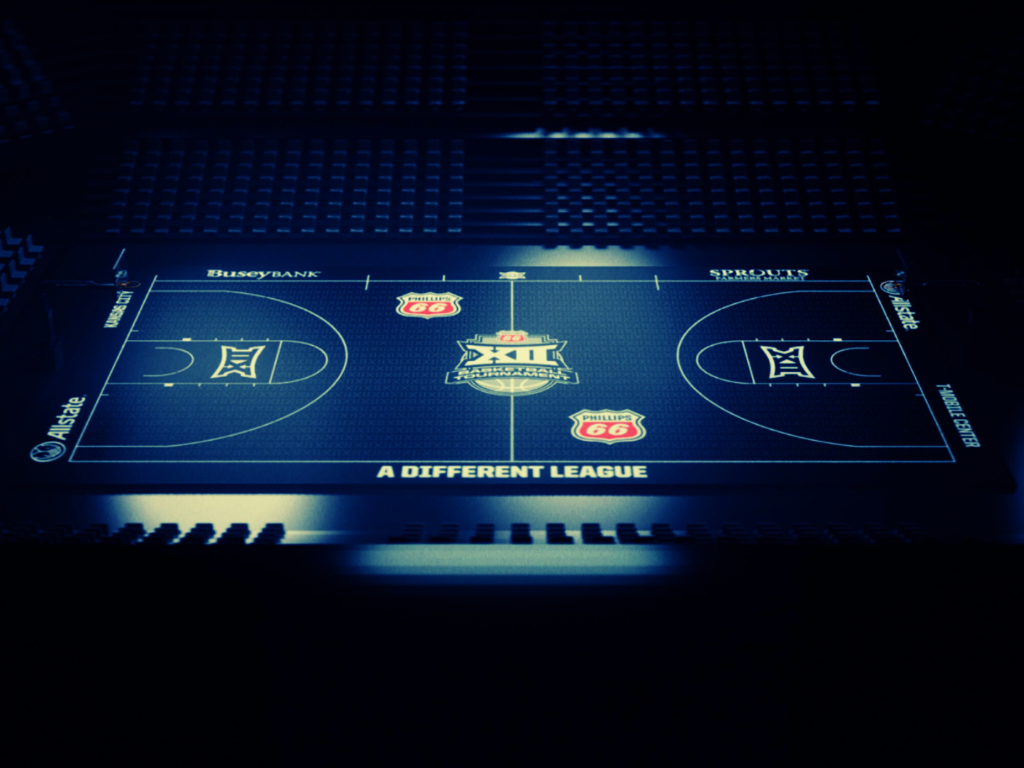
Sports is becoming more interwoven with tech these days. The NFL and Microsoft have an ongoing partnership to use Surface devices on the sidelines and that has led into co-branded commercials for Copilot, the companies AI assistant. The Big 12 Conference has attempted to modernize for its conference tournament by implementing a court made completely of LED glass, presenting the opportunity to introduce new elements into the live game experience. The court has since been scrapped after multiple players complained about it being slippery and uncomfortable to play on. The reaction to the court and its potential utility raises a question, however: just how much do we want tech to infiltrate the sports experience?
The Promise & Folly of Glass

The glass court that the Big 12 used for its tournament was developed by ASB Glass Floor. ASB is at the forefront of new smart floor technologies and is considered to be the market leader in this space. They have furnished customizable floors for NBA All-Star Weekend, Bayern Munich in the EuroLeague, and for FIBA U19 tournaments, among others. In promotional material for their surfaces, ASB touts being able to add team logos quickly, which was a selling point for the Big 12 as it meant that they could have custom courts with logos for the teams playing with quick turnaround times—which is ideal for a setting like a conference tournament.
In their press release announcing the partnership with the Big 12, ASB paints a utopian picture of the benefits that come with implementing this type of court technology. They stress that court designs could become more dynamic, allowing for more experimentation with designs that might have not been possible with hardwood. Shot charts could be included to show how well a team or player is shooting from three or in a certain zone in real-time for instance. It also presents an opportunity for stunning replays on the court itself after highlight plays.
All of these benefits are absolutely true. Particularly from an in-arena experience, being able to see stats on the floor without having to look at the jumbotron certainly has tremendous appeal. For those watching from home, seeing stats appear on blank space on the court as opposed to relying on the scorebug could also be seen as a great quality of life improvement.
For a sport always looking to attract younger viewers, creating a video game like atmosphere after a big three or fast break dunk also makes sense. It would equate watching a basketball game to playing a video game, in essence speaking the language of the next generation.
But also in the press release, ASB mentions “real-time branding” and “in-game activations”. Those phrases translate into one thing: ads. Lots of ads. With a dynamic floor that can be changed instantly, sponsorships for a court become like commercial slots for the Super Bowl. Instead of one or two primary sponsors with their logos painted outside of the field of play, multiple sponsors can pay to have their brand plastered on the court for both in-arena and at home viewers.
It begs to question, what is the limit? How much of the playing surface is actually for sale? Because the transition from a rolling carousel of ads by the half court line can quickly evolve into a basketball court resembling a NASCAR vehicle. Recently, sports leagues have divvyed up their broadcast rights across multiple streaming options, with the sole intent of maximizing shareholder value. The digital court is a similar mechanism, a tool designed to maximize advertising revenue under the guise of digital dynamism.
Consider the success of Google Search. We think of Google Search as the best web search platform available. And it is that. But that’s not what it is to Google. Search is an advertising cash cow for Google—accounting for 56% of the company’s revenue—filled with paying customers on their Ads platform. It’s not branded in that way because we generally view advertising as predatory and not useful, but that’s the reality. A digital basketball court is similarly marketed as a breakthrough in presentation and immersion, but what it truly is, is a robust ad platform. The true reason for doing this is for the advertising and revenue potential and all of the visual benefits are just window dressing. All that is further complicated when the court is unplayable.
Both men’s and women’s players have noted that the surface is inferior to hardwood—prone to more slippage for light and nimble guards. In another layer of disappointment, the complaints of the women players were largely ignored and change only happened when male players talked about the challenges of the court. Much like many products in big tech, women were cast aside as irrelevant. This ignores the increasing popularity of the women’s college game and suggests that both ASB and the Big 12 don’t really care about the health and well-being of women players.
For a game so reliant on guard play, that should be a nonstarter. And yet they went through with it anyway, because the revenue optimization incentive was too strong to ignore. That tension underscores a frustration with modern technology that many have grown to adopt, and this court failure is just the latest example of a growing disillusion that many have with new technology.
Big Tech & a Moment of Disenchantment

In 2016, the Pokémon Go app was released. That summer, it was all anyone could talk about. People would schedule meetups, there were Pokémon Go parties, and businesses were established off the popularity of this mobile game. In that moment, I remember thinking that this is why technology is so cool. It took a trading card game that was already massively popular and adapted it to the digital age—enhancing the experience for the way we live our lives today.
Throughout the boom of Silicon Valley in the smartphone age there were a lot of pivots across multiple industries. The idea of subscription services for movies and music became popular, spawning the empires of Spotify and Netflix. The taxi industry was upended by Lyft and Uber. Social media emerged and enabled a new way to connect with family, friends, and with strangers with similar interests. This, we all thought in the moment, is what made the internet the greatest invention of the modern age.
But like all great rises, there was a poisoning on the horizon. Social media networks began to optimize for time on site, relying on clickbait and ragebait to keep people scrolling and consuming ads. Generative AI arrived, disrupting industries, negatively impacting the environment, and making a select few founders obscenely wealthy. The result today is that we have an online culture filled with hate speech, ideological segmentation, and rampant polarization. AI has caused thousands of job layoffs and forced us to question if anything we see online is real or fabricated. In short, it feels like a digital hellscape that would be the setting of a dystopian sci-fi novel.
The result of this has been a push back from many to reject technology as much as is logically possible. There has been a rise in people using “dumb” phones—such as flip phones, minimalist devices like the Light Phone, and a return of full QWERTY hardware keyboards from firms like Clicks and Unihertz. Digital music players have also made a comeback, as have low-cost digital cameras. There are devices that intentionally block smartphone usage, and the disenchantment with generative AI seems to be rising, with many people making tech purchases because they feature less AI.
There is a growing sense that we are living in a feudal society where big tech oligarchs are the lords of the land. They continue to enrich one another through deals that seem illegal on paper, while average people lose their jobs because companies don’t want to “miss the AI revolution”.
That mentality leaves the idea of a tech-enhanced sports experience in a tough position. The advancements are clear, but people in general are disillusioned with just about every tech company. It forces us to wonder if digitizing something like a playing surface for a basketball game is taking it a step too far.
Trying to Find the Line
When it comes to technology, the common theme for advocates is that “you don’t want to get left behind”. In his excellent book “Blood in the Machine“, Brian Merchant compares the Luddite movement during the Industrial Revolution to the moment we are in with big tech today. The textile factory owners that got rich off of industrialization while craftspeople suffered, have been reincarnated as the big tech CEOs of today. During the Industrial Revolution, we accepted garment factories because they presented a cost savings and added convenience—fabric became easier to produce and was more readily accessible with the rise of ready to wear clothing. What was lost however, was perfectly fitted clothing and shoes that a tailor or cobbler could craft. It’s a tradeoff that we all accepted and became the societal norm, for better or worse.
We are in a similar moment with AI and art, for example. A flyer or graphic created in ChatGPT is inferior to what a graphic designer could create. But it is also cheaper and faster. For some, that’s a trade-off that they are willing to make. With any new tech innovation, there is a calculus to make. The smartphone connected everyone and made everyone accessible. But at the same time, it has jeopardized privacy and security, handing data over to big tech companies like Google and Apple.
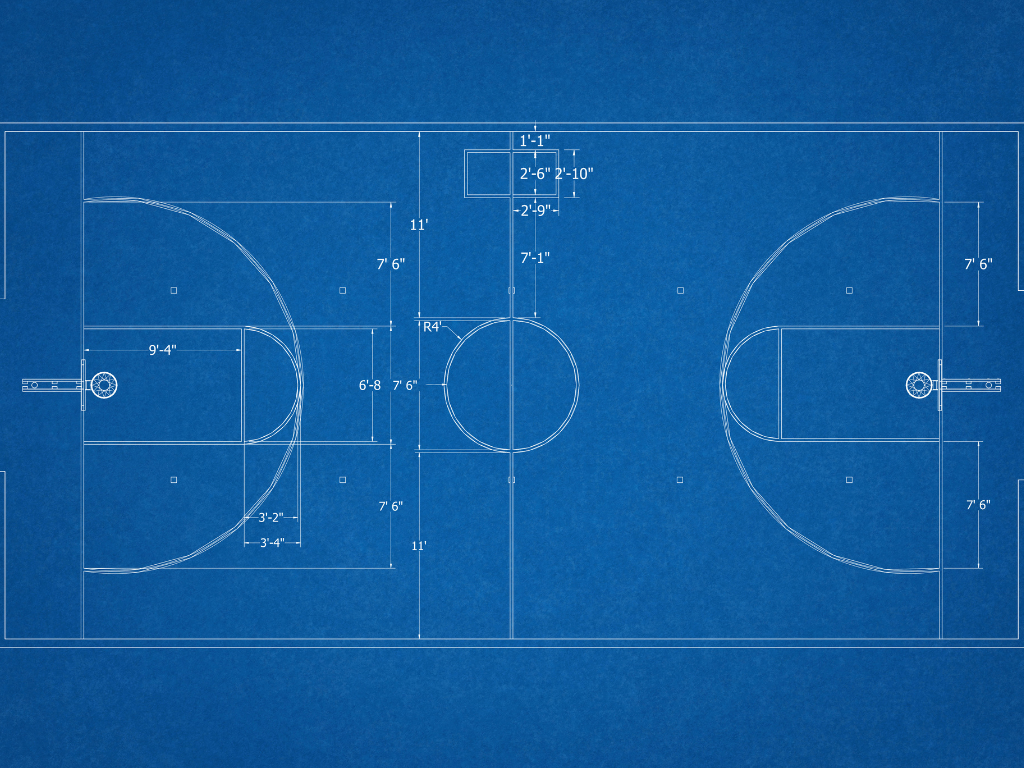
So, it is with the humble basketball court. Hardwood has been used since the creation of basketball, and over time, it has had changes and improvements. The process of installation has become faster, and court designs have become more intricate and somewhat artistic. The trade-off for a digital court is clear. The experience can become more immersive, but the quality of play on it may reduce. Much like the shift from hardware keyboards on smartphones to touchscreens, the accuracy is reduced, but it comes at the benefit of a larger screen. Compromises and trade-offs.
The digitizing of hardwood feels more akin to the idea of the digital laptop keyboard which is an idea that has all but faded from memory. In 2018, companies like Lenovo introduced laptops with two screens, taking the idea of a smartphone typing experience and adapting it to the desktop. But it was rejected by the masses, because it turns out that people like typing on physical keys.
If a digital floor creates a less fluid basketball product, then it can never truly succeed. This has been proven out as the Big 12 reverted to traditional hardwood midway through its tournament. It feels that in the quest to not be left behind, the Big 12 took multiple steps backward. This event feels like a microcosm of something larger, however.
For how transformative technology has been in the last quarter of a century, it has since devolved into a pure transactional mechanism aimed at squeezing every ounce of profitability out of a product. I think back to the excitement I had when my dad bought that Nokia, and how I have similarly been excited for new smartphone, headphone, and laptop releases in the years since.
Technology and innovation are genuinely exciting, but we must wonder, at what cost? How far will we degrade things that we love at the altar of perceived progress? The Big 12 Tournament court is a metaphor for who new tech seems to serve—the ruling class, without any consideration for those that make basketball or any other pursuit great. And that separation is a core issue of our times.