Angel Reese: A Basketball and Cultural Supernova
The Chicago Sky star is getting better and in the process is proving to be a cultural powerhouse for women's basketball

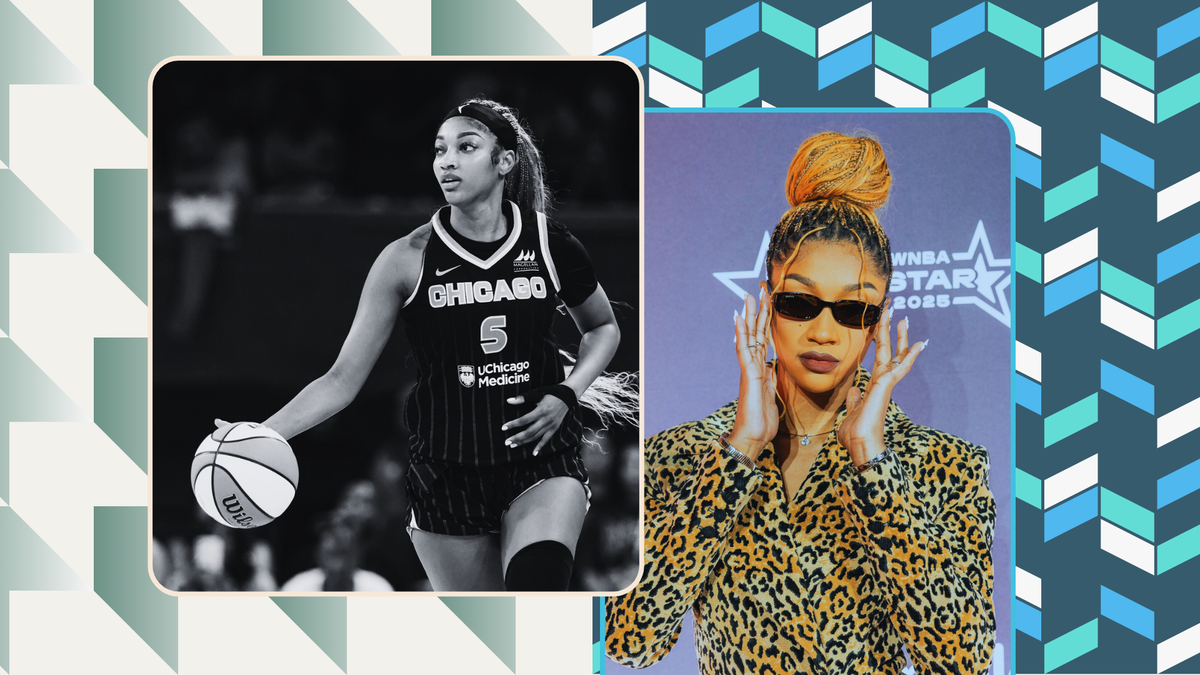
In the last five years the interest and popularity of women’s basketball has exploded. A supernova of popularity that has led to a rapidly changing environment around the WNBA and how it’s covered. Much of this has been attributed to Caitlin Clark, who instantly became the sport's most popular player after her record-breaking college career at Iowa.
Every great athlete needs an adversary and for Caitlin Clark (and her fans) that person is Angel Reese. Reese played collegiately at the same time as Clark and they both entered the WNBA in the same season—where Clark was selected first and Reese was selected seventh.
All along they have been pitted against each other, framed as a future rivalry for years to come. Reese has been characterized as hateful and resentful (if the musings of Robert Griffin III are to be believed) but has also proven to be a cultural needle mover. An argument can be made that some of the newfound interest in the sport is her doing as much as it is Clark’s. I can’t help but find myself rooting for Reese, because she is a needle mover in so many ways.
A Game That is Evolving
While she was at LSU, Angel Reese averaged 20.9 points and 14.4 rebounds per game while shooting 50% from the field. She entered the WNBA as an elite rebounder, and that was evident right away. She averaged 13.1 rebounds as a rookie, which led the league. She had a rebound rate of 22.97%, which was also the best in the league. She leads both of those statistics as well this season.
The biggest criticism of Reese that has been memed into oblivion is that her offensive game is not very good, with many deriding her for “mebounds”, or when she rebounds her own miss. This criticism has always felt misguided to me, as we are punishing a basketball player for making hustle plays, which is counterproductive.
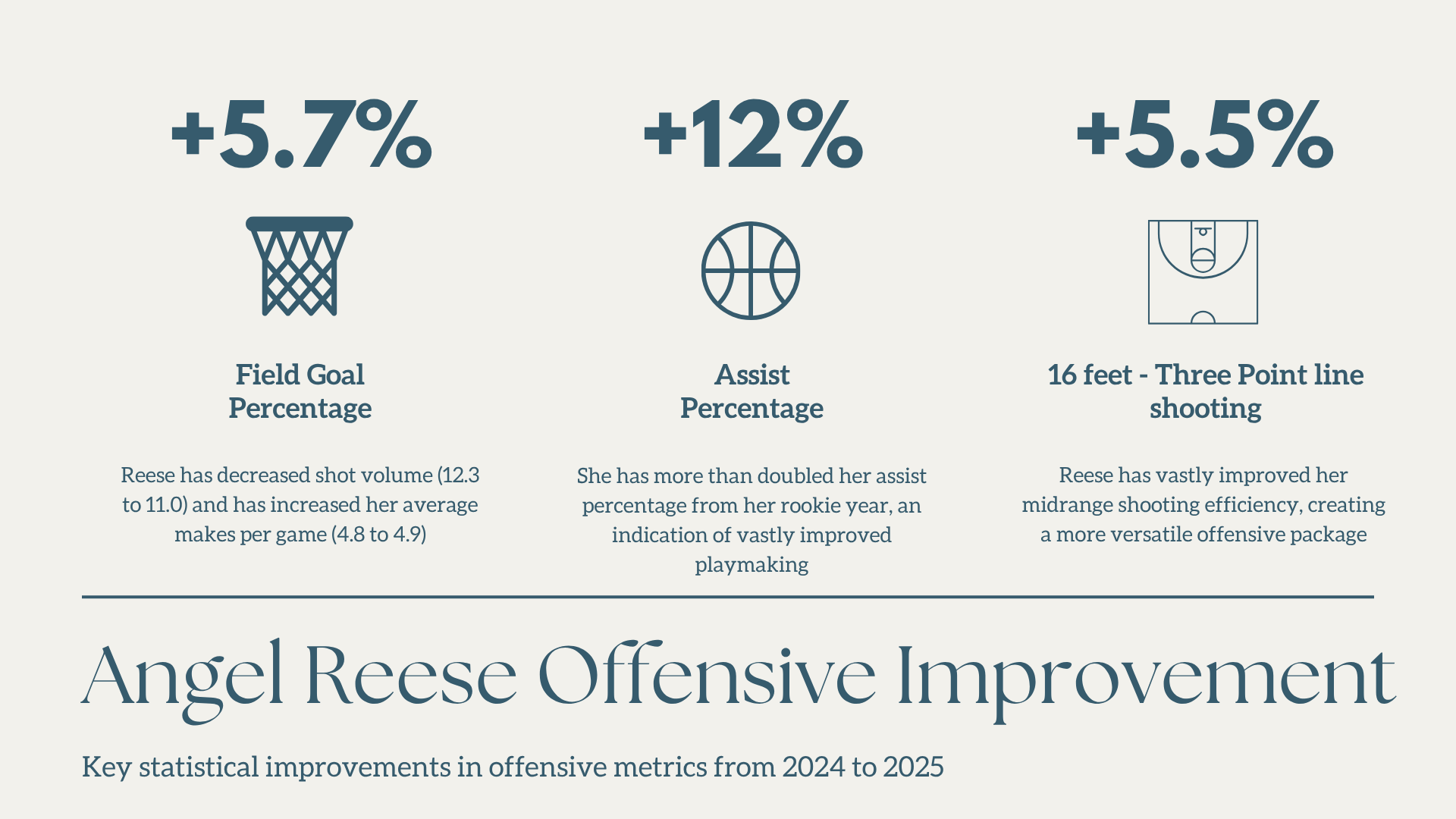
This season, Reese has developed her offensive efficiency in numerous ways. She has improved her field goal percentage by 6%, increased her three-point accuracy by 3% on nearly double the volume, and has upped her effective field goal percentage by 6%. She is not quite a three-level scorer yet, but progress is being made. This work is evidenced by her efficiency improvements from 3-10 feet and 16 feet to the three-point line. From 3-10 feet her efficiency improved by 17% while 16 feet to the three-point line improved by 6%. What this tells us is that she is working on her game and actively advancing as a player.
With her progression, there is an argument to be made that Reese might be on a Lisa Leslie-level trajectory. This path makes sense since Leslie was seen working with Reese on her game back in March. The scene was reminiscent of the way that Hakeem Olajuwon has worked with various NBA players to improve their footwork and post skills. It’s evident that Reese is committed to her craft and to becoming the best player that she can be.
Laying this out is important because perhaps more than any current WNBA player, Reese seems to get the most criticism. Her college into pro rivalry with Caitlin Clark has caused people to flat out lie and suggest that she is not a talented basketball player. They have also cast aspersions that she “hates” Clark and is resentful of her spotlight.
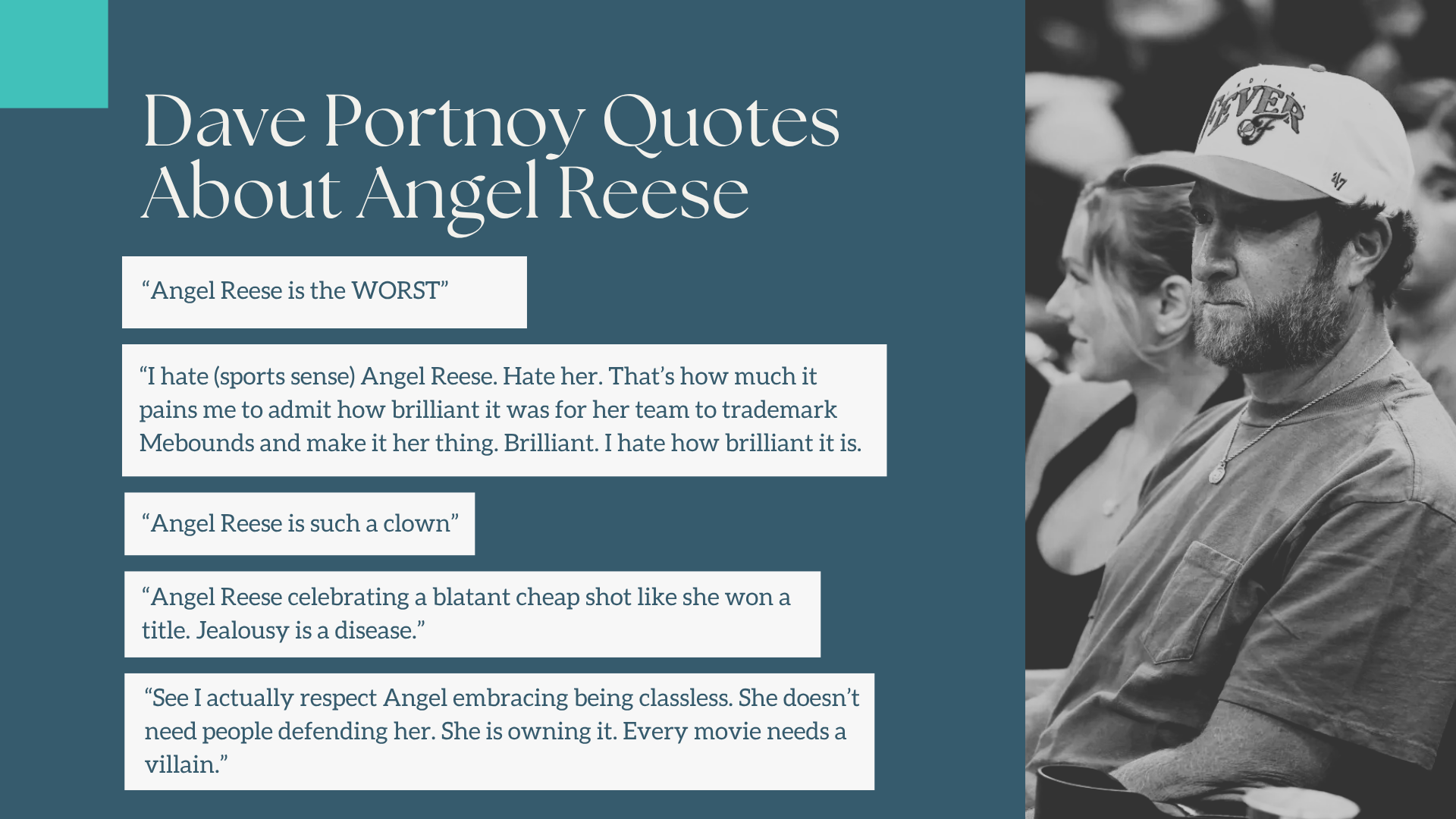
A vocal driver of this talking point has come from Dave Portnoy, the founder of Barstool Sports. Portnoy has been a Caitlin Clark fan since her days at Iowa and his hatred of Reese goes back that far as well. Reese’s well known ring finger celebration towards Clark is now well-known and has led to Portnoy saying that Reese is a “classless piece of sh*t” and that he “hates her”.
This sentiment has turned into the now widespread thought that Reese is an unskilled and untalented player with inflated rebounding stats. It has also positioned her as a sort of villain in the Clark hero arc. Portnoy has made racist comments about athletes in the past, so his alliance with Clark and hatred of Reese feels like it has a racial undertone to it, even if he denies it.
In Reese, Portnoy and other white fans that have gravitated to Clark have created a bogeywoman of sorts. In an America that is increasingly racially divided with the current administrations dismantling and negative connotation of DEI (diversity, equity, and inclusion) initiatives, Reese is everything that they detest: a confident, talented, and unapologetic Black woman.
Reclaiming the Conversation
The WNBA is a league dominated by Black women, yet they are often overshadowed by their white counterparts. They are also labeled as violent and aggressive whereas white players are labeled as “fierce competitors”. Look no further than the way many in the media talked about Angel Reese after an on-court altercation versus how a similar situation involving Indiana Fever guard Sophie Cunningham was viewed.
Reese and other Black players that have gotten into on-court disagreements are called classless and dirty. Meanwhile, Cunningham was championed as Caitlin Clark’s “enforcer” and quadrupled her social media following overnight. There is an appetite in this country to delegitimize Black women with stereotypes and tropes. For those engaging in this behavior (that are increasingly gravitating to the WNBA), Angel Reese has become the face of their vitriol.
Reese has history with the player they care about the most (Clark) and is a vocal Black woman from Baltimore. In a certain sense, she was created for racist white people to hate. Instead of seeing this and standing down, Reese has instead doubled down on her personality, refusing to shy away from who she is.
Reese launched her podcast “Unapologetically Angel” last summer, and it has presented her with an opportunity to continue to deliver her personality to the masses. Unlike many player-led podcasts, Reese’s show isn’t necessarily exclusively a sports show—even though basketball players like Paul George and DiJonai Carrington have been guests.
Her show is an all-encompassing look at American Black culture, touching on lifestyle, sports, and music topics. It’s a platform that has helped her to create a relatable brand that is a breath of fresh air compared to the sanitized images of professional athletes that we have grown accustomed to.
This level of character has led to Reese becoming a role model for young Black girls as an example of success. In the last few months, this has led to numerous partnerships and additional exposure to the masses with her being on the cover of NBA 2K26 and Vogue. She has expertly navigated the criticism from people like Dave Portnoy and has not compromised who she is and continues to elevate past the negativity that many have tried to drown her with.
There have been moments throughout that have been racially charged. There were rumors of monkey noises at games and the amplification of a social media graphic depicting a gorilla on the 2K26 cover instead of Reese by Robert Griffin III. Reese has remained resilient and has never cracked under the pressure of this bigotry.
It is becoming increasingly evident that Angel Reese is more than a basketball force, but a cultural one as well. She is a driving force behind a revival of a former titan of basketball culture and has bridged the gap with the hip hop world—a trajectory reminiscent of another iconic basketball player from the DMV area.
Angel Reese, Allen Iverson, & the Importance of Cultural Figures
I grew up in the 90s in New York City and was a dedicated Knicks fan. But in the late 90s and early 2000s there was something about Allen Iverson. He possessed magnetism and authenticity, making him one of my favorite players to watch. Beyond his skills on the court, Iverson was style personified and was a true connection between hip hop culture and the NBA.
When Iverson entered the league, he brought with him a look that symbolized a generation of fans that were immersed in hip hop. He had tattoos, braids, and wore streetwear that wouldn’t have been out of place in a Ruff Ryders video. Iverson’s look permeated through the NBA, eventually causing then commissioner David Stern to implement a dress code. Iverson ultimately connected the worlds of hip hop and basketball world and this manifested through his shoe deal with Reebok that incorporated rappers like Jadakiss into advertising. Angel Reese follows a similar trajectory.
Iverson and Shaquille O’Neal are in the process of attempting to reinvent Reebok as a basketball brand after Adidas sold ownership of the company to Authentic Brands Group. One of Reebok’s first moves was to sign Angel Reese as a headliner for the rejuvenated brand. The company has also signed WNBA star DiJonai Carrington and young NBA players Matas Buzelis and Dink Pate. But it is Reese’s crossover and streetwear appeal that makes her the most important piece of the brand’s reinvention.
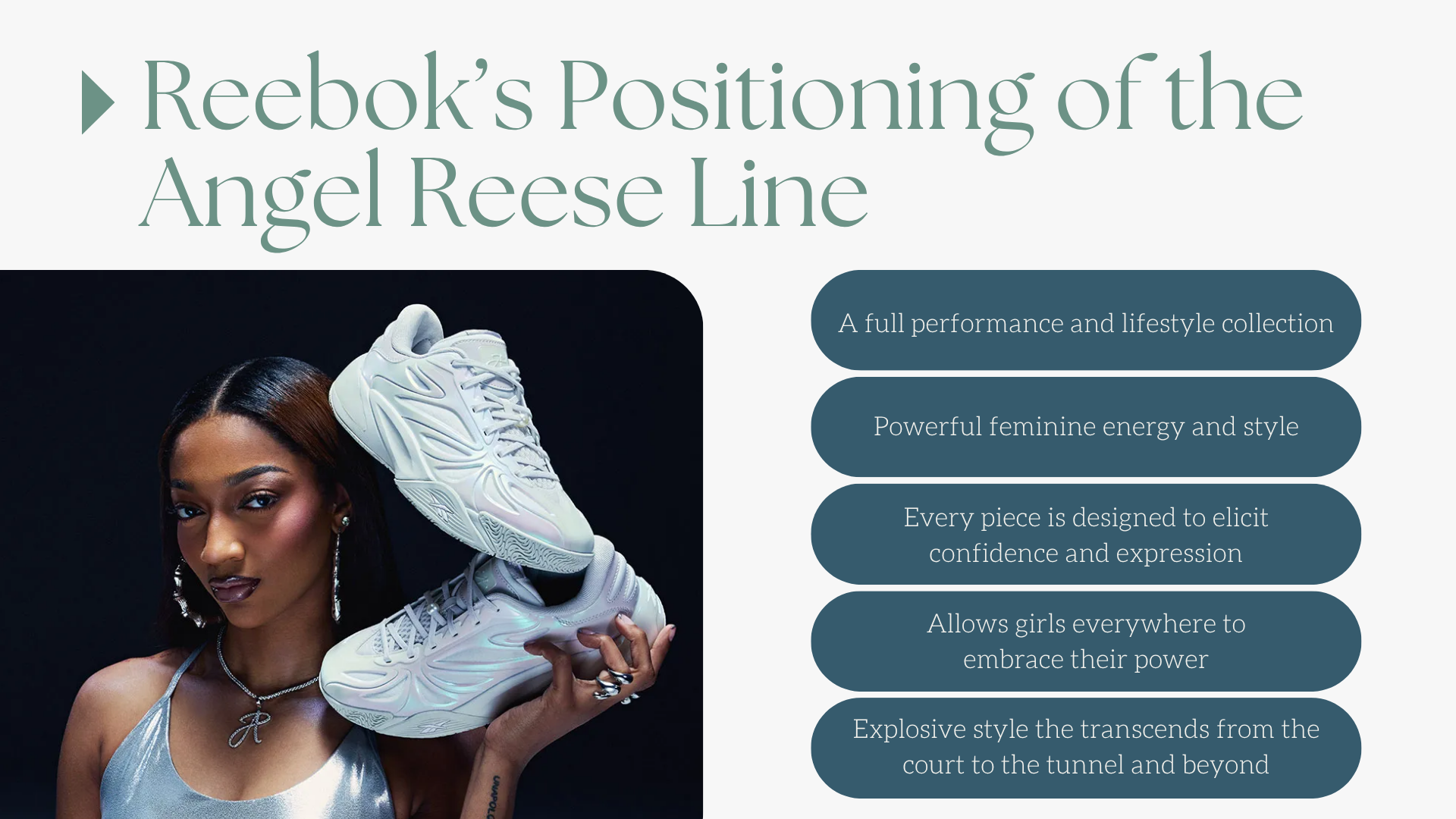
Reebok is looking to capture a piece of the cultural zeitgeist with their relaunch, much as they did with Iverson in the late 1990s. Because she is so prevalent in the fashion world as well as the sports world, Reese is a no-brainer decision for the brand. Her signature shoe, the Angel Reese 1, will be hitting shelves in 2026 and has already generated a ton of buzz in the sneaker community for its street-ready look.
Reese has proven to be an exceptional marketer as well. She took the term “mebounds” which were used as a derogatory critique of her game and trademarked it to further establish her brand. She has inked deals with other companies as well such as Reese’s (an obvious partnership) and Beats by Dre. Reese has also continued to establish her cultural credibility by continuing to be affiliated with and supported by the music community, just as Iverson did two decades ago.
Artists like Beyonce, Megan Thee Stallion, and SZA have been very public supporters of Reese and have attended Sky games to watch her. She has hosted a wide variety of artists on her podcast and that has led to her booming popularity. These artists are bastions of Black culture, which by default has also made Reese a face of modern Black excellence.
She is a trendsetter, just as Iverson was before her. The appeal of Angel Reese is multifaceted, but it starts with the fact that she is an overwhelmingly talented basketball player. Her talent has allowed her to carve cultural lanes with rappers and fashion designers—further enhancing her ubiquity. Many have tried to position her as the sort of villain in the hero story of Caitlin Clark. With the thought being that Clark is the Michael Jordan of this league, while Angel Reese is an obstacle on her road to greatness.
While Clark is an amazing player in this league that will receive many accolades, it’s unfair to simply label Reese as an obstacle. Reese is talented in her own right but also is a face of Black culture for a new generation.
She is a cultural tastemaker that is bridging gaps for the WNBA as many NBA players like Iverson did years ago. She is impactful, and anyone stating otherwise is falling into the trappings of racist propaganda that has been spewed by ignorant fans that look to belittle the voices and impacts of Black women in America.
There are many great basketball talents in the WNBA, with even more elite players joining every single year. But people like Angel Reese don’t come around very often. It would be foolish to underestimate her impact both on the court and off it. Her arrival into the mainstream consciousness should be celebrated and we must realize that we are dealing with a cultural force and not just a basketball player.
Thanks for reading Deep Cover! This post is public so feel free to share it.