Billionaires, Power, & the Worship of the NFL
The NFL’s collusion case is another case in the long precedent of fans continuing to side with power when it comes to football

The debate over increasing minimum wage has always fascinated me. When people see a fast-food worker asking for $18 per hour, quite often their immediate response is “well I do more important work and I only make a little bit more than that”. The result for those on that side of the debate is that fast food workers, who are deemed less skilled and somewhat less than, don’t deserve a higher wage because the “higher value” worker would no longer enjoy a wealth gap.
In that debate, anger is directed at the ground level employees as opposed to their millionaire and billionaire employers for not adjusting wages for the ever-increasing cost of living in today’s world. I was reminded of this dynamic recently when reporting from both Pablo Torre and Mike Florio uncovered a case of collusion among NFL owners to limit guaranteed contracts for players in the wake of the DeShaun Watson contract that the Cleveland Browns agreed to after acquiring him from the Houston Texans.
The reporting on this has been essentially limited to Torre and Florio’s extensive work, with higher profile outlets squashing the story. It should be a bigger story, but it has gone wildly underreported. In short, the league suggested to its owners that they join forces to compensate elite players with less guaranteed money for their own financial safety. Then this is followed by text messages showing that contracts are commonly discussed between owners, making the allegations of collusion seem more concrete.
And yet, many of the comments on the reporting online have dismissed these allegations calling them a not a big deal or expressing apathy. These are the same fans that when a player is bargaining for more money will be very quick to call them greedy. But when ownership is plotting to suppress an emerging salary standard it’s brushed off as good business. This story is yet another example of the way that the football-watching public refuses to hold its team owners accountable all in the name of protecting the NFL brand.
The Illusion of Integrity

In sports coverage, there is often an accepted notion that teams operate independently of one another. Much like the action on the field, we (somewhat foolishly) believe that front offices operate with the same meritocracy. Quite the opposite, as ownership groups of teams are the most exclusive of exclusive clubs. They are “good old boy” networks in every sense of the phrase.
We would like to believe that an owner will do everything in their power to field the best product on the field, to take care of their staff and players to run a competent operation. But teams have different agendas to accomplish their goals. Some will spend their exorbitant wealth to field a championship team, while others will reduce costs in any way possible to increase their profit margins.
The club of NFL owners is so exclusive with only 32 members. Even by billionaire standards it is a rare group. There are an estimated 813 billionaires in the United States, and the only non-billionaire owned teams are the Cincinnati Bengals (owner Mike Brown is worth $925M) and the Green Bay Packers (publicly owned). This means that only 3.6% of American billionaires own an NFL team—making it the most exclusive of exclusive clubs.
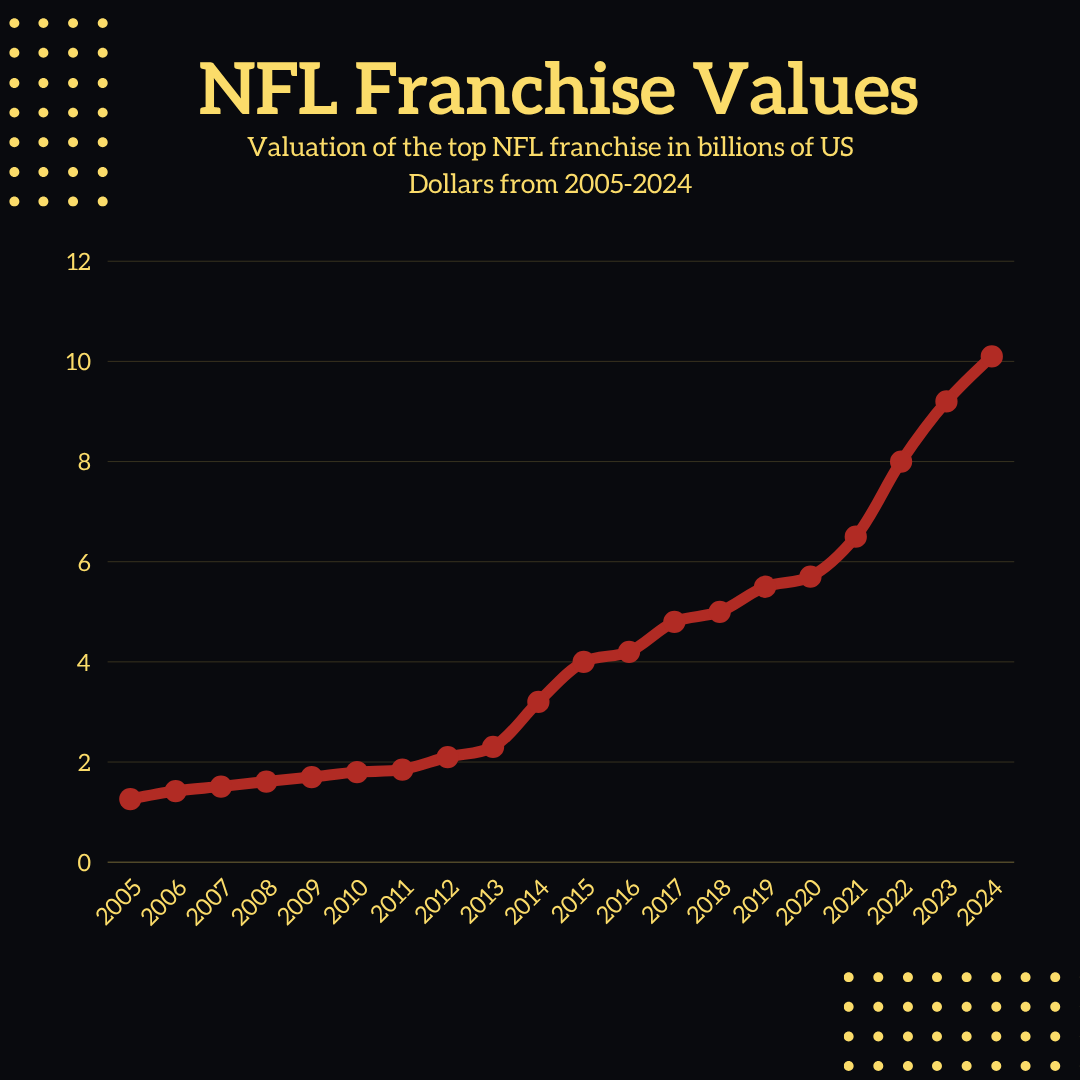
These owners come from various backgrounds of wealth accumulation, and they see an NFL franchise for what it is: a cash cow investment. In 2005, the most valuable NFL franchise was worth $1.2B. In 2024, that number skyrocketed to $10.1B. And the valuations are only increasing, which means that investing in an NFL team will never be a bad financial decision.
With the almost assured profitability of a team, owners will remain in their spots for as long as they can before the offers become too enticing to refuse or they are forced out (which is what happened to former Washington owner Dan Snyder). As a result, there is commonality between the owners, which fosters a sense of closed-door meetings and handshake agreements.
While we would like to believe that NFL team operations are always on the up and up, it doesn’t take a wild hypothesis to reach the consensus that the owners would collaborate on a decision that helps them maximize their balance sheets. If it means working together to reduce player movement and salaries, so be it.
The best example of this is the way that the NFL and its owners fought off the introduction of free agency for many years, to the point where legal action was needed to help introduce the framework of modern free agency that we know today. The owners in that instance were trying to protect their leverage and lock players into contracts, ensuring that payments and rosters were as regulated as possible.
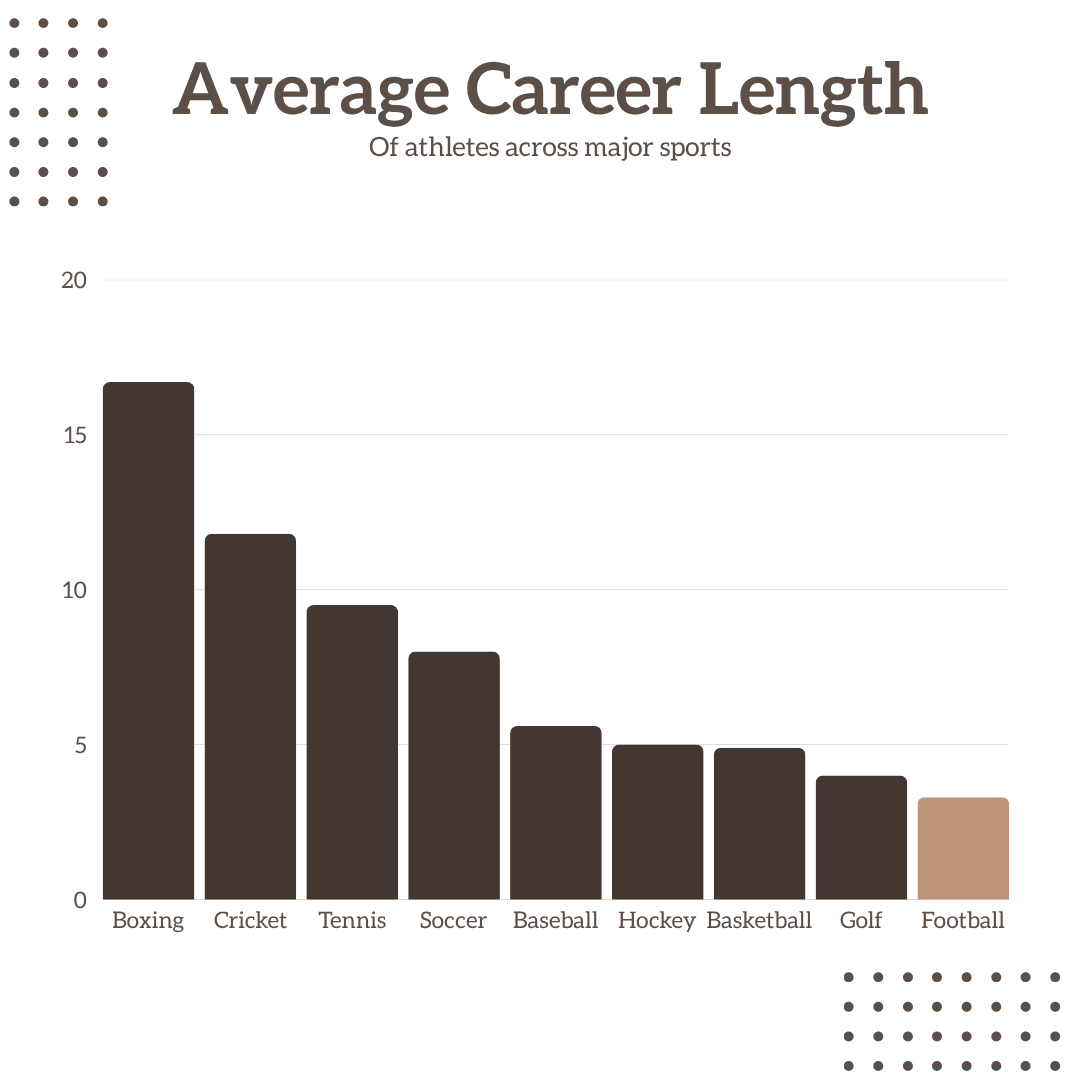
Players, of course, eventually did get free agency and the tug of war between them and team owners has been ongoing in collective bargaining agreements ever since. The issue of guaranteed contracts (which are the standard in other leagues) for owners is that football is a dangerous sport that has the lowest average career length in professional sports at 3.3 years. That means that guaranteed contracts will result in more long-term payouts for players that are no longer able to meet the standards of their signed deals either through injury or attrition.
For players, it’s easy to understand their desire for financial security. Football is a dangerous game that features a lot of injuries. Ensuring that they are paid every cent of their contract is important especially with post-career concerns driven by head trauma injuries like CTE. Because their careers are so short, they are looking to maximize their income so that they can afford health care and set up their families for success after they retire.
The owners at the suggestion of the league, deciding to collude on this point in the wake of the Watson contract, should surprise no one. Owners have often looked at players as tools to fill their stadiums and generate millions of dollars for them. Their hope is to pay them as little as they can within reason. The fact that the owner of the Los Angeles Chargers thanked the Arizona Cardinals owner for setting precedent to not offer guaranteed contracts through a text message is indicative of that.
The idea that billionaires are morally corrupt should surprise no one. They have amassed absurd levels of wealth for a reason. Perhaps more surprising is that fans will often take the side of the owner as opposed to understanding the perspective of the player. It’s once again like the fast-food worker example, where people love the entity but not the people responsible for making the entity redeemable.
The Neverending Worship of the Shield
I have often been fascinated by something that I call “aspirational visions of wealth”, that I feel impacts the way a lot of people see the world. If you were brought up in a low- or middle-class family, it’s incredibly likely that you as an adult will also be in that tax bracket. The people that build themselves from nothing to millions are incredibly rare.
But we are shown the lifestyles of the wealthy on social media, reality TV shows, and other forms of entertainment. When people see this on their screens it creates a desire to be wealthy. The next step is that their worldviews and policy stances change because of how it impacts the upper crust of society. Those people will often state that they feel a certain way because they want to be protected when they themselves become rich. The result is sympathizing and deifying the uber rich while urging average people to just simply accept what has been given to them.
In the response to the reporting on the collusion case by both Mike Florio and Pablo Torre, commenters on X have said things like “are we supposed to care about this” and “this is a big fat nothing burger”. When I presented the story to a friend of mine who was unaware of it prior, he said that it was smart by the owners as a method of cost savings. In so many instances, the viewing public has sided with the billionaires at the expense of the players that put their bodies at risk.
The urgency to defend both the teams and the league itself at all costs stands out here more than anything. It should be easy to understand and sympathize with a player that puts their body on the line every week to want some level of security. But instead, there is more sympathy with the protection of the investment by the owner. It’s another example of the emotional extortion that team owners have over their fan bases.
Quite often, a city’s football team is its lifeblood. I think about when I lived in Detroit and the Lions were a mess. Despite their struggles, Sundays in the city had a certain aura to them that was filled with hope and passion for their team. Good sports towns love their teams and have unwavering loyalty to them. Owners use this devotion to often paint players as villains if they want to leave or demand more money. These tactics work and create a sort of “us versus them” mentality.
The foundation of this support enables stories like this collusion case to be buried. The NFL dominates topics on national shows on ESPN and FOX Sports One, and its new media deal has games broadcast on virtually every streaming network that is available. It is therefore in the best interest of those networks that the league they invested substantially into is free of scandal. As I was reading more about the collusion case, I was shocked that it wasn’t covered by more outlets.
It is a story that features corruption, impropriety, and deception—all key elements that we look for in a fascinating story. But upon further reflection, it makes all the sense in the world that the NFL would try to silence the story, just as they tried to silence the CTE story when that information began to come out.
The NFL is king in the United States. It accounts dominates TV ratings, accounting for every slot in the top ten rankings in 2024. People simply love the product, so any story that puts any of that into jeopardy will be dismissed. This feeling was so strong that DeMaurice Smith, former head of the NFL Player’s Association, felt that the collusion case was likely a waste of time because of how high the bar for collusion is. This environment grants the NFL extraordinary power, so much so that these sorts of stories are blips on the radar.
In some sense, the way that this has unfolded is apropos considering the state of politics today. We live in a world where oligarchs and the super wealthy control nearly every aspect of our lives. Any small wins that the greater majority achieves are often overshadowed by the desires of the few in power. By the time the NFL season starts this fall, most of us will forget about this story. Such is the reality when an entity holds power and can get away with whatever they want. We should live in a world where we hold these teams and this league to task, but at this point that seems like more of a utopian fantasy than a foreseeable reality.
Thanks for reading Deep Cover! This post is public so feel free to share it.