
College Football Continues to Change, But Saturdays Are Still Special
As the sport leans more into a professional operation, positive remnants of the past remain


This past week, I was listening to the debut episode of “Ringer Tailgate”, a new college football podcast from The Ringer. Towards the end of the episode, the hosts were reminiscing about their favorite college football players and the mystique of various venues around the college football landscape. As a longtime watcher of the sport, it was a great listen because it made me think about my favorite players over the years.
When the games arrived on Saturday, it was a reminder that despite all the nostalgia and great feelings, college football has become an incredibly commercialized product. The headliner of Week 0 was a top-25 matchup between Iowa State and Kansas State, affectionately called “Farmageddon,” which was played in Ireland. Sponsorships are everywhere, and we are reminded constantly of the NIL deals and transfer portal. And yet, despite that commercialization, there is still something about college football on Saturday that taps into emotional chords that few other sports can.
A Reminder of the Business Aspect

There was an irony to a matchup of two land-grant schools from America’s heartland playing a football game on international soil. But it is a reflection of what the sport has become. College football is the second most popular sport in the United States, trailing only the NFL in popularity and ratings, with over 2 million people watching each Big Ten and SEC game on average. The sport is a money-making machine and that has driven much of the conference realignment and increased media rights deals in the past decade.
The idea that school pride and athletes competing “for the love of the game” has never been further from reality than it is today. Coaches are making millions to not coach teams because the expectations are so high. Players are entering the transfer portal at record rates, with over 4,100 players looking for new homes this past off-season alone. Players are also being compensated now through NIL deals and financial collectives that feel a lot more like a professional soccer outlet than the side hobby of academic institutions.
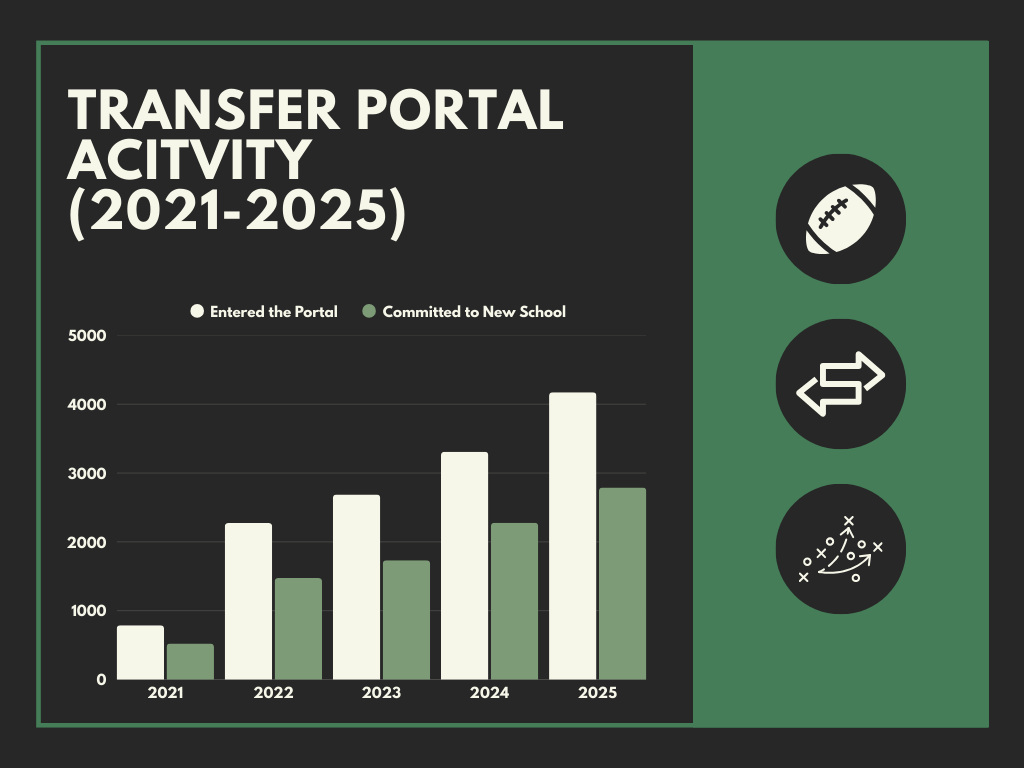
None of this is entirely new; players have been compensated legally and illegally dating all the way back to the 1980s with SMU and others. But it has never been more visible and transparent than it is today. It’s impossible to go through a broadcast without a color commentator mentioning how much a player made through NIL or how many times they have transferred to get to where they are now. Throughout a game on Saturday, we are mercilessly reminded of the business that is college football.
Advertisements have also permeated college football, much as they have their professional counterparts. Stadiums are being licensed out to brands (such as Boise State’s Albertson’s Stadium or Vanderbilt’s FirstBank Stadium), brands are taking out every aspect of advertising that they can during the game, and bowl games are perpetually being renamed depending on which sponsor happens to be paying more. And yet, with all this corporate shifting and the general soullessness of it all being just a money grab, there is still something wistful and magical about games on Saturday.
The Magic of Saturday
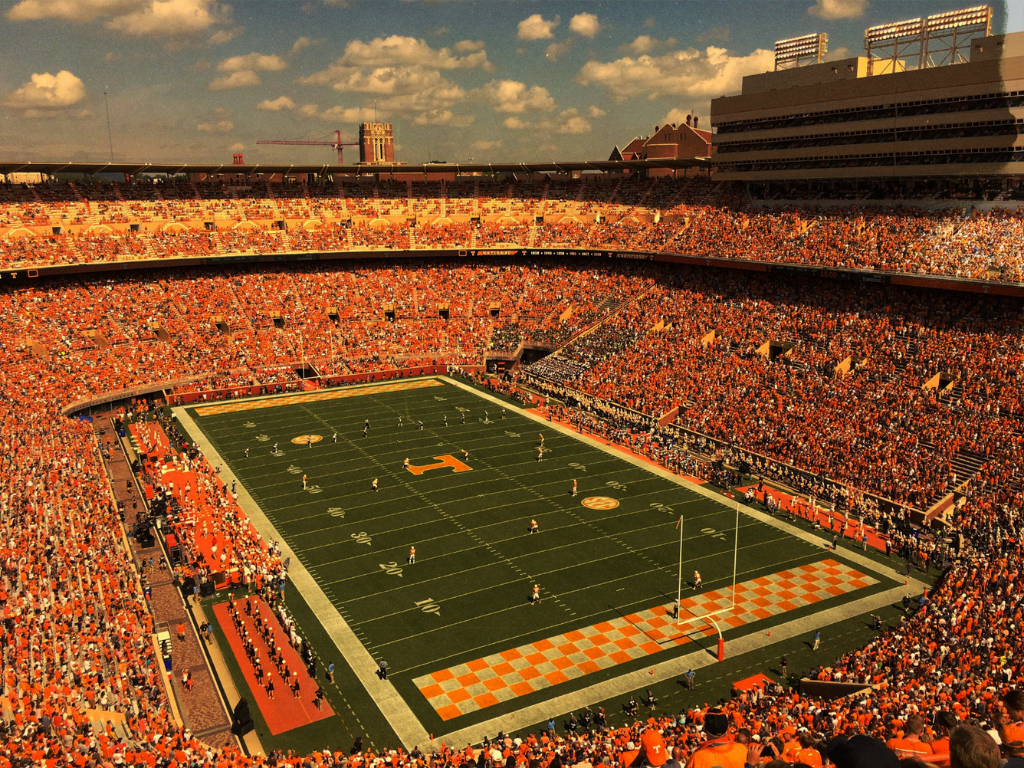
Netflix recently released a documentary series called “SEC Football: Any Given Saturday,” which takes a look at last year’s SEC football season by following the journeys of various teams, players, and coaches. While the documentary could be (rightfully) considered a fluff piece about the conference, it fully captures the essence of football stadium culture in the SEC. And that is something that, despite all the endorsements and corporatization, still reigns supreme in college football.
In these small university towns, football means everything. Look no further than the way that Starkville, Mississippi, was depicted. Mississippi State was dismal last season, winning only two games and going winless in conference play. And yet, as they were gearing up for the Egg Bowl rivalry game against Ole Miss, old cultural lines are redrawn, and who you root for in part defines who you are.
When I lived in Detroit, the in-state rivalry between Michigan and Michigan State was always one of football but also of identity. Because of its academic standing, Michigan fans often lean on their school’s educational prestige as a sort of superiority play. The Michigan State counter to this is that Michigan fans are entitled and pompous. This is the case with so many local rivalries across college football, and it leads to passionate fans from multiple generations in the stands every Saturday.
Going to a college football game is a generational mishmash. There are current students, working adults who attended the university decades ago, and older generations who have been watching the team their entire lives. They are from a wide range of economic, societal, and cultural backgrounds; all there for the same reason: to root for a team that they care deeply about. College football still has the pageantry that rises above the commercialization, with marching bands and chants that create an experience that feels uniting in a way that is almost foreign in 2025.
For those few hours, people can temporarily check their animosity at the door and be singularly focused on watching their favorite team play a game that has captivated the nation. It’s a beautiful minimalist mental experience that is often hard to describe. There is magic in watching players develop with huge stadium crowds behind them, with the knowledge of the past in the back of their minds.
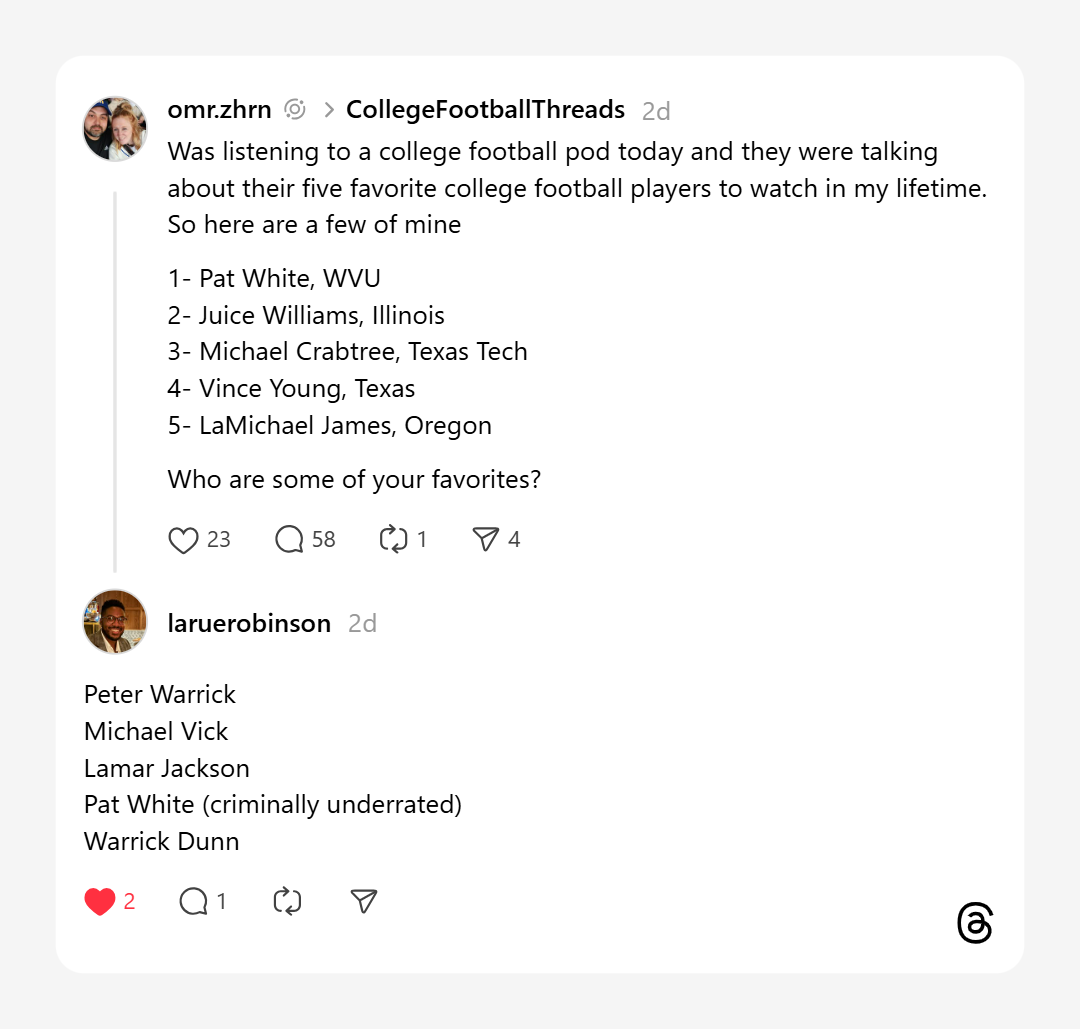
Conversation among college football fans is often rooted in recalling the past, of players of yesteryear who left their mark on the sport. I made a post on Threads asking people who their favorite players from the past were, and the answers were incredibly wide-ranging. Over fifty people responded with their favorites, instantly sparking nostalgia for players like Peter Warrick or Jahvid Best, who were not successful pros but incredible college players that provided memories for a lifetime.
The connective tissue of decades of great players bonds us in a way that many non-sports fans do not understand. Despite all of the changes in the college game this last decade, there is still a mystique that the sport has where stars are made every Saturday, and fans occupy the stands with undying loyalty. The players are paid like professionals now, and the teams are run like NFL franchises, but the fan experience still remains blissfully organic and passionate. Saturdays in the fall are still amazing, and I hope that never changes.
Thanks for reading Deep Cover! This post is public so feel free to share it.