Duke Basketball & the Ruling Class Mirror
They have been the most hated program in America for forty years. That hatred is trying to tell us something


It was a moment that lasted an eternity. In unexpected twist of fate, UConn guard Braylon Mullins found the ball in his hands and shot a deep three as time was expiring. As the ball traveled in the air for what felt like an eternity, thousands of basketball fans held their collective breaths. When the shot dropped, they jumped for joy. Why? Because UConn, a powerhouse in its own right, had vanquished Duke.
While the sport of college basketball has continued to change in recent years, there is something that has remained a constant: a lot of people hate still Duke basketball. Duke itself has had its own transitions, but the animosity towards their basketball team has remained—and arguably gotten stronger. Beyond the basketball, Duke represents something visceral in us—an embodiment of wealth, class, and privilege that we want to see fail more than anything.
A School for the Elite
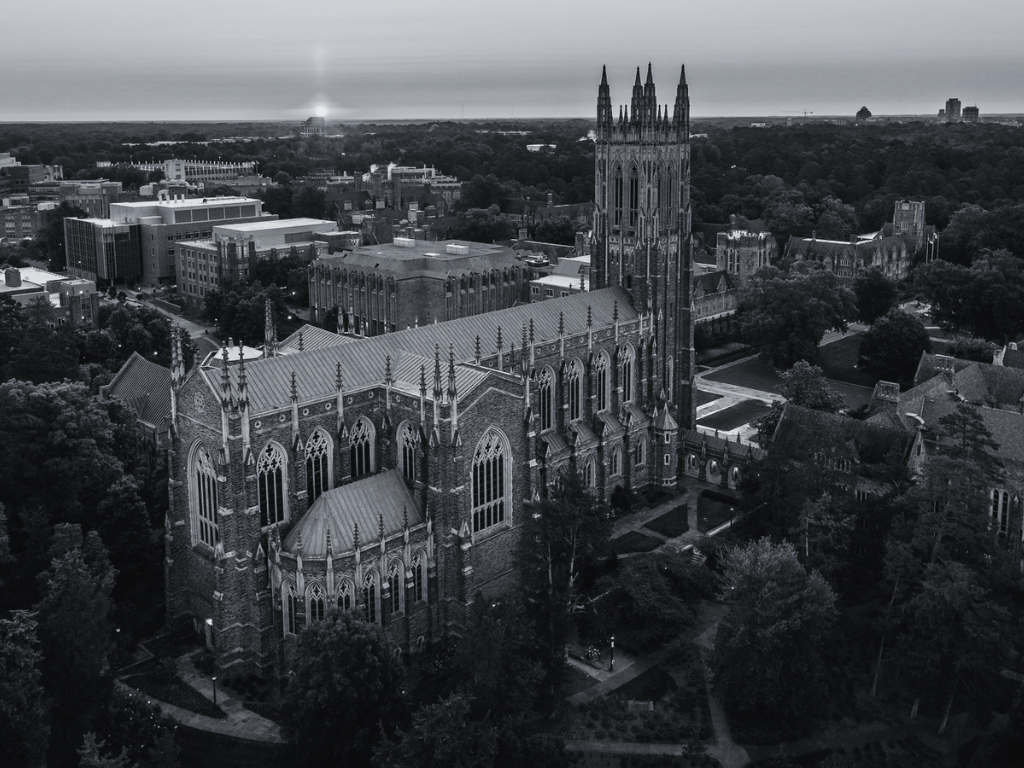
There is a cluster of schools in North Carolina that have been prominent in basketball at different times since the 1980s. The three main schools in the area are North Carolina (UNC), North Carolina State (NC State), and Duke. UNC and NC State are both public universities while Duke is the largest private university in the state. With that distinction comes the reputation that comes with being a private institution.
Duke is viewed as being a school that is for the elite, where future white collar and C-suite workers go to school. Duke has often fashioned itself as an Ivy League university in the South, whereas others are viewed as schools for the average person. That sort of class distinction permeates to the basketball court.
When Duke basketball began its rise to national prominence in the 1980s under head coach Mike Krzyzewski, it came with a sort of image. Duke players had a “clean cut” look, its players were not rough around the edges, and they played a style of basketball that many considered “the right way to play”. In short, that means that Duke had a lot of White players and didn’t play up tempo—which at the time was considered the street game.
Duke recruited Black players such as Johnny Dawkins and Grant Hill, but there was a sense that this was a team for White America. In an era of “The Fresh Prince of Bel Air”, Duke wanted more Carlton and less Will. Duke in a sense emphasized assimilation as opposed to Black individuality—which mirrors the overall structure of white America that avoids Black individualism. In a basketball sense it was successful, but there was a feeling that it lacked the authenticity of other schools in that era.
The student body of Duke, even today, skews predominantly white with only 9% of its student body being African American. This is no more evident than watching the “Cameron Crazies”, the student section at the team’s home games that usually feels like an introductory partying seminar for future finance executives.
As a result of this perception, Duke for many years had a star white player that embodied a sort of white privilege ethos. The most notable example of this was Christian Laettner. But there have been others such as Grayson Allen, JJ Redick, Danny Ferry, and Mason Plumlee. When Duke was truly making a name for itself and making deep tournament runs annually, this elitist slant to their team came into focus as they played, and beat, schools and players that resonated more with Black America.
The Racial Divide of the 1990s
The late 80s into the 90s were the golden age of college basketball for many. The talent was exploding, there were iconic coaches, and characters that were fascinating. It’s also important to note that during this period the hip hop era was taking shape and it was reflected in basketball and the two entities have been linked ever since.
In that era teams like Georgetown, UNLV, and Michigan came to represent Black culture as it was becoming more mainstream. Hip hop was being played on the radio, Black fashion came into prominence, and more and more popular shows were led by Black people. It was a moment of identity and representation for the Black population of America that entered the sports space.
Idols were made of players like Patrick Ewing, Larry Johnson, and Chris Webber. They were new Black heroes. A play style that was once laughed at by the basketball establishment as playground ball was winning games and getting noticed nationally. This is the space that Christian Laettner entered.
For White America, he was the sort of antidote to the rise of Black culture. He was revered for the classic Duke clean cut image and in some sense treated as “the Great White Hope”, much how Larry Bird was in the NBA during the early 80s. Laettner was mythologized for his intensity that often manifested in dirty plays—a courtesy he was given in coverage that his Black counterparts never were. During this time, Duke became the team for White America while UNLV and Michigan specifically became the teams of Black America.
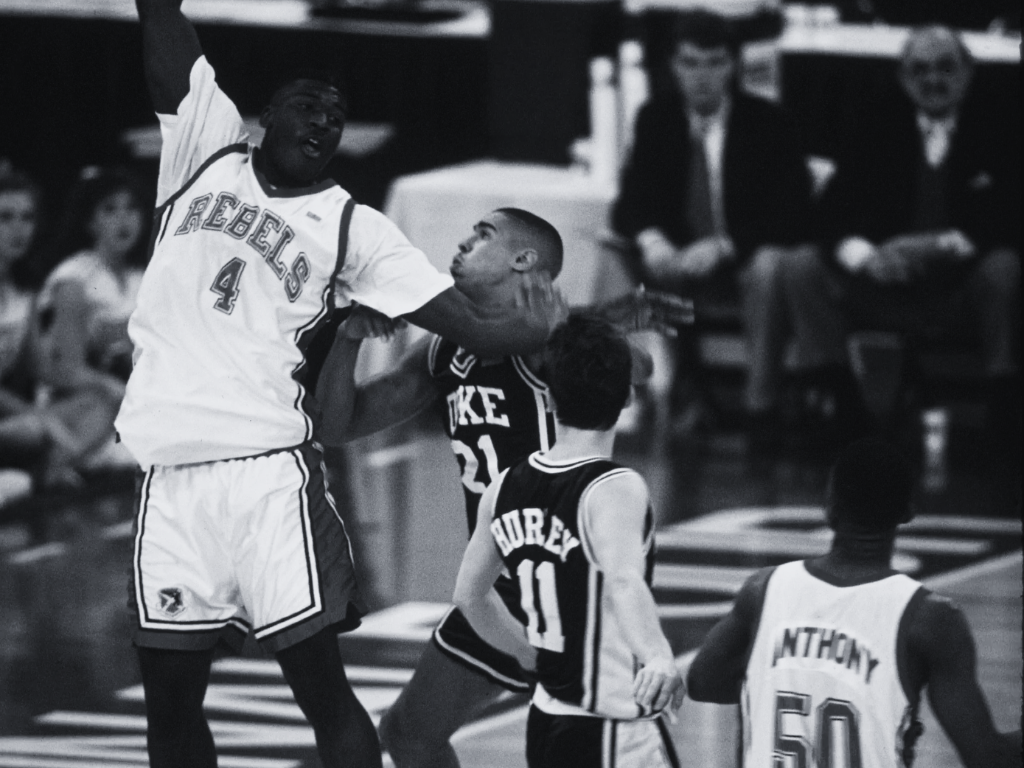
When UNLV beat Duke for the national title in 1990, it became a win for Black America. Anderson Hunt, Larry Johnson, Greg Anthony, and Stacey Augmon were representative of the modern Black experience. And they had vanquished the white team that featured Bobby Hurley and Christian Laettner. But that moment of victory would eventually fade as Duke would go on to win the national championship two years in a row.
One of those titles came against Michigan during its Fab Five era, a team that screamed hip hop culture with their black socks, baggy shorts, and affinity for the music of the generation. The difference between teams that Black America rooted for, and the establishment of Duke was incredibly stark and fostered hatred for an entire generation of basketball fans.
Duke’s success in that era and beyond validated their claims with image and play style. Since then, they have only missed the tournament twice and are a fixture at the top of the sport. In a game dominated by Black players, it is the perceived white school with its Black players that many considered sellouts for playing there that remained dominant.
Eventually, Duke had to pivot—as was evidenced when it signed players like Zion Williamson and Kyrie Irving. The rise of personalities like Jay-Z created a vision of aspirational wealth among Black people, but especially athletes. There was a craving for power as a result, and Duke was uniquely positioned to offer it as a legacy institution. Duke did not shift its philosophy because it suddenly believed in the empowerment of the Black athlete, but because the institution chased what would play well and prolong its power. As time passed, the clear racial divide has eroded as Duke has evolved and has been replaced by something more universal: a wealth gap.
The Haves and the Have Nots
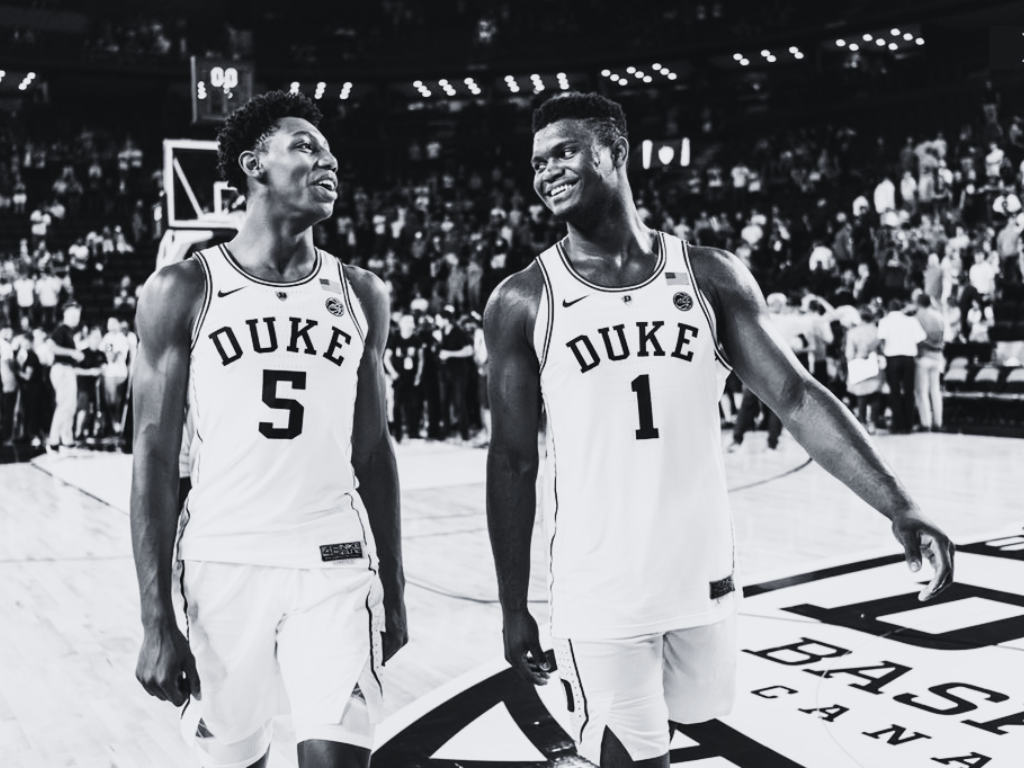
After claiming that he did not recruit one and done players, Mike Krzyzewski pivoted and started recruiting players that would spend one season on campus and then go to the NBA. Since then, countless NBA players have come through the building. Names like Kyrie Irving, Jayson Tatum, Zion Williamson, Paolo Banchero, and Cooper Flagg were all once Blue Devils.
Duke is no longer seen as “the white school”, but they are the “rich school”. This past season, Duke was third in the country in NIL (name, image, and likeness) spending on men’s basketball. Because of its wide alumni base they can get more and more funding. Nike, New Balance, and Gatorade all sponsor Duke.
Duke in that sense is a mirror of corporate America. It has embraced Black players, but only as cogs in the machine. Players when they are at Duke feel like parts of the basketball machine, perceived to be lacking in individual flair that is seen at other programs. It feels like a sanitization, extracting their basketball excellence but disregarding the rest—just like any Fortune 500 company treats its staff. And that is a reason that the school has so many detractors still today. The way we view their players is evidence of this, consider how prospects like AJ Dybantsa (BYU) and Caleb Wilson (North Carolina) are talked about versus Cameron Boozer. There is a personality to them whereas Boozer feels like just another Duke product.
Because of their name, history, and funding, Duke has a pick of the top recruits in the country every season. They are representative in that way of the millionaire and billionaire class in this country. It doesn’t matter that they haven’t won a national title in over a decade, because they are Duke and there is prestige with their brand.
Much how upper-class people in society get more of a benefit of the doubt than those below them socially, so does Duke in the world of college basketball. While other schools have dips in their success, Duke does not—almost like they are too big to fail. Like clockwork, Duke seems to be able to contend in the ACC, make the tournament, and win a few tournament games without fail. They are ever-present.
What was once the school of white privilege and elitism is now simply a school for the elite. The student body demographics are still the same, but between NIL spending and the history of the school, there is perhaps no other team in college basketball that represents the wealth class of this country more than Duke.
With the success that Duke has enjoyed also comes the arrogance of its fan base. There is an expectation by them to win every single game, that they belong at the top of the sports pyramid. Much like wealthy social classes, Duke and its fan base have an arrogance about them that is rooted in their long run of relevance and success. It’s that arrogance and disparity with other schools that makes any time that Duke loses, a cause for celebration for many.
Hoping for the Fall of the 1%

In modern times, the wealth gap has widened. Today, 10% of American families control over 60% of the nation’s wealth—a number that has continued to rise since 1989. Much of this has come from the boom of different industries and the governmental taxation system that often allows the uber rich to avoid paying taxes.
This has created anxiety in the populous around wealth. More than 70% of Americans view the wealth gap as a serious issue, and 69% of Americans view taxing the rich as a necessary measure. In the last decade, average Americans have seen tax breaks and deals be cut to wealthy men responsible for varying degrees of financial and societal impropriates.
So, when there is a basketball team that is the walking embodiment of a class of people that many have grown to detest there is an appetite for seeing that group fail. Sports has always been viewed (perhaps somewhat foolishly) as a meritocracy—if you work hard enough you too can succeed.
That utopian meritocracy view doesn’t apply to real life, but it’s nice to think that it can at least apply in basketball. The advent of NIL deals and the transfer portal have made many believe that there is a more even distribution of talent across the board, enabling lesser schools to compete and create a level playing field.
But in a capitalist society that is an impossibility, a fantasy dream. Schools like Duke who have always found ways to rise in a system will continue to do so. What has happened is that they continued to accrue talent and win games on the court. That creates resentment. Resentment that the new system didn’t work the way that we thought it would.
Therefore, rooting for Duke’s losses is really wanting the megacorporation to fail. In a reductive sense, it’s akin to pulling for a mid-sized restaurant chain to outsell McDonald’s. The chances for victory are slim, but when they happen its cause for celebration.
Duke is the empire, the villain of a story. They are Thanos, with all the inevitability that comes with that moniker. So, when a team, even another heavyweight like UConn, can vanquish them, there is a degree of vindication that comes with that.
More than anything, Duke’s existence and the animosity that they face is a mirror of us. It shows us how we truly feel about those with obscene wealth, and how truly unpopular they have become. As wealth gaps increase, we will root for the dismantling of oppressive conglomerates the same way we do when Duke loses. Because at the end of the day, it is those small slivers of hope that tell us that even Goliath loses on the right day.