
Eli Manning’s Hall of Fame Prism
The Giants great presents us with a dilemma of how we view greatness—do raw numbers invalidate an incredible story?

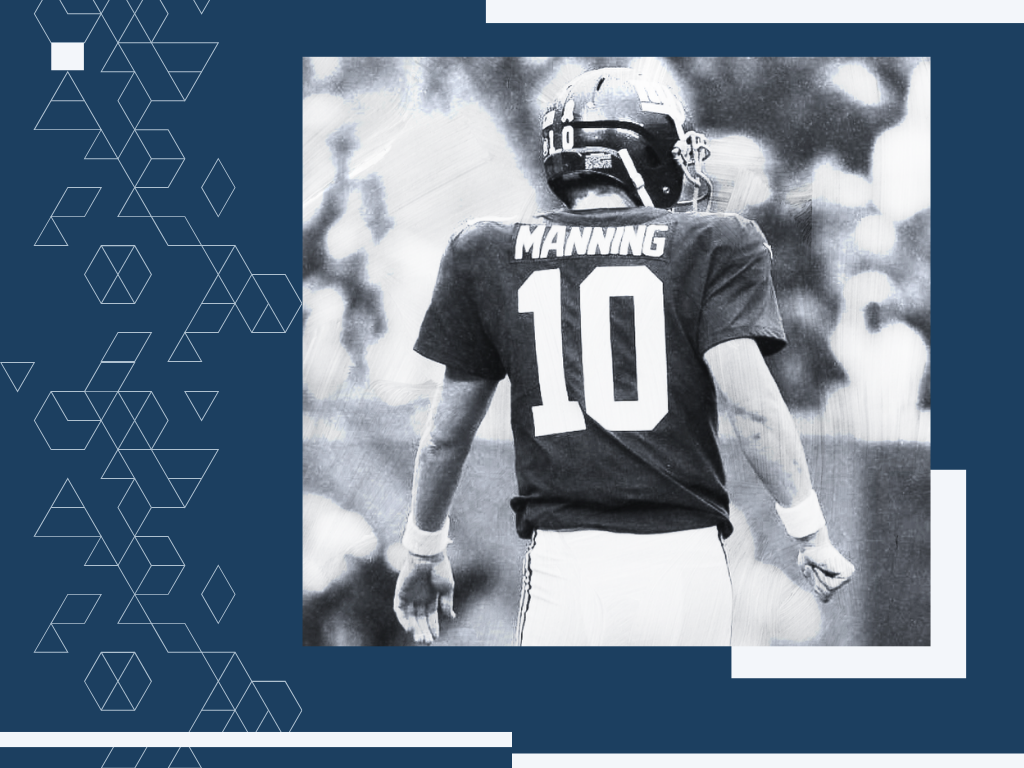
The NFL is a league of storytelling. Whether it’s about the rise of a player like Tom Brady from the sixth round of the Draft to being the greatest quarterback of all-time or the miracle Super Bowl victory of Joe Namath’s Jets over the Baltimore Colts, the NFL is perhaps the closest thing that we have to ancient mythology in modern times. We deify the exploits on the field, highlight the adversity, and a myth is born. And the NFL is very good at capitalizing on the myth—look no further than the excellence of NFL Films over the years as proof.
Today’s view of the NFL, however, places stats at a premium. Numbers, models, and analytics have dominated sports over the last decade as teams and fans try to get smarter about the game. When it comes to the way that we judge players from the past, they often require a blend of the statistical and the mythological. As with any two diverging paths, there is a point where they meet.
That point leads us to a player who’s career contrast is reminiscent of black and white cookies that occupy the bakery shelves of the city that he played in: Eli Manning. Manning’s first chance at immortality in the Pro Football Hall of Fame has come and gone without an induction into Canton, Ohio. Manning presents an argument to viewers of modern football: should we value mythology or does mythmaking cease to matter in a world dominated by numbers?
The Case Against Eli Manning
Eli Manning spent all 16 of his playing years with the New York Giants, a feat that seems downright foreign in the current sports landscape. He was an ironman, never missing a game despite being sacked over 400 times. Discounting his first and last seasons where he didn’t start every game for the Giants, Manning was often good but not great and the team’s record often reflected that.
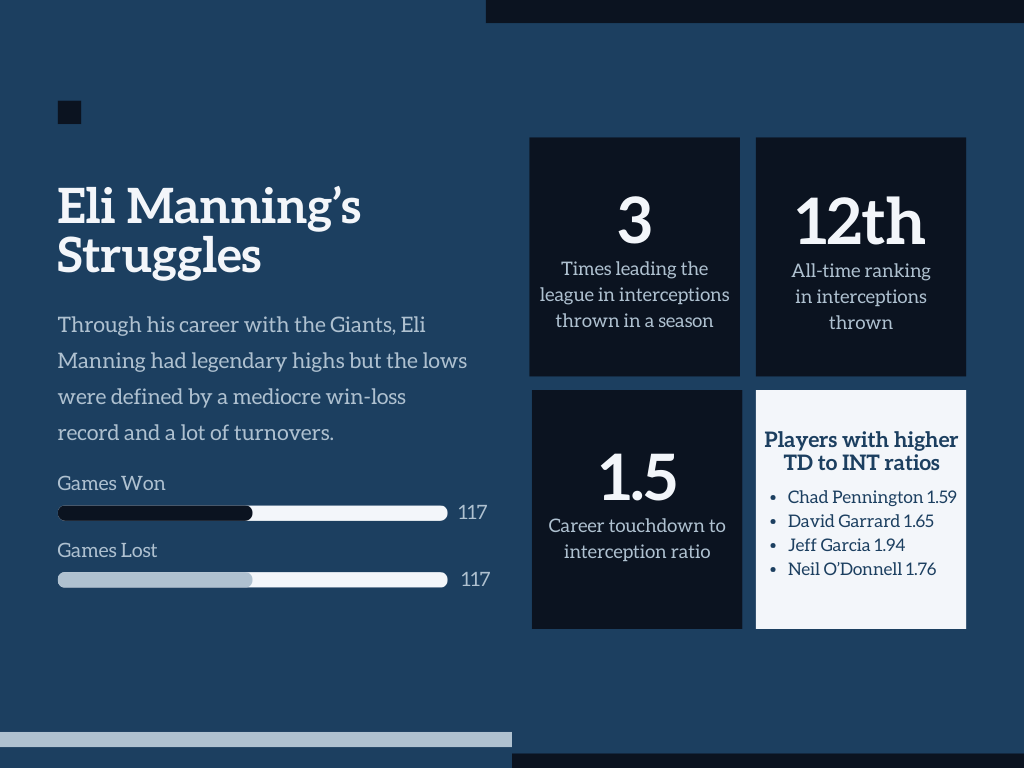
In 15 seasons, the Giants only won over ten games in a season five times, with seven seasons ending in a sub-500 record. Manning was also known to throw a lot of interceptions, leading the league in the category three times throughout his career. He ranks 12th all time in interceptions thrown and has a touchdown to interception ratio of 1.5—which doesn’t crack the top 50 all-time and is lower than the ratios from players like David Garrard and Neil O’Donnell.
One of the biggest critiques of Eli has been that he was simply a game manager that relied on a strong running game and elite defensive talent to win games. While this is slightly overstated, the Giants during the Eli Manning era did have excellent talent on the defensive line with the likes of Michael Strahan, Osi Umenyiora, Justin Tuck, and Jason Pierre-Paul. In the running game, the Giants finished in the top ten in rushing seven times and finished top 16 ten times. Generally speaking, during Eli’s prime he had a reliable pass rush and running game—two ingredients that are supposed to translate to success in the win column.
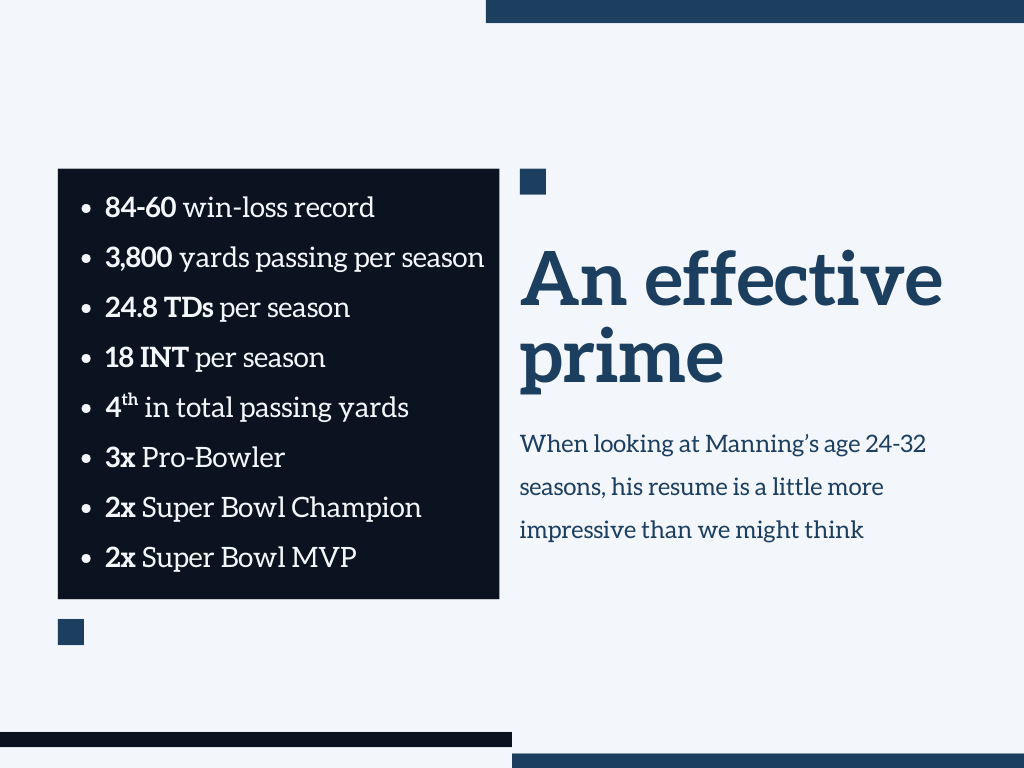
The final win-loss record being 117-117 for Eli tells the story of a mediocre player because having a 500 record is considered mediocre. However, if we consider Manning’s prime from his age 24 to age 32 seasons, he was 84-60 with three Pro Bowl appearances, two Super Bowl wins, and a 60% winning percentage. In that time he averaged 3,800 yards passing and 24.8 touchdowns per season. The interceptions were still high at 18 per season, but that resume in a vacuum would likely be enough to merit Hall of Fame consideration during that era.
In that time period, Manning ranked fourth in passing yards and touchdowns thrown. These are respectable numbers by any metric. Where the statistical argument for Eli falls apart is that he played another five years as the full-time starter. And while it was normal for a drop off in skill and winning for quarterbacks in their thirties in the 80s and 90s, the 2010s presented a new reality. Led by Tom Brady, quarterbacks began extending their careers, achieving excellence in their mid thirties in a league that became pass happy and protected the position more than ever before.
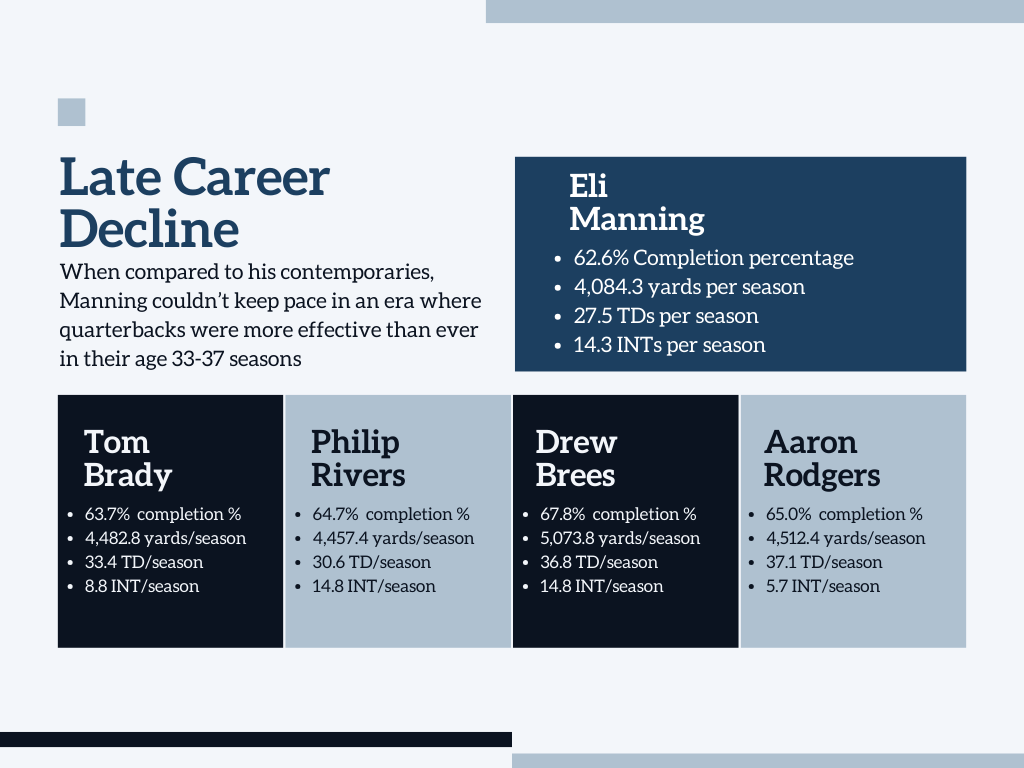
When compared to his contemporaries, Manning accumulated less yards, had a lower completion percentage, and worse touchdown to interception ratio in his age 33-37 seasons. This lack of efficiency contributed to the lack of winning that he did in the last quarter of his career as a Giant, which has helped to color his memory as a player that wasn’t a “winning player”. The Giants during that time also did Manning no favors, failing to equip a competent offensive line to protect him and a carousel of head coaches that further complicated matters.
That is the statistical story of Eli Manning. The raw numbers that tell us that he was good, but not great. The mythology of Eli Manning, however, spins a much different tale.
Giant Mythology
It’s ironic that Manning played for a team called the Giants—best known as creatures that played significant roles in Greek, Celtic, and Norse mythology. Ancient mythology often leans into the fantastical, a mode of storytelling that teaches lessons while also creating larger than life figures whose accomplishments invoke feelings of awe and admiration. But the myths did not always demand a towering figure like Hercules.
Psyche, who was a mortal woman of immense beauty, unknowingly married the god Eros but broke his trust by trying to uncover his identity. To regain said trust, she completed a series of impossible tasks set forth by the goddess Aphrodite through determination and assistance from others. She is ultimately granted immortality and is reunited with Eros—a story showing the value of perseverance. In a strange way, the story of Psyche and her myth is similar to the mythology of Eli Manning.
During Manning’s time as the Giants quarterback, the team went to the playoffs six times. Four of those appearances were unremarkable, resulting in opening round losses. But the other two ended in Super Bowl victories over Tom Brady and the New England Patriots dynasty. Much as Aphrodite was the gold standard for beauty in ancient Greece, the Patriots were the standard of elite football teams during the Brady era.
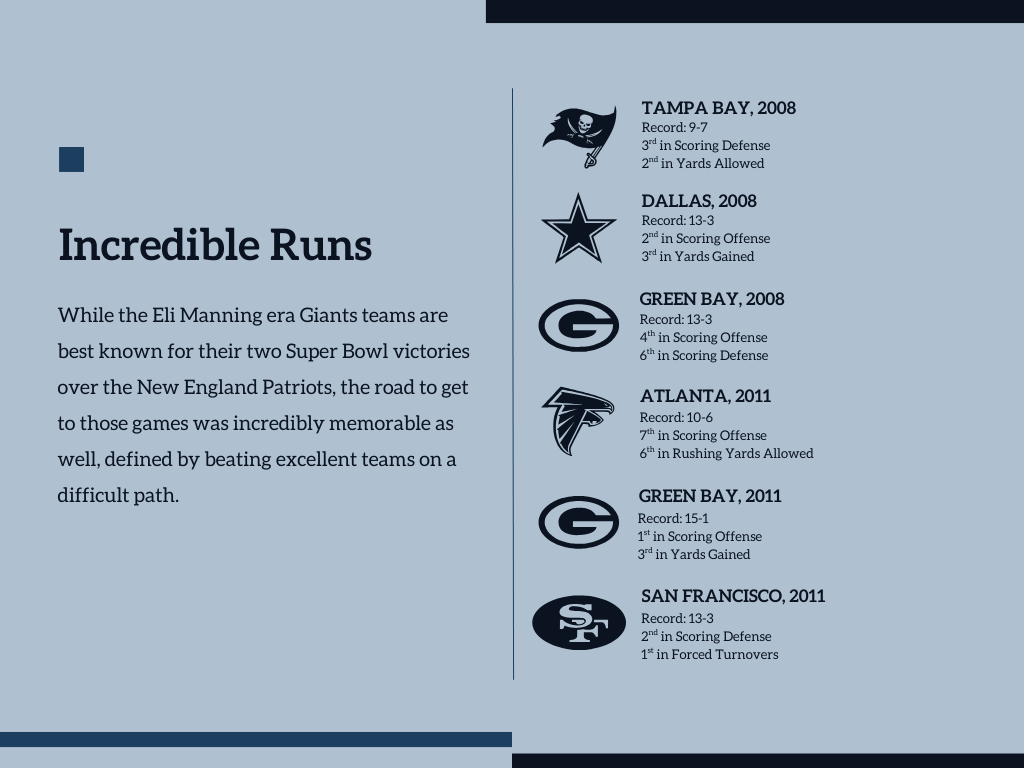
The paths that led to both meetings with the Patriots are often forgotten in the conversation about Eli, but they warrant bringing up. In the 2008 run, the Giants played the third best scoring defense (Tampa Bay), the second best scoring offense (Dallas), and a Green Bay team that was top six in both offense and defense with a quarterback (Brett Favre) that finished second in MVP voting. In 2011 they held Atlanta who had a top ten scoring offense to two points, beat a 15-1 Packers team that had the MVP of the league (Aaron Rodgers), and defeated a 49ers team that gave up 100 yards rushing three times all season.
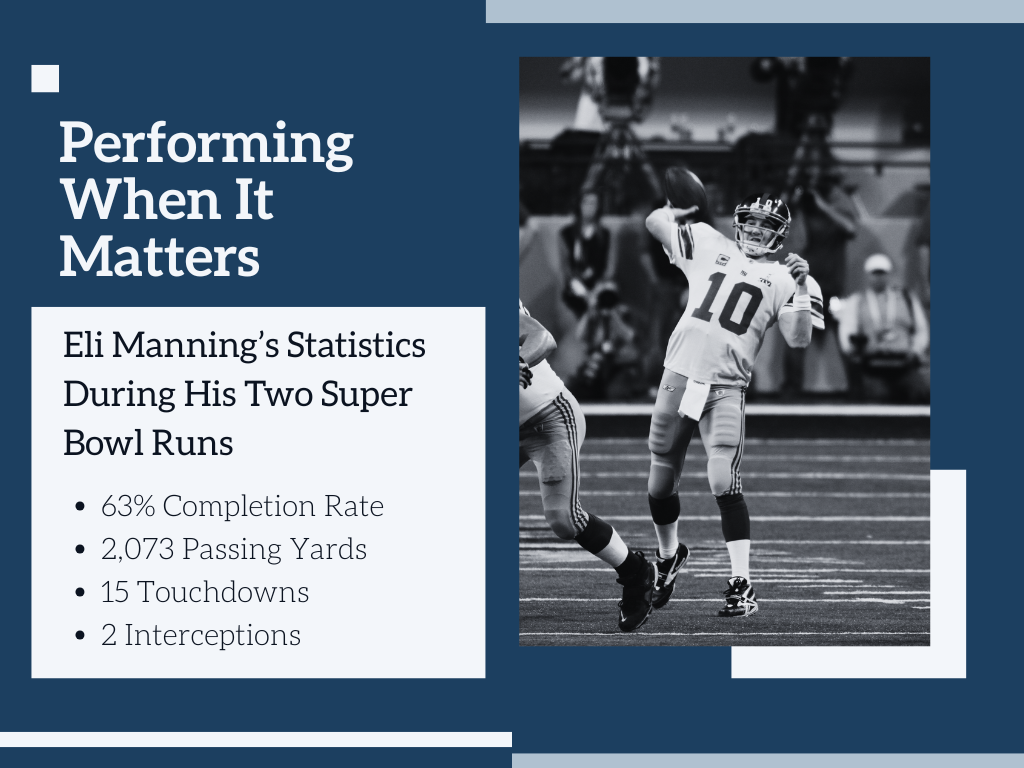
There is a notion that Eli Manning was carried to his two Super Bowl appearances by his defense. While the defense played well in both runs, allowing only 15.1 points per game to opposing offenses, Manning played an excellent brand of football. Between both runs he completed 63% of his passes for 2,073 yards, 15 touchdowns, and just two interceptions. It’s remarkable efficiency that eluded Manning throughout his regular season career, and helped to cement his standing as one of the best postseason performers we have seen in recent NFL history.
Those NFC Championship runs set the stage for the main event—a battle against Goliath. In the 2007 season, the Patriots were a well-oiled machine. They finished the regular season with an undefeated 16-0 record, and seemed determined to dethrone the 1972 Miami Dolphins as a team to run the table. The Dolphins did it with a 14 game regular season, and the Patriots were on the verge of history to end a season 20-0. It was unprecedented, and they entered the game as massive 12.5 point favorites.
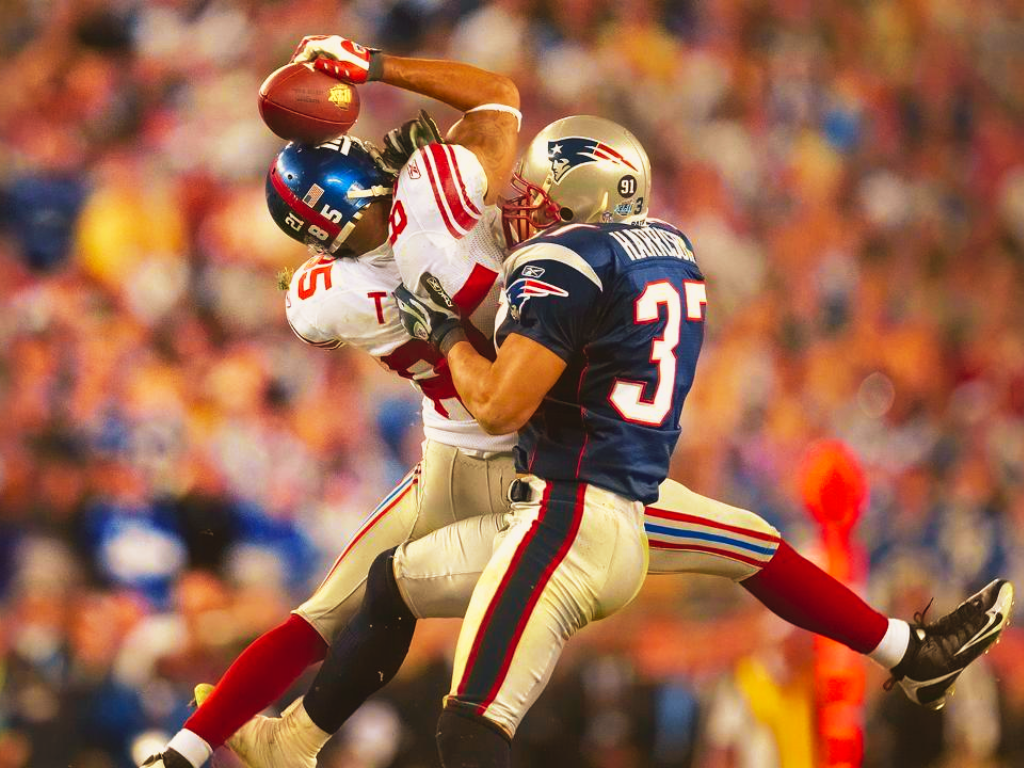
Manning played well in the game, going 19/34 for 255 yards and two touchdowns. But what created the myth of Manning during this game was the play that is now better known as the “Helmet Catch”. Many people will remember that play for the absurd visual of David Tyree pinning the football to his helmet in traffic to make a crucial reception. But the circumstances often are glossed over. There was only 1:15 left in the game with the Giants down four, on a 3rd & 5 that they had to have to maintain their championship hopes. Manning somehow escapes a certain sack and throws what is in essence a prayer that is answered by Tyree and the football gods.
Three plays later, Manning found wide receiver Plaxico Burress wide open in the corner of the end zone with 35 seconds left, the score that would deliver him and the Giants a championship. It was storybook, a moment that most football fans will remember for the rest of their lives. It was Psyche completing Aphrodite’s impossible tasks. It showed that this Patriots team, that many thought was invincible, was in fact beatable.
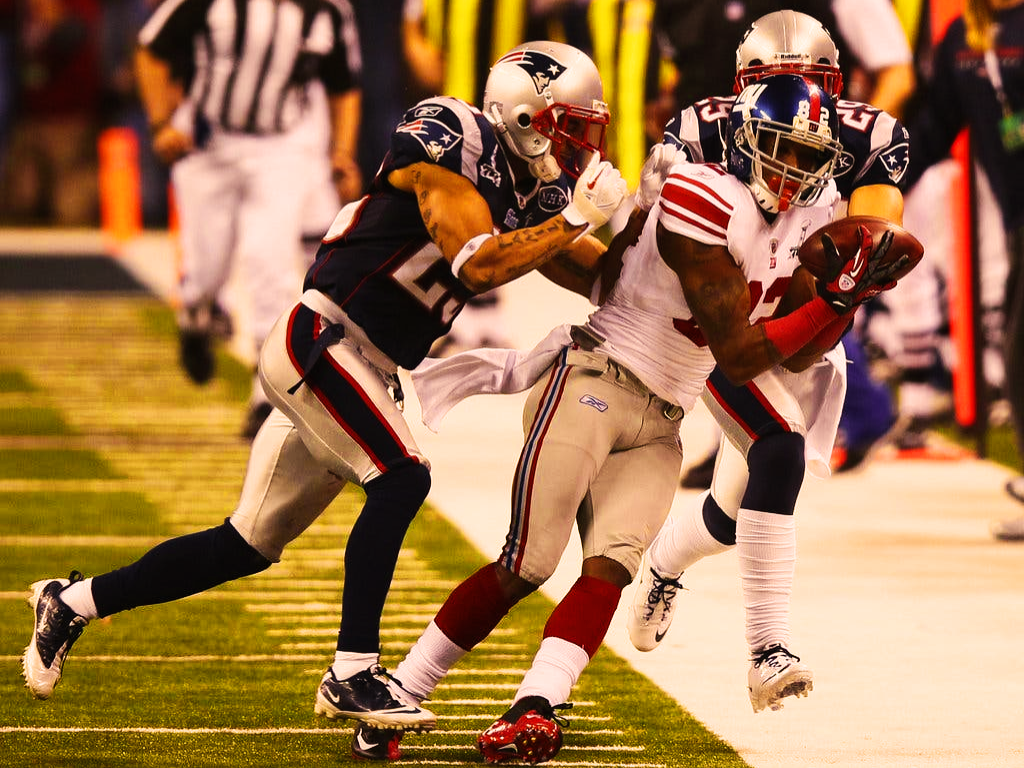
Four years later the teams would meet again. New England was not the machine it was the first time, but Tom Brady was still the best player in the sport operating at the peak of his powers. Manning would, once again, need to lead a comeback to defy the odds. His magic kicked in again with a perfectly placed ball down the sideline to Mario Manningham for 38 yards. Manning would lead the team on a 88 yard drive capped by an Ahmad Bradshaw goal line run to win another Super Bowl at the hands of the Patriots.
On that final drive, Manning went 5/6 for 74 yards. Clutch and precise when it mattered most. Those two plays encapsulate the legend that Manning cultivated in his two Super Bowl appearances. He became one of only 13 quarterbacks to win the Super Bowl at least twice. All of those quarterbacks with the exception of Jim Plunkett are in the Hall of Fame (or headed to the Hall of Fame in the case of Patrick Mahomes). Manning did it the hard way, without a first round bye and overcoming talented teams.
With all his flaws, he is if nothing else a fantastic football tale. Many a sportswriter have validated a case for a players greatness by saying that “you can’t tell the story of the NFL without him”. In the case of Eli Manning that is incredibly true. The only player to beat Brady twice in the Super Bowl, the quarterback who prevented a second undefeated season from happening, and the architect of two iconic clutch plays in Super Bowl history. If the history of the NFL was a novel, he would most certainly play a role in it. But are those incredible moments of brilliance enough to warrant selection into the Hall of Fame?
Storytelling Versus Statistics
When it comes to Eli Manning’s Hall of Fame candidacy, the debate is incredibly polarizing because both sides of the argument can make very compelling cases. The detractors are right to say that the last half decade of his career was filled with meaningless football where he accrued stats to pad his all-time resume. They hold his win loss record and interception ratio against him. They hold the lack of playoff success outside of the two Super Bowl runs against him, especially when compared to his contemporaries.
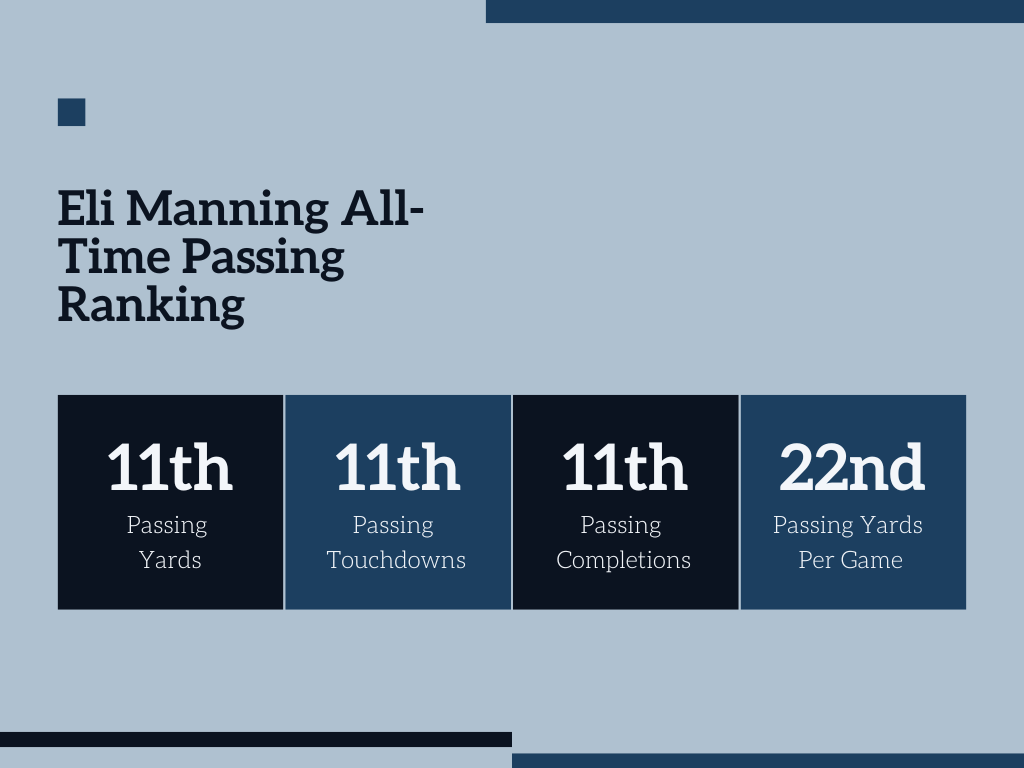
His supporters are relying on those same stats that he accumulated in his later years to bolster his argument. He is 11th all time in passing yards, 11th in passing touchdowns, 11th in passing completions, and 22nd in passing yards per game. Those numbers coupled with his two Super Bowl wins and two Super Bowl MVPs should be enough to get him into the Hall of Fame, according to his supporters.
Manning presents a case where the story on the theoretical museum display makes a ton of sense. Being able to recount his Super Bowl heroics against the Patriots is the type of thing that museums like the Pro Football Hall of Fame dream of. Ironically, the inclusion into the Hall of Fame for a quarterback based more on story than stats or winning has already occurred with a different quarterback that also played in New York.
Joe Namath is most famous for his guarantee of a Super Bowl victory over the heavily favored Baltimore Colts. That moment was an incredible piece of storytelling, especially coming so soon after the merger between the AFL and NFL. But when taking a look at Namath’s numbers there is a different story being told.
He had a losing record, finishing his career 62-63-4. He also threw more interceptions (220) than touchdowns (173) and led the league in interceptions four times. But no one chooses to remember that. They instead remember “Broadway Joe” who held New York City in the palm of his hand and made the proclamation that he would beat the Colts and then went ahead and did it. Namath is a story of bravado gone right and that is what resonates.
Eli Manning played in the shadow of his brother Peyton and will always be compared to the statistically superior Philip Rivers because of the trade that sent Manning to New York and Rivers to San Diego on Draft night. He was likely the fourth or fifth best quarterback consistently in a golden age of passers. All of that is true. But it is also true that when the lights shone the brightest against a historic counterpart, he delivered. That has to matter in the grand scheme of things.
Statistics are readily available in today’s day and age. And we are all guilty of box score watching when it comes to determining the greatness of players. With the influx of all this data, what sometimes gets lost is the euphoria of surprise. The magic that comes from a player and a team defying the numbers and the odds to deliver unexpected outcomes that go against statistical models. Eli Manning presented that to us, and if nothing else gave us a great story.
Him being passed up in his first year of eligibility is not surprising. But for the sake of great storytelling in a league that sometimes undervalues the impact of those stories, Eli Manning deserves to be recognized and immortalized in Canton, Ohio. The flashes of brilliance that he did have were incredible, and are more than worthy of being remembered.
Thanks for reading Deep Cover! This post is public so feel free to share it.