“Ethical” Basketball & the Dream of a Meritocracy
What a movement against foul baiting says about us


My father moved to New York City when he was 18 years old in pursuit of a college degree and a chance at a better life than the one that awaited him in Jordan. His story of immigration, hard work, and eventual success is a pillar of the American ideal, something more commonly known as the American Dream. The American Dream is the ideal that every individual in the United States has the opportunity to achieve success, personal fulfillment, and upward mobility through hard work, talent, and determination.
In other words, America has long viewed itself as a meritocracy—where anyone can make it as long as they apply themselves. This may have been true in the late 70s when my father moved to the States, but there is a growing sentiment that this is no longer the case, an argument that it has never been the case. And that same disillusionment with meritocracy has quietly seeped into the way we watch basketball.
Much like the Ancient Greek definition of democracy that only allowed Greek men to vote, American meritocracy has often come with caveats. People of color have not enjoyed the same structural advantages as their white counterparts. Women have contended with the glass ceiling for as long as they have been in the workforce. And poor people have less room for error when climbing the ladder than the wealthy do. The idea that hard work would lead to success was once the pillar of American society, but that feeling has waned in recent years.
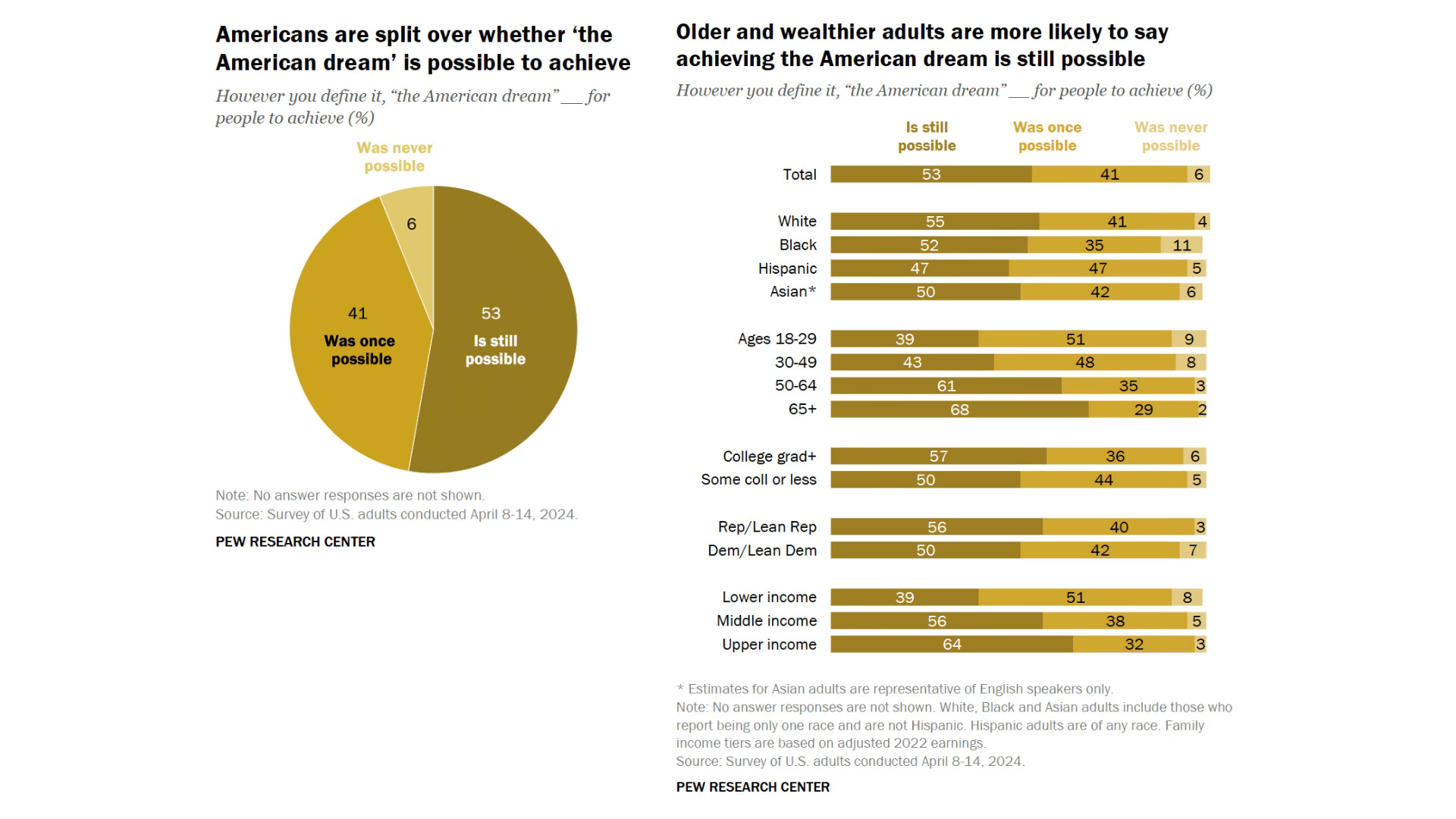
According to a Pew Research poll in 2024, more than half of Americans under 50 years old believe that the American Dream is no longer achievable. Previous pillars of success are becoming harder to reach for millions of Americans—home ownership, long and successful careers, valuable college degrees, etc. Those difficulties have led to the notion and belief that without the advantage of generational wealth and connections, the idea of an American meritocracy is dead.
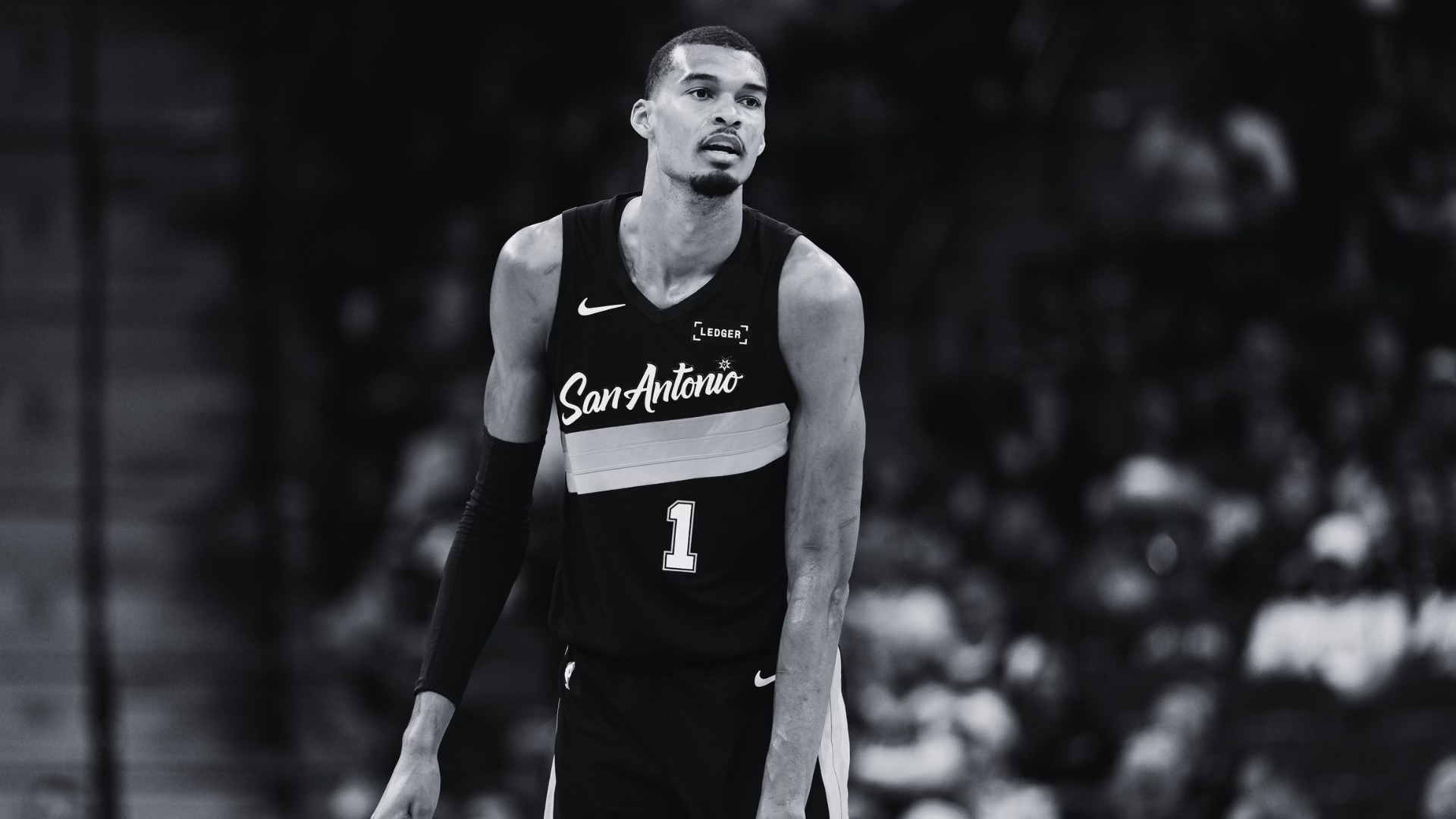
As it does in other areas, the prevailing social logic also impacts the way we view our hobbies, and basketball is no exception. The term “ethical basketball” has gained steam as a marker of favorability in the way we view teams and players. Spurs superstar Victor Wembanyama has popularized the term, but it has been used by the Pistons’ Cade Cunningham and the Pacers’ Tyrese Haliburton.
The existence of “ethical” basketball implies that there is also “unethical” basketball. Fans of either phrase often default to intent. Ethical basketball is positioned as ball movement, playing with the intention of making shots in the flow of an offense, and not executing with the sole intention of getting to the free throw line. Unethical basketball, by contrast, is defined by playing for free throws, putting the defense in compromising positions and taking advantage of the rules in place to shoot free throws, which are consistently a higher percentage shot than a typical jump shot.

There are a few known “unethical” players. James Harden, Shai Gilgeous-Alexander, Jalen Brunson, and Luka Doncic have all been accused of being unethical foul grifters by opposing fan bases at some point in time. They are criticized for their free throw numbers, accused of needing free throws to get their points. Many view this practice as “dark arts“ and a scourge of modern basketball. What this ignores is that players accumulating points at the free throw line is far from a new tactic.
Many who pray at the altar of ethical basketball often view James Harden as the executor of basketball’s original sin. But long before Harden’s time in Houston, getting to the line has been a core feature of the game of many an NBA star. In the 1986–87 season, Michael Jordan made 833 free throws, accounting for 27% of his total point output. In 1983–84, Adrian Dantley had free throws account for 33% of his total points. Of the 74 times that a high-volume scorer had free throws account for more than 25% of total points, 54 of those seasons happened before 2010. These numbers indicate that the “dark arts” of today are not as new as people might think.
Ironically, the styles of Jordan in 86-87 isn’t too much different from what we see from Gilgeous-Alexander today. While driving stats were not introduced until much later, it’s safe to assume that Jordan averaged close to 20 drives per game considering his high usage rate, heavy shot volume, and lack of prevalence of the three point shot—all of which contributed to him getting to the line. Gilgeous-Alexander is also a volume driver, averaging 18.8 drives per game, which leads to him getting to the line. The methods and results are the same, but the way they are viewed is vastly different.
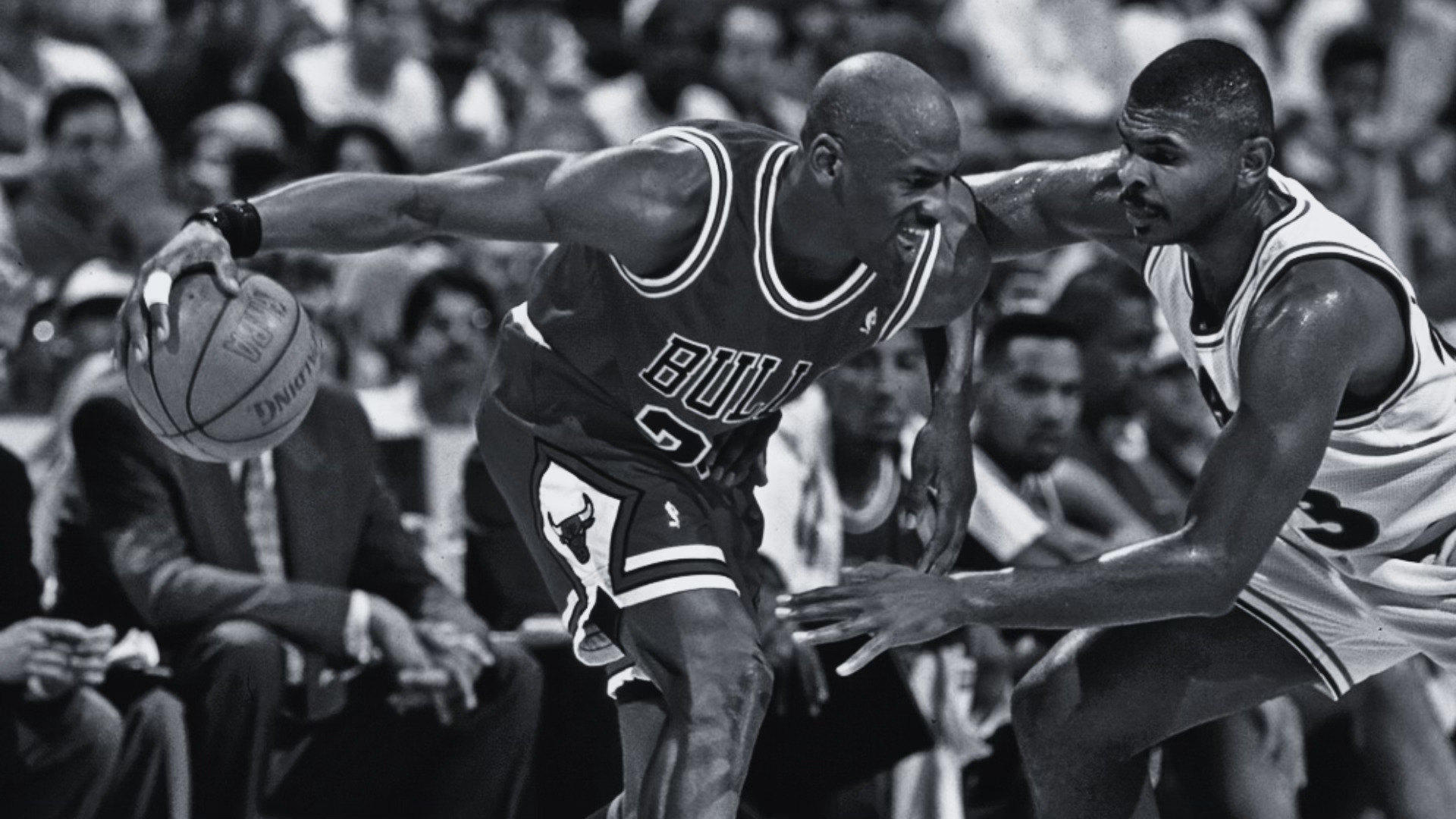
Players like Jordan, Dantley, Karl Malone, Charles Barkley, and David Robinson all used the free throw line to bolster their point totals. They used a variety of mismatches and moves to draw contact and get a far easier chance at two points at the free throw line. And yet they weren’t slapped with the unethical label. Is forcing contact in the 80s really that different from rip-through and arm-hooking moves that we see today? They both put referees in a compromising position to make a call and usually end up in multiple free throw attempts. Regardless of the era, watching your favorite team give up over 20 free throw attempts to an opposing star player can be demoralizing.
The difference now lies in how we view loopholes. In the 80s and 90s, we saw an unprecedented admiration and fascination with wealth. The 80s saw the rise of consumerism, an unprecedented increase in emphasis on material wealth and luxury. The idea of the self-made mogul took shape. In the 80s, this was defined by real estate and stock market success stories, and eventually evolved into the tech and dot-com moguls of the 90s. There was a deep respect for their perceived ingenuity and success.
Today, that same reverence has evaporated. The billionaire class is widely despised by the masses as ruthless and out of touch. Tech CEOs and venture capitalists that dominate the global economy are viewed in a largely negative light as opportunists and oligarchs. The eat-the-rich messaging has never been as strong as it is today, with many choosing to boycott companies and CEOs that don’t align with their values. A big driver of this disdain goes back to meritocracy and a lack of a level playing field. Many Americans of an older generation like using the term “pull yourself up by your bootstraps” to indicate self-made success. What this ignores is that not all proverbial bootstraps are created equally.
Those with more amenities and tools at their disposal simply have an inherent advantage, allowing them to use holes in the system to their advantage. More access to capital means access to better lawyers, for example, to get away with more in the legal system—which is not too different than a perceived better whistle that a star player may receive. That reality frustrates middle- and lower-class Americans because they are shown a world where not everyone has the same chance for success, and where those with the privilege to game the system can do so without much consequence.

That tension is what makes seeing a basketball player consistently abuse the rules and get to the free throw line so frustrating. Because they are taking something that is supposed to be the purest of meritocracies and warping the system’s rules to create a perceived unfair advantage. Consider the way we talk about the way Shai Gilgeous-Alexander or James Harden get to 30 points in a game. They are called grifters, purveyors of the dark arts, and foul merchants. But when someone on a team we root for gets points, their hard work is put in a context of wholesomeness. Jarrett Allen of the Cleveland Cavaliers once described it as, “farm raised, non-GMO, organic, free-range ethical basketball.”
It’s especially interesting to juxtapose that viewpoint to how we viewed players who got to the line frequently in the past. In the 90s, getting to the free throw line was often considered an act of toughness, of a player imposing their will. Oftentimes the intent by the player was still to get to the free throw line as opposed to actually making the shot, but it was perceived differently despite being similar in intention. This difference of viewpoint is an indication of the way that our sensibilities have changed.
Fans crave an ethical brand of basketball because they are tired of seeing institutional and systemic manipulations happen in real life and want an escape from that in the basketball world. In a city like Detroit, that has experienced its fair share of corruption and tough luck historically, a star like Cade Cunningham becomes a reflection of an ideal they were denied. But if basketball mirrors life from the perspective of institutional improprieties, then watching a sport borders on becoming dystopian and miserable. As individuals we know that we can’t change the tax system or the cost of healthcare, but we can demand a more desirable style of play from our basketball players, a group of people that have a significant emotional currency with us in totality.
Maybe that’s why the ethical basketball debate feels so outsized. It’s not really about rip-throughs or foul baiting or who takes twelve free throws a night. It’s about what we still want to believe. Basketball is one of the last places where we can pretend meritocracy still works—where effort is rewarded and talent rises.
So when a player bends those rules, even within the boundaries of the game, it hits a nerve that has nothing to do with basketball. It reminds us that even here, in this place we escape to, the system can still be gamed. And maybe that’s the real discomfort: not that the sport has changed, but that the world has.