Giannis Antetokounmpo, Trade Requests, & Being the Bad Guy
Giannis wants to win, wants to stay beloved, and wants to maximize his contract. He can’t have all three.

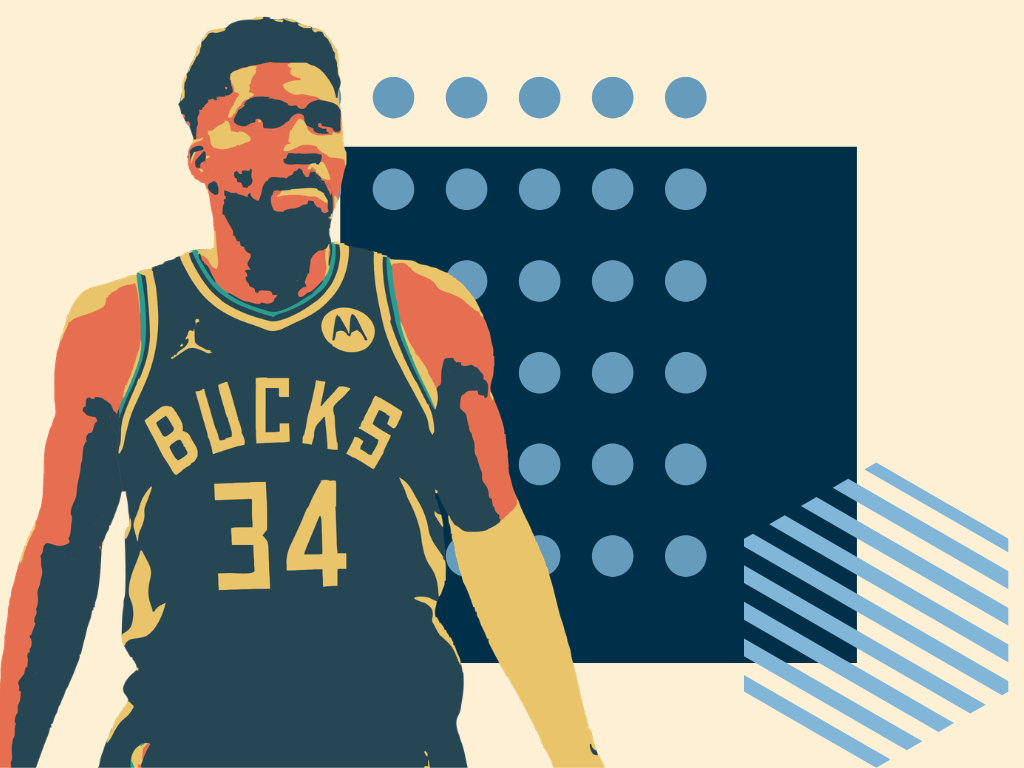
After years of speculation about when he could possibly switch teams, it seemed like Bucks star Giannis Antetokounmpo was going to request a trade. With a speculated move to the Knicks that never materialized, a most annoying series of events has transpired: a perpetual will-they-won’t-they regarding Antetokounmpo’s future. Giannis has seemed averse to cutting the cord on playing for the Bucks, and the NBA world has remained in limbo as a result. We all know what this has devolved into, yet Giannis seems resistant to admit it through an official trade demand.
What he has done is avoid using the term “trade request” explicitly. He even pivoted in the opposite direction when he made social media posts that suggest that he will be a Buck for the rest of his career. At the core of the back-and-forth of the Giannis saga is a core tension. Giannis wants to compete for titles, but the Bucks are not equipped to allow him to do that. It genuinely seems that he would prefer to try to win in Milwaukee, but he is realizing he needs to go elsewhere to win. Giannis’ problem is that he is afraid to do what other superstars in this predicament have had to do: embrace being the bad guy.
The Relationship Between a Star and His City
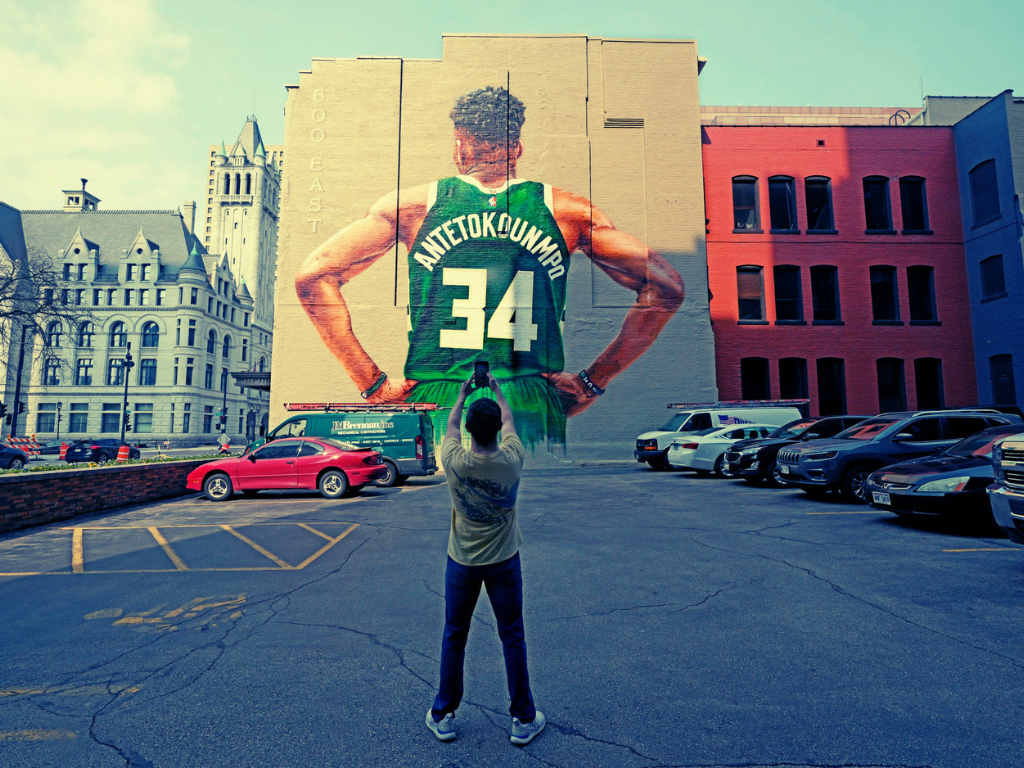
Being drafted by an NBA team and becoming a star in that city is a life-changing experience. There is the money that comes with it, of course, but there is an even deeper connection. Most NBA stars enter their cities at 19 years old. They are still figuring out who they are as people, and they have to navigate understanding a new city. When they succeed, the city and its people embrace them, and they are accepted as part of the fabric of a local culture.
That acceptance matters. Giannis has noted how grateful he is to the city of Milwaukee for accepting him and his family, and to the Bucks for giving his brothers a chance to make it in the league. In her excellent biography of Giannis, Mirin Fader notes the culture shock that Antetokounmpo faced as a young player and the difficulties he had acclimating to NBA life. There was even a moment when he was walking to the arena on a brutal Wisconsin winter day in just team-issued sweats because he had not bought anything else. A local fan saw him and drove him to the arena. Those sorts of moments created a connection between a young player and a city that have residual effects.
This story is not uncommon among NBA superstars. They are put on billboards. They do community outreach. All of the responsibilities that come with being an NBA star have the secondary effect of building connective tissue locally that goes underreported. Consider the NBA’s community awards that highlight work that star players do in their markets monthly. Players become community pillars as part of engendering goodwill between teams and their fan bases.
Those relationships that are forged, while diminished on social media, are lasting on a human level. Consider an example like Ben Wallace. An unknown commodity early in his career, he forged a legacy as one of the best defensive big men of his generation in Detroit. Despite moving on to Chicago and Cleveland after his heyday as a Piston, Wallace has remained invested in the Detroit area, launching his cannabis brand, Undrafted, in the city and becoming a fixture at Pistons games. Players recognize what a city did for them and often pay it back with their investment and time even in retirement.
That connection is what makes the end of a player’s time in a city so difficult. They formulate roots, spend their formative adult years in the market, and have deep connections with local leaders and team personnel. Leaving all of that is difficult, and that is the struggle that Giannis has in particular because the city of Milwaukee has been so transformative to his life, which started in poverty on the streets of Athens selling items on the street to make ends meet. But eventually, All-Star players need to accept that they will be villainized for doing what makes the most sense for their careers.
Becoming the Villain
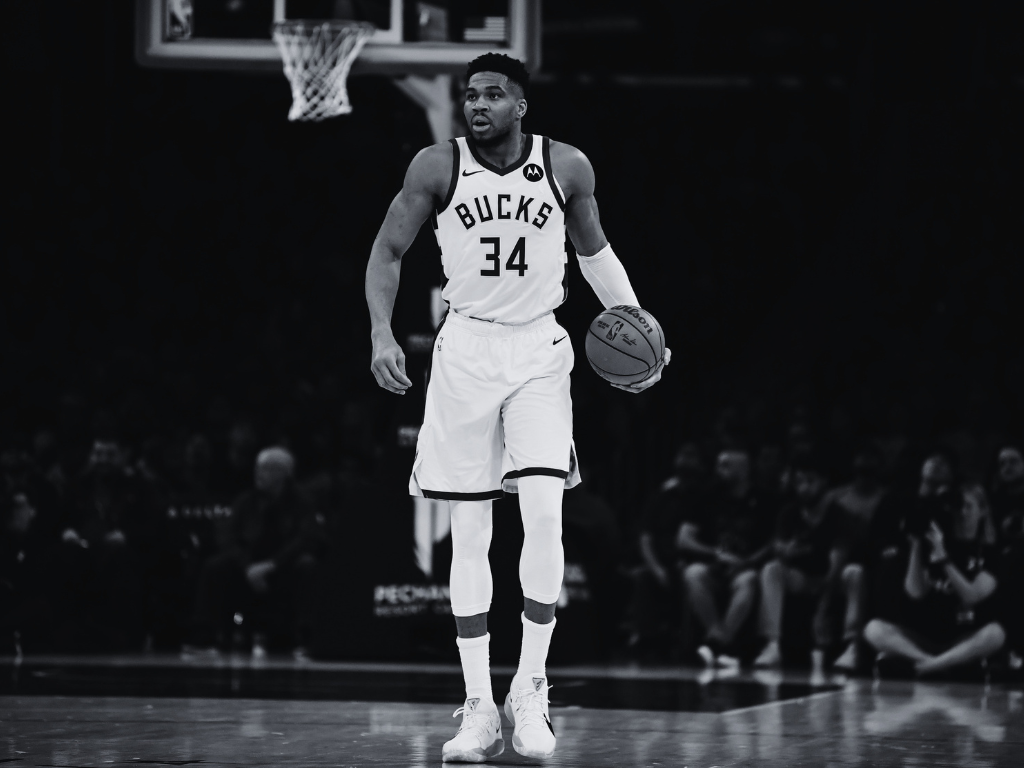
Sports fandom is rarely rational; fan is short for fanatic, after all. In the world of sports, your team is the center of the universe, and everyone else is just a hater that despises your team. Your team is the main character of the story, the protagonist that should prevail. So, when a key part of that story no longer wants to be associated with you, it feels like a betrayal.
The way reactions to this manifest is often with an initial surge of rage. Typically including unfollowing the player on social media and making a display of defacing their jersey in some way. When LeBron James left Cleveland for Miami, this was the reaction. When Damian Lillard was traded to the Bucks after a decade in Portland, there was some resentment, even though many fans understood it.
That is how these things usually go: a fan base is sad and angry that their star player has left them, but ultimately, they end up understanding why the player wanted to leave. If the player returns, either as a player or in retirement, they are embraced and adored, as both James and Lillard have been upon their return to their drafted cities. Time heals all wounds, and it especially heals trade requests.
Much like graduation goggles, time allows fans to remember the good times and forget the bad moments that caused tension. Consider Carmelo Anthony and the Knicks. Anthony was a savior for the team early on after being acquired from Denver, but that fizzled out thanks to woeful management and roster construction. Anthony left on bad terms in a public spat with then President of Basketball Operations Phil Jackson. But as time has gone on, Knicks fans remember him as a magnificent scorer and one of the best Knicks in the post-Ewing era. The stink of the exit has vanished, leaving only the rosy smell of nostalgia.
For Giannis, it seems that he wants to avoid the stink altogether, to be seen as the good guy, the superstar that was never difficult. It is why he has not formally said the words “I request a trade.” Instead, he uses terms like “ready for a new home” and describes an environment of dysfunction regarding his desire to play late in the season while the team looks to preserve a draft pick, which is currently being investigated by the NBA.
Giannis has also indicated that he would like to have a legacy like Dirk Nowitzki and Kobe Bryant, two players who stayed with the same franchise their entire careers and won titles in those cities. Ironically both Nowitzki and Bryant were close to being traded for one another, and Bryant had flirted with leaving LA multiple times throughout his storied career. But because they ended up staying, much of that is forgotten and they are immortalized as the last loyal legends of the NBA—a breed of superstar that is near extinction. The impasse that Antetokounmpo faces is one of conflicting desires, a push and pull that makes him look wishy-washy at best in this situation.
The Giannis Pendulum
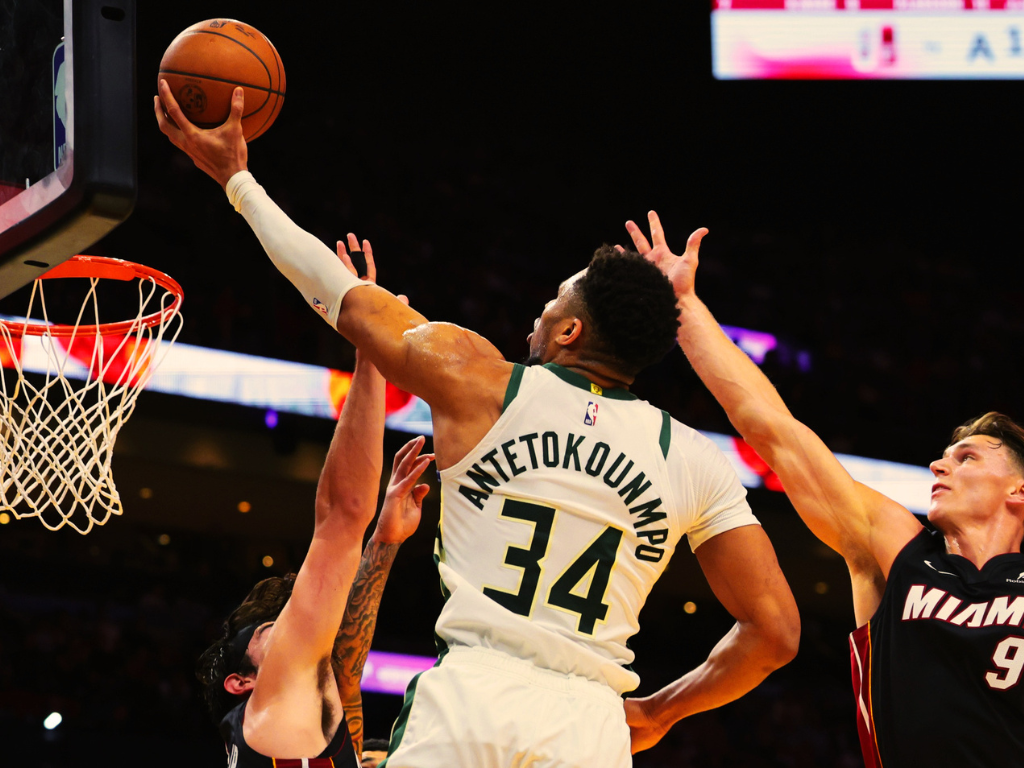
In an age of player mobility, it is a novel idea that Giannis wants to play for only one team. It seems that the only other star player who will have that sort of storybook ending in the modern era is Steph Curry. All the others have been wanderers. Even players that have long tenures with their drafted teams—Devin Booker, Jayson Tatum, and Jaylen Brown—all feel like they could be moved if the right player or package became available. Players also want to win so badly because modern basketball culture is so defined by ring count.
In that sense, Giannis’ desire to be a one-team player is noble. But it may also enter into the realm of being unrealistic. The Bucks, to their credit, have constantly tried to improve the roster around Giannis. The trade for Jrue Holiday netted them a championship, while the deals for Damian Lillard and Myles Turner were duds, but win-now moves all the same. The Bucks have also drafted poorly in the Giannis era, whiffing on players that should have been solid depth pieces. But at this point, they are out of assets to move around and can no longer field a championship contender, even with Giannis still in the tail end of his prime.
Giannis, although already having a title, wants to be remembered as one of the most dominant players of his era. And to solidify that, he needs to compete for more titles. He realizes that the Bucks, as constructed, cannot give that to him. His desire to win is now firmly in competition with his desire to be remembered as a one-team star. Like most elite players, the need to win will always surpass the desire to stay put. Which is why it is expected that he will be moved in the offseason.
From the perspective of Bucks fans, Giannis has done more for their team than they could have ever dreamed of. He delivered their first title since 1971, had ten winning seasons, and made the playoffs ten times. Before he arrived, they had not made a Finals appearance since 1973–74 and had only made the Conference Finals once since 1990. He effectively saved an underperforming franchise. Will the fans be angry when he is traded? Of course. But they will quickly get over it, and he will have his jersey retired, have a statue built in front of Fiserv Forum, and be remembered as one of the three greatest Bucks ever, alongside Oscar Robertson and Kareem Abdul-Jabbar.
By not making a trade request, Giannis is prolonging the inevitable because he is afraid of the short-term repercussions from a fan base that has been by his side since the beginning. It is a natural feeling to have, but in order to move forward from this saga, the bandage needs to be ripped off. The longer he waits, the worse that initial backlash will be.
The reason for that is that Giannis is eligible for a supermax extension worth $275 million over five years. Had he been traded this season, he would have been eligible for that regardless of the team he played for. But because the deal was not made, partially because Giannis refused to make a formal trade request, only the Bucks can offer that deal to him. So, his paths are to get traded and not maximize his earnings, to sign the deal and stay with the Bucks, or to sign the deal and force a trade immediately after signing.
All of those solutions present a negative outcome for Giannis, considering his desire to both compete and not come off as a selfish superstar. We can then conclude that if the ending is bad regardless, why not simply understand the predicament, decide what matters more, and follow that path. The path for every superstar has been to chase titles and success, regardless of geography, and Antetokounmpo is no different.
Giannis has been a Buck for 13 seasons. He has had tremendous moments and fulfilled what was asked of him by bringing a title to the city after it spent decades coming up short. A short period of resentment will be drastically outweighed by his immortality in the annals of franchise history in the long term. Giannis should accept that he has to be a bad guy for a small period, and we will all be better for it.