How Barilla is Telling a Story of Italian Culture Through Formula 1
At COTA, Barilla is bringing an Italian Sunday to Austin, filled with togetherness, heritage, and pasta

For decades, interest in motorsports in the United States has been dominated by NASCAR and IndyCar racing. Both sports have enjoyed strong regional followings in the South and Midwest. Formula 1 racing, by and large, has been considered a more European phenomenon when compared to NASCAR and IndyCar. There has always been a stereotype of an air of uppity exceptionalism when it came to Formula 1—as was evidenced by Sacha Baron Cohen’s role as Jean Girard in the NASCAR-themed file “Talladega Nights”.
A few years ago, that all changed. Thanks in large part to the Netflix documentary series “Drive to Survive”, which chronicles the intense drama and fast-paced action of the sport, Formula 1 (F1) has gained momentum and is finally making inroads in the United States. This has resulted in three U.S. Grand Prix venues: Miami, Las Vegas, and the Circuit of the Americas (COTA) in Austin. COTA has hosted a Grand Prix since 2012 and continues to be a popular venue on the F1 circuit.
Italy has been at the forefront of F1 since its modern inception in 1950. Ferrari has long dominated the sport, having competed in every season since the creation of the championship series and has won over 230 races. There is an Italian pride that comes with the history and future of F1.
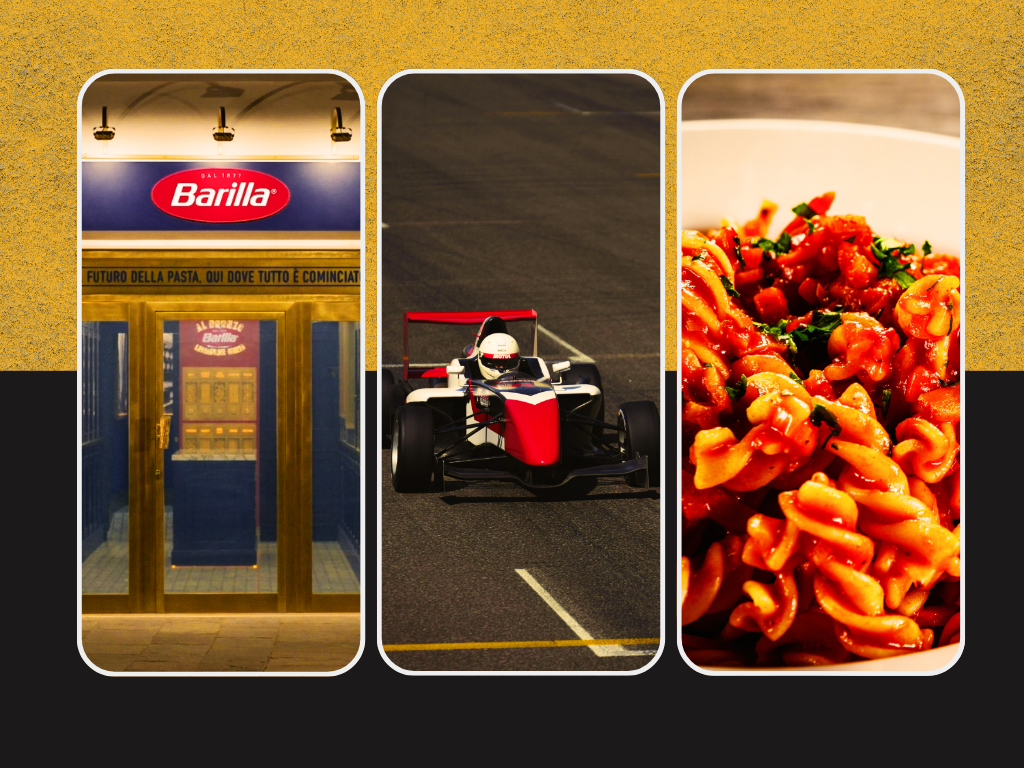
Therefore, it is no surprise that Barilla, a pasta company that is synonymous with Italian cuisine in America, has been named the official pasta partner of F1 for the 2025 season. The company brings its history and culinary prowess to COTA this year, showcasing the passion of the sport while also infusing the event with elements of Italian culture.
A Connection Between Racing and Food
Barilla has been making pasta for a very long time. What started as a bakery in Parma, Italy, in 1877 has transformed into the world’s largest pasta producer. Barilla has always been a family business, with ownership passed from generation to generation. Today, it is a global player in the Italian food industry, with a bulk of its revenue (59%) coming from the United States and its home country of Italy. Coincidentally, those are two countries that are incredibly important in the growth of F1 on a global scale. But that is not the only common thread between the pasta maker and the sport.
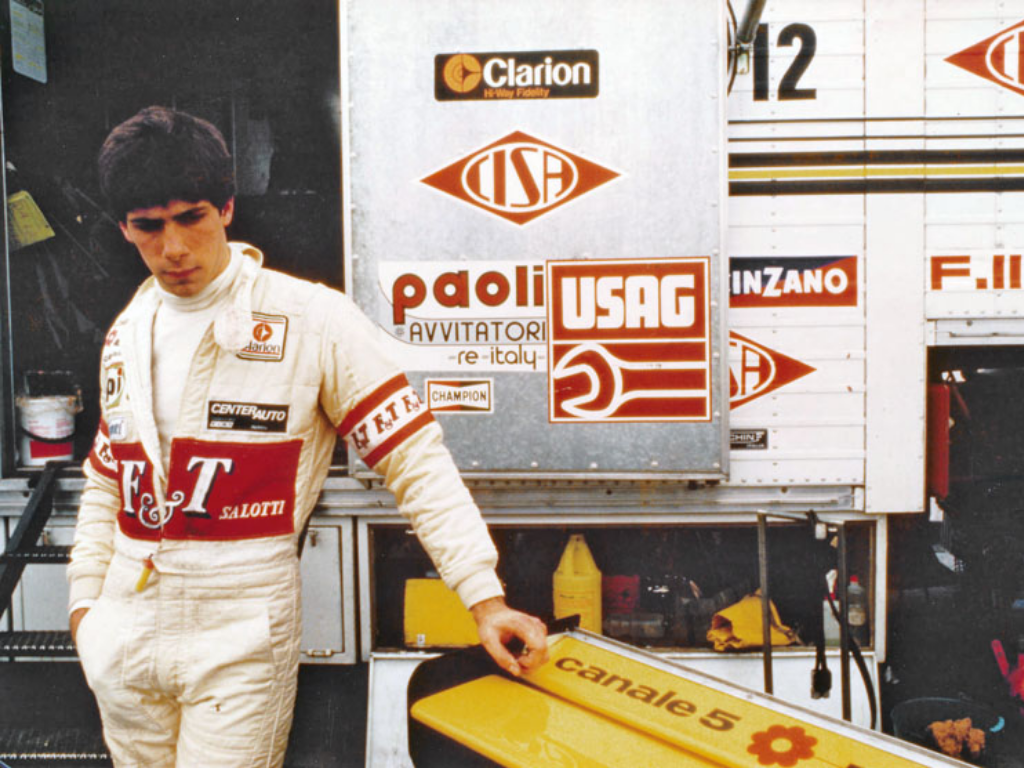
Paolo Barilla is one of the brothers that currently runs the company and is the Deputy Chairman of the Barilla Group. But before he came back to the family business, he had a different profession: F1 driver. Barilla started racing in 1975 and rose through the Italian racing ranks, racing in both Formula 1 and sports cars. In 1985, he won the 24 Hours of Le Mans.
Throughout his racing career, Barilla competed in the European Formula Two Championship, International Formula 3000, Japanese Formula 3000, 24 Hours of Le Mans, and Formula One. He raced for the Minardi team, an Italian team that competed in the F1 Championship from 1985 to 2005. The team would eventually be sold to Red Bull Racing as a part of its developmental rookie team. Many fans of the sport were exposed to Red Bull Racing in recent years thanks to the overwhelming success of four-time Formula One World Drivers’ Champion Max Verstappen.
Paolo Barilla’s background in F1 is central to this partnership with his family’s company. He acknowledges that the similarities between F1 and pasta are not instantly recognizable, but that “Behind both, and the effort that goes into making them, are skilled professionals, passionate and determined, driven by the desire to keep improving.”
The focus on craft is one that makes sense for two fields that are focused on precision and efficiency. He added, “our greatest satisfaction is being able to offer all the men and women of F1, after an intense competition, a well-deserved plate of pasta.” Barilla is looking to showcase the synergy and commonality between the two at COTA this month, injecting Italian heritage to the races and showcasing the proud history of his family’s business and his country’s culture to the masses.
A Taste of Italy in Texas
There is a tradition in Italian culture that runs in direct opposition to the hustle and bustle culture of the United States. It’s called La Domenica Italiana, which translates to “Italian Sunday”. The tradition revolves around making Sunday a day of rest, filled with time spent with family, the sharing of plates, and a unifying connection of food. From an American perspective it is a novel idea, where days like that are typically reserved for holidays like Thanksgiving and Christmas. But it is a big part of Italian culture, and with the platform of the COTA Grand Prix, Barilla is attempting to recreate that feeling—injecting Italian culture in the festivities in the process.
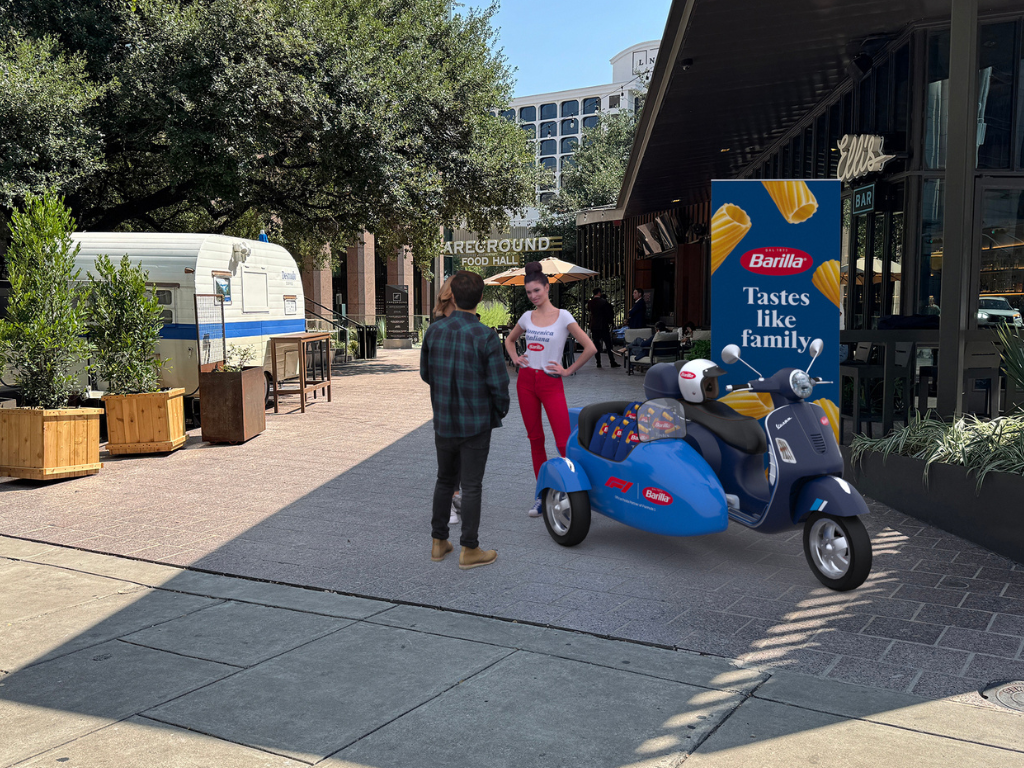
The Circuit of the Americas track is 5,513 meters in length. To honor this, Barilla will be hand-delivering 5,513 pasta meal kits, delivered by Vespa, in downtown Austin from October 16-19. Perhaps a piece of on-the-nose marketing, but it delivers the Italian flair that the company is looking for with cuisine that is decidedly Italian delivered with a vehicle that is also associated with the country.
The Vespa isn’t simply a mode of transportation in Italy, but rather a symbol of Italian identity. In the wake of World War II, Italians were in search of a vehicle that was affordable and efficient to travel the narrow streets of Italian cities. The Vespa emerged, offering an elegant solution that empowered Italian citizens to reclaim a sense of normalcy that was taken away during the war.
The Vespa also became a symbol of Italian cultural motifs, embodying a carefree and fashionable approach to life in post-war Europe. The vehicle became a worldwide phenomenon, but it has always been a piece of Italian identity and culture. It is only right then, that such a symbol of Italian culture should deliver a food item that is synonymous with Italy.
Pasta has been the chosen food of Italians dating back to the Roman Empire. Over the years, it has moved beyond a simple food item and has become a symbol of Italian hospitality, an accessible dish that satisfies the palates of the wealthy and the poor. It is a window into life in Italy. That is what Barilla is bringing to Austin.
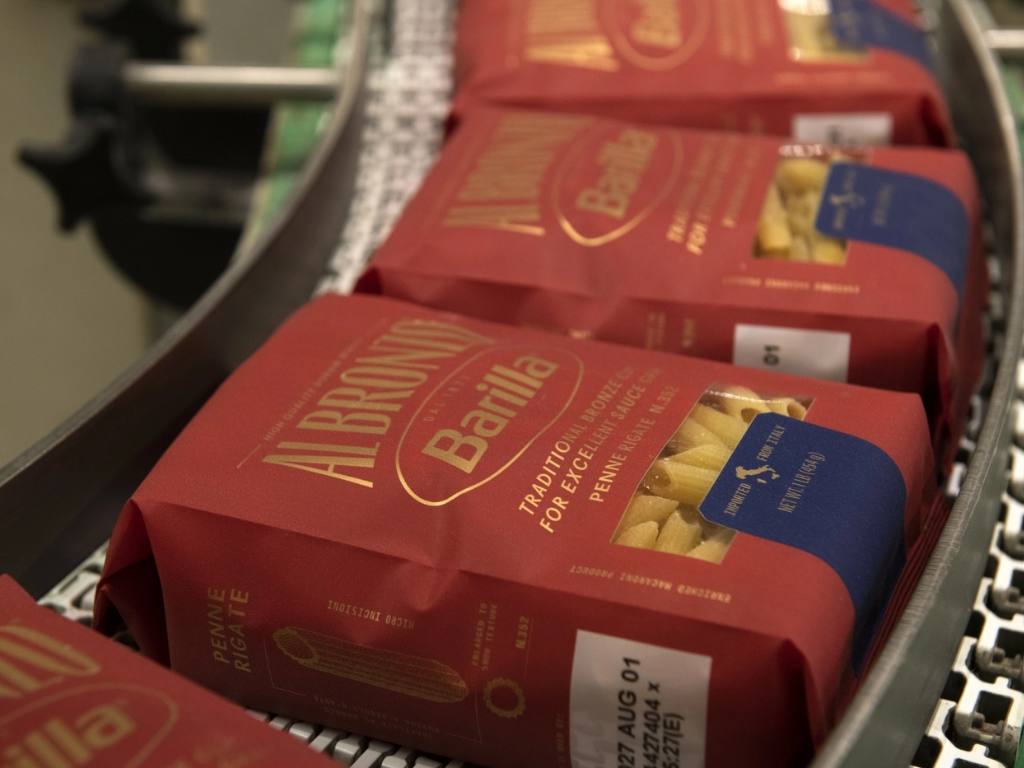
In addition to the deliveries, Barilla’s premium line of Al Bronzo Pasta will be served at 20 restaurants in Austin—including The Grove Wine Bar & Kitchen and Dovetail Pizza. The Al Bronzo collection is made using traditional bronze-cut dies, a nod to the company’s tradition. Incorporating this into restaurants where racegoers will dine during the Grand Prix reinforces the message of Italian heritage—which is evident on the track and now off of it.
The familiarity with Italian culture doesn’t stop there. Barilla will also be doing lasagna tastings at H-E-B—the largest retailer in Texas. Lasagna is a dish that many Americans are familiar with thanks to Garfield and Olive Garden. But the deeper meaning of the delicious dish is one of unity, special occasions, and family collaboration. These are characteristics that are directly in line with the modern culture of F1 races.
In addition to the thrilling racing, F1 races often feature an understanding of unique cultural experiences, engaging fans, and building communities. It is no surprise that these characteristics also align with Italian culture considering how ingrained Italy has been in the sport for many decades. Barilla is a company that has made Italian culture accessible in the United States for many years, and its efforts at COTA are an expansion of that work.
F1 has definitive Italian roots, and to Americans few companies embody Italy as much as Barilla. The story being told here is one of deep history and passion, a connection between sport and food that has been intertwined for generations. F1 loves a great story, and Barilla is telling one while reintroducing fans to the nuances of Italian culture—a reminder of the connective cultural power that sports hold.
Thanks for reading Deep Cover! This post is public so feel free to share it.