In the Fight Between Google & Disney, the Fans Always Lose
Another carriage dispute on YouTube TV shows that the pivot to streaming services for sports content was always a house of cards


I have been a YouTube TV subscriber since 2018. At the time, I worked for a third-party marketing company representing Google Chromebooks in Best Buy locations. Our company offered to compensate us for our subscriptions with the understanding that we could speak to the benefits of the product. The appeal then was simple: no contracts, affordable pricing, and most of the channels that were available on cable.
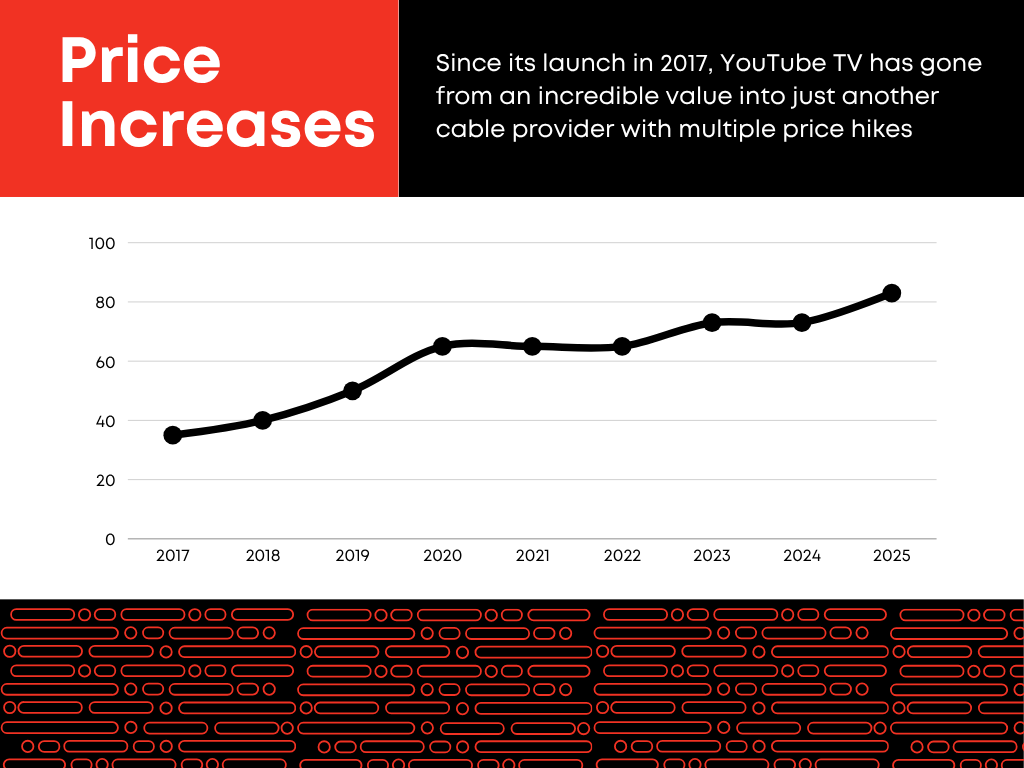
The price of YouTube TV then was $40 per month. Today, that price has more than doubled—costing $82.99 per month without any add-ons. That price is more in-line with what we would expect from a traditional cable operator like Xfinity, who has packages ranging from $50-$185 per month.
Google has found itself in multiple carriage disputes this year, but its current one with Disney has stretched for two weeks is the worst one yet. Disney owns all of the ESPN properties, which means that SEC football, ACC football, NFL Monday Night Football, and more are no longer available on YouTube TV. It’s a battle between two media and tech Goliaths that has reminded us that in the end, it is always sports fans that suffer in these disputes.
The Importance of Live Sports
The business of live TV has eroded in the streaming era. Shows are no longer appointment viewing, because everything is on demand. Even news has pivoted to a more on-demand and social media focused model. The only things that draw a crowd for live TV is election coverage and sports. Therefore, it is no surprise that over 69% of the top cable content in 2025 is sports content.
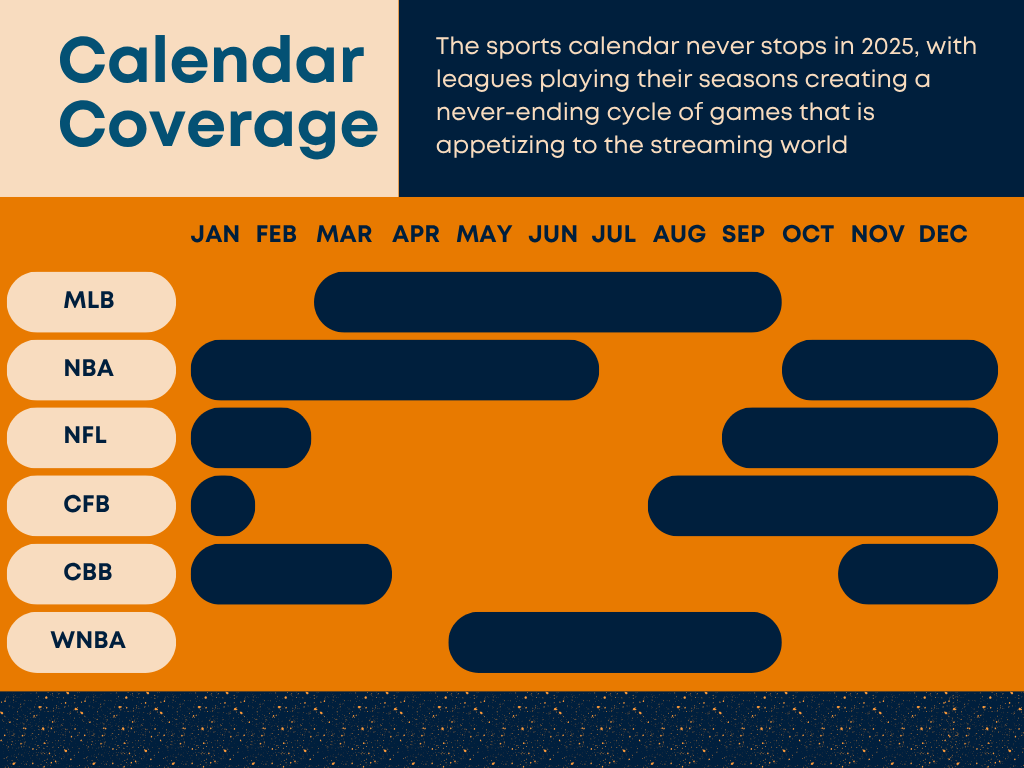
Sports programming ensures retention for these services, and is also a reason why companies like Netflix, Amazon, and Apple have bid on sports rights in recent years. Say you are a fan of baseball and basketball, and you want to be able to watch MLB and NBA games. The NBA season runs from October to June, while the MLB season runs from April to October. That calendar overlap ensures that you as a customer are subscribed to live TV, whereas a person may unsubscribe from Netflix after they finish the latest season of Stranger Things.
That need for sports is why so many tech companies have gotten involved in broadcasting games. The NBA when it negotiated its new TV deal added Peacock and Amazon Prime. The NFL’s current deal has games on Netflix, Prime, Peacock, and Paramount+. HBO Max, once a destination for prestige television exclusively, now broadcasts the NHL, college basketball, MLB, NASCAR, Unrivaled, and college football. In addition to the NBA and NFL, Peacock also offers Premier League soccer, Big Ten football, and college basketball. Every streamer is getting involved in some sort of direct-to-consumer option.
Disney has seen these trends and instead of relying solely on live TV providers like YouTube TV, it has released its own app: ESPN Unlimited. This service offers all of the ESPN properties (12 channels in total) which includes the NBA, NFL, SEC football, Big 12 football, the NHL. Disney also owns Hulu and fuboTV, two competitors of YouTube TV. The push to its standalone app and its vested interest in other live TV providers helps to explain why it is playing hardball with the market leader in live streamers.
The Cost that Fans Pay
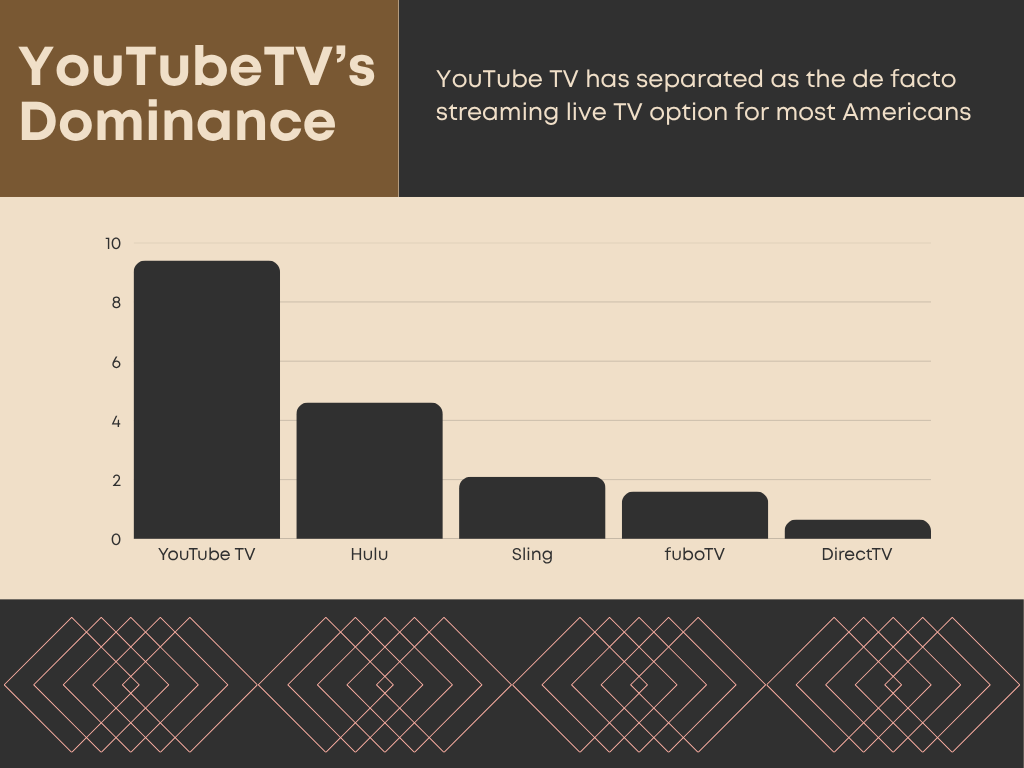
YouTube TV is a decided market leader within the virtual multichannel video programming distributor segment. It currently holds a 40% market share—dwarfing the reach of Hulu and fuboTV. The service has over 9 million subscribers and is quickly becoming the default alternative to traditional cable in the minds of American consumers.
Disney not having its programming on the service for two weeks, in the heart of college football season is a huge blow. Morgan Stanley estimates that its absence from YouTube TV is costing Disney $4.3 million per day in lost revenue. As of now, the company has lost upwards of $30 million of revenue during this blackout dispute.
Google is also taking a hit, as many have voiced their displeasure online and a poll of 1,100 US consumers found that 24% cancelled or planned to cancel their YouTube TV subscriptions.
Dan “Big Cat” Katz from Pardon My Take weighed in on the dispute and likely echoed the sentiment of all sports fans dealing with the repercussions of this dispute between the two companies, saying:
They’re just screwing over the consumer, the people who just want to watch sports. I just want to watch sports. That’s all I want to watch. The shows I watch are on Netflix or HBO. Let me just watch sports. Give me all the sports in one place and let me pay for that, and stop with this bulls*** where everyone is trying to squeeze each other out for an extra dollar, screwing over the people who just want to watch sports.
Katz’s frustration is the same shared by many that have started to feel priced out of the sports experience. This has already happened when it comes to attending live sports. On November 16th, the Washington Wizards will host the Brooklyn Nets in a matchup between the two worst teams in the NBA’s Eastern Conference. A lower bowl seat to that game ranges between $70-180 before fees and concessions, pricing out average Americans from the live experience.
Watching sports at home is now experiencing similar price increases. To watch nationally televised NBA games, you would need subscriptions to Peacock, Amazon Prime, and ESPN—netting a monthly cost of $60 per month. When games aren’t televised, it is fans who pay the price. Last week they missed out on multiple top 25 college football games because two huge companies couldn’t reach terms. The likely result of this negotiation is that YouTube TV will see yet another price increase and consumers will have to decide if they can afford it.
The clamoring for an all-in-one sports package is a utopian fantasy that will never happen. Instead, what we are moving towards is the need to pay for multiple streaming networks to have access and playing the guessing game of what app is airing which game. It’s a user hostile approach that generates maximum revenue for the providers and leagues but leave fans frustrated and penalized for enjoying sports. The greed of companies like Disney has never been more apparent than it is in 2025. It also has no limits—leaving fans to pay the cost, once again.
Thanks for reading Deep Cover! This post is public so feel free to share it.