Jayson Tatum, the Boston Celtics, & the Fleeting Nature of Success
How one injury might have shifted the landscape of an entire conference for the next couple of seasons

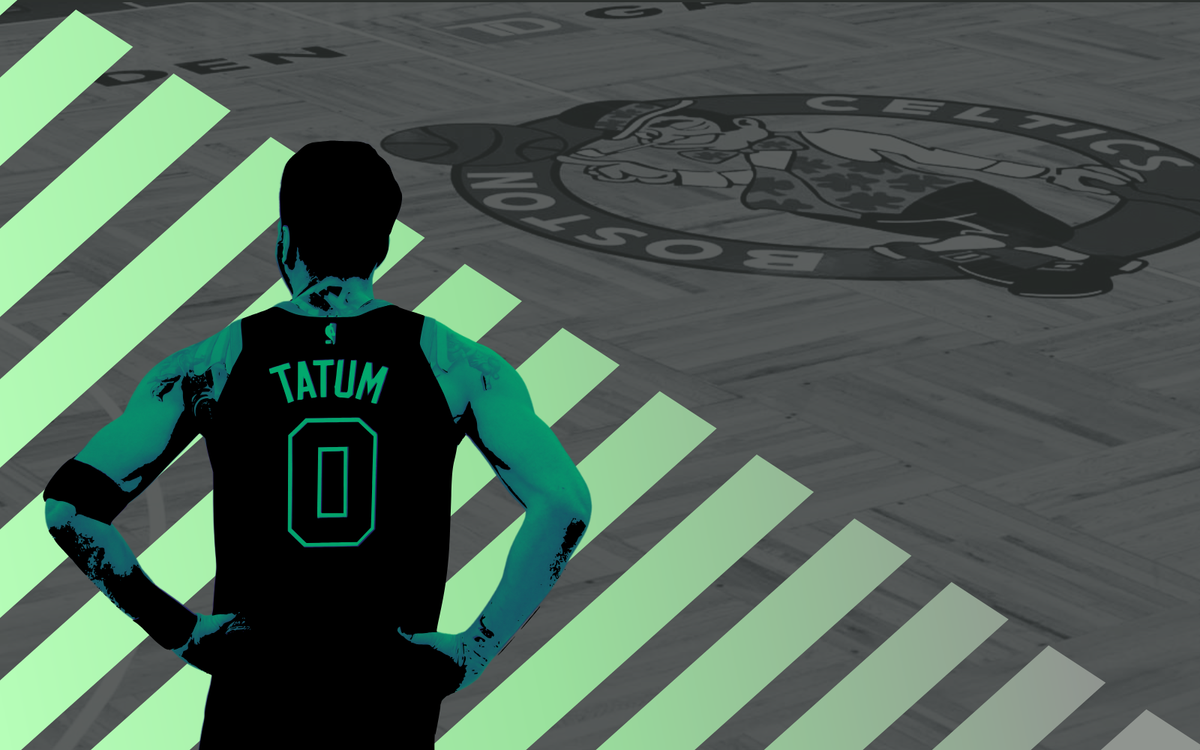
In sports, a team’s fate can change in an instant—it’s a cruel reminder of how fleeting moments of glory truly are. The Boston Celtics a mere month ago seemed to be poised to make another trip to the NBA Finals with a chance to repeat as champions, to become the first repeat champion since 2018 when the Warriors went back-to-back.
But then on a tipped pass by the Knicks’ OG Anunoby, Celtics star Jayson Tatum fell to the ground and writhed in agony. The play happened with 3:08 left in the fourth quarter and the Knicks were on their way to victory. Fans held their collective breaths, hoping that their worst fears wouldn’t be confirmed. But as the pain on Tatum’s told everyone, the Celtic’s star had a torn Achilles.
Tatum underwent surgery the next day, meaning that he will likely miss all next season. And in that instant, the outlook of the entire Celtics franchise has come into question. A team that seemed on the verge of a dynasty is now headed towards uncertainty with a roster consolidation on the horizon. It is yet another reminder that success in the NBA is more fleeting than we think.
Keeping the Band Together
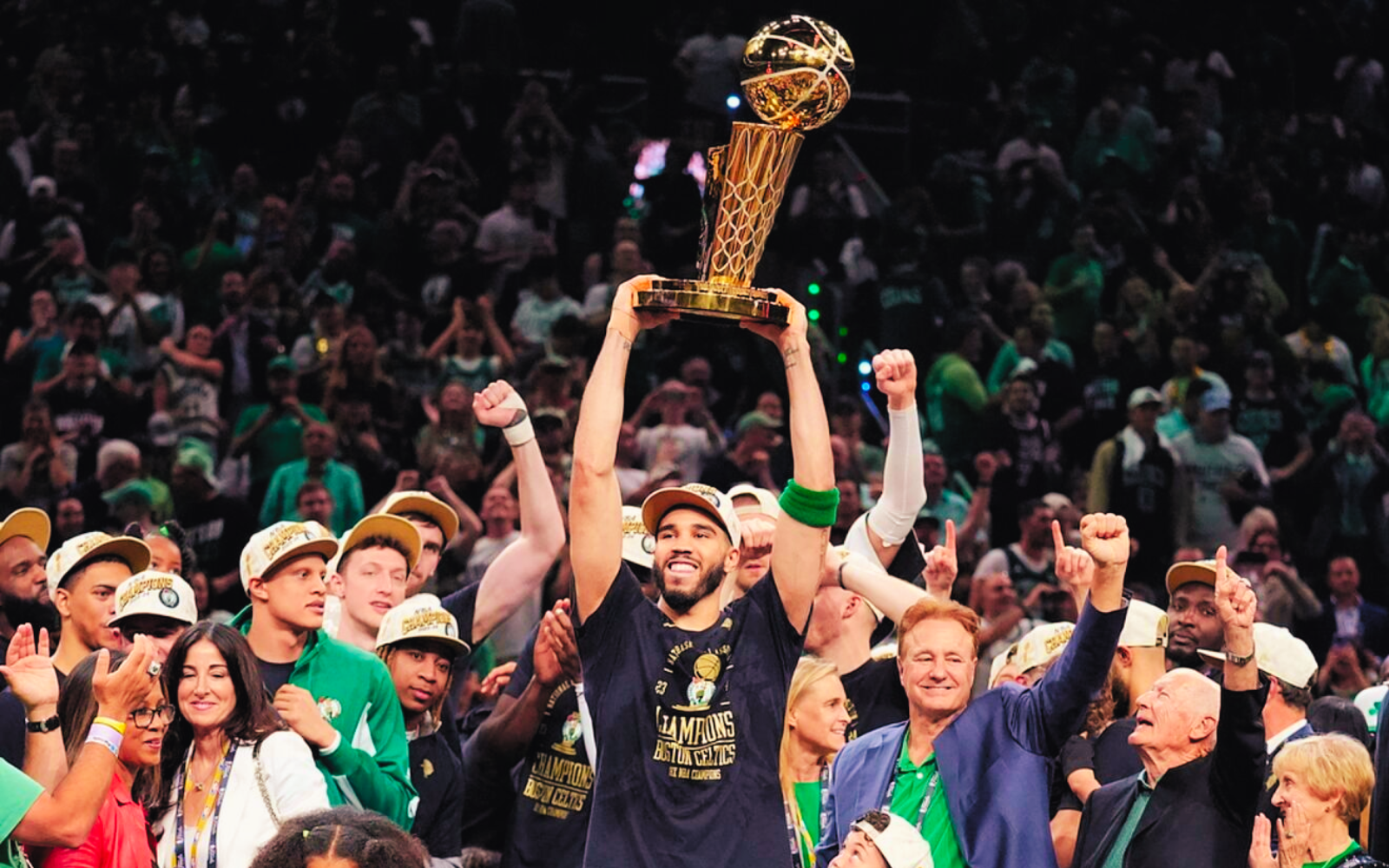
Leading up to last year’s title, the Celtics were waiting for their breakthrough moment. It was the seventh season of the Tatum and Jaylen Brown pairing. They had been to the Conference Finals four times and made the Finals once. But they hadn’t gotten over the proverbial hump.
The acquisitions of Kristaps Porzingis and Jrue Holiday were win now moves to finally hoist their 18th banner in the rafters. And it worked. The Celtics cruised to the Finals and beat the Mavericks in five games. Most teams that win a title (unless you’re the 1999 Chicago Bulls) will try their best to keep the team together to try for another bite at the apple.
The Celtics did that by re-signing all their players from their championship run in the hopes of being a repeat champion. And through the regular season and the first round of the playoffs, everything seemed to be going according to plan. Even when the Celtics blew two twenty point leads in the first two games against the Knicks to go down 2-0 in the series, many still thought that Boston would figure it out and win the series.
The team at that moment felt validated in overspending to keep the team together, fully aware that there would be a luxury tax bill coming due in the following offseason. But if it resulted in a second championship, then it would have all been worth it.
The summer was already going to be filled with tough decisions as the Celtics were sold in the middle of the season and it is highly unlikely that the new owners would have wanted to pay $500M for a roster, even if they won another title. But once Tatum was injured and the Celtics lost their second round series against the Knicks, a difficult but manageable situation morphed into a disastrous one.
Tatum up until this point has been incredibly durable—appearing in 92% of Celtics games since he entered the league. He has been an MVP candidate in three of those years and was named All-NBA four times. He has averaged over 25 points per game in five consecutive years. That sort of durability and production is hard to find in today’s NBA and even harder to replace. What was set to be a difficult season has now turned into an impossible one.
Changes on the Horizon
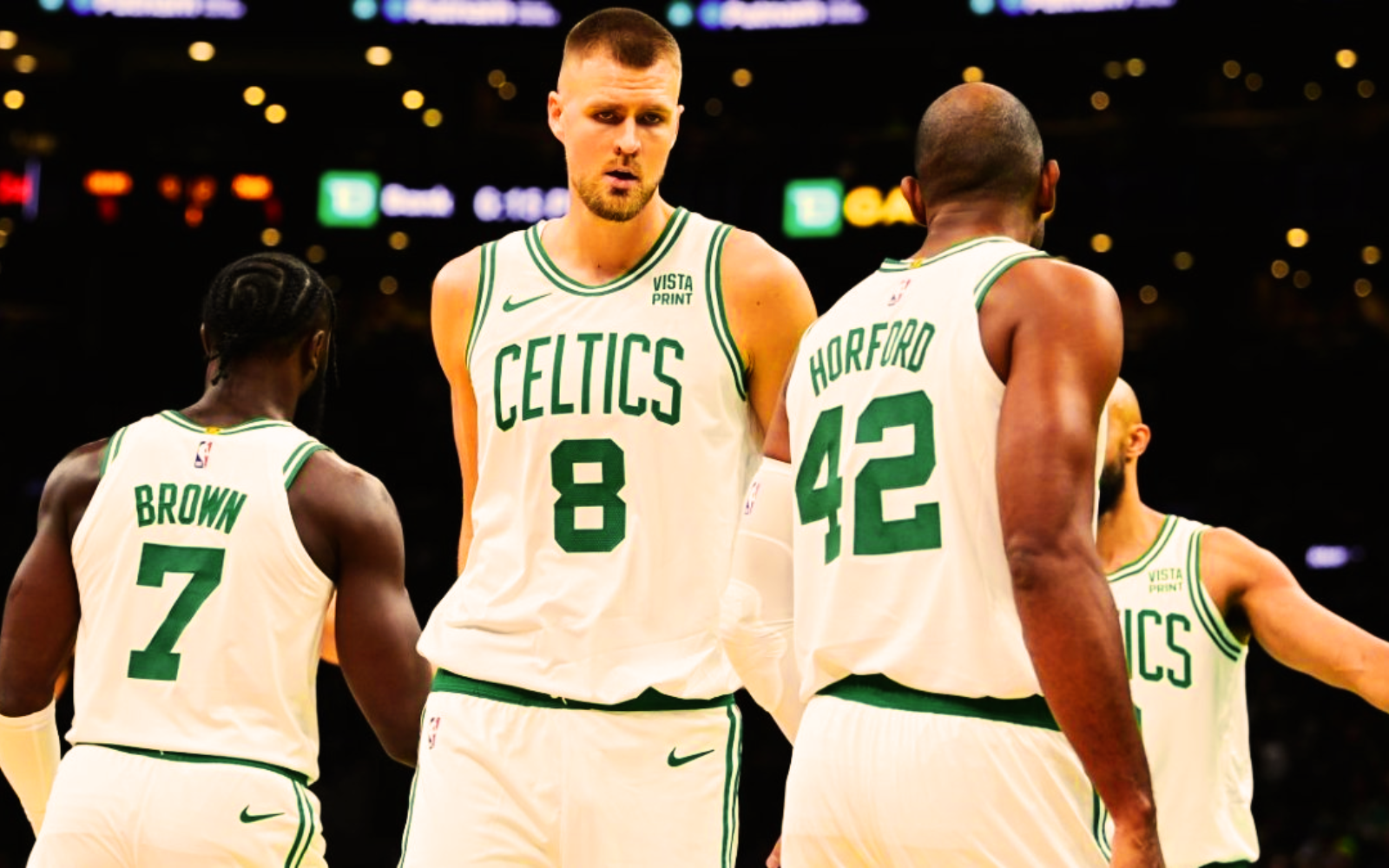
Before the Tatum injury it seemed likely that the team could lose Jrue Holiday and/or Kristaps Porzingis in salary dumps to land below the second apron, helping to avoid additional tax bills. That was all under the assumption that they would have a healthy Jayson Tatum to play with Jaylen Brown to try and weather the storm.
Without Tatum, much of the calculus shifts. Holiday and Porzingis must both be traded at this point. Al Horford is an unrestricted free agent this summer, and without their best player it is likely that he will sign a veteran minimum deal with a contender to try and contend for another championship before he retires.
Luke Kornet had arguably the best season of his career with Boston this year and will also be an unrestricted free agent. He will receive offer sheets from teams that are looking to add center depth like the Los Angeles Lakers, so his future in Boston seems uncertain as well.
And there is the last option that is a possibility that most Celtics fans don’t want to consider. With this next season likely to be one without championship aspirations, the Celtics might be tempted to trade Jaylen Brown. Brown has a massive salary and is set to make $53M next year and that number will balloon to $64M in the 2028-29 season. Trading him now could free up substantial amounts of cap room and allow the Celtics more freedom financially moving forward.
When Tatum comes back in the 2026-27 season, he may be looking at a very different team than the one he last played with. In this era of more stringent tax rules and business decisions needing to be made, this injury might prove to be one of the most consequential ones that we have seen in years.
The Ripple Effect

There is a palpable level of uncertainty around the Celtics for this upcoming season. There is a world where they are led by Jaylen Brown as a top four team in the East, but there is also a world where the Celtics dismantle much of this roster and fall to Play-In territory.
Much like when Michael Jordan left the Bulls in 1994 and Shaquille O’Neal and Kobe Bryant were broken up in 2005, there is a vacuum in the conference. The sudden disassembly of a championship team creates an avenue for other teams to see a path to their own championship.
In 1994, it presented an opening for the New York Knicks and Indiana Pacers to get the Finals, and in 2005 it opened a path for the Phoenix Suns to play the San Antonio Spurs in the Conference Finals. In this case, the Celtics have lost an elite superstar in the middle of his prime and will be a shell of its former self.
This, ironically, opens an expanded title window for the Knicks and Pacers again (who are meeting in this year’s Eastern Conference Finals) to have two years of realistic title contention. It also gives the Cleveland Cavaliers an opening to be the best team in the East after a disappointing playoff outcome this year.
Perhaps even more than those three, is how this injury impacts the way the Milwaukee Bucks handle their off-season. With a healthy Tatum and a full-strength Celtics team, the Bucks would be justified to trade star Giannis Antetokounmpo and prepare for a rebuild. But without Tatum, Milwaukee might see a chance to get back to the Conference Finals if they feel that they can beat Indiana, New York, or Cleveland as currently constructed.
The opening creates a larger slice of hope for most of the Eastern Conference, and that is the biggest residual effect of this outcome. What felt like a conference that could be dominated by the Celtics with everyone playing catchup for a few years has now turned into anyone’s game. In a way, that’s better for the health of the Eastern Conference, but it is also disappointing to see a potential short-term dynasty thwarted before it even got started.
The long-range potential of all of this is that the Celtics and Tatum are set up for a tour of vengeance when he comes back in 2026-27. No one knows what Boston will look like then, but considering Tatum’s work ethic and history of high-level performance, it is safe to assume that they will be highly motivated when the time comes. In this age of true NBA parity an injury like this shuffles the deck, and this might be the most consequential shuffling that we have seen in years.
Thanks for reading Deep Cover! This post is public so feel free to share it.