Kevin Durant Doesn't Care About His Legacy & That's Good for Basketball Discourse
One of the greatest players to ever touch a basketball isn’t obsessed with his legacy, and neither should any of us—for the good of basketball discussions in the future

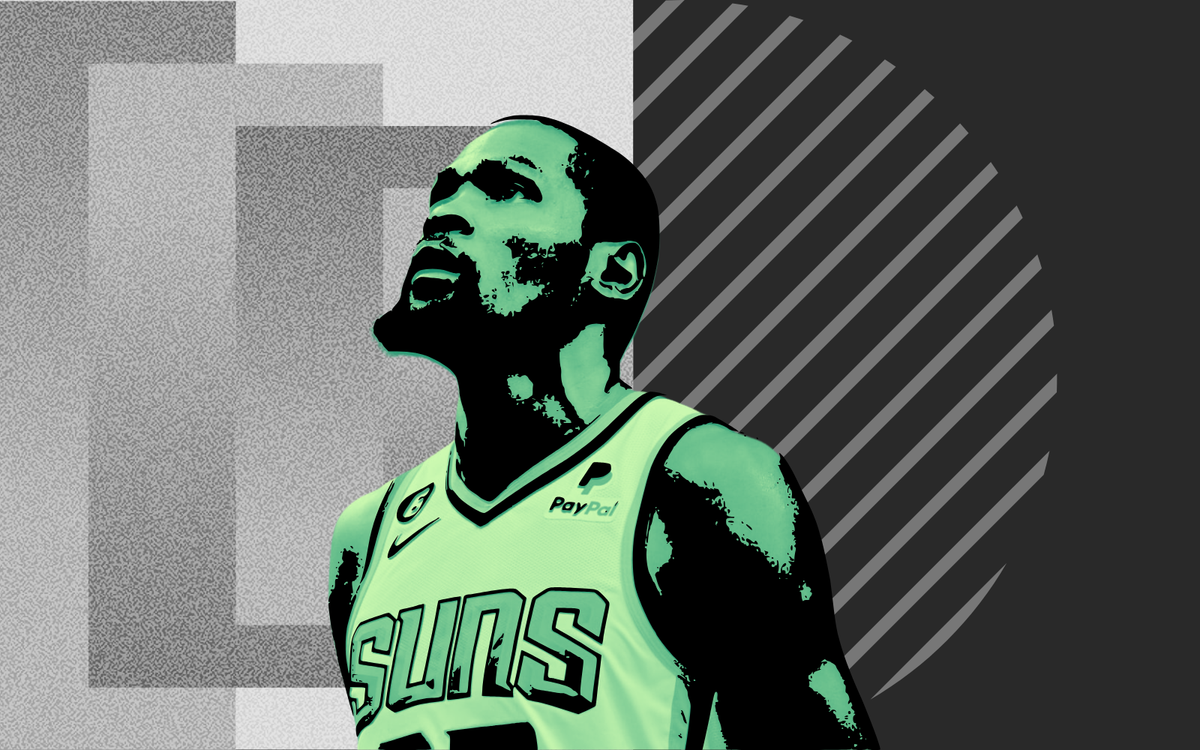
Stephen A. Smith once said that Kevin Durant leaving the Oklahoma City Thunder to sign with the Golden State Warriors was “the weakest move by a superstar in NBA history”. Many people agree with his assessment, questioning Durant from a mental fortitude perspective, arguing that the mentality has never matched the talent.
In a recent exchange with users on X (formerly Twitter), Durant had his legacy questioned again, with the suggestion that it will always be attached to Steph Curry. Durant responded by saying “Good I Never loved the spotlight anyway. Always just wanted money, buckets, and girls.”
The comments are prototypical of Durant when it comes to his social media presence and is very on brand for a superstar that has consistently distanced himself from the obsession of historical comparisons when it comes to great NBA players. While many find his take on his all-time standing frustrating, I would argue that it’s refreshing that a player of his stature refuses to buy into the unsolvable debates that we place on stars.
The Obsession with Legacy

“Yes, he’s great, but he’s not Michael Jordan”. Those are the words that have followed LeBron James his entire career. LeBron’s longevity and accolades are all great, but they will always be measured against Jordan’s titles and the way that his career panned out. For years, the topics of sports debate shows like First Take have centered around the legacy of LeBron James in the context of the Jordan comparison.
The popularity of these segments and debates has led to legacy being one of the most common phrases in sports analysis. So much so that every moment or decision is looked at through the lens of legacy repercussion. A playoff loss, a missed shot, or even an injury will tarnish the perceived impact of a player because we are programmed to be so concerned with their legacy.
Before Damian Lillard was traded to the Milwaukee Bucks, he had cemented himself as one of the best players to put on a Portland Trail Blazers jersey. But the conversation was always centered around how he had yet to win a ring and that he needed to get himself in a situation to maximize his historical impact. He was an area legend, the face of basketball for a generation in his city, and fourth all-time in three pointers made. But the entire conversation centered on his lack of championships, suggesting what Lillard had done wasn’t good enough.
The same is set to happen for Lillard’s current teammate, Giannis Antetokounmpo. Giannis has delivered a championship to Milwaukee, but with poor roster construction decisions in Milwaukee, many are expecting him to demand a trade to get into a better situation.
As of this writing, indications are that he will not request a trade and stay with the Bucks to build a contender with roster overhaul. The reaction to his has been that Giannis is choosing loyalty over legacy. Dirk Nowitzki received the same critique when he stayed with the Mavericks during his career. They are acknowledged as great players, but ultimately there is disappointment because of the unrealized achievement that we expect from them.
For Giannis, he is one of the most dominant players to ever touch a basketball. He is a champion and a remarkable basketball development story. And yet for many, that is not good enough. Because he has been compared to Shaq, there is an expectation that he should want to win as many titles as Shaq, if not more, and do whatever he needs to make that happen.
For the most part, many players succumb to the pressure that comes with these expectations. This is where Kevin Durant has both challenged and rejected the concept. It is a notion that he has opposed and his push-back on it deserves to be commended.
Manipulating the Argument

During his time in Oklahoma City, Kevin Durant established himself as one of the best players we have ever seen. In nine seasons, he won the MVP award once and finished in the top six in voting five times, led the league in points per game four times, was named All-NBA six times, and won Rookie of the Year. All that was missing from the resume was a title.
He had the chance in 2016, when the Thunder led the Warriors 3-1 in the Conference Finals. They then lost three games in a row—a brutal collapse no matter what way you slice it. Instead of coming back the next season, he did what most basketball people want of star players: he put himself in position to win titles. The twist is that he went to the team that just beat him in the Conference Finals.
Many called the move gutless, a stacking of the deck for the Warriors. Which, to be fair, is exactly what it was. But as time has passed, it is easy to see it from Durant’s point of view. In the basketball world’s obsession with ring culture, Durant simply did what would get him a championship. At that point in his career, he had accomplished more than 99% of players who played in the NBA.
In Golden State he won two titles, which are on his resume—regardless of how tainted fans think those titles are. But the message that Durant was sending, it could be argued, is that if all that was missing from his resume was a title, then he had those now. He was already one of the best three level scorers that we have ever seen even before the titles, so the championships should have changed nothing but enhance his overall resume.
But the perception was that while he won those titles, it was as a passenger and not the driver—a point that fans on social media have never let him forget. In the case of Durant, the goal posts shifted from “you have to win titles to validate your legacy” to “yes, but you need to win them as the main guy”.
It can be argued that Durant’s team up with Kyrie Irving (and later James Harden) in Brooklyn was with the intent of appealing that shift in expectation. But in recent years, Durant has achieved some inner peace on the subject.
In 2023, he said that he doesn’t care about his legacy anymore. Citing that the focus became too much on era comparison and on winning debates to validate one player’s greatness over another. Instead, Durant has focused on his craft and trying to play high-level basketball in the twilight of his career, which was on full display during the Paris Olympics.
He has not submitted to the legacy conversation that has continued to surround him but instead has challenged why it is such a big talking point. Considering how so many players have fallen victim to “he was great but what about the titles”, it is refreshing to see star that is choosing not to focus on that. In many ways, Durant is a basketball purist—a player focused solely on his craft and on playing the game that he loves.
The counterpoint to Durant is that he must reckon with not living up to the expectations, even if they are irrational. But I would argue that pushing back on the importance of perceived legacy is a good pivot holistically for NBA stars. Far too often, we degrade players because they didn’t win championships that we thought they should win.
Does the lack of a title make Allen Iverson less of a trail blazer, does it make Patrick Ewing less impressive as a defensive anchor, or Dominique Wilkins any less jaw dropping of an athlete? Absolutely not. But because of the suffocating nature of ring culture and legacy prioritization we often miss the forest for the trees with these players.
By Durant advocating against the toxicity of legacy debates, he is hoping for true basketball conversations to have a chance to flourish. Otherwise, we will end up with hours of fruitless era comparisons that achieve nothing. Durant’s stance highlights what is wrong with shows like First Take and Inside the NBA that often belittle current generations in favor of propping up the past. It is a unique NBA issue that other sports don’t deal with.
How people remember you as a great athlete does matter, but at the same time it is not the only thing that matters. Kevin Durant reminds us of that. No matter what we think of his actions as a professional basketball player, what we all must admit is that he is one of the best scorers we have ever seen. I think talking about the nuance of why that is, is more productive than debating the merits of a player’s legacy. It’s a moment of push-back that in the grand scheme of things, is great for basketball discourse.