
LeBron James is Right About Ring Culture, But He May Be the Wrong Messenger
Championships as the sole measure of greatness is a flawed exercise, but being told that by the face of ring culture misses the mark a bit

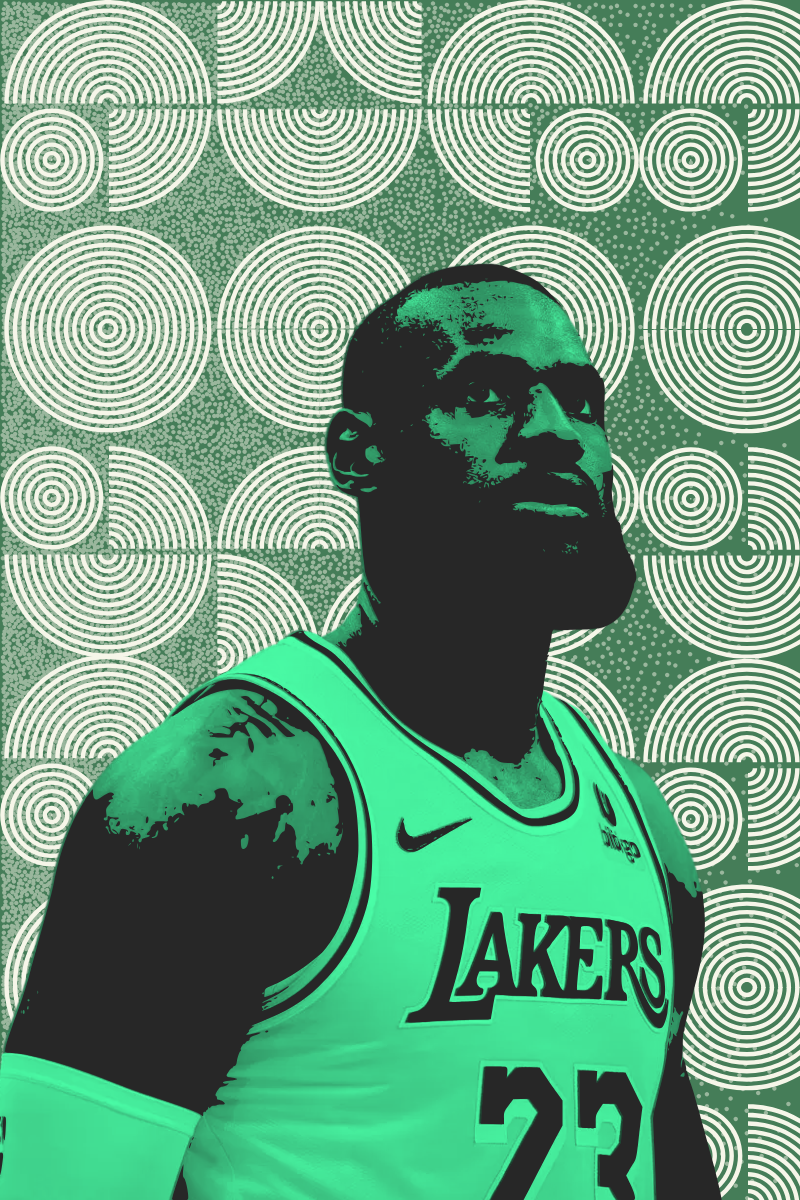
Sometimes, the messenger matters more than the message itself. Recently LeBron James, on his Mind the Game podcast, made some comments about the glorification of championships as a measure of a basketball player’s greatness:
“I don't know why it's discussed so much in our sport and why it's the end-all, be-all of everything. Like OK, 'You weren't a great player [because] you never won a championship.'
Or if you won one, you can't be in the same conversation with this person. You sit here and tell me Allen Iverson and Charles Barkley and Steve Nash f***ing weren't unbelievable? Like, 'Oh, they can't be talked about or discussed with these guys because this guy won one ring or won two rings.' It's just weird to me."
The comments are valid and worthy of discussion, especially considering modern basketball discourse and how it is obsessed with championship count. Despite that, LeBron James of all players may not be the best person to deliver that message. Let’s explore why he has a point, even if it will draw criticism because of the path of his illustrious career.
The Trappings of Ring Culture
The idea of measuring an NBA player’s greatness by championship rings is not a new concept. In fact, at this point it’s a trope of talking head debate shows. Players that were excellent are often overlooked because they never won a championship. LeBron used examples like Nash, Barkley, and Iverson—all players that transcended and moved the game forward from an archetype perspective even without winning titles.
Steve Nash was the orchestrator of the “Seven seconds or less” Phoenix Suns that introduced up tempo basketball to the modern NBA, a style that almost every team in the league employs today. Charles Barkley redefined what we thought a power forward could look like and do. He offered a smaller, more athletic offering to the lumbering giants of the past with the ability to handle the ball in the open court and push the pace. And of course, Iverson, one of the best small guards to ever touch a basketball, whose style was so influential it inspired an entire generation of basketball fans.
And yet, despite the individual greatness of these players, the rhetoric has often been skewed against them to the point that they are somewhat forgotten in all-time NBA discussions. These ring conversations has evolved (or devolved, depending on your perspective), however. Instead of devaluing those players that never won, the target has expanded to those that “only” won once. The prime example of this recently has been Milwaukee Bucks All-Star Giannis Antetokounmpo.
https://x.com/TheDunkCentral/status/1933540198614233187
By any definition, the achievements of Giannis equal a successful career. He is a nine-time All-NBA selection, a five-time All-Defensive selection, two-time MVP, one-time Finals MVP, and of course a one-time NBA champion. According to ESPN’s Stephen A Smith, all that doesn’t matter unless Giannis wins a second championship. On First Take, Smith called Giannis an “underachiever” if he fails to secure a second title.
Considering that Giannis was selected as a project player with the 15th overall pick in the 2013 NBA Draft, this opinion is ridiculous. The fact that the Bucks were blessed with one of the most dominant players since Shaq with that selection is a miracle. To call him an underachiever is the type of rage-inducing material that modern NBA discourse thrives on.
Smith and ESPN know this, which is why they frequently espouse these takes in hopes of generating more engagement and comments on social media to increase view counts. The fault with these opinions is that it devalues just how hard it is to win a championship. This is especially true in this decade that has seen a different champion in every year since 2019. An appearance back to the championship stage is never guaranteed, therefore it should not alone define the greatness of a player.
By relying on an arbitrary number like championships won without nuance or context, it is extremely easy to forget or overlook the traits that make a player great. Conversely, by associating greatness only to that number it can also devalue what makes a player that won all those titles so great.
For instance, Kobe Bryant has often been considered a step below in all-time rankings because he won five titles compared to his idol Michael Jordan’s six. What that ignores is how much of a technician and manic competitor Bryant was, how he reinvented himself after Shaquille O’Neal left Los Angeles. The story of Kobe Bryant is not only about five championships but that is the box that this sort of commentary puts him in.
The advent of ring culture can immediately be linked to both Michael Jordan and LeBron James. When James was ascending, many in a younger generation felt that they were watching the best player of all-time. Those that grew up when Jordan was in his prime were offended at this notion.
The best argument they had was that Jordan won six times and never lost in the Finals. James’ supporters countered this with the fact that he made the Finals ten times, prioritizing the journey and wear and tear to get to that point. The debate has raged ever since then. What makes the fact that LeBron has a problem with ring culture now so amusing is that he played into it for so long.
The Arguable Face of Ring Culture
LeBron James’ decision to leave his hometown Cleveland Cavaliers in 2010 to join the Miami Heat had one simple motivation: to win titles. At the time, he felt that the Cavs were miles away from title contention, and he wanted to add that hardware to his resume. He had a point there, as the core of him, Antawn Jamison, Mo Williams, and an old Shaquille O’Neal was not enough.
In theory, he could have stayed in Cleveland and perhaps gotten a Dirk Nowitzki-style championship if the cards all lined up. But James, a player that had his eyes on the greatness of Michael Jordan since he was in high school, wanted to be in that elevated conversation. And simply put, the recognition required multiple titles.
So, he made the unpopular decision to “take his talents to South Beach”. The result was a positive for him in the rings department as he won two championships in Miami, but it also created a PR hit that he had to form a “super team” to do so. Much like Kevin Durant’s titles in Golden State, James’ titles in Miami don’t seem to hold the same gravity as others because to many it felt like a foregone conclusion considering the assembly of top-level talent for one team.
LeBron’s career moves have often been predicated on his standing all-time. His return to Cleveland and 2016 championship there was about the prodigal son fulfilling his promise. His title in Los Angeles was becoming a part of the lore of a historic franchise. All these decisions and occurrences were in service of being considered the best player ever. These were all exercises in the service of ring culture.
Therefore, hearing James's lament on the prevalence of ring culture in the broader basketball conversation rings hollow because he is an architect of that conversation alongside Michael Jordan. The unfortunate reality is that because of his history, many will dismiss his assertions, even if they are accurate.
We do place a premium on championship rings above all else. It can also be asserted that James is recognizing how the obsession with ring count has clouded the way he approached his career and how so many other players before and after him have as well. The true culprit of these assertions seems to always go back to the futile activity of era comparison.
The league changes and shifts so much from generation to generation, it is truly impossible to properly compare players. And yet we are obsessed with ranking and arguing over whose nostalgic memories is the best. LeBron speaking about this is being ridiculed, which is fair. But the message and tone of conversation does need to shift. Winning titles is the goal of every player, but it should not be the only standard that we measure greatness by. Hopefully as the years pass, we can evolve to that point.