
Marina Mabrey & the Geometry of Range


The Tempo guard has shown expanded range this season and could be a precursor to desired shooting archetypes in the future
In football, the spread offense changed the geometry of the field. By widening formations and forcing defenses to cover more horizontal space, offenses created cleaner matchups, more passing options, and more efficient ways to punish hesitation.
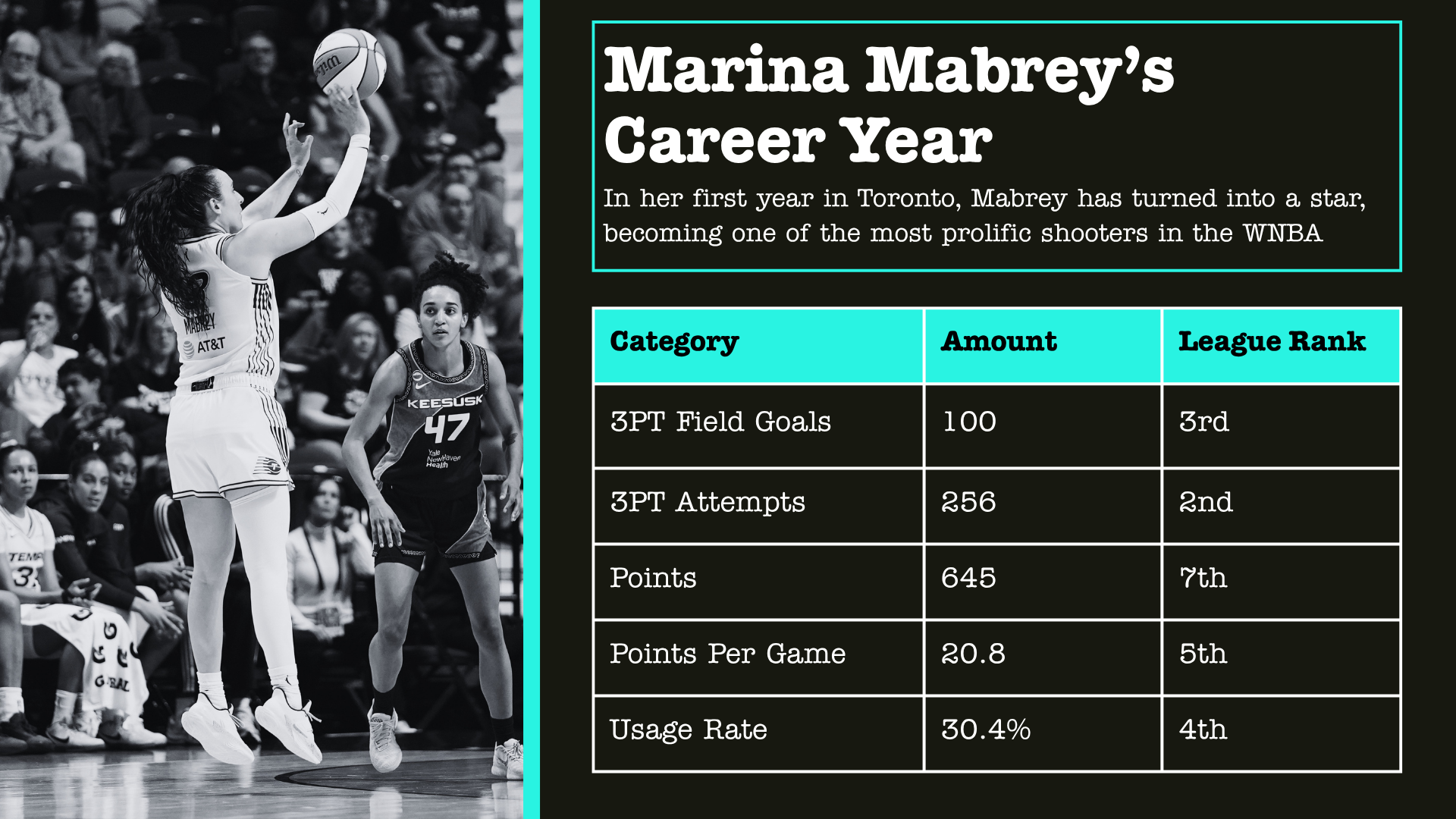
Similarly, the WNBA has seen its own expansion of spacing and range in recent seasons. One of the most intriguing examples this year has been Toronto Tempo guard Marina Mabrey, who has emerged as an All-Star after being selected by the Tempo in the 2026 Expansion Draft. Mabrey has set career highs in three-point attempts, points, and free throw attempts, ranking second in the league in three-point attempts and third in made three-pointers.
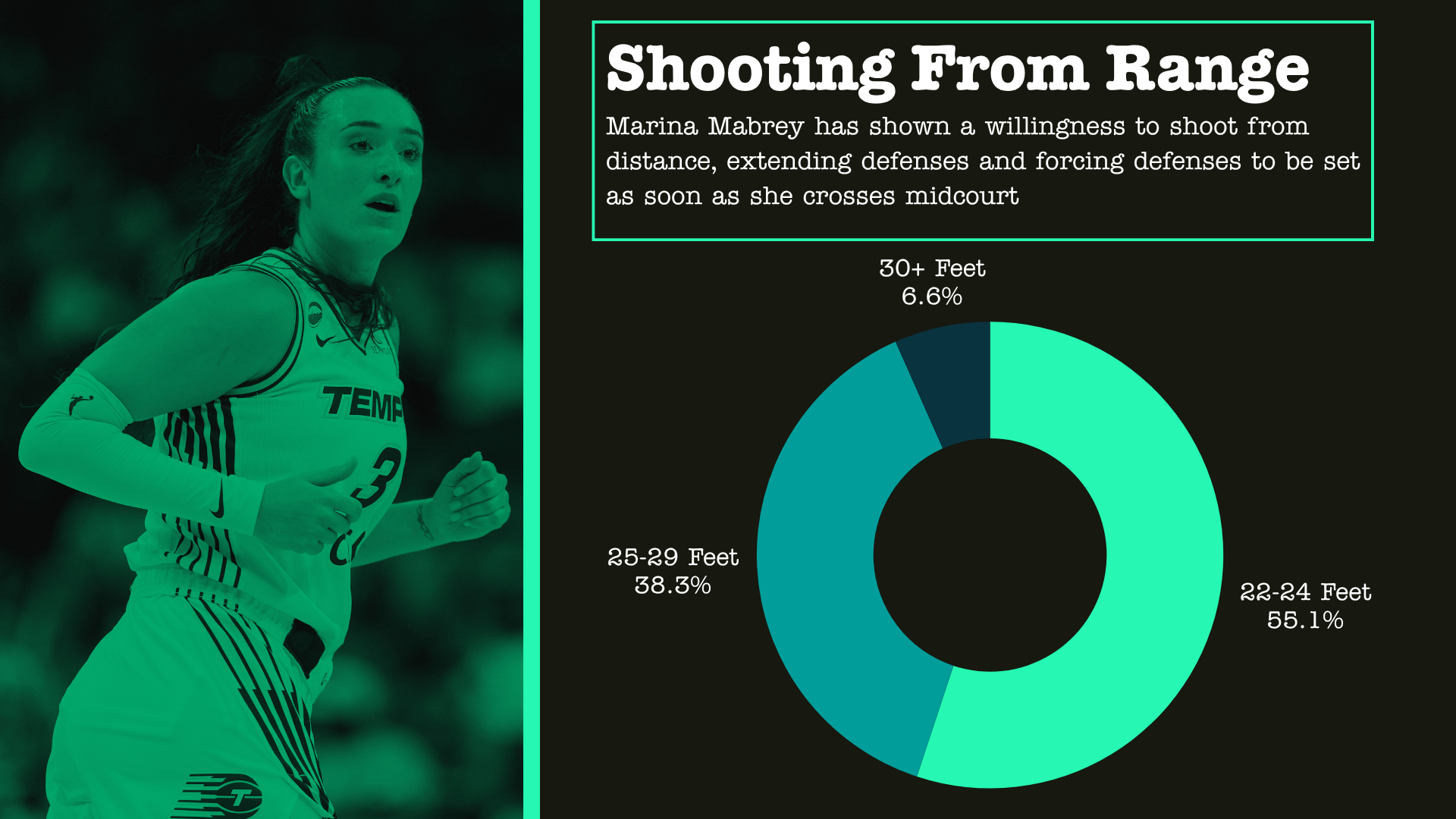
One of Mabrey’s trademarks this season has been her extended range, with 44% of her attempts coming from 25 feet or further. Mabrey has been excellent at creating space with her quick dribble and step-back and forcing defenses to play tighter on-ball defense as soon as she crosses the half-court line. Her willingness to raise up for long threes is indicative of longer above the break attempts in the WNBA, stretching defenses even further to create more opportunities.
Mabrey’s value, then, is not just that she is making deep threes. It is that her range changes where the defense must begin guarding an action, and that shift expands the usable half court before a possession has even begun.
The WNBA in recent seasons has fully embraced the three-point shot, with teams like the Golden State Valkyries going all-in on analytics-based basketball philosophy. This shift has resulted in a lot of three-point attempts in pull-up scenarios above the break and from the wing due to presenting options to shoot or to drive to attack the rim.
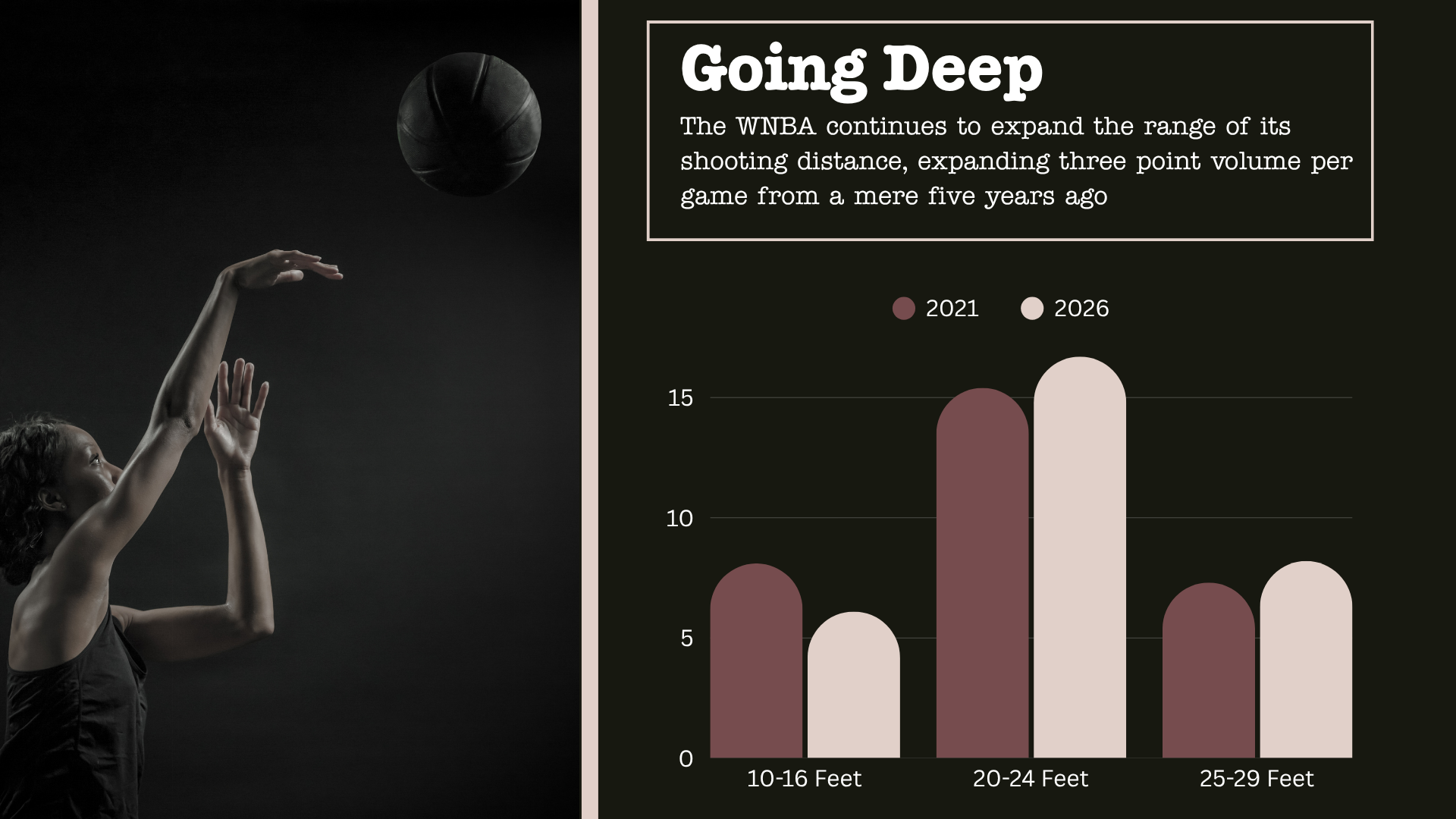
What is interesting is that while three-point volume has increased, the distance of those attempts has stretched as well. In 2021, the average WNBA team took 15.4 attempts per game from 20-24 feet, a zone that includes long twos and threes just beyond the line. From 25-29 feet, the deep-three range, teams averaged 7.3 attempts per game. This season, both numbers are up: teams are taking 16.7 shots per game from 20-24 feet and 8.2 deep threes per game.
Mabrey has taken this idea and supercharged it. 38.2% of Mabrey’s threes this season have come from the 25-29 foot range. She has gone to that shot with such frequency that it has become a necessary part of defending her. Taking the shots is one thing, but Mabrey is also making them at an incredibly high rate.
In fact, she is more efficient from that deeper range. From 22-24 feet out, Mabrey has hit 38% of her attempts this year. From 25-29 feet, that efficiency has increased to 41.8%. For context, that efficiency alone would rank as third best in the league this season among high volume three-point shooters (minimum of 125 attempts).
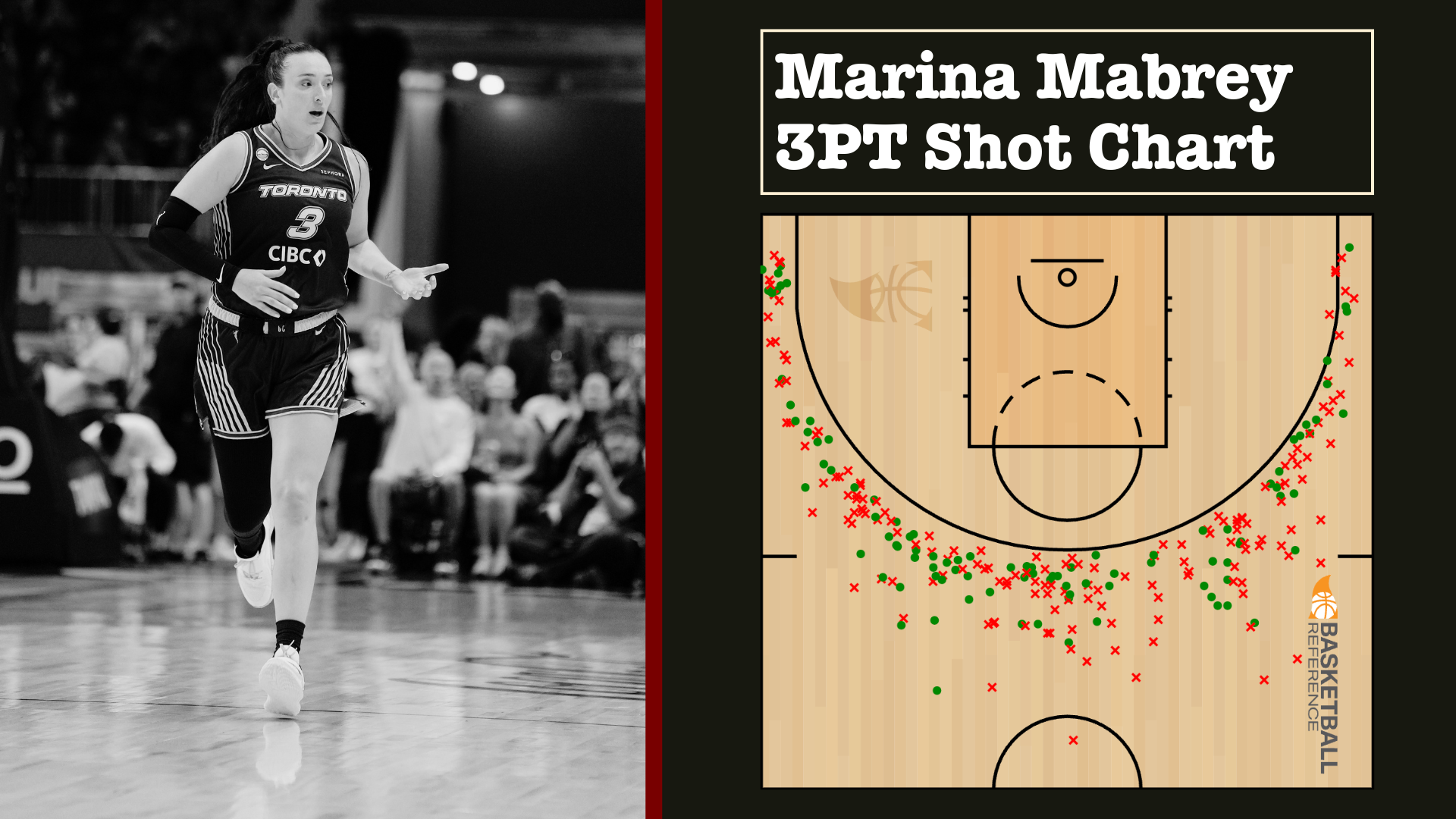
Consider the pressure this puts on a defense. Once Mabrey crosses midcourt, she is two dribbles away from being in range. That forces defenses to lock into their coverage earlier in the possession, which can open driving and passing lanes behind the first line of pressure. She extends the defense to its limit, creating gravity and rotational stress before Toronto has even initiated its action.
By honoring her range from that distance, defenses are disadvantaged geometrically, much like football defenses were against the spread offense. The more interesting wrinkle, however, is that Mabrey’s range extends even further.
6.5% of Mabrey’s threes this season have come beyond 30 feet. She has not been efficient on those attempts, shooting only 23.5%. But her willingness to take them, and occasionally make them, functions like a home run swing. It is a shot that stretches the defense even further and forces coaches to decide how early Mabrey needs to be picked up. Pick her up too deep in the backcourt, and she can exploit that pressure on a drive. Wait too long, and her willingness to fire from 30-plus feet becomes its own problem.
It’s a similar tactic that the Indiana Fever have deployed with Caitlin Clark who has attempted 32 threes from 30+ feet this season. That threat, combined with Clark’s cohesion with Kelsey Mitchell and ability to attack the rim, has made Indiana a potent offense this season. Both Clark and Mabrey give us a glimpse of what the future of WNBA offensive strategy from a high usage ball handler could look like.
From a basketball aesthetic perspective, this is a step in the right direction. Few things in the game are more exciting or more devastating than a deep three. The threat of that shot creates fascinating defensive matchups, invites more aggressive spacing choices, and opens the door for the kind of ball movement that makes offense feel expansive.
Many have lamented the steady decline of the mid-range shot in modern basketball. There is real art in perfecting that shot, as the Dallas Wings have shown this season. But the extension of shot options in the half court creates more possibility, more pressure on defenses, and a better chance for the extraordinary to happen.

Setting up deep in the backcourt, as Mabrey has often done this year, opens the door to high pick-and-roll sets, individual step-back three opportunities, and swing passes that create great shots. Mabrey’s prolific scoring in Toronto, including six games with 30-plus points and a 53-point performance against Los Angeles, suggests that the WNBA’s future will feature more players comfortable operating from longer three-point range.
The brand of basketball in the WNBA continues to evolve, and the deep three is the latest iteration in that ongoing metamorphosis. These changes are not arbitrary; they enhance the league’s complexity and expand what is possible within a possession. In the next decade, more guards may treat 28-foot threes as part of their regular offensive diet. If that happens, Marina Mabrey will look less like an outlier and more like one of the catalysts of that change.