
The WNBA Doesn’t Need the Dunk

The debate over lowering the rims says less about women’s basketball than it does about our narrow definition of what makes basketball exciting
Few sports terms have had the same linguistic resonance as the slam dunk. Even someone unfamiliar with basketball knows what someone means when they say that something with a guaranteed outcome is a “slam dunk”. On the court, dunking has long been looked at as the pinnacle of athleticism—combining agility and force to create something that can be breathtaking to behold.
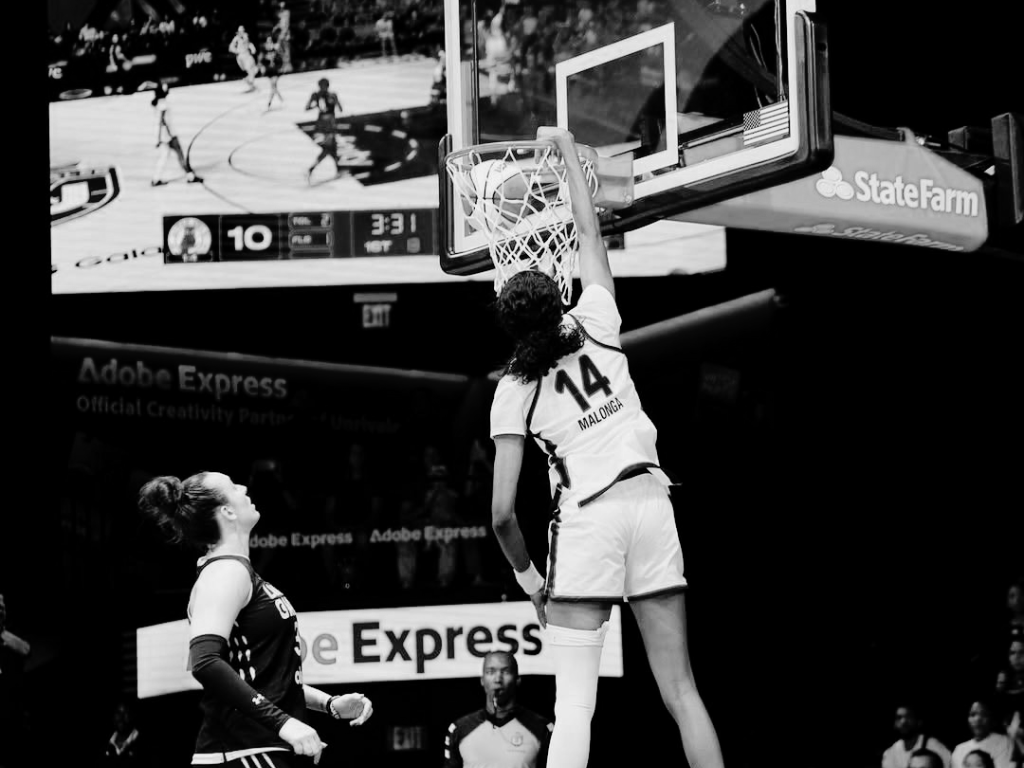
Notably, in-game dunking has predominantly been a feature of men’s basketball. There have been WNBA players who have dunked before, with Seattle Storm center Dominique Malonga being the most recent, but it is not a common feature of the game.
For years, many men have lamented the lack of the dunk in women’s basketball and have advocated for lowering rims as a solution. Former NBA player-turned-podcaster Stephen Jackson seems to be one of them. On a recent episode of his podcast All the Smoke, Jackson and co-host Matt Barnes were discussing lowering the rims in the WNBA with actor Jason Sudeikis.

Sudeikis and Jackson made the case for it, while Barnes disagreed, noting (correctly) that lower rims would compromise shooting. Jackson and Sudeikis presented a common argument used against women’s basketball: that a lack of above-the-rim play makes the game boring. It’s an assertion that reflects an obsession with the dunk and a gross misunderstanding of the intricacies of the women’s game.
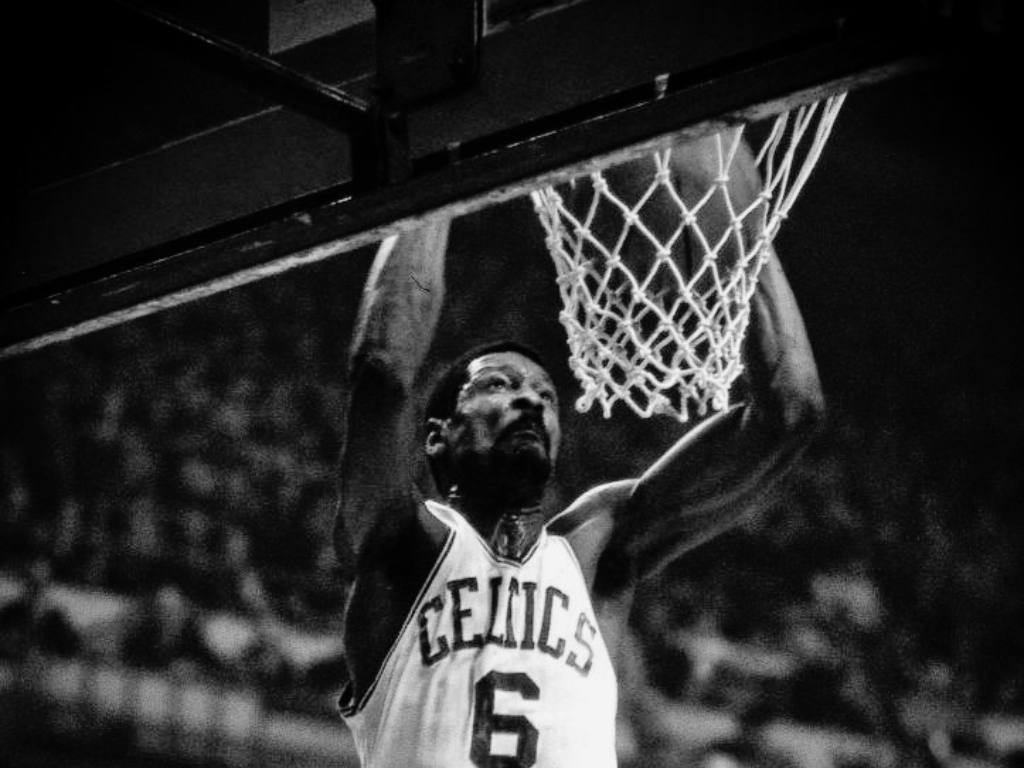
Male basketball players have been dunking since the 1960s when dominant centers Bill Russell and Wilt Chamberlain incorporated the shot into their games—utilizing their athletic advantages over their competition. The shot evolved over the years, leading to the creation of breakaway rims, which were designed specifically to limit the number of backboards shattered by powerful dunks.
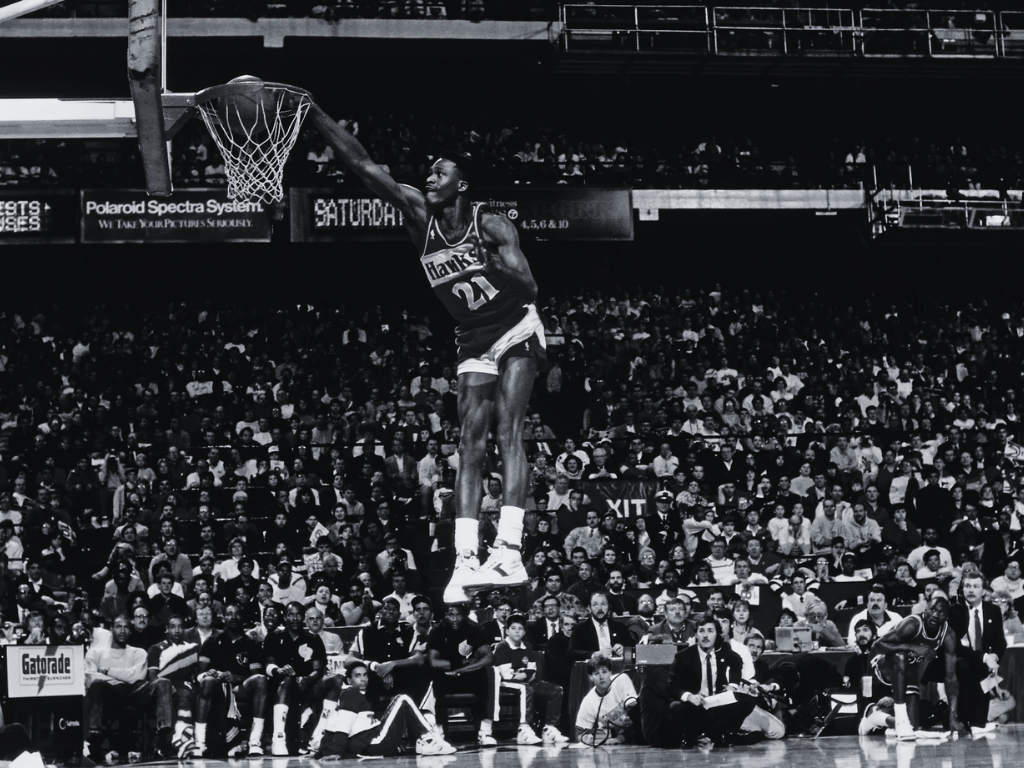
In the NBA, dunking became a part of the league’s rise to power. Players like Michael Jordan, Julius Erving, and Dominique Wilkins dazzled crowds with thunderous and graceful dunks, both in dunk contests and in games. A mythology grew up around these high-flyers, a certain awe that came with beholding what they could do vertically. It sparked our imaginations and has continued to do so, as dunks are frequently excellent highlight material in the social media clip era.
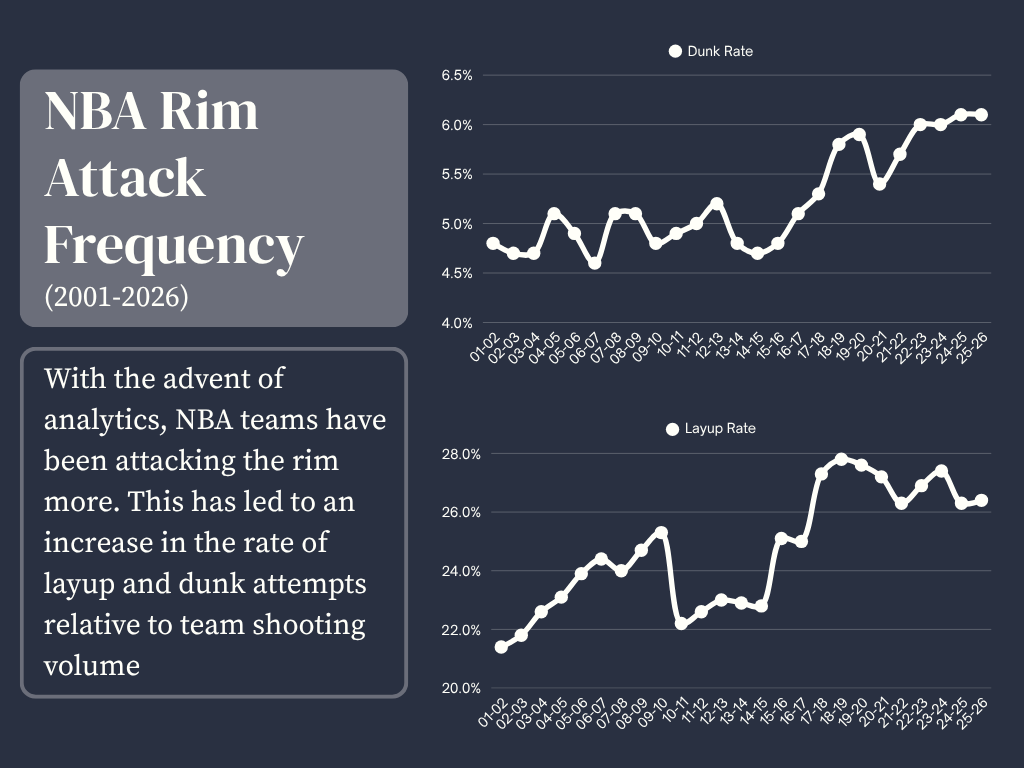
Since the NBA started tracking advanced shooting statistics in 1996-97, dunks have been on a steady increase in frequency. In the 1996-97 season, dunks accounted for 4.8% of all field goal attempts. In the 2025-26 season, that number jumped to 6.1%. The same is true of layups. In the 2001-02 season (when layup attempts were first tracked), layups accounted for 21.4% of all field goal attempts. In 2025-26, they accounted for 26.4% of all attempts.
For all the yearning that has been done for the dunk in the WNBA, a 6.1% dunk frequency indicates that it is also relatively rare in the NBA. The idea that the WNBA is boring because it lacks dunks would indicate that dunks in the NBA are much more common. Instead, 94% of shots taken are not dunks, making the suggestion that it’s a huge miss in women’s basketball hold less weight.
This jump in frequency of both the layup and the dunk is reflective of the analytics movement in the NBA, where three-point attempts and shots at the rim are coveted more than any other shot. That, mixed with a culture that makes dunking the cool thing for a basketball player to do, helps explain the 1.3-percentage-point rise in dunk frequency over the years. But it’s important to note that the WNBA is not the NBA.
The NBA has been known as a league of above-the-rim play with a heavy reliance on isolation scoring. Typically, in clutch situations, NBA teams default to their best player isolating a certain matchup and having him make a decision. We saw this in the 2026 NBA Finals with Jalen Brunson, and we’ve seen it throughout league history: a player calling for the ball and taking over in “winning time”.
MAI YAMAMOTO PUTS THE ACES UP BY 10 🎯
— TSN (@TSN_Sports) August 29, 2026
The Aces' beautiful ball movement leads to a deep three from Yamamoto! #WNBA pic.twitter.com/aaWUlX9gZy
While this dynamic exists in the WNBA, the league has often excelled in ball movement and technique. Year over year, WNBA teams frequently average higher assist rates than their NBA counterparts, and unassisted makes occur more often in the NBA than in the WNBA. While the mid-range shot has all but disappeared in the NBA, it is a shot that is still utilized in the WNBA—even if the frequency is eroding a bit with more three-point attempts in recent years.
.@JohnWall with the blow by and the JAM! pic.twitter.com/mAT17JmDZ5
— NBA TV (@NBATV) January 4, 2018
Ball movement, while common across several NBA teams, is more of a standard in the WNBA. While the NBA relies on driving blow-bys to create openings, the WNBA achieves its spacing through off-ball movement and screen navigation. Both leagues play the same sport, but they have vastly different philosophies about how it should be played.
That difference is what makes the idea of simply lowering the rims to increase dunks such a foolish idea. It suggests that the only exciting thing about basketball is the dunk, which devalues strategy in the NBA while simultaneously discrediting the quality of basketball being played in the WNBA.
What Jackson and Sudeikis are doing is akin to going to a steakhouse and being upset that it doesn’t serve sushi. And instead of appreciating what the steakhouse does offer, they ask why it can’t put a California roll on the menu. It’s a bad-faith premise that devalues what makes the WNBA so unique as a league.
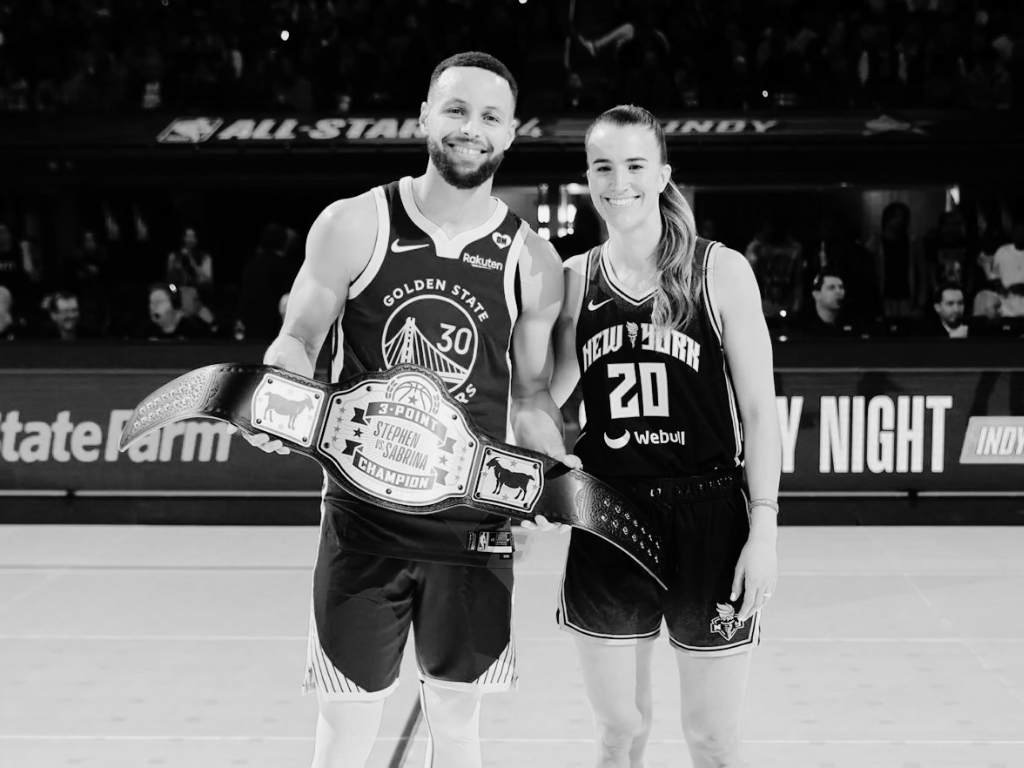
Additionally, treating lower rims as a reasonable solution invites comparisons that frame the WNBA as inferior. When New York Liberty guard Sabrina Ionescu competed in a three-point contest against Steph Curry during the NBA’s All-Star Weekend in 2024, she used the standard WNBA ball. The WNBA uses a size 6 basketball, while the NBA uses a size 7—the difference being that the NBA ball is two ounces heavier and one inch wider.
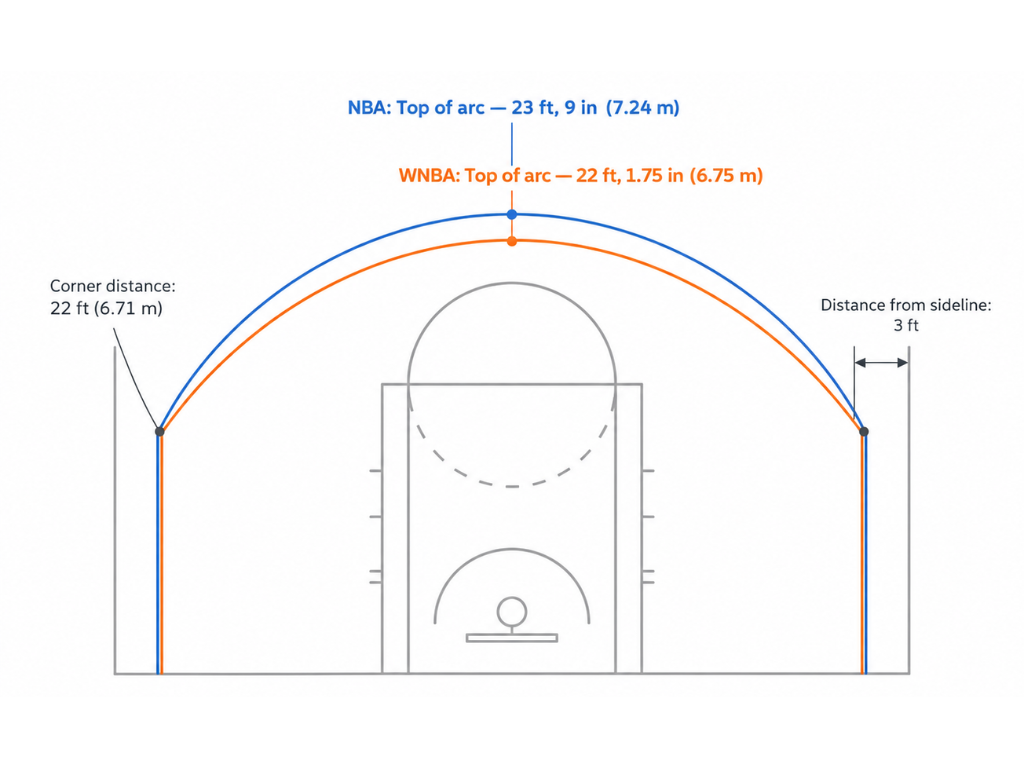
Many critiqued Ionescu for using that ball, citing an unfair advantage because of the ball’s smaller size and lighter weight. That critique speaks to the perception that WNBA players are somehow less than their NBA counterparts, since they use a smaller ball and shoot from a shorter three-point line (the WNBA line is 1.5 to 2 feet closer than the NBA line). That criticism would only grow louder if the league also had drastically lower rims.
Matt Barnes’ point about altered shooting mechanics with a drastically lower rim informs why rim lowering is a bridge too far in alterations between the men’s and women’s games. In volleyball, there are differences in net height and ball weight, but the integrity of the game is preserved. Shorter three-point lines and lighter balls accomplish the same in the WNBA; a much lower rim instead alters the geometry of the game and becomes too radical a change.
A league that has often been on the receiving end of jokes from men who don’t even watch it would be at risk of even more ridicule. Lowering the rim just to see a higher frequency of dunks is in fact asking us to take the WNBA less seriously as a basketball product. Jackson’s stated utopia of lobs and acrobatic dunks in the WNBA then feels a bit like a desire to see a reenactment of a Harlem Globetrotters game.
This willingness to belittle the league speaks to male-dominated power structures in a patriarchal worldview. The logic goes like this: basketball, as defined by men in America, is filled with dunking. Therefore, for the women’s game to meet that definition, there needs to be dunking. And if lowering the rims is what’s needed to meet that definition, the conclusion is a patriarchal one: that men are inherently superior at basketball.
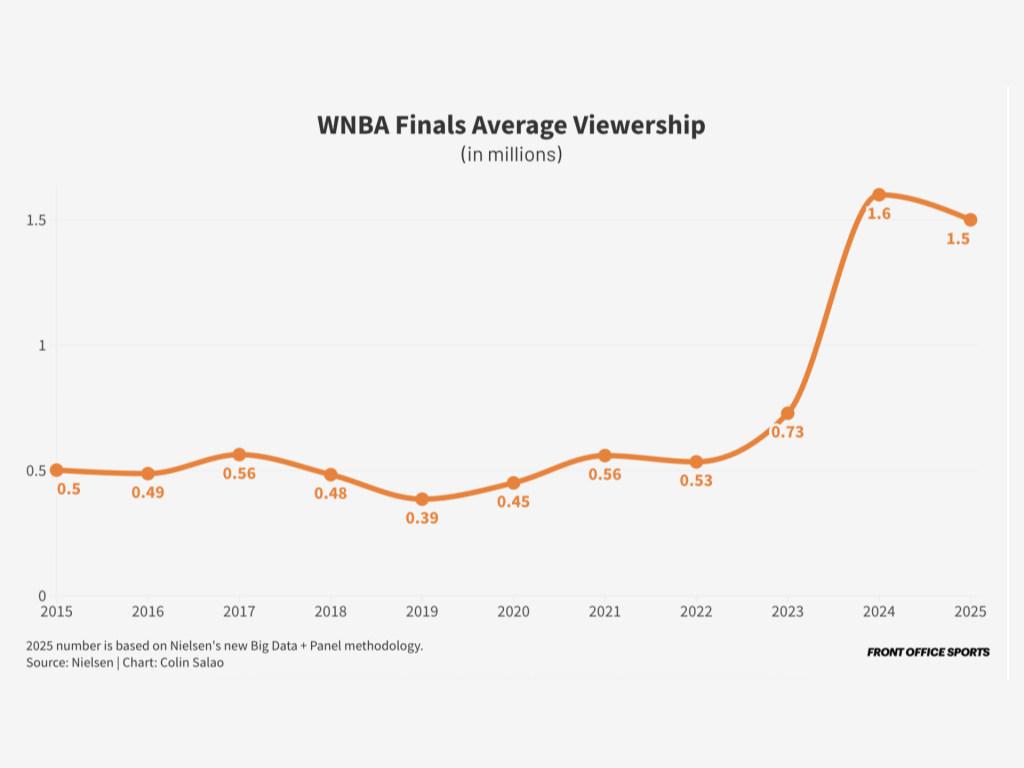
A dismissive comment about lowering the rims then feeds into that built-in bias, because dismissing a rising sports league suggests that it isn’t legitimate. Instead of valuing what makes the WNBA interesting—player movement, high-level shotmaking, defensive intensity—critics lament that its players aren’t doing what men do.
Saying that “they just need to dunk more” is wildly undermining of the talent of elite players in the league like A’ja Wilson, Breanna Stewart, and Paige Bueckers (among others). There is room in basketball culture for multiple interpretations of what is pleasing. You can appreciate the relentless motion of the Golden State Valkyries while also appreciating the ferocity of an Anthony Edwards dunk on the baseline.
So, should the WNBA lower its rims to accommodate more dunking? Absolutely not. The league’s recent surge in popularity has opened up new streams of interest and with it have come new fans. Those fans deserve to see a game played as it was intended and how it has evolved, and not a funhouse mirror version of the NBA.