Mohamed Diawara, Ramadan, & a Moment of Representation
The Knicks rookie fasted during the holy month and in the process shed light on the philosophy of Ramadan and created a human connection in the process
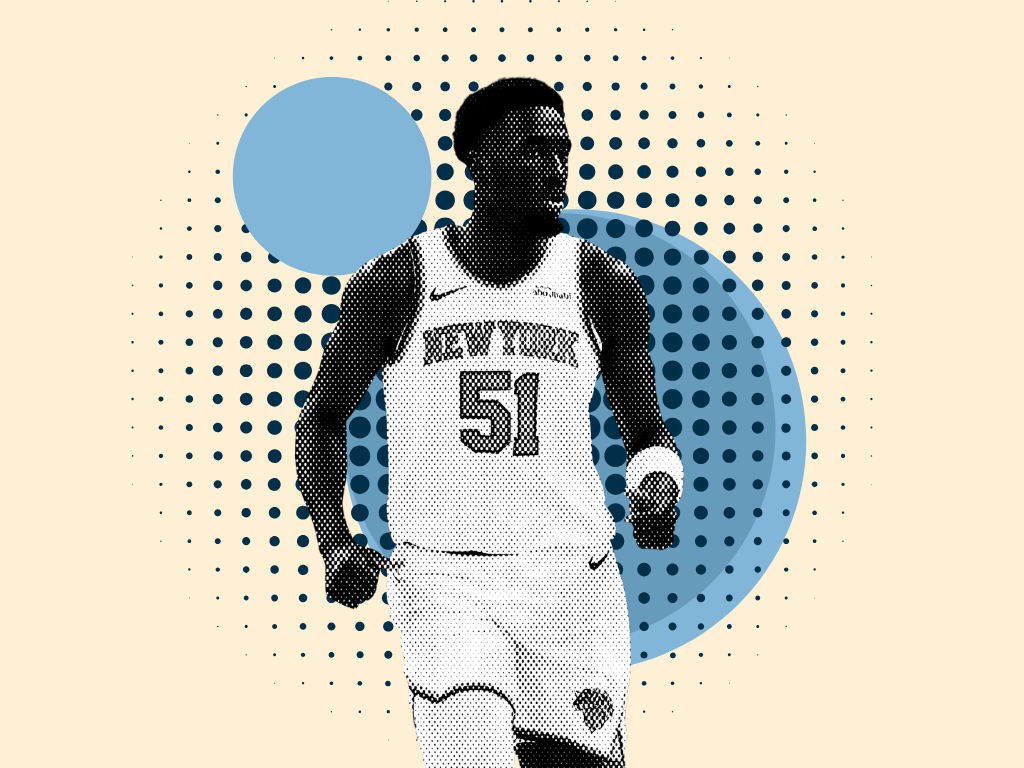
Mohamed Diawara is not the first Muslim player in the NBA; in fact, he’s not the first Muslim player to play for the New York Knicks. But Diawara, who is in his rookie year in New York, has been more outward in his faith than other Muslim players, culminating breaking his fast with Zohran Mamdani, the mayor of New York City in a profile for GQ.
Diawara’s Ramadan journey has been well publicized, from Iftar with the mayor to notes about the Knicks accommodating his fasting schedule with Suhur meals on the road. In a city that has the largest Muslim population in the United States, Diawara is a signal of representation for a group of people that have not always been given that benefit of the doubt.
The Discipline of Ramadan
I grew up Muslim in New York City, and for a few years attended an Islamic school with the intention of learning Arabic at a more proficient level. My first Ramadan experience occurred in the winter, in between Thanksgiving and Christmas (it’s important to note that Islam operates on a lunar calendar as opposed to the more utilized solar calendar).
Fasting during Ramadan as I was taught accomplished two major goals: an appreciation of the gift of food and drink and the creation of empathy for the experience of the less fortunate. It’s a month of reflection, humility, and perspective as much as it is about any religious ideal. For that reason, the philosophy of Ramadan has always fascinated me.
Ramadan mandates abstaining from food and drink from sunup to sundown. It requires a level of discipline, to deal with hunger and still go about your day. But beyond that, it is also meant as a time of reflection, of taking stock of one’s life. That’s hard enough if you work an office job. It’s exponentially more difficult if you’re a professional athlete.
The NBA schedule during the regular season is often brutal on the body. There is a lot of travel, and the schedule isn’t exactly conducive to allowing a player to break his fast as it would be in a predominantly Muslim country. Diawara has noted, however, that fasting for him has become more routine and that it was more of a challenge for him in Europe than it was in the NBA.
According to Diawara this is due to more frequent and longer practices in Europe, which can be harder on a depleted body. He also noted that the Knicks were very accommodating during the month of Ramadan, ordering food service to be delivered for his Suhur at 4:00 AM and ensuring that he has the nutrients need for maximum performance.
During Ramadan, Diawara appeared in 14 games and averaged 13.5 minutes per game, but the load varied—an indication of a different sort of discipline asked of the young rookie. During those games, Diawara averaged 5.6 points on 35% shooting from three—maintaining a consistency of previous months. To maintain his level of performance while fasting is impressive and an indication of the supreme focus and commitment that Diawara approaches his craft with.
Diawara’s Ramadan is an encapsulation of the struggles of navigating adjustment to the NBA while also a moment of representation for a group of people that at times have been cast as the enemies of this country.
Journey and Acceptance
In a sense, Mohamed Diawara’s path mirrors that of many Americans. Of Malian descent but born in Paris, Diawara has the experience that many children of immigrants do in this country as the first generation born in a new country. It’s particularly a sentiment that many New Yorkers can identify with. Furthering that connective tissue, is that as a 20-year-old, Diawara is also experiencing the immigrant experience in a foreign country.
In both Paris and New York, there have been challenging moments for Muslims in the last two decades, and Diawara is a reminder of that. France features Europe’s largest Muslim population, with nearly 6 million of the countries people following the faith. But the large population has faced backlash with laws enacted limiting religious garments and a sharp 75% rise in anti-Muslim incidents in 2025—with a vast majority of them being violent in nature. The country has experienced a growing hostility towards Muslims in recent years, and that is the environment that Diawara has been raised in.
Diawara in interviews has been very conscious of the delicate balance between his Malian heritage and his French upbringing. Like many immigrants, he is fiercely proud of his African roots while also embracing of French culture. In an interview with Valeria Rubino of ViaggioSport, Diawara notes that he carries his national pride every day in his approach while also opining for French culinary flavors. As any immigrant can attest to, there is a tension at play there to balance both worlds and it is evident that has been Diawara’s formative experience.
He then comes to the United States, to New York City, that has not the most glamorous record in recent history to its Muslim residents. I grew up in Queens and have always been proud of the Arab representation that is in the borough and throughout the city. What was once part of the melting pot shifted after 9/11, however. Muslims became viewed as the enemy and the reason that the country was attacked and subsequently at war.
Even with the election of a Muslim mayor, attacks and rhetoric have amplified in the city. There have been anti-Islam demonstrations conducted with the aim of “stopping the Islamic takeover” of the city. That sort of animus isn’t unique to New York City, however. It pervades much of American life and politics, and Diawara as a 20-year-old immigrant is entering that volatile existence.
That environment is what makes his openness about his faith and willingness to discuss such a breath of fresh air. Similarly, the Knicks accommodation of his needs during the month of Ramadan is also refreshing. Diawara in that way is a symbol of what many envisioned the American dream to be. The story of coming to the country, unfamiliar with its dynamics, and thriving in it and becoming successful. From that lens, his journey is a true American success story, and it’s important to be reminded of that.
He is a positive reminder of how sports can help us understand those with different beliefs than us. The commentary from Knicks fans throughout Ramadan is being impressed that Diawara has been able to be effective in the minutes he’s received while abstaining from both food and water. Those same people might have never understood the intentionality behind Ramadan or judged a Muslim for “starving” themselves. Instead, Diawara’s Ramadan experience has been one of education and embrace. And in today’s charged political climate, it’s incredibly refreshing to see an athlete be able to bridge the gap and allow us to feel a human connection.