
Pop-Tarts, Xbox, & the Spectacle College Football Bowl Era
In a time where bowl games have lost their meaning, going viral through spectacle isn’t just marketing, it’s survival
Allow me, for a moment, to transport you back to my childhood. Growing up in New York City, I never had a natural allegiance to a college football team. But in the late 90s the sport fascinated me. During bowl season, I consumed as many bowl games as I possibly could. They were fun, entertaining, and I got to see teams and players that I wouldn’t normally be able to throughout the season.
In the years since then, bowl games have lost their importance and are often called useless and pointless with the advent of the 12-team College Football Playoff. And on a certain level, that criticism is accurate and fair. Players often opt-out of non-playoff bowl games to prepare for the NFL Draft or move on to their next venture.
But bowl games move on, this season there will be 35 non-playoff bowl games played. They still present sponsorship opportunities to brands to increase their visibility in core demographics even if they have strange names (can I interest you in the Cheez-It Citrus Bowl or the Wasabi Fenway Bowl?). There is a new trend among bowl games to make them interesting again, however—leaning into the weirdness of the spectacle. It’s a model that we have seen used by the Pop-Tarts Bowl and the Xbox Bowl. In today’s content hungry world, it might be the bowl games last gasp at relevance.
The Arrival of the Decline

College football has always been a bit of an odd bird when it comes to American sports. Every other collegiate sport has had some sort of playoff event to crown its champion for decades now. The NCAA basketball tournament started in 1939, the College World Series in 1947, and even the FCS (Football Championship Subdivision) instituted its football playoff in 1978. But college football at the FBS (Football Bowl Subdivision) level was committed to the bowl game structure that started in the early 20th century.
Originally established as a vehicle to drive tourism to warm climates in December and January, bowl games were a cash cow for the organizers of the games and its sponsors. Part of the messiness that led to the current playoff system was rooted in threading the needle between the bowl games of note—such as the Rose, Sugar, and Orange Bowls—and the concept of crowning the right champion. This led to the Bowl Championship Series (BCS) into the four-team College Football Playoff before reaching the 12-team format that we see today.
During all of the machinations and discussions on the rightful way to crown a champion, bowl games persisted and offered a palate cleanser in the midst of NFL playoff races. In an era of extreme regionality, bowl games offered a glimpse at other conferences where stylistic differences were on full display. The Cotton Bowl, for example, often pitted teams from the SEC and Big 12 that otherwise may have never played one another. That aspect made it intriguing, and worthy of a watch.
But as the BCS and eventually College Football Playoff took hold, the meaning of a bowl game diminished. And in an era where players are signing endorsement deals and being paid through NIL (name, image, and likeness) collectives, the potential injury risk wasn’t worth the gifts from the sponsors that had become the norm for bowl games.
The games have devolved to exhibition games. More and more players are opting out to prepare for the NFL Draft or because they are entering the transfer portal to find a new school. For the time being, bowls will continue to be a part of the equation—but they face the looming prospect of declining attendance and viewership. A way to address that problem is to make the bowl a spectacle as opposed to just another soulless corporate sponsorship opportunity.
Creating Headlines
It’s safe to say that in today’s world we have information overload. Our smartphones are constantly alerting us with notifications in an effort to lure us into an app to consume content or purchase a product. Even the way TV shows are made to be less nuanced because users are often glancing at their phones while watching a show, something known as the second screen phenomenon. There is a war for our attention, and it is a war that bowl games have been losing since it has become accepted that the games don’t matter.
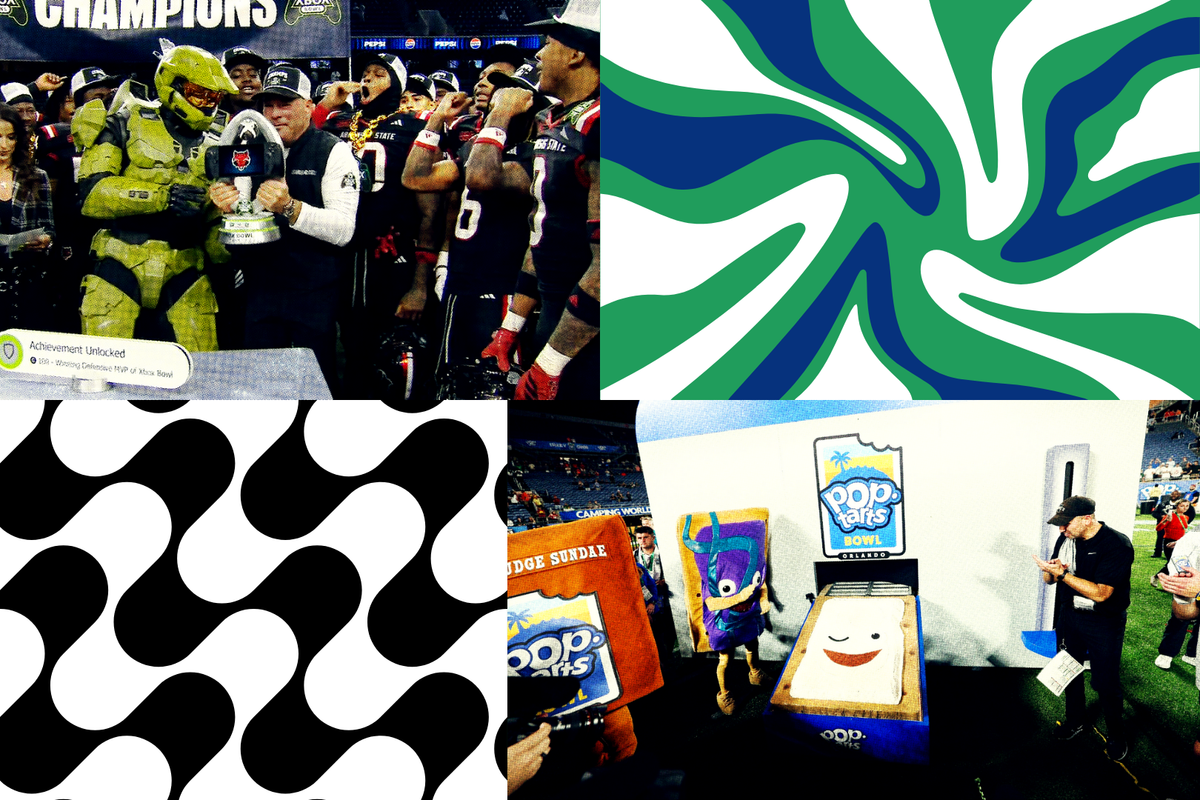
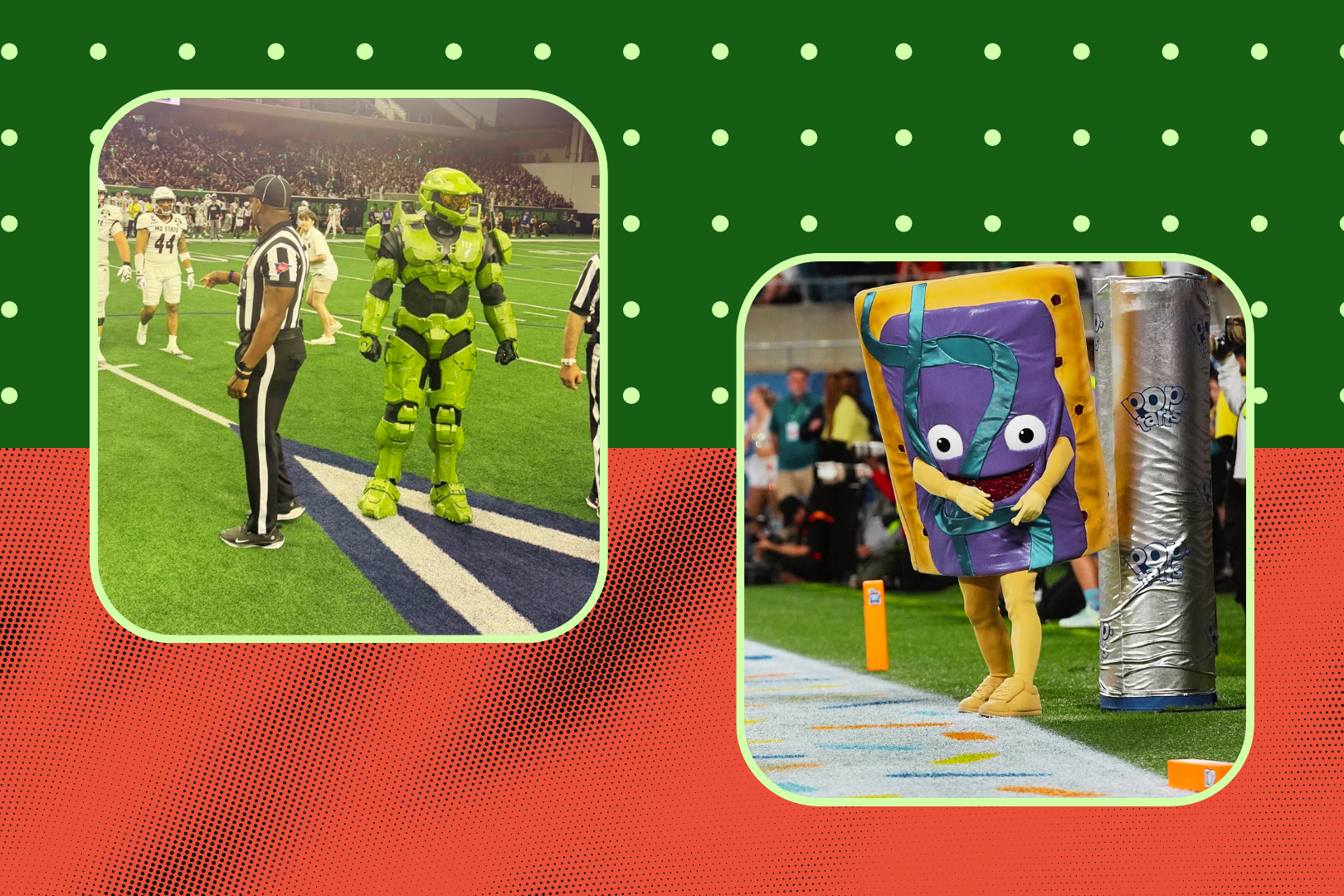
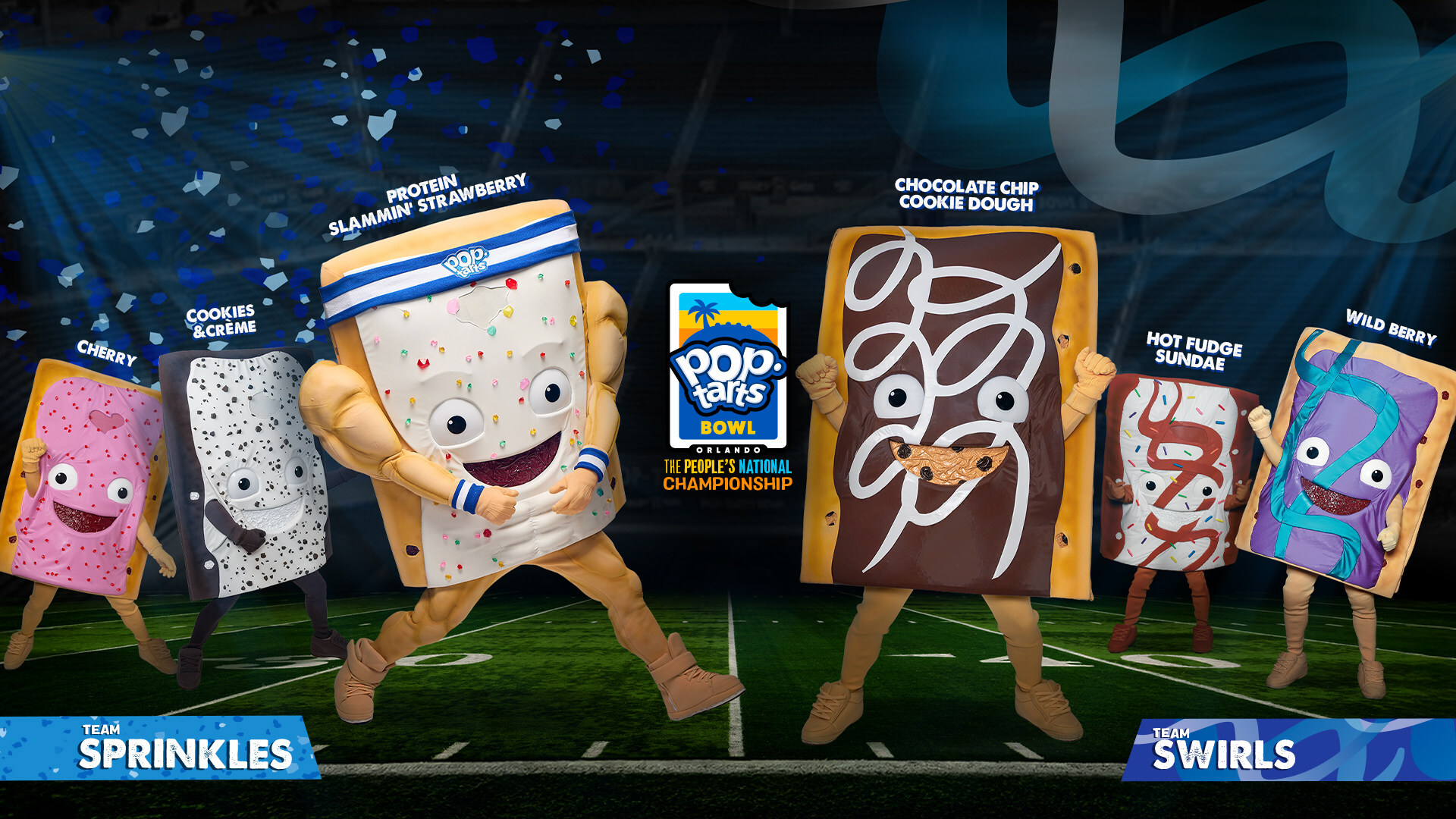
It turns out the way to fix this was not on the field, but with theatrics on the periphery. The Pop-Tarts Bowl leaned into its branding with a trophy that is a functioning toaster, holding a fan vote to pick the bowl’s mascot, and even a sacrificial scene that resulted in an edible Pop-Tart for the winning team. This year, the bowl features six mascots that will compete in competitions with one another on the sideline during the action. The game has mastered creating something noteworthy that sticks out among a sea of other options.
Taking a cue from the Pop-Tarts Bowl, this year’s first ever Xbox Bowl leaned into Microsoft’s gaming intellectual property to make the matchup between Arkansas State and Missouri State stand out. Master Chief from the popular Halo video game series delivered the game’s trophy on a Warthog (a ubiquitous vehicle in the game franchise) and the game’s offensive MVP Corey Rucker was given a trophy inspired by the new achievement icon found on Xbox games. The bowl trophy was innovative as well, with and ASUS ROG Ally portable gaming console attached to the metal trophy.
The Xbox Bowl had more than Halo representation, however. Other gaming properties like Fallout, Fortnite, and Sea of Thieves were represented on the sidelines—adding to the gaming ethos of the entire event. The antics of the mascots and the deliberate leaning into branding to the point of being over the top helps these bowls cut through the digital noise of the internet. In that sense, the game being played on the field is often secondary, moving to the side so that the sideshow of the event can create viral moments that create attention.
Viral Moments That Resonate

We live in an age where what is culturally resonant is often determined by the virality of a video on social media apps. Recently, a scene from the show “Your Friends & Neighbors” featuring Jon Hamm dancing in a club turned viral and became a well-known piece of internet lore. The clip has been used thousands of times on TikTok and other platforms, boosting awareness to a show that many people may have never heard of.
While the show has a contingent of fans, it was this internet meme that has driven up the awareness of it ahead of its second season that launches this spring. Similarly, these moments help drive awareness for bowl games like the Pop-Tarts Bowl and Xbox Bowl. The antics on the sideline became fodder for online content, generating millions of views and thousands of comments.
The responses to both online have been overwhelmingly positive. Fans of the Halo series rejoiced, suggesting that this bowl game should never be discontinued. The Pop-Tarts Bowl has become the gold standard for fun bowl games because of the virality of the mascots, and it is likely the most recognizable non-playoff bowl game in the current bowl lineup.
All of this stems from leaning into virality and internet culture. By doing so, both bowl games have gained mindshare with viewers. Fans will likely tune in not for the football, but to see the antics that the organizers have devised on the sidelines. It’s a shift in focus, but it also allows the game to remain relevant. Non-college football addicted viewers will not know much about the teams playing in the games, but they are invested in the hilarity and branding displays on the sideline, and that could be enough to get them to tune in.
Authenticity and the Future
What these exploits show is an awareness that bowl games in 2025 and beyond need to be bold. The action on the field is no longer enough to draw attention to the game sponsors. Slapping a logo on the field and on jerseys may have been enough a couple of decades ago, but with so many entertainment options today, that is just a baseline—there is a craving something more real, more authentic.
Both Pop-Tarts and Xbox have engaged in experiential marketing that does the hardest part of marketing: getting people to talk about your brand. In that sense, the companies are no longer just sponsors, but rather they are part of the draw to watch. The game is mainly the vessel to which we can see their latest efforts unfold.
The positive reaction and engagement towards both bowl games likely means that other bowl games will need to follow suit. We have seen some of this already, with the Scooter’s Coffee Frisco Bowl giving the winning coach a coffee bath instead of the more traditional Gatorade. But it clear that leaning into weirdness that leads to virality is the best way for the continued survival and success of these bowl games.
Are there diminishing returns if every bowl game tries to out-weird the other? Perhaps. But an alternate view is that college football was always at its best when it had an element of peculiarity to it. Around the landscape, the sport is filled with odd traditions and lore that make the sport incredibly unique. It should be fitting then, that the sports bowl games mirror that eccentricity, to embrace the fun and wacky side of the game.
Are these moments by brands truly authentic? No. But that doesn’t mean that they aren’t enjoyable and worth watching. And that is the point. In a way, brands have reverse engineered authentic engagement through these bowl game shenanigans. They are ultimately not taking themselves too seriously and accepting that they are fun sideshows to the main event that is the College Football Playoff.
What the Xbox and Pop-Tarts Bowls are doing is an exercise in attention farming and a double down on the fun of a sport and its fans. That should be celebrated, and it should be the pivot that other bowl games engage in. While we have lamented the bowl games existence in a playoff world, they are starting to reinvent themselves. To say that, yes there are no real stakes on the line, but why should that make these events any less enjoyable? It’s a strong message, and one that I hope becomes the standard moving forward.
Thanks for reading Deep Cover! This post is public so feel free to share it.