PSG, Palestine, & the Solidarity of Sports
Fans of the French football club showed their support for the people of Gaza on the biggest stage, showing the power of togetherness through sport

For most of my adult life, I have had a fascination with French culture. It started when I was 19. I worked at a restaurant and was renting a room from my grandfather’s neighbor who worked in a city a couple of hours away, so I had the house to myself. I didn’t have cable, so when I got home from work, it was a basic antenna with a few channels that awaited me. My choices then were either local news broadcasts or edited episodes of Sex & the City on the CW. I opted for the exploits of Carrie Bradshaw.
In season six, there is a scene where Carrie is running through the streets of Paris and in the background the song “La Belle et le Bad Boy” by MC Solaar is playing. It was my first exposure to French hip hop, and it triggered a fascination with the genre for me.
Years later, on Spotify, a tailored mix suggested songs by French artist Maître Gims. From there I became fully immersed in French music, and have since read more about the nation’s history, started to admire the athletes that have come from there, and became more interested in its cuisine.
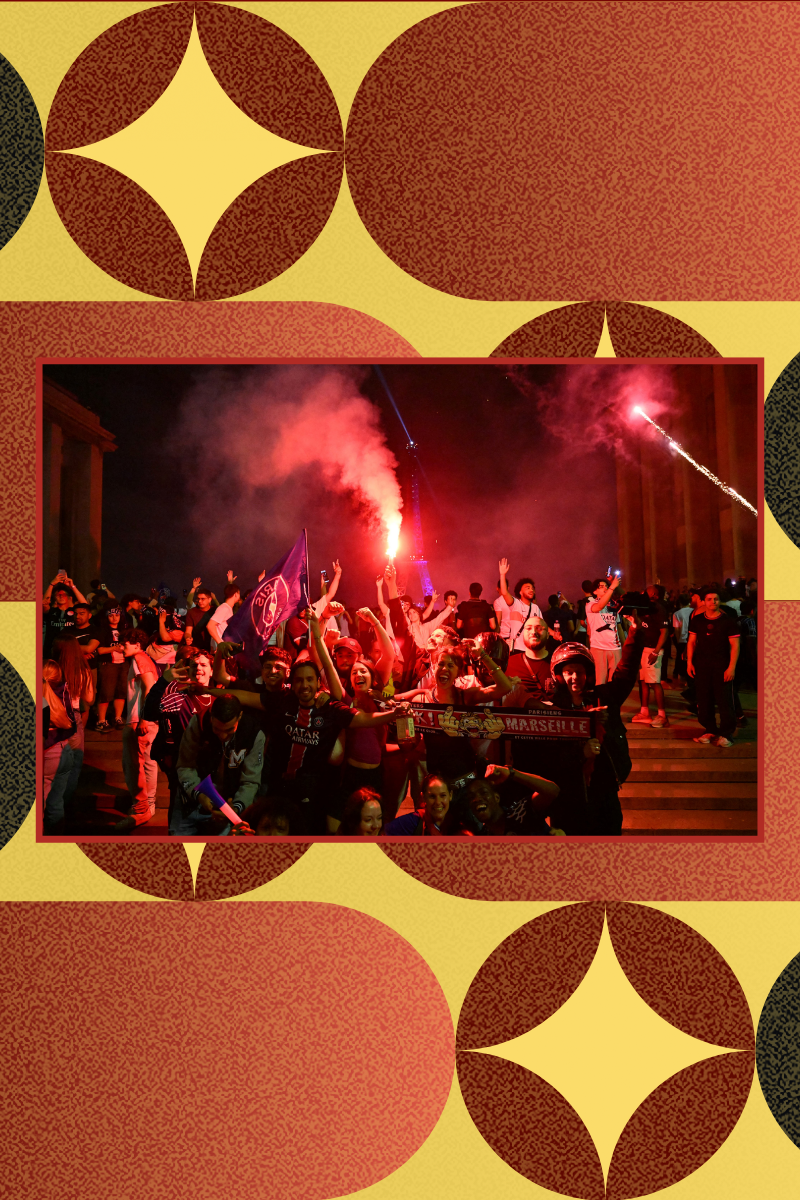
The fascination with French sports has led me to have a passing interest in the countries best soccer club, Paris Saint-Germain (PSG). After years of coming close, PSG won the Champions League recently with a dominant 5-0 victory over Inter Milan. But what interested me most about this match was the way that the team’s fans celebrated the win.
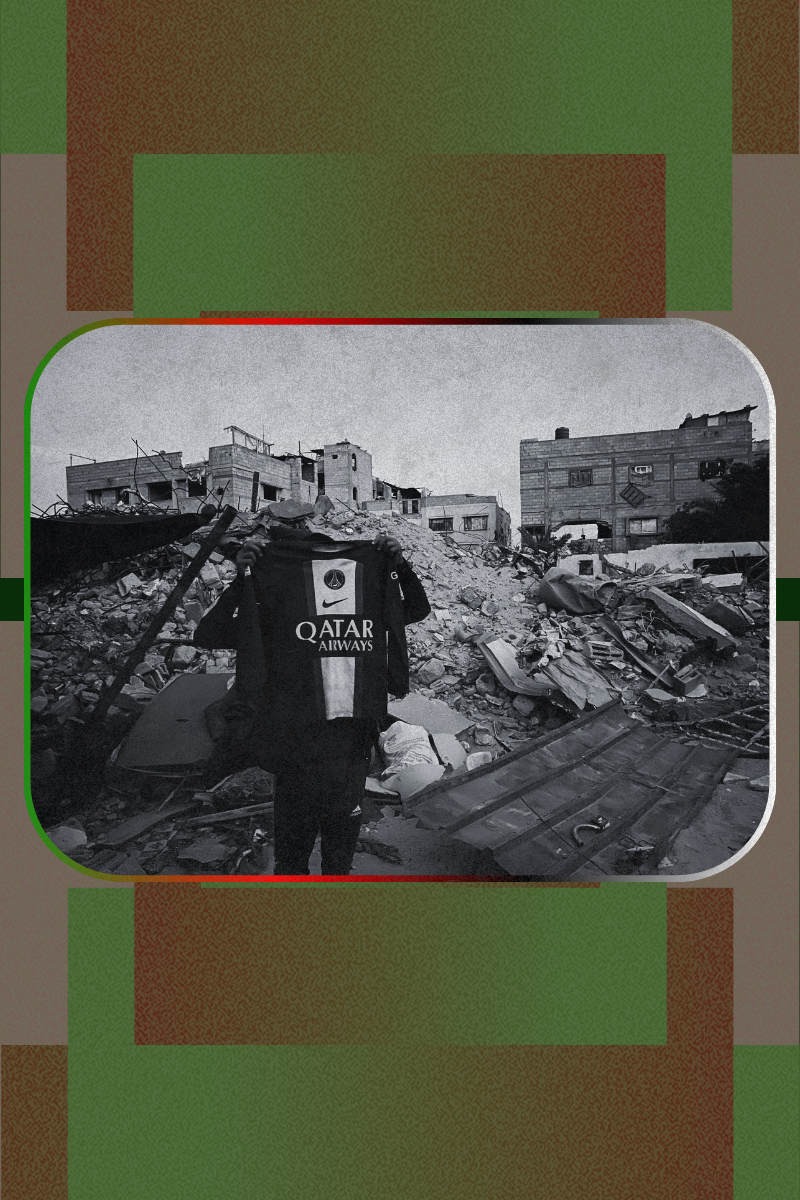
In both the streets of Munich (where the final was held) and Paris, PSG supporters were seen holding signs advocating for the liberation of Palestine and calling for an end to the genocide in Gaza. As a Palestinian American this moment resonated with me, reminding me of the differences between a nation and its people, the role of sports in expression, and the importance of togetherness in times of turmoil.
When Governments Do Not Represent the People
Years ago, when I lived in Jordan I would get into conversations with people about life in America. A common theme in these conversations was that there is a clear delineation between how people feel about the citizens of a country and how they feel about that same country’s government.
During Friday prayers I would often hear an Imam be critical of the United States’ involvement in Iraq and Afghanistan (I lived there during the beginnings of the Iraq War). But at the same time, when American tourists visited Amman, they were received with gracious hospitality. On some level, we can distinguish who is at fault for wrongdoing and who is powerless (for the most part) to prevent it.
The French government over the years has acted in a way that feels hostile to Palestinians and Muslims in general. In the aftermath of PSG’s fan support of Palestine, the mayor of Paris banned the Palestinian flag citing fears of unrest in the city. The French policy of secularism has also created a hostile environment for its Muslim citizens, with bans of various veils and ritual slaughter methods that are sacred to both Muslim (halal) and Jewish (kosher) populations.
France’s position on Palestine has frequently been inconsistent. The country has often leaned on international law and has historically advocated for a two-state solution with Jerusalem as a neutral capital. But it has also banned pro-Palestinian protests and under Emmanuel Macron has shifted to a position blanket labeling Palestinians as terrorists and have criminalized Palestinian liberation organizations.
The people of France, have a much more united stance on the matter. In a survey of French people, 80% have said that they wish for their country to fully recognize the Palestinian state. France has a very diverse population with up to 15% coming from Arab and/or Muslim backgrounds. There is a strong connection with the Middle East (due to colonialism) that has resulted in countries like Lebanon and Algeria speaking French in addition to Arabic.
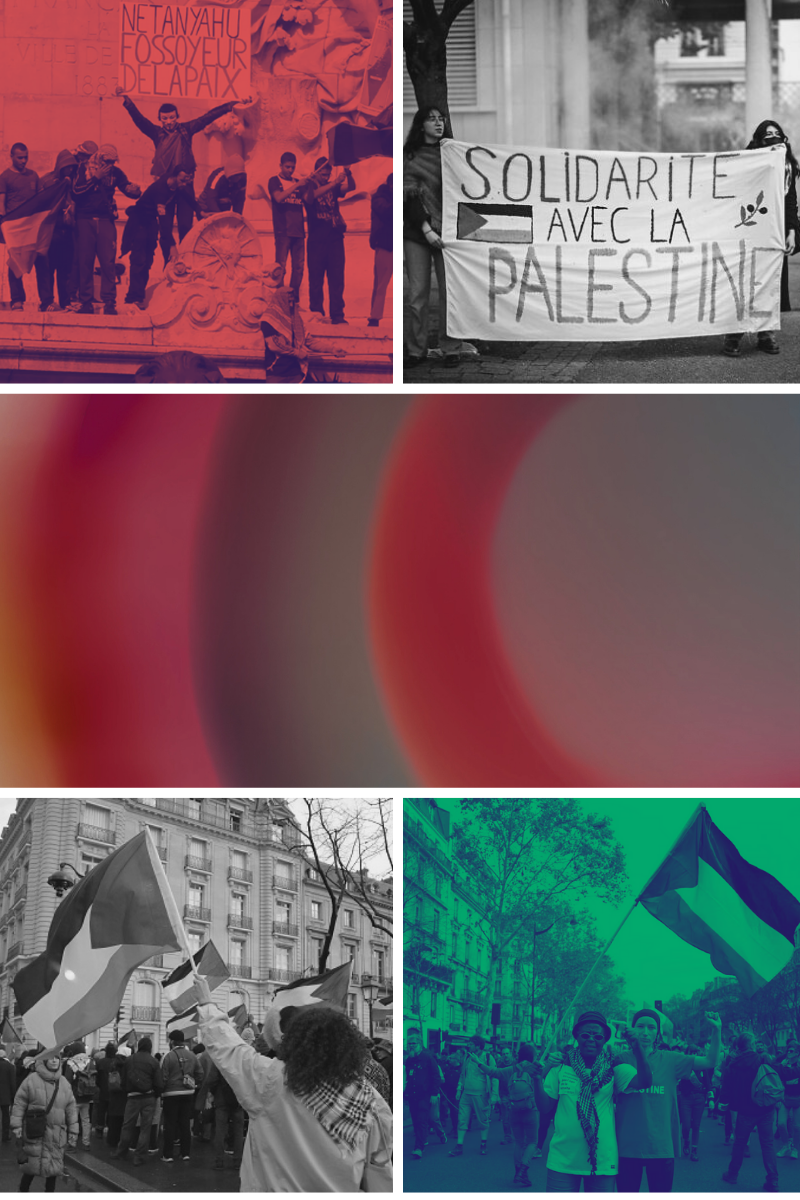
In recent days, French people have demonstrated on the streets of Paris calling for an end to the violence, supporting the plight and heartbreak of the people of Gaza. The French population has long been conscious of social justice, so the decision by PSG supporters to use their voice when the cameras were on them is not a surprising one.
Roughly seven million French citizens are foreign-born, and 40% of those people are in the Greater Paris area (according to a 2021 census)—meaning that a sizable chunk of PSG fans are likely immigrants or the children of immigrants. The support for Palestine by PSG fans once again is indicative of the power of sports as a binding societal element and an outlet to advocate for change.
Sports as a Megaphone for the Many
The beauty of sports is that it’s a medium that captivates the hearts and minds of people that would typically never align. Different social classes, political affiliations, and belief systems are found when watching a game, a connective thread that means so much to so many.
There is power in that unity, power that allows us a moment to share collective human moments. When athletes and fans amplify a cause or stance that is important to them, quite often the world is watching and change can be provoked—or at the very least, uncomfortable conversations can be had.
During the Civil Rights movement in the United States in the 1960s, notable athletes like Muhammad Ali, Bill Russell, and Kareem Abdul-Jabbar were on the front lines advocating for change and justice for Black people. By being associated with the efforts of the movement, these athletes brought more attention and helped to apply pressure by shifting government sentiment, leading to the ultimate passage of the Civil Rights Act and the fight for racial equality during that decade.
Tennis legend Billie Jean King, through her “Battle of the Sexes” match with Bobby Riggs, helped the women’s rights movement gain significant traction in 1973. King’s win challenged stereotypes about women’s capabilities when compared to men and inspired greater recognition and respect for women athletes. This moment helped to push talking points of better pay and more rights for women at the forefront of the minds of the public, which has led to reform efforts that are still ongoing today.
A relatively recent example of an athlete shifting the conversation on an important issue is former San Francisco 49ers quarterback Colin Kaepernick. Kaepernick started to take a knee during the national anthem—silently protesting police violence against people of color. The actions led to the derailing of his NFL career but also sparked a conversation about the need for police reform and how people of color are treated in modern American society.
All these conversations became amplified by sports, even if the athletes that took their positions weren’t directly responsible for the ultimate reforms that took place. Sports is the rare place where a political echo chamber is not as prevalent.
Because all that matters to fans when they are watching a game is their team winning, and the bonding that happens goes far beyond political divisions that may prevent people from interacting with one another. While some fans may not agree with uncomfortable conversations being presented to them, it does force them to reckon with acknowledging them. In the case of the Palestinian struggle for freedom, capturing mindshare in that way has always been an uphill battle.
Bringing Awareness to Palestine
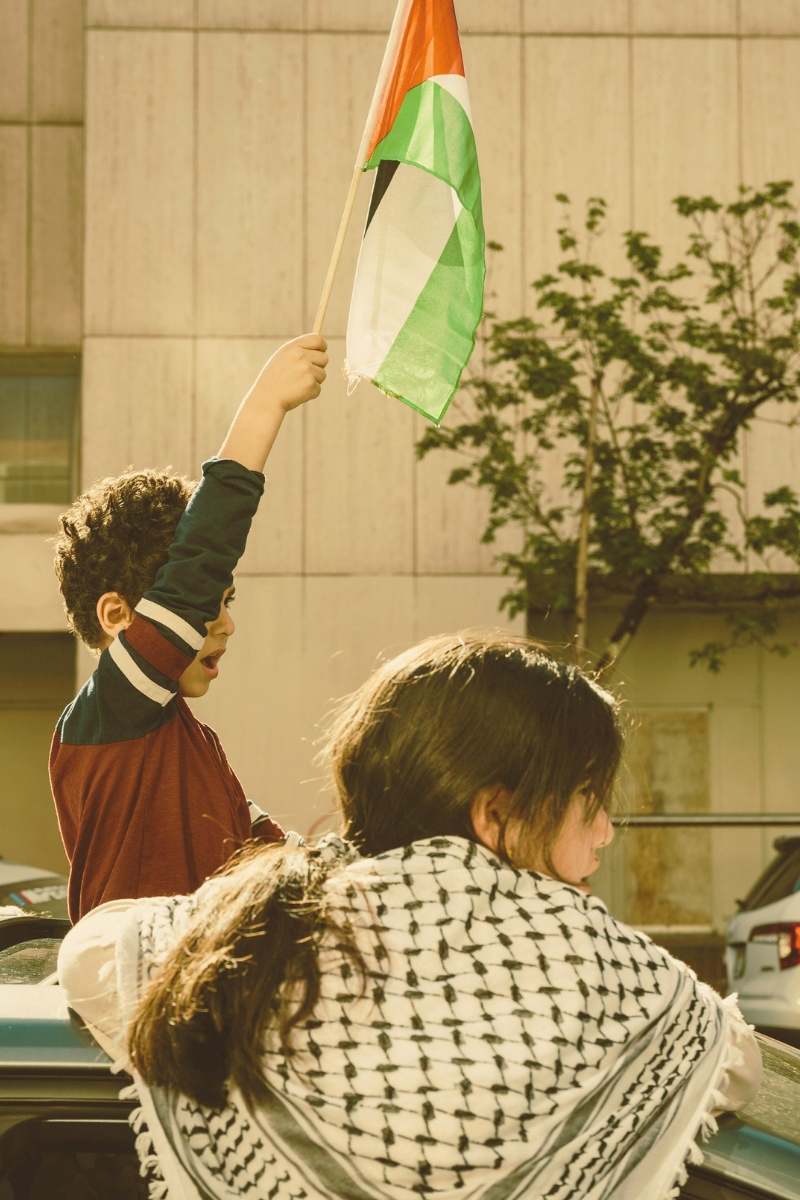
In Western sports, Arabs are often excluded in the broader conversation. There have only been a handful of elite players across major sports that have appeared over the years such as Mohamed Salah, Achraf Hakimi, and Rony Seikaly. But by and large, the representation for Arabs in sport has been lacking. As a result, the ability for those same athletes to drive awareness for causes that would be important to Arabs is difficult.
During the latest war in Gaza, the support from leagues and teams has been decidedly one-sided—a nod to the leanings of ownership groups throughout various leagues. But there have been some players that have spoken up, such as Jaylen Brown of the Boston Celtics and Kyrie Irving of the Dallas Mavericks in the NBA. PSG fans have shown their support for Palestine throughout the season, but using the platform that comes with the Champions League final is incredibly important.
The Champions League final was the seventh most watched sporting event in the world, trailing events like the FIFA World Cup, Tour de France, and the Olympics. With 450 million viewers, it has four times the viewership of the Super Bowl. In short, it’s a big deal. Those 450 million people were exposed to PSG ultras (also known as super fans) supporting their team while also showing solidarity for the people of Palestine.
As a Palestinian American, this is the kind of support that we are simply not used to. Throughout my life, whenever I talk to non-Arab friends about Palestine, I am often put on the defensive, forced to make a compelling argument for innocent people’s right to live. It is often an uphill battle to combat the beliefs of people that are firmly entrenched into an accepted ideology. Much of this difficulty can be traced back to the way that people are taught the politics and characteristics of foreign groups of people.
Seeing PSG supporters in the stands and the streets take the opportunity to deliver a message of solidarity during their club’s happiest moment in decades means a lot. It is a show of compassion on the largest scale that is not the norm for many of us. The positive outlook of the moment is that fans from across the world will see what happened in Munich and Paris and develop solidarity or at the very least have a newfound understanding for the Palestinian struggle.
I have always had an attachment and fascination with French culture. This moment as a Palestinian, has made me feel closer to the people of Paris than I have ever felt without meeting them. To those that held signs and banners, solidarity means more than I could ever express. For a moment during the ecstasy of jubilation, all of us Palestinians were PSG fans, and there is something beautiful about that and in the way that sports can bond us together in ways we may have never imagined.