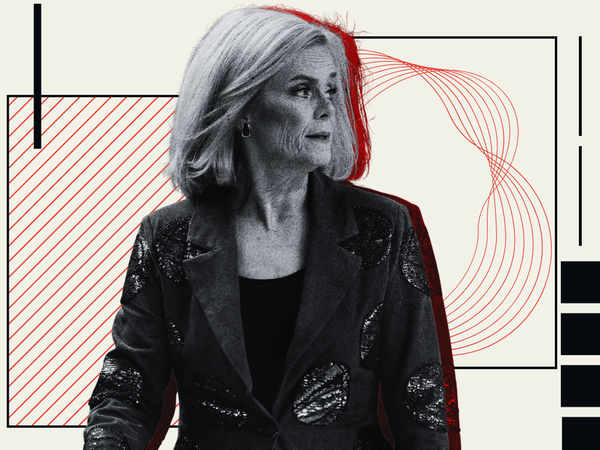
"Survivor" is More Like Sports Than We Might Think
As the show nears its third decade, its longevity and continued success has a parallel to another long-running competition enterprise: pro sports

Months ago, I was in a conversation with a colleague. She isn’t a sports fan by any definition of the term. But we quickly realized that we did have a shared interest in a TV show, and that show was Survivor. When describing her interest in the long-running CBS reality TV show, she noted that Survivor is her version of watching sports.
It’s a line that has stuck with me ever since she said it. Because when you peel back the obvious differences, there is a lot that the show has in common with professional sports. Survivor is a game of risk, endurance, physical strength, mental fortitude, and relationships. The exact same can be said for success in the NBA or NFL.
Cultivating Relationships, Bottling Fame
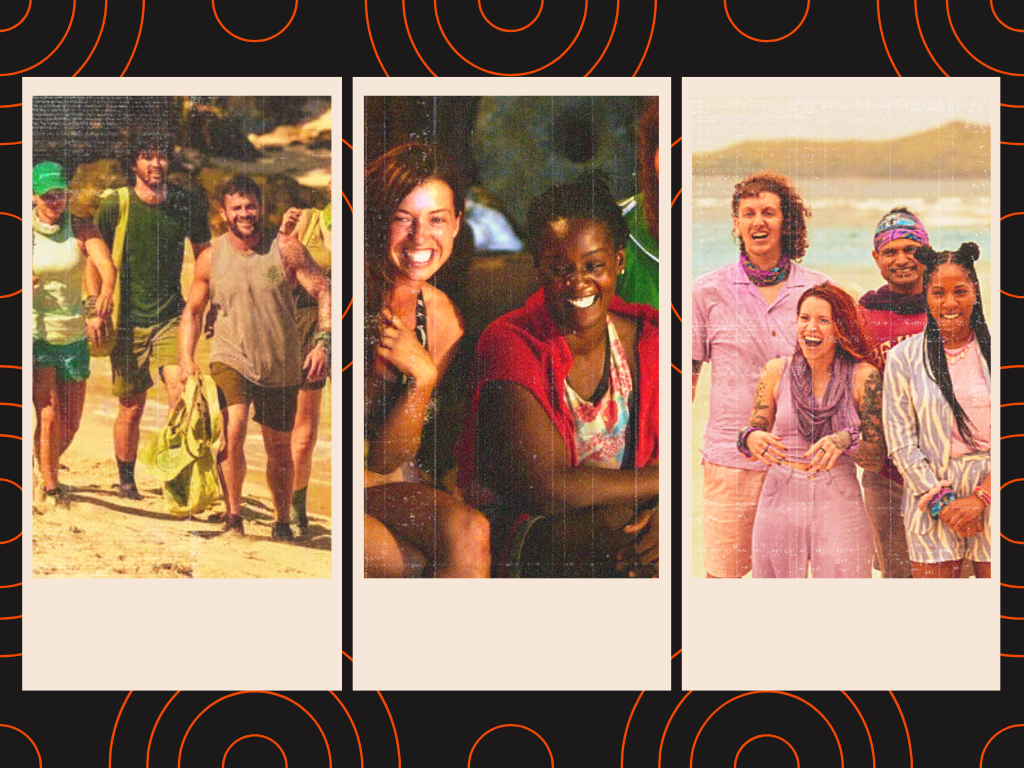
Survivor, perhaps more than most reality TV shows, has a way of changing the lives of its contestants. Part of that is the prize of $1 million. Contestants like Rob Mariano (better known as “Boston Rob”), Sandra Diaz-Twine, and Parvati Shallow have become household names to fans of reality TV. Shallow in particular has parlayed her four appearances on Survivor into a book deal (a memoir titled “Nice Girls Don’t Win”).
Survivor has a long-running history of taking people that live normal lives and giving them an opportunity to open new doors for themselves. Using Shallow as an example, she was working as a cocktail waitress and pursuing a career in boxing before auditioning for the show. From her winnings she was able to make a cameo in the 2009 movie Into the Blue 2: The Reef and hosted a Survivor after show for several years. She turned her opportunity on Survivor into a life of higher notoriety.
This is not much different than the rags to riches stories we see with many professional athletes. When players are drafted, they talk about the fulfillment of a lifelong dream. How they overcame the odds of an impoverished neighborhood and lack of resources to create a new life for themselves and their families. This moment of altered fate is a story that we love to hear time and time again. It brings humanity to a realm that often overlooks the fact that we are watching humans compete for entertainment.
For example, look no further than this year’s NBA Draft. VJ Edgecombe was drafted third overall by the Philadelphia 76ers and promises to be an exciting young player for years to come. Edgecombe comes from humble beginnings and his Draft night interview showed that to the world, where he talked about how he and his mother lived off a generator for seven years as the place where they lived didn’t have electricity. It’s the sort of “came up from nothing” story that we as a consuming public love.
Survivor is no stranger to these types of stories. There have been contestants that were previously unhoused, those dealing with turbulent personal lives, and contestants that were grieving losses. The show helped them elevate from those circumstances into the limelight and to potentially boost them financially. The human element that is shared between the show and sports doesn’t stop there.
Much like professional sports, Survivor is a game of relationships. Alliances are formed, agendas are abided by and putting on a face for the cameras are table stakes. This is not much different than the clashing personalities on a sports roster, which features players that must blend personalities and speak in a certain way to the media to avoid friction—thus preserving their time with the team.
In a weird way, Survivor is both an individual game and a team game. It differs from team sports in the sense that the individual game will always come first, while the opposite is true in sports like football and basketball. But the blending of the two and the relationship building that is required to be successful are analogous across both competitions. No Survivor winner has ever won a season without having strategic alliances, much in the same way that a superstar athlete can never win a championship without competent role players around them.
To win in sports or Survivor, a wide range of skills are required to excel. Both require a combination of fatigue, physical skill, and mental acumen to differentiate the cream of the crop from the rest of the crowd—providing incredible theater in the process.
Physical Demands
The physical demands of sports are well documented. Ligaments and bones are put through a torture test of abuse and fatigue, necessitating athletes to be the best conditioned people on Earth. Consider an NBA player that is expected to play around 30 minutes a night over the course of an 82-game season. This player needs to have the endurance to last through this marathon while also competing at a very high level.
While on a much shorter scale, Survivor contestants also have attrition that they must deal with. Over the course of the 26-day competition, they are deprived of regular amounts of food and drink and often must make do with water from a well, coconuts from trees on the island, and the occasional bit of rice if they are fortunate enough to receive it from host Jeff Probst. It is a test of short-term endurance that often strips down contestants to their core in service of winning—which is language that also feels appropriate to the commitment that athletes have to their bodies.
Beyond simply tests of endurance, both contestants on the show and professional athletes require a range of skills to be successful. A football player must be able to play with both power and finesse. A great running back in today’s NFL for instance, must be able to power over defenders in the open field while also being a crisp route runner in the passing game. In Survivor there is also a balance at play between the mental aspect of the game and the physical one.
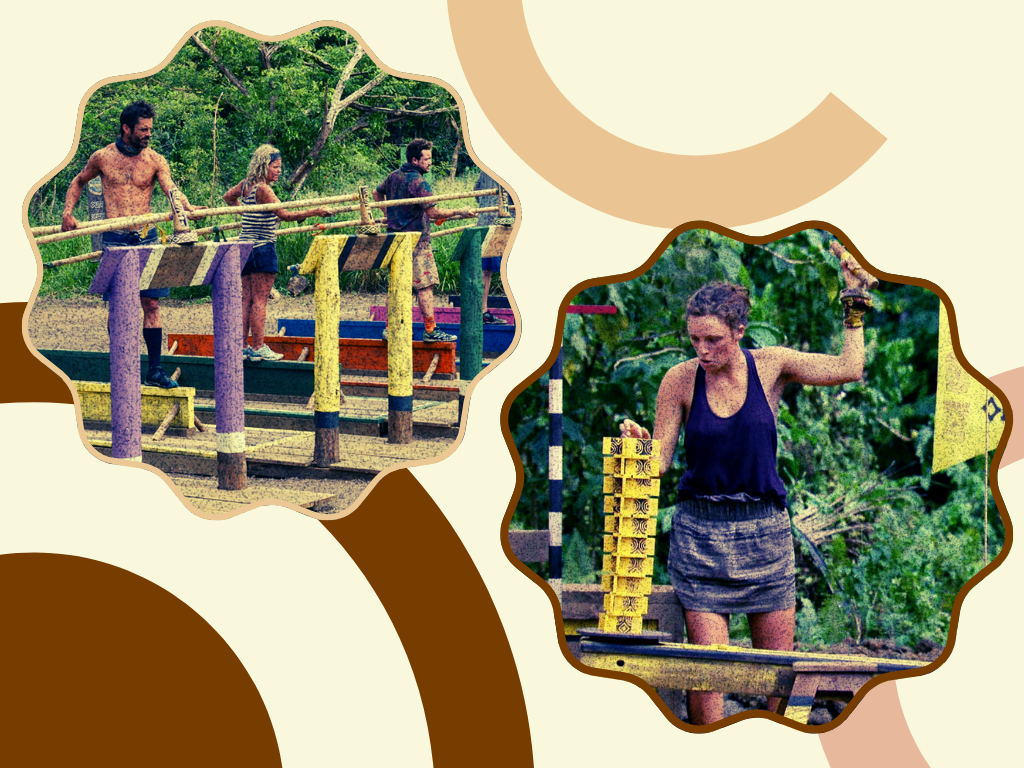
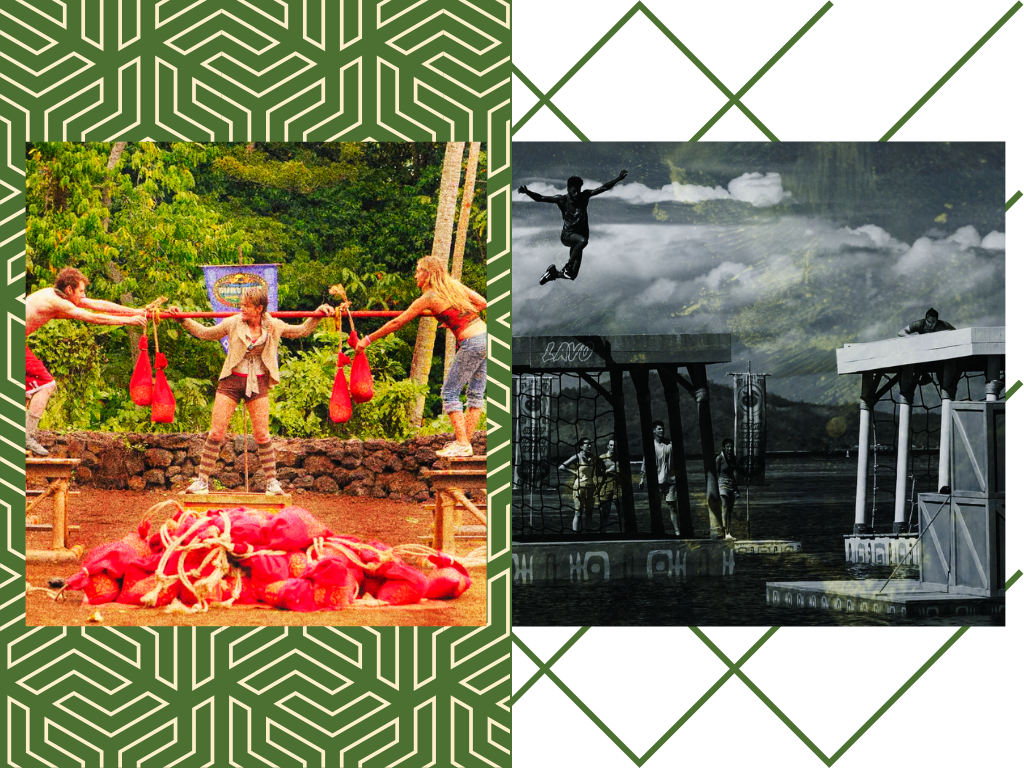
Immunity and reward challenges in Survivor often test the limits of players. They can be tests of endurance requiring the players to maintain a position on poles and planks. But they can also be focused on speed in the way of obstacle courses that require agility and pliability. This is compounded by mental challenges that feature puzzles and mazes, proving that a Survivor player must be both physically and mentally adept to be successful.
People Love Drama
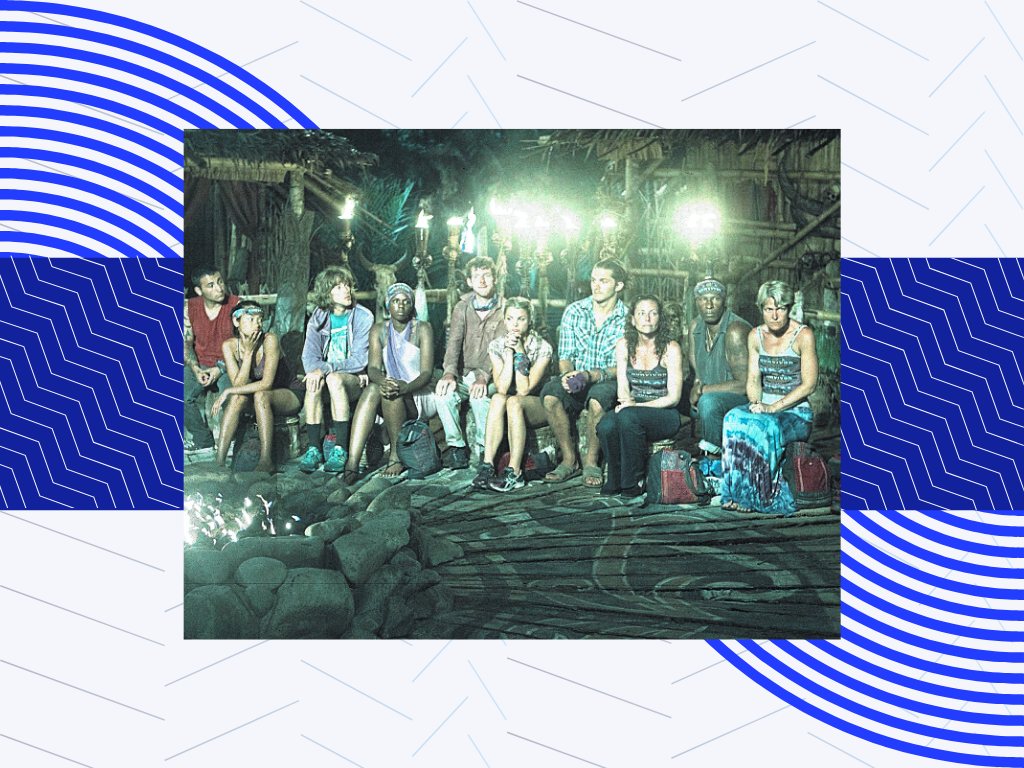
Sports is an entertainment product as much as it is athletics showcase. With that comes storytelling and interpersonal dynamics that are fascinating to watch unfold. In sports, it is the high leverage moments when games are on the line that define the arc of a player’s story and consequentially the fate of their franchise. The comments that the player makes off the playing field are equally consequential and lead to trade requests, discussions about their overall impact, and where they stand in the grand scheme of things for the sport.
These types of moments also have their place in Survivor lore as well. At Tribal Council, where contestants are voted out at the end of each episode, players have become legendary for orchestrating maneuvers to blindside their opponents and boosting their Survivor resumes in the process. Blindsides have both gained the respect of fans while others have made them hated. This creates story arcs and personas that drive fascinating discussions among the Survivor faithful. This is no small community either, as the Survivor subreddit is one of the platforms largest and most active communities.
Much like discourse on X (formerly Twitter) about the NFL and NBA, Reddit Survivor fans post clips of nostalgia from previous seasons, create what-if scenarios if votes had gone differently, and life updates from former contestants. This creates an investment from the fans, and helps to spur interest when contestants appear for multiple seasons. The interesting piece of this all is that fans are often treated to both the storytelling and struggle of first-time players and the expanded story and lore of past players as well—which in a way is reminiscent of veteran vs young players in professional sports.
Survivor presents us with a product that is an illustration of the human condition. A thesis on what a person will do be able to withstand to reach an end goal. The shift in their personalities, the reaction to hunger, and the relationships that are forged and broken along the way are all part of the storytelling process that keeps so many coming back for more every season.
Similarly, the stories of athletes beating the odds to make the league, their greatness on the field of play, and the sacrifices that they make to win captivate us as well. The magic that makes sports special to so many, is also the same magic that have made Survivor an institution for nearly thirty years as it approaches its 50th season next year. We come back to the show repeatedly because it is compelling, and in that way, it is incredibly reminiscent of our collective societal love of sports.
Thanks for reading Deep Cover! This post is public so feel free to share it.