The Fading Mystique of Monday Night Football
Extra games make business sense, but they devalue what made MNF so good to begin with
For the past two NFL seasons, the league has scheduled a doubleheader on Monday nights for four weeks of the season. This year, those doubleheaders are scheduled in Weeks 2, 4, 6, and 7. This is not a random decision, but rather a function of the NFL’s revised media deal that was signed in 2021, which allowed ESPN/Disney to go from 17 games to 23. This increase accounts for four additional Monday Night Football games, plus ESPN’s Saturday doubleheader in Week 18.
From a business lens, this is a great development for the NFL and ESPN. It extends viewing time on Monday nights and captures maximum ad revenue. In an era of multi-feed viewing through features like YouTube TV’s Multiview, some likely view this as a great development. After all, it means more football on Mondays. But in the push to maximize profit, has the NFL cheapened the significance of Monday nights?
The History of Creating a Spectacle
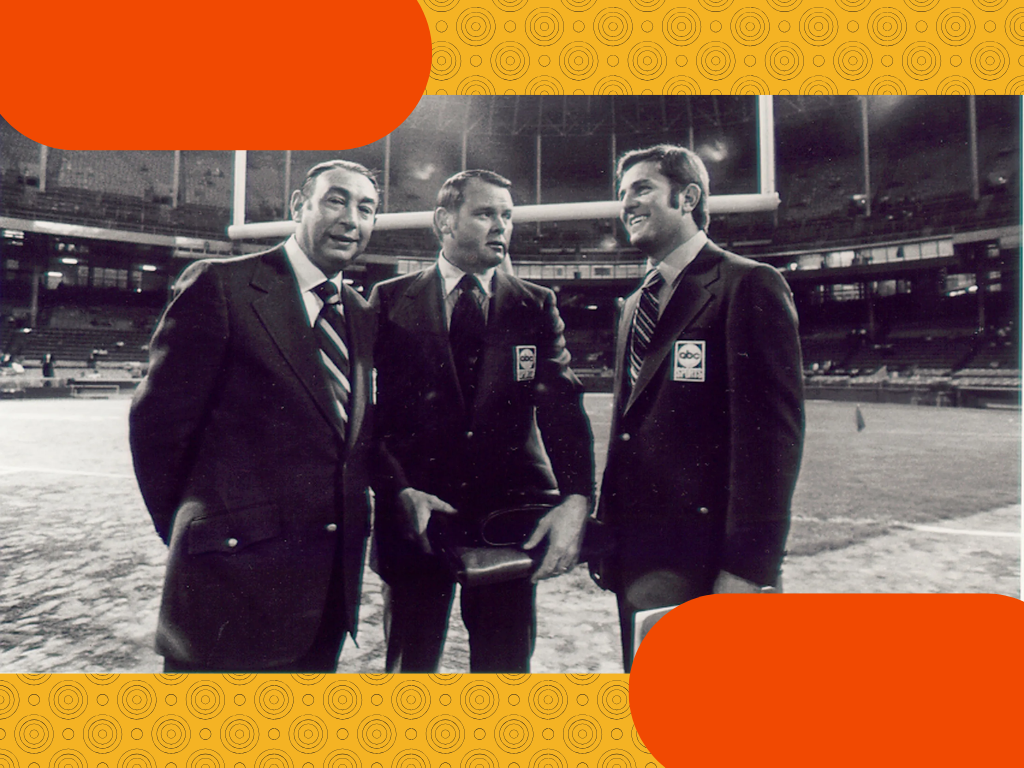
Prior to 1970, the NFL did not play games on Monday night on a regular basis. The league already owned Sundays, but as the sport’s popularity surged in the late 1960s, commissioner Pete Rozelle saw Monday nights as a showcase opportunity—a single game that could command national attention.
By spotlighting a single game in partnership with ABC, the NFL created a must‑see event. The early booth—Howard Cosell, Frank Gifford, and Don Meredith—was polarizing but compelling, and fans tuned in. The group was often abrasive and critiqued, but there was no question that the product was compelling, and droves of fans tuned in.
Rozelle envisioned Monday Night Football as a cultural event that leaned more into the entertainment aspect of sports. The show featured guest cameos frequently, giving it pop culture currency—such as George H.W. Bush, Bo Derek, and John Lennon. It even broke the news of Lennon’s murder in 1980, further establishing it as a staple of both sports and American pop culture.
Monday Night Football transformed the sport of football during the 1980s and 90s. In its early days, it drew 30-40 million viewers—the most for a sports program at the time. Its blend of entertainment and sports created appointment television for fans of the sport every week. This was a showcase of the best product in the NFL on a regular basis, with a presentation that felt differentiated from Sunday.
It’s inarguable that Monday Night Football wasn’t divorced from revenue goals. Rozelle excelled at TV deals, and turning a struggling ABC partnership into appointment television didn’t hurt ad rates. But he also understood scarcity, and that a standalone game would deepen demand.
The popularity made the game matter more. People looked forward to it on Monday and discussed the result on Tuesday. It became a staple for those that gamble on sports, and eventually those who play fantasy football as a way to salvage their weeks.
Innovations that we take for granted today, like multiple camera angles, were pioneered by this standalone product. Players from the 70s and 80s often speak of Monday Night Football with the same reverence NBA players reserve for playing on Christmas Day—the stage made the games feel bigger. There was a magic there, and it feels like some of that is taken away when there are multiple games being played on Monday nights.
Brand Dilution

Monday Night Football was considered the marquee game for the NFL from its inception in 1970 all the way to 2006, when ABC stopped airing the show due to the high costs, despite very high ratings. From that moment on, it was instead Sunday Night Football that became the flagship showcase game for the league. Changes such as flex scheduling made Sunday night more conducive than Monday night.
In 2006, the program moved from ABC (a broadcast channel) to ESPN (a cable channel). We may not think much of that now, but in the mid-2000s that was a big deal which narrowed reach to those with a cable subscription. At that point, it is safe to say that the mystique and appeal of playing on Monday night began to fade.
Rozelle’s scarcity model gave way to Monday night doubleheaders, a move to maximize viewership and ad inventory for ESPN. Over time, the show lost some appointment‑TV aura, and the broadcast teams rarely matched ABC’s gravitas.
The move of John Madden and Al Michaels to NBC was indicative of the priority shifting from Monday Night Football to Sunday Night Football. Much of the ESPN era has been maligned for offering inferior broadcasting teams, which led to reduced ratings for the show. This changed in 2021, when the network poached Joe Buck and Troy Aikman from FOX to be the faces of Monday Night Football.
The network eventually introduced the ManningCast, an alternative broadcast with brothers and former quarterbacks Eli and Peyton Manning that has been wildly popular. It’s another attempt to restore Monday’s special feel, though opinions differ on how fully it succeeds.
The NFL in 2025 operates in stark contrast to the scarcity model that Pete Rozelle championed. Instead, they are a daily and year-round content machine. There are multiple games on Mondays, games on Thursdays, and later in the year more games on Saturdays. The league has expanded to Christmas Day games, adding even more inventory for network partners to buy.
The doubleheaders on Monday night are a symptom of the larger content dilemma of modern sports broadcasting. Because we are so connected at all times, there is a sense of urgency by leagues to always be available. The NBA with its new media deal boasts that there will be nationally televised games on every night. Much how our favorite shows and video content are always on-demand so are our favorite sports.
The cost is losing what makes a standalone game special. Anticipation fades when the same product is slotted everywhere. The revenue is tangible, but the distinctive soul that made Monday Night Football different grows harder to find, and perhaps impossible to recapture.
Thanks for reading Deep Cover! This post is public so feel free to share it.