
The Illusion of Game 7 Home Court Advantage
How ticket hyper-inflation and the three-point revolution turned the most sacred advantage in basketball into a statistical coin flip


Game 7 in the NBA Playoffs holds a mythological weight over us as basketball fans. When they arrive, we enter basketball nirvana—hoping for an epic resolution of a war of attrition that was set over the previous six games. It’s a mixture of tension, frustration, and urgency in one package. When it comes to predicting the outcomes of these games, we often rely on an old maxim: that the team playing at home will have the upper hand.
In any analysis of a playoff series, we often resort to the importance of home court. The reasons are well-documented—familiarity with the venue, crowd on your side, and the ability to sleep in your own bed as opposed to a hotel. For decades, the theory of home court advantage has rung true, but the NBA is constantly evolving and changing. And in a decade that has seen increased parity, shifting crowd dynamics, and the importance of shooting variance, home court in Game 7 is not as bulletproof as it once was.
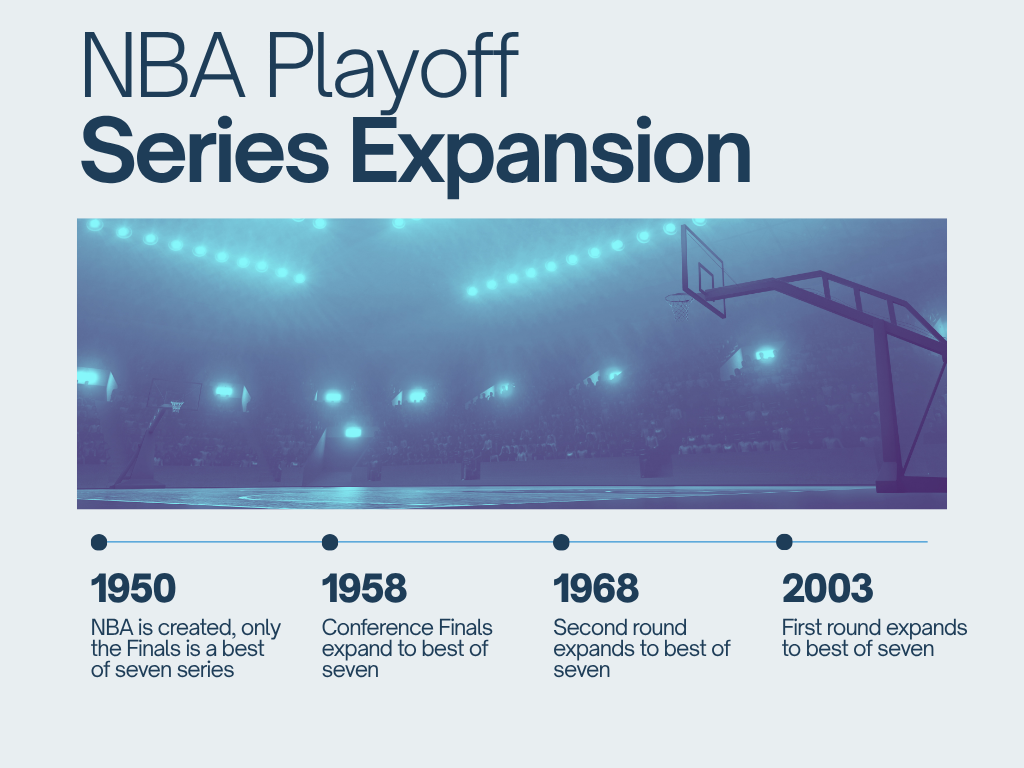
The NBA, when it was founded in 1950, started by only having the Finals be a best of seven series. Over time, they have added it to other rounds—the Conference Finals in 1958, the second round in 1968, and the first round in 2003. In the early days, home court advantage was dominant. During the 1950s, there were six Game 7’s, and all of them were won by the home team. The trend continued into the 1960s, where the home team went 11-2 in Game 7. In fact, it wasn’t until the 18th Game 7 in NBA history before a road team won when the Boston Celtics beat the 76ers on the road in Philadelphia in 1968.
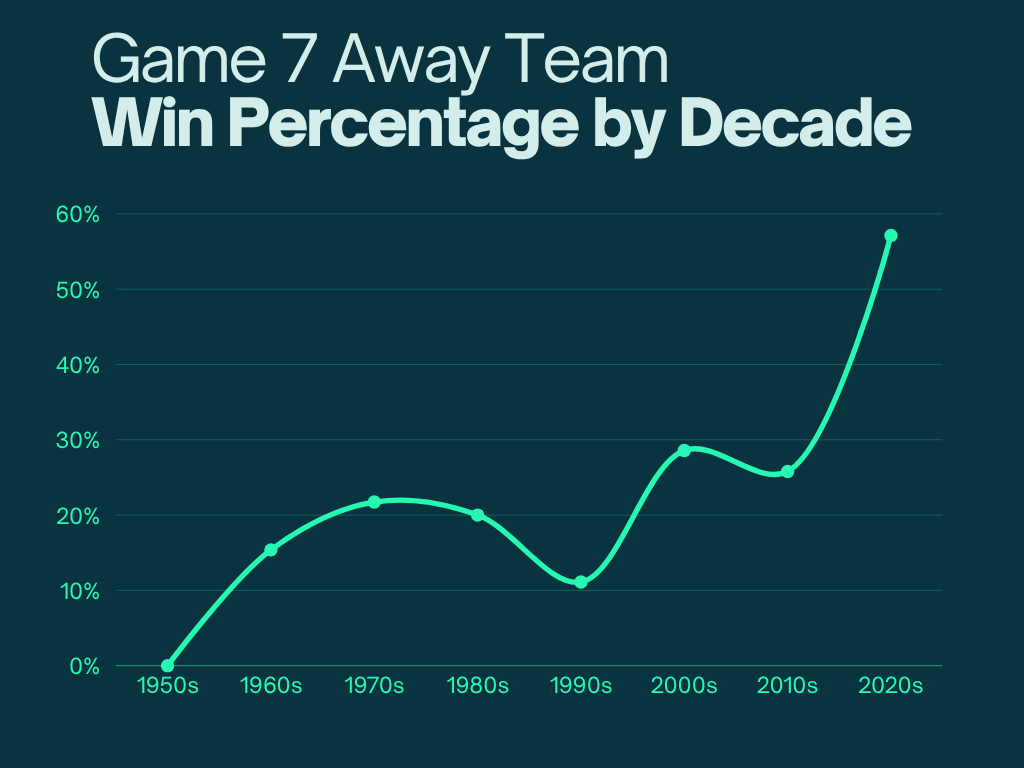
This trend of home court dominance continued over the next four decades. From the 50s all the way through the 2010s, the away team never won more than 28% of the Game 7 matchups. All of the telltale signs of why this was the case are there—the advantages of the home crowd, sleeping in your own bed, and the opposing team dealing with those elements. But it also was indicative of the gap in talent in the league during those years. For many of the teams in past decades, they may have slipped and allowed a series to get to a seventh game, but once they were faced in a do or die scenario at home, they usually prevailed—the talent ultimately won out.
There was also a player mentality that went into the looming specter of playing a Game 7 on the road. In the ESPN 30 for 30 documentary “Winning Time: Reggie Miller versus the New York Knicks“, Reggie Miller discussed that mentality when it came to Game 7 of the 1994 Eastern Conference Finals when his Pacers came into Madison Square Garden to play the Knicks. In Game 6 in Indiana, Miller missed a late free throw that cost the Pacers the game, and forced the pivotal Game 7. In the documentary and subsequent interviews, Miller noted that that moment is when the Pacers lost the series. Game 7 on the road, especially at a venue like Madison Square Garden, carried with it an enormous mental weight that had to be overcome. And so many players during those years were unable to overcome it.
Miller learned his lesson and was able to overcome and vanquish the Knicks at Madison Square Garden the next year in the second round after a missed Patrick Ewing finger roll layup. Miller triumphed because he was able to overcome the mental hurdle that came with winning on the road in that sort of a charged situation. But as time has gone on, basketball has continued to change. And with that, the nature of Game 7’s have changed with it. But that crushing mental weight required a specific kind of environment to sustain itself—an environment that the modern NBA has inadvertently spent the last two decades dismantling.
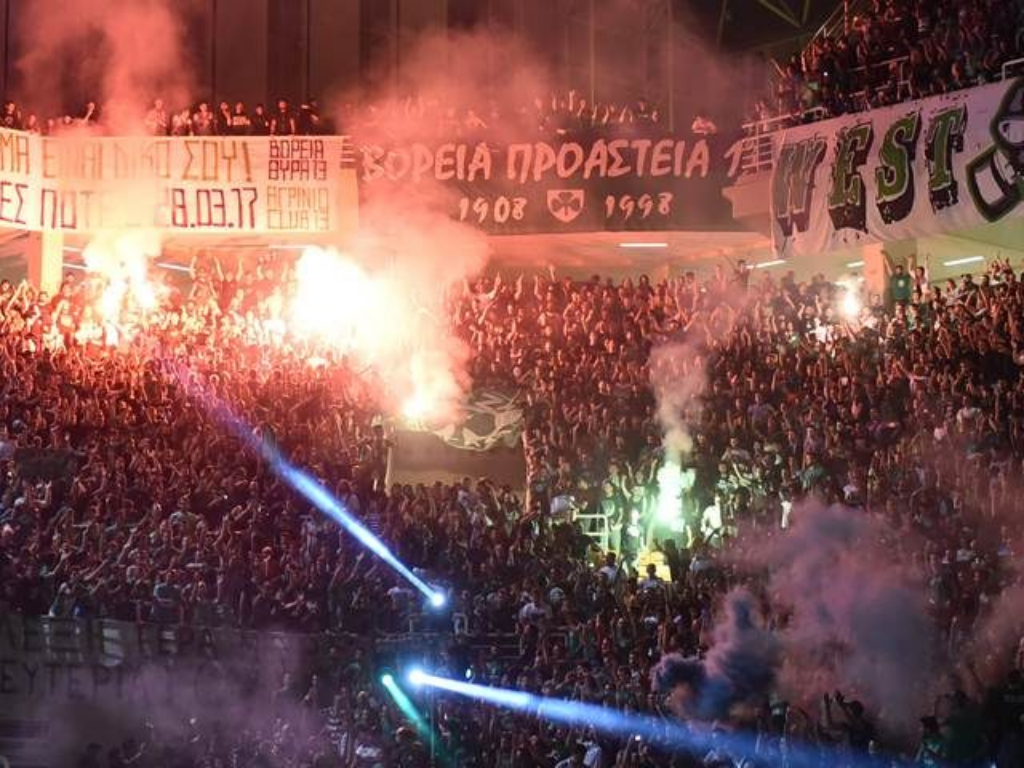
One of the most striking visuals I’ve seen in recent years was the difference in fan atmosphere between an NBA playoff game and a EuroLeague game. EuroLeague crowds often resemble hyper-active soccer crowds in the region—filled with chants, standing fans, flags, and sometimes pyrotechnics. NBA playoff games used to have some of that energy but it has faded into something more subdued over time. There are two culprits for this: rising ticket prices and the cultivation of a family-friendly environment.
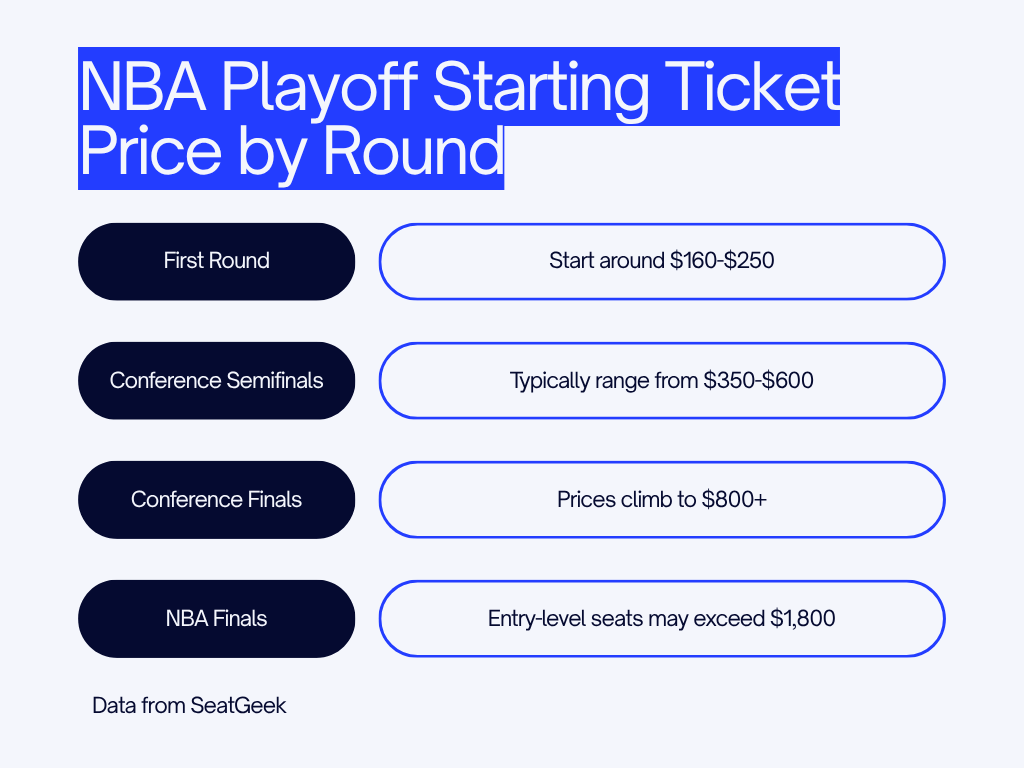
According to SeatGeek, playoff tickets in the NBA start at around $160 per ticket in the first round and escalate to $1,800 per ticket for entry level seating in the Finals. In an economy with less and less disposable income, many of the lower and middle class fans are effectively priced out. We see this dynamic in action with the rise of team-sanctioned watch parties outside of arenas. Playoff tickets have become a luxury of the rich in many ways, and generally speaking those fans have little interest in becoming rowdy.
On top of the pricing, the NBA has long fashioned itself as a family-friendly product. They want parents to feel comfortable bringing their kids to games in a continued effort to enhance fandom and viewership. That is a tougher sell when loud fan atmospheres have the potential to cross the line into hooliganism. If parents don’t feel safe at an NBA game in the stands, then they will stop coming. That’s an outcome that terrifies the NBA, so the result is a slightly neutered home court experience.
The combination of those two elements leads to a fan experience that shifts from animosity for the road team to just a mild annoyance. Teams have tried to mitigate this with themed playoff t-shirts and calls on fans to get loud, but it’s had mixed results. The “hostile” in “hostile road environment” has continued to diminish and opposing players are simply not as intimidated as they once were by a Game 7 on the road. There are a few instances where the atmospheres are incredible but the more hostile environments typically happen outside the arena and not in it.
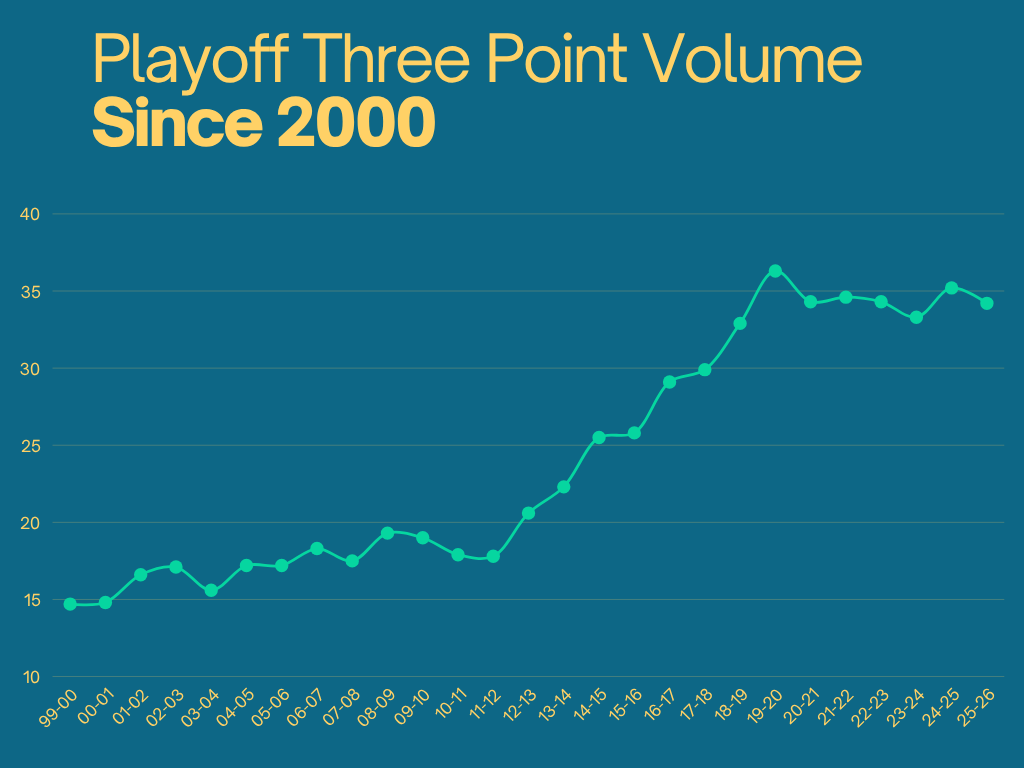
As crowds have changed over the years, so have the tactics on the court. Thanks to players like Steph Curry, Damian Lillard, and James Harden, the three point shot has increasingly become the most important shot in basketball. What started as an analytics calculation, has turned into a reimagination of what is expected of today’s player. Three-point shooting started to increase in volume around 2015—coinciding with the rise of the Warriors dynasty. In the 99-00 season, teams in the playoffs attempted 14.7 threes per game, totaling 19% of their shot volume. This season, teams are shooting 34.2 three-pointers per game in the postseason—accounting for 40.1% of all attempts. The shot has more than doubled in frequency, which introduces variance to the equation when it comes to a Game 7.
Few things can silence a home crowd faster than a couple of made threes. In a three play sequence, there can be a six point swing that can render any cheers in an arena lifeless.
And when a team has a hot shooting night, there is often little that opposing defenses can do to overcome it. That shooting variance can be credited with the fluctuation in away team winning percentages increasing in the 2020s. There were five Game 7’s this postseason before the Finals. Four of those winners were determined by the team with better three-point shooting efficiency. The only exception was the first round series between Toronto and Cleveland where the Raptors shot percentage points better than Cleveland (28.6% vs 28.2%) from three but still lost the game. The three-point shot is the great equalizer in today’s NBA. It’s the reason that no lead is safe these days and also why home court advantage simply doesn’t mean what it used to.
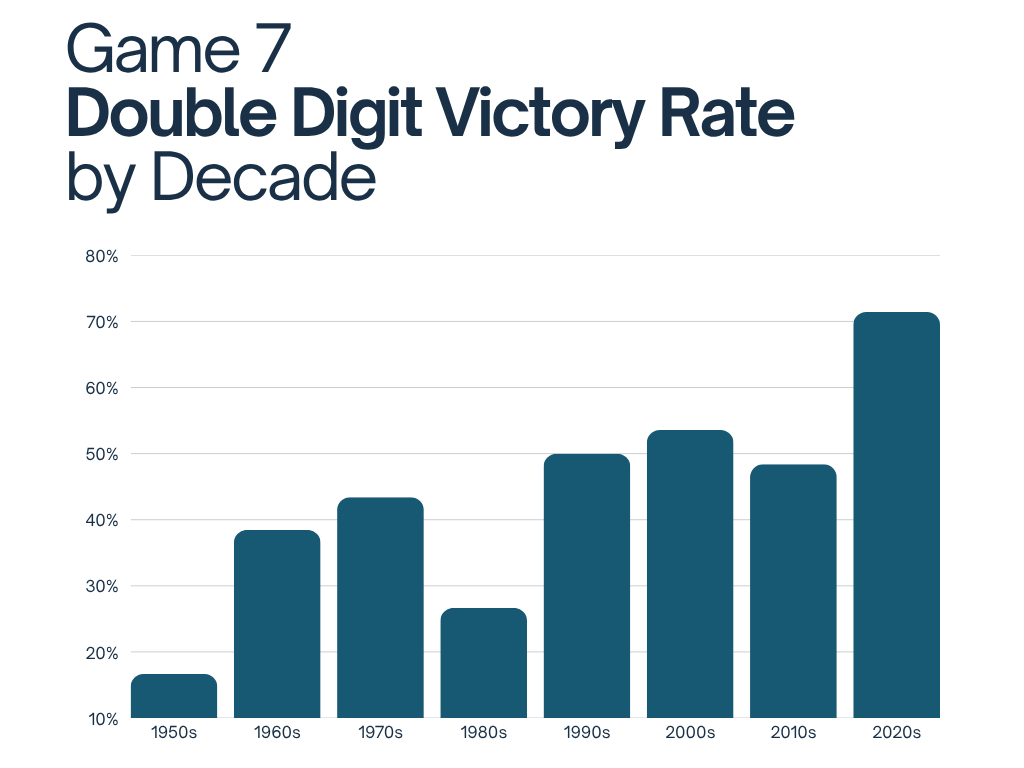
Shot variance can also be attributed to the fluctuation in margin of victory in Game 7’s. We have this notion in our minds that a Game 7 is like the final battle scene in an action movie. That teams trade blows one after another and the victor barely makes it out alive. In reality, thanks to shot variance, more of these games end up in double digit outcomes. In the 90s, 2000s, and 2010s, Game 7’s ended in double digit margins of victory between 45-50% of the time. This decade that number has ballooned to 71.4%. The old mantra of the NBA being a “make or miss league’ has never been more accurate.
This trend also is reflected in the number of blowout outcomes (game with a margin of victory of 20 points or more). From the 50s all the way through the 2010s, Game 7’s were blowouts less than 25% of the time. This decade, they happen much more frequently at 38% of the time. These blowouts happen for both the home and away team. This year’s playoffs are a perfect illustration of this.
The Detroit Pistons closed out the Orlando Magic at home by 22 points and the next round the Cleveland Cavaliers blew out the Pistons in Detroit by 31 points in Game 7. The common denominator? Shot variance. Against the Magic, the Pistons shot a blistering 48% from three (versus the Magic’s 33%) and against Cleveland, the Pistons shot 30% (to Cleveland’s 32%). The home crowd and the advantages of playing at home were still there, but the shot making was not. The way the game is played today and the volume at which threes are taken, has largely rendered homecourt in Game 7’s into a bit of a triviality.
In the past, teams often were incentivized to win games in the regular season because home court advantage was so coveted. A good explanation for this is because years ago, there was often a concentration of talent at the top of the league so any sort of structural advantage for later rounds was essential. But in today’s NBA landscape, the talent is much more diluted. With increased player movement and a collective bargaining agreement (CBA) that makes retaining players for long periods so difficult, the NBA has never seen this much parity. In this decade, there have been 12 different franchises that have made an NBA Finals—already more than any other decade in the history of the league.
Because talent is always moving around, there comes a lack of synergy with roster construction. And with the attrition of multiple postseason runs, injuries are bound to happen and team depth is tested more than ever. When the talent is spread so thinly across the league, the playing field is more level, which leads to more upset potential in a Game 7 environment.
And yet despite all the evidence we have that home court advantage has never been weaker in the playoffs, we cling to it. It’s one of those old basketball axioms that we rely on to help us decide who has the edge in a game. Perhaps it’s one of those things where it’s a space of comfort to ground ourselves in to counter the madness of unpredictability that the NBA has increasingly become. We don’t know who will have a hot or cold shooting night, we don’t know when injuries will occur, and we don’t know how a referee will call a game. But we can at least say that a team has an advantage by playing at home.
Many have concluded that the NBA regular season has become meaningless. One of the last shreds of meaning that it has is that good regular season teams are rewarded for their success with playoff home court advantage. If that is no longer considered an advantage then the regular season means even less. So in that sense, we need home court to matter. Otherwise we are watching 82 games that deliver us no context to how a season ends.
The NBA postseason is often seen as the most predictable in American sports, one where the better team always wins. However, the dip in home court relevance introduces the unknown, an element of randomness. And that is very good for the health of the NBA as a product even if it comes at the expense of home court advantage being a bit of a farce.
Thanks for reading Deep Cover! This post is public so feel free to share it.