The Mythology & Fallacy of the NBA Hometown Hero
The allure of the hometown star has captivated NBA fans for decades—but the reality rarely lives up to the fantasy

In the fifth season of Netflix’s hit series Stranger Things, there is a throwaway scene without much consequence that to a sports fan may have been memorable. As the main ensemble of characters are seeking to move in secrecy there are two guards that are having a discussion about basketball. One mentions Reggie Miller going 4/6 from the field in a game, while the other notes that Steve Alford would have doubled those numbers. It’s a small line but likely rooted in discussions that basketball fans in Indiana were having in the late 80s.
The struggle for fans at that time, was that the Pacers were resetting their franchise and chose to draft Miller, who was from California and played at UCLA, instead of Steve Alford. Alford was a local legend, earning Mr. Basketball in Indiana in 1983 and eventually leading the Indiana Hoosiers to a national championship in 1987 before entering the NBA Draft.
There was a desire for fans at the time to draft Alford because of his local cult status. Many people were disappointed by the selection of Miller, so much so that Pacers general manager feared being attacked for selecting the UCLA product. History proved Walsh right, as Miller became the face of the franchise and went on to a Hall of Fame career while Alford lasted only four years in the NBA before transitioning to a successful career as a college coach. The Miller vs Alford debate is an example of one of the most seductive fantasies in sports: the desire for the homegrown hero to play for his hometown team, but it is also one of its most dangerous traps.
The Psychology of the Hometown Pick

Sports is one of the last vestiges of tribalism that we have in modern society. With fandom and cities there is tremendous value placed on an “us versus the world” credo. Look no further than the “Detroit versus everybody” motto that almost all Detroit sports teams have embraced as gospel to their identities as proof of this.
Fan bases often tie much of themselves and the ethos of their cities to their teams as a result. This creates a sort of “one of us” dynamic when a local product is in line to be selected or acquired by the local NBA team. This applies to potential trades and free agency decisions as well. It’s why speculation about Anthony Davis signing with the Bulls or the Wizards trading for Kevin Durant are always mentioned in rumor mills.
What is at play here is an emotional calculus as opposed to a sound basketball decision. There is so much weight placed on the idea that the player “just gets it” when it comes to team and city culture, and fans ultimately want to root for someone that they can identify as one of them. This is especially more pronounced as player salaries have ballooned—making their relatability less likely otherwise.
Fan desire, therefore, creates tough predicaments for front offices—as was evidenced by Donnie Walsh’s fear of being attacked for selecting Reggie Miller. While a team will often insist that they are making the best basketball decision at all times, there is undeniable pressure from fans to take local products if they are available. The last thing a team wants is a fan revolt for the wrong pick—it’s a delicate balance that team’s need to balance that often goes unconsidered. Ignoring that pressure and making the best basketball decision is crucial to successful team building.
The Local Legend That Never Was

From the perspective of the Pacers at the time, selecting Steve Alford would have been a home run from a public relations perspective. In a state that covets high school basketball, Alford was one of the best that the state has ever seen. In the 1982-83 season, Alford was one of three players ever to score over 1,000 points—ending the season averaging 37.1
The local legend status was further expanded when Alford chose to play at Indiana under Bobby Knight. He won a title in his senior season and was named a consensus All-American two years in a row. It’s fair to say that from 1983-1987, Steve Alford was the face of Indiana basketball as a player. In his last two seasons in Bloomington, the Hoosiers went 51-12 and were a force. The Pacers drafting him would have made sense from a storytelling perspective, and it was a story that Pacers fans wanted to hear.
But the Pacers identified that because of his smaller size, Alford may not translate as well to the NBA game. Miller, on the other hand, possessed the same scoring ability but with a 6’7” frame. In an era of physical play that required some level of size to survive, Alford was at a disadvantage, and he was never able to catch on as a starter—only starting in three games in 169 appearances over four seasons. Miller went on to become the face of the franchise and played all 18 years of his career in Indiana, cementing himself as the greatest player in franchise history. To this day, Miller is the all-time leader for the Pacers in three pointers made, assists, steals, and points. Ignoring pressure to take the homegrown talent proved to be the right call for Indiana.
The Alford and Miller conundrum is not an outlier situation. In 2012, the Portland Trailblazers would have their own version of this decision. In the 2012 NBA Draft, Portland held the sixth and eleventh picks. Terrence Jones was also in that draft and was a local product from Oregon. Jones was a top 10 high school prospect and led Jefferson High School to three straight Oregon Class 5A state championships. He was a two-time player of the year in high school and averaged 32 points, 13 rebounds, and 5 assists as a senior.
Jones would go on to play two years at Kentucky before entering the Draft, and his hometown team had two picks. Instead they drafted Meyers Leonard and Damian Lillard. Leonard turned into a serviceable backup big while Lillard became the modern face of the Blazers franchise. Jones would ultimately fizzle out of the NBA relatively quickly and go on to bounce around the G League and the Puerto Rican league.
In the examples of both Miller and Lillard, outsiders were taken instead of a local product and turned into institutions in the cities that drafted them—ironically becoming local heroes in their own right. For every rule there is an exception, however. And when the hometown story works, it is incredibly intoxicating and makes the concept viable spanning generations.
For Every Rule There is an Exception
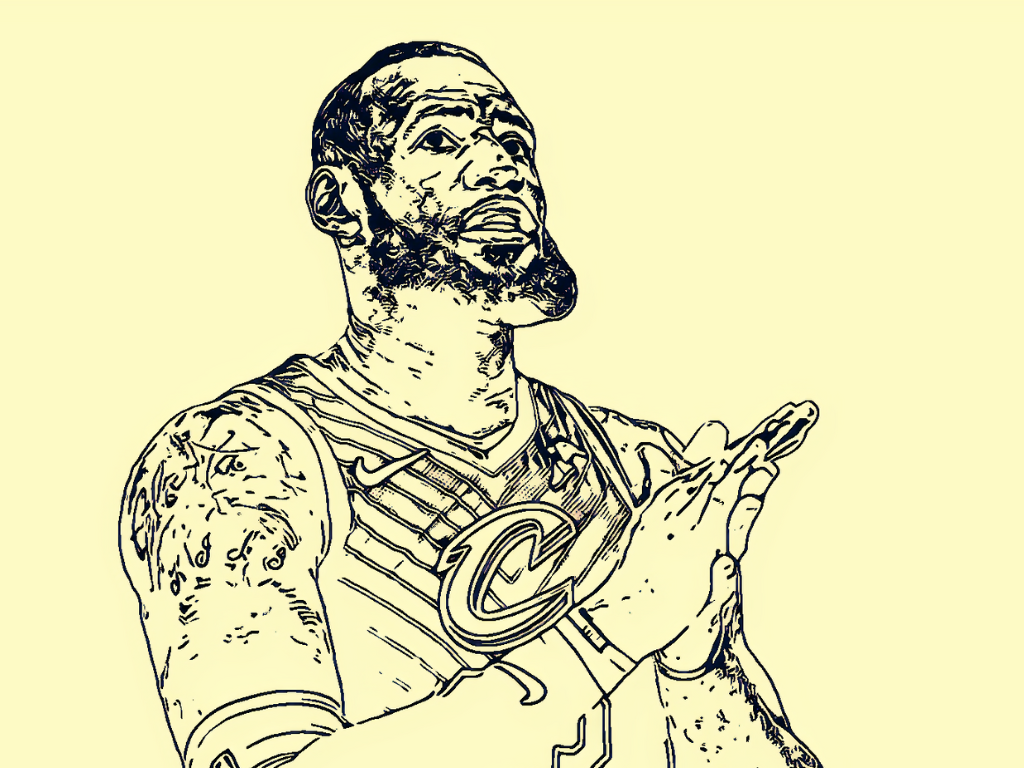
If you jumped into the past and told the story of LeBron James’ career, most would believe that it was fiction. The phenom born in Northeast Ohio that had lofty expectations and actually met and exceeded them. Drafted by the team that he grew up rooting for, only to leave them, and then come back to fulfill his promise to the city. It’s the stuff of Disney movies and fairy tales. But it happened, and is the driving story of every desire to have a homegrown player on a professional team.
The amount of pressure that LeBron faced when he entered the league cannot be understated. He was the chosen one, the anointed next face of the league. The NBA in 2003 was one that was still trying to figure out its post-Michael Jordan strategy. LeBron was crucial to that, he was the heir apparent, the future that was promised.
Beyond that, LeBron was also destined to be the savior of Cleveland sports—the player that would finally deliver a championship to a city that had known only heartbreak in all the major American sports. The Browns relocation and blunders in the playoffs, Michael Jordan’s domination of the Cavs, the World Series shortcomings. They were all on LeBron’s shoulders.
Because he was young and had so much placed upon him, LeBron felt all of it and that is what led to him leaving. In the summer of 2010, he committed what many view as his ultimate sin: “The Decision“—the televised event that announced to the world that he would leave his hometown team and join forces with Dwyane Wade and Chris Bosh in Miami. It’s a moment that LeBron himself regrets in retrospect and made him the ultimate Judas in the eyes of Cleveland sports fans.
His jersey was burned, and fans hated the player they once loved, the local product that was promised. Now they felt betrayed and mocked by yet another disappointment to add to the resume. This time period marked a time when LeBron was a villain in the NBA, a role that didn’t truly suit him.
That perception was flipped when he returned in 2014, noting that he was coming home. He had won in Miami, but there was still unfinished business because he understood what a title would mean to the city and area that raised him. His title in 2016 over the Warriors, as a result, is perhaps the most meaningful title that a player has delivered to a city in NBA history.
LeBron had matured in Miami and was solely focused on the mission of delivering a title to Cleveland. When he came back and achieved that, his hometown legacy was forever cemented—the prodigal son who returned and delivered what was promised. His declaration of unfinished business and his delivery of the goal made his eventual departure to Los Angeles one of appreciation as opposed to the vitriol of his Miami exit.
The lesson of LeBron is that there is no unconditional love given to the homegrown player in the moment. The desire to bring prosperity to your local team is often met with romanticism initially but it is often replaced with vitriol if results aren’t met. These players face the added pressure of connective tissue to a location that can derail their efforts. We saw it with Carmelo Anthony in New York and Derrick Rose in Chicago, where the team and city moved on from their allegiances to the player when it all didn’t work out.
But the LeBron exception is the intoxicating proof that it is still possible, that the glory of the homegrown player is possible. It’s why the downfall of a player like Lonzo Ball when he was drafted by the Lakers is less surprising—the pressure of succeeding is simply immense.
When the Hero Becomes the Villain

Because of the persistent “us or them” dynamic that comes with fandom, a player that was once beloved by his cities team could quickly become the enemy. There is perhaps no better example of this than Isiah Thomas.
Thomas was a Chicago area legend in high school and excelled at Indiana University. When he entered the NBA Draft in 1981, he tried to sabotage his draft stock to allow the Bulls to be able to draft him. The Pistons didn’t fall for it and drafted him anyway. Thomas would go on to become a Hall of Famer and the best Piston of all-time.
Before that happened however, Thomas was still beloved Chicago, despite the fact that he played for a division rival. That ended when Michael Jordan arrived in Chicago and became the teams new preferred son. The playoff battles with the Bulls in the 80s made Thomas an enemy in the city that raised him as a result.
The rivalry between Thomas and Jordan is still ongoing today, and it stands to reason that some of Thomas’ vitriol is rooted in the fact that Jordan became a God in Chicago while Thomas was forever deemed a villain in his own city. Thomas is proof that the hometown hero mystique has its limits—you can be replaced because the allegiance to the team is what matters above all.
Another player that experienced this was Paul Pierce. A native of Inglewood, California, Pierce watched the Lakers dominate the NBA when he was a kid. Yet as a professional, he became a seminal figure for their chief rival: the Boston Celtics. Pierce was booed like every Celtic would be in LA, where the fans embraced Kobe Bryant as its new adopted savior. If nothing else, sports fans lose sight of your roots when the name of the front of the jersey changes.
The Player Empowerment Wrinkle

For decades, players were often relegated to the team that drafted them—making dictating where you played very limited. In 1988, Tom Chambers became the first unrestricted free agent, and a new era was ushered in. Eventually, players began to advocate for themselves more and choose preferred destinations that align with their desires. LeBron’s path to Miami became the blueprint for this movement and led to different players wanting to return home to craft their own hometown hero narrative.
It’s why Carmelo Anthony forced his way to the Knicks. It’s why Kyrie Irving signed with the Brooklyn Nets in 2019. Rumors around other players looking to return home have continued to circulate as a result. There is a notion that someone that grew up around a fan base will simply understand the plight more than others.
This doesn’t always translate with star players, but it does with role players. During the Tom Thibodeau era, veteran forward Taj Gibson had multiple stints with the team. Long past his prime when he was in Chicago, Gibson’s Brooklyn roots were highlighted as part of the cultural fit with the Knicks and New York City as a whole. The same happened for Kyle Lowry, who returned to Philadelphia as a veteran and was embraced as returning to help the 76ers contend for a title.
So why does it work better for role players? The pressure points simply aren’t there. A player that is there for bench morale and occasional production can lean into the understanding of a fan base because they don’t have to concern themselves with the load and blame that comes with being a star player.
The player empowerment era has given NBA players more agency than they have ever had when it comes to choosing where to play. But their desire to “go home” has been juxtaposed with the reality of the pressures that come with playing in their hometowns and that the true goal is winning, and nostalgia for a city will always be superseded by a well-constructed roster and competent front office. In some sense, NBA star players become nomads that find homes in new places, adopted by their new cities and cemented as pillars of the fan base.
Transforming into Local Heroes

When you think of the city of San Antonio, you likely think about the Alamo and the Spurs. And when you think of the Spurs, it’s very likely that you also think about Tim Duncan. Duncan is from the US Virgin Islands, but his roots in San Antonio during and after his playing career run deep.
Duncan spent all of his 19 seasons as a player with the Spurs, and in that time, he established initiatives in the city like the Tim Duncan Foundation that involved health awareness, research, and education. He has also supported many causes locally such as the Children’s Bereavement Center, the Children’s Center of San Antonio and the Cancer Therapy and Research Center. Duncan still resides in San Antonio and briefly served as an assistant coach for the Spurs. Despite being an outsider, Duncan became a pivotal community member of San Antonio who is a beloved figure.
The same case rings true for Damian Lillard, who despite being from California has made Portland, Oregon home and is a seminal figure in Blazers history. When he was released from his contract in Milwaukee this summer, Lillard returned to Portland and was embraced with open arms—the return of a son that made his triumphant return.
These players arrived as outsiders, but they were embraced by fan bases and adopted as their own. They were allowed to grow into their roles without enduring the pressure that comes with playing in your ancestral city. There are no expectations about comprehending the historical struggle and heartbreak, just the reality of trying to win in the present.
The sentiment of the guards in the Stranger Things scene is one that will forever be common because we as fans always like to identify something within us in our athletes. But the sentiment was also incorrect, a result of how sentimentality often clouds our judgement as fans.
The true right move for a front office is to divorce ourselves as much as possible from the trappings of someone that “gets” the fan base and instead focus on the one that brings the best skillset to inspire winning.
Tyrese Haliburton is this generations Reggie Miller for Pacers fans, a dynamic player who grew up in Wisconsin. But you would be hard-pressed to find anyone that doesn’t consider the fabric of Indiana woven into Tyrese Haliburton’s persona. The true magic happens when the player embraces the city as his own, rather than feel the pressure of living up to where he was born. I doubt that if those guards were talking about today’s Pacers if they would regret having Haliburton on the team.
Thanks for reading Deep Cover! This post is public so feel free to share it.