
The NBA Draft Lottery & the Chaos of Chance
The fine line between skepticism and numerical variance


Sports fans love conspiracy theories. Some of the classics are that Michael Jordan’s foray into baseball was a secret suspension for his gambling, that the NBA rigged Game 6 of the 2002 Western Conference Finals to save the LA Lakers’ season, and that the NFL destroyed evidence to hide the “Spygate” scandal that involved the New England Patriots. But the conspiracy theory that many fans believe with full conviction is that the NBA has pre-determined the winner of the NBA Draft Lottery on multiple occasions.
That belief has once again been reignited as the Dallas Mavericks, with a 1.8% chance of being awarded the number one pick, won the Draft Lottery. This happens mere months after the Mavericks shocked the NBA world by trading superstar Luka Doncic to the LA Lakers in a move that many have called malpractice and a fireable offense. Whether you believe in the rigging of the Lottery or not, the NBA has shown once again that it is a league that is never short on storytelling.
The Mystique of the “Agenda”
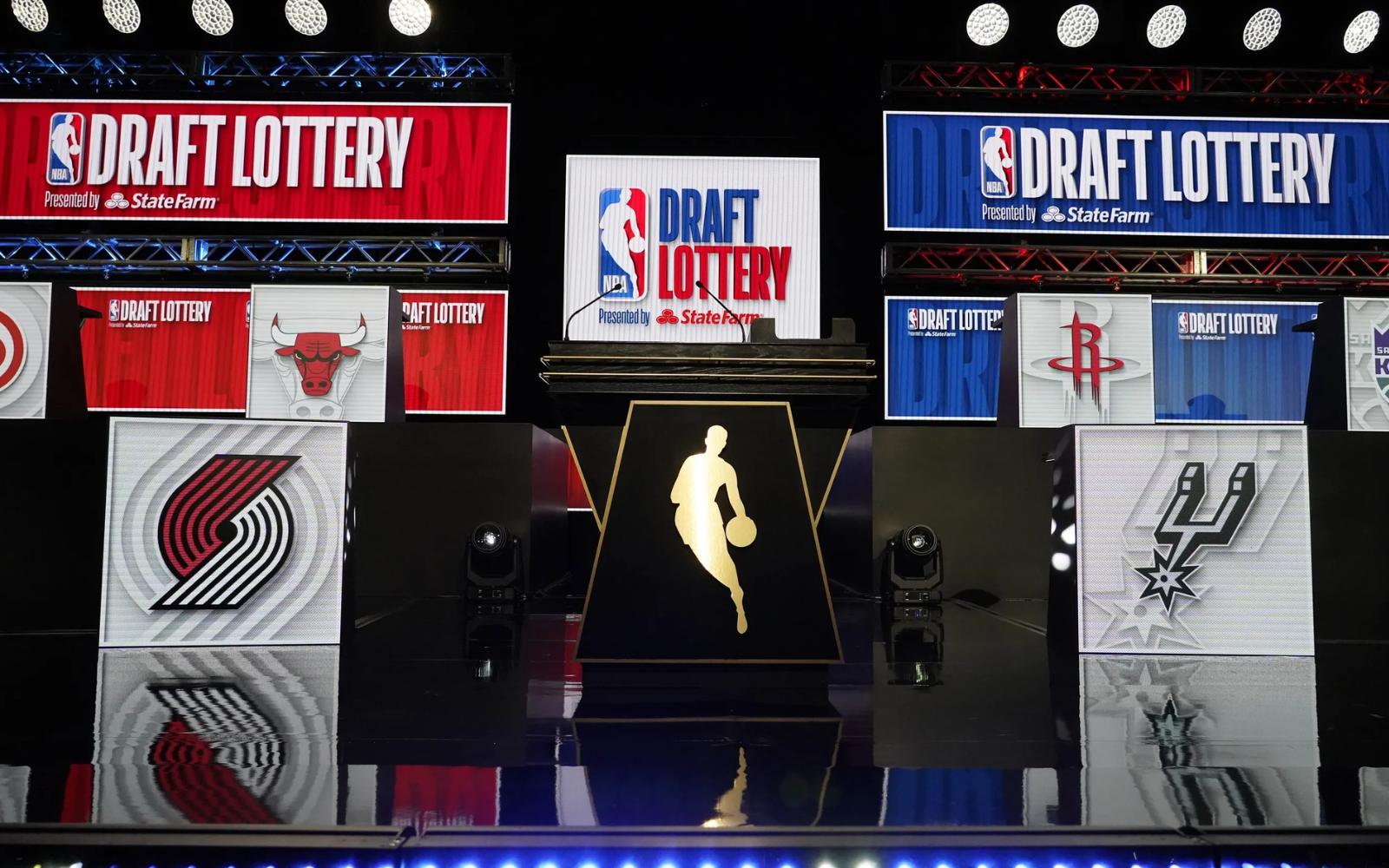
Often, the truth is the hardest thing to accept. Being able to take accountability for the mistakes that we make is a skill that takes many years to harness. In the world of sports fandom, it’s easier for us to say that there is a higher force limiting team success as opposed to accepting that it just didn’t go our team’s way.
On the court we see this manifest when fans blame referees for a loss or saying that the league didn’t want your team to have success. This is typical fan behavior, often said in the heat of the moment—a statement made to rationalize a loss that doesn’t include the very likely reality that your favorite team just didn’t make enough plays.
But this is done to explain a moment in time, one game that went the wrong way. When it comes to a Draft Lottery going the wrong way, the layers become more complex. It is not just that a team is potentially missing out on a player. But rather that they are missing out on the potential of that player—triggering a what-if-conversation that can never be resolved.
In 2023 and 2024, the Detroit Pistons had the best odds of getting the number one pick in the NBA Draft. In both instances, the team ended up with the 5th pick—which resulted in the selections of Ausar Thompson and Ron Holland. Both of those players have turned into immediate contributors and were important to the Pistons resurgence this season.
But it denied Pistons fans the potential of pairing Cade Cunningham with Victor Wembanyama or Brandon Miller in 2023 and Alex Sarr or Stephon Castle in 2024. As those players advance in their careers, Pistons fans are likely to wonder what their franchise could have been if the Lottery gods shined upon them.
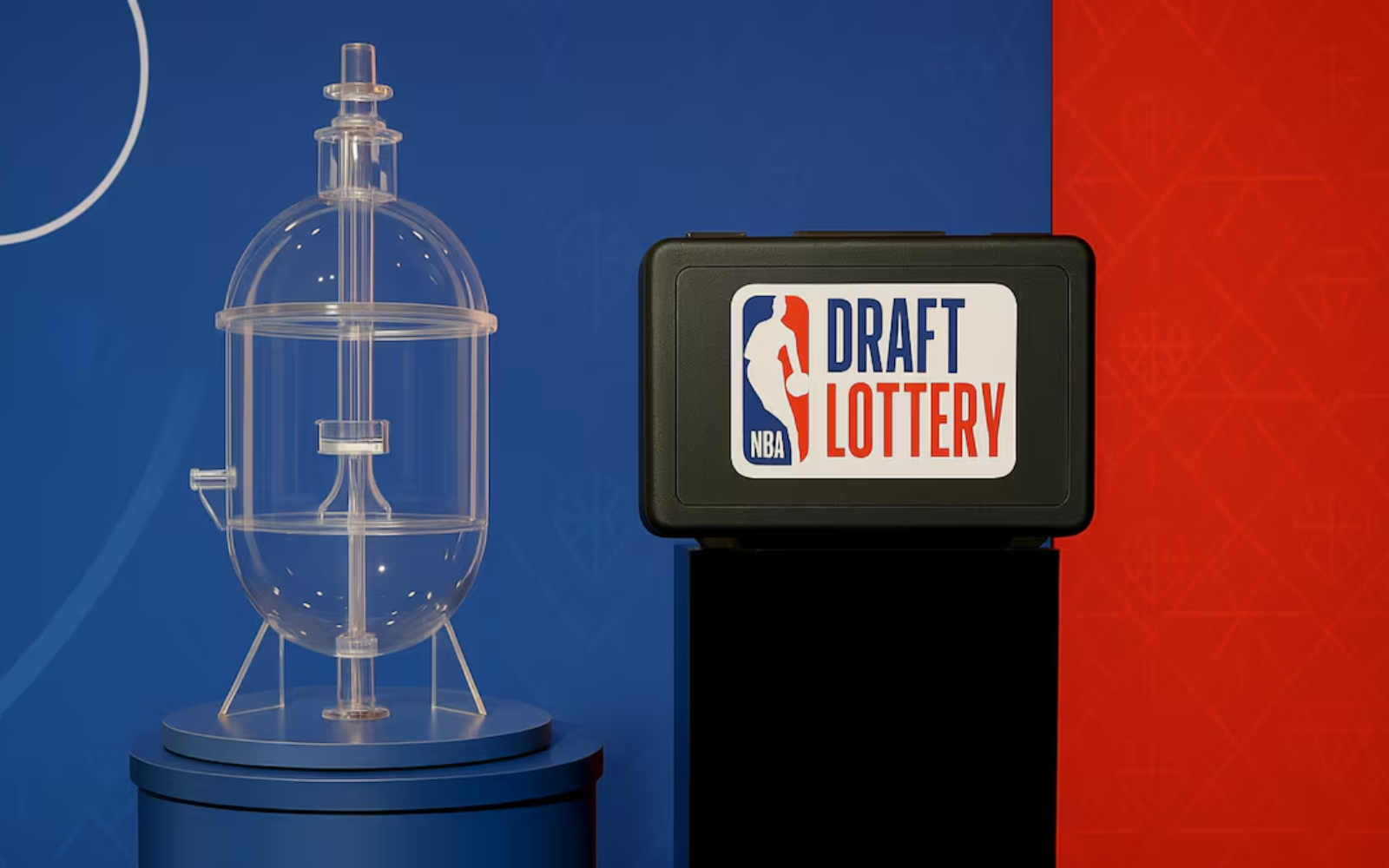
Because the Lottery system is purely mathematical and probability based, there is no direct cause of wrongdoing that we can point to. The Lottery is conducted by the accounting firm Ernst & Young, with ping pong balls that are measured and weighed to prevent tampering and then run through a machine that automatically mixes them in 10 second increments. But because we don’t see it happening live, the potential for conspiracy abounds.
The adage that numbers don’t lie rings true here. Raw statistics don’t account for convenient correlations that we see throughout the history of the lottery. When these happen, it is all too easy to blame it on an agenda or the league wanting the outcomes to land a certain way. But like many things, if you position things well enough, they become believable, which is the case with the conspiracy theories about the NBA Lottery.
Creating Suspicion
There is an explanation for every Lottery outcome and why the league would have wanted to determine who got the first pick. For the Mavericks, it’s not a hard correlation to make. Dallas is a franchise that is in a top five media market that traded away a superstar player in his prime to the league’s glamour franchise, the Lakers.
This move was seen as payback for setting up the Lakers for the next decade as a way to combat slumping ratings. As a result, the Mavericks are rewarded with the rights to draft Cooper Flagg—a prospect who is one of the highest rated players to enter the draft since LeBron James in 2003.
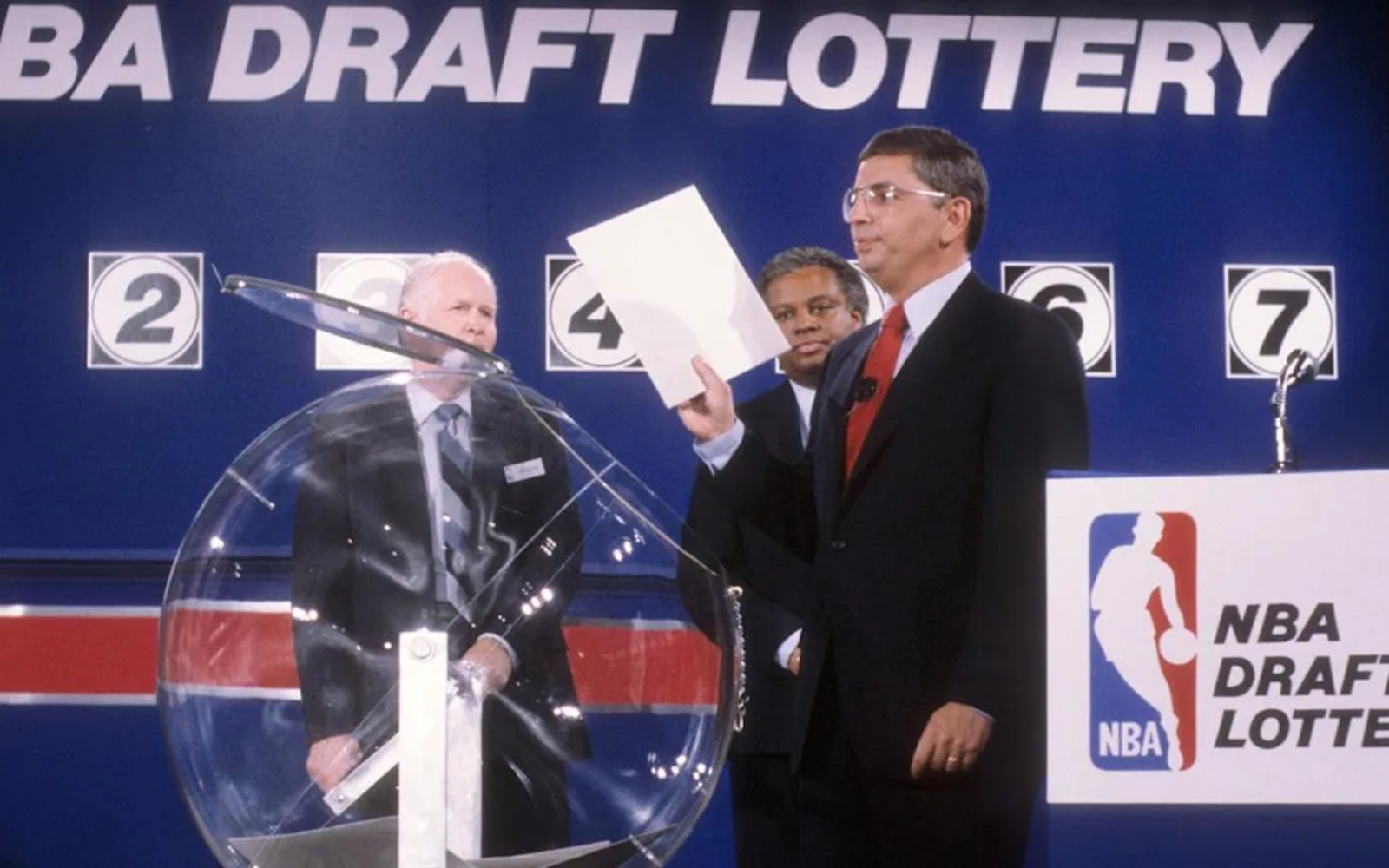
The oldest Lottery conspiracy happened during the first ever Lottery. In 1985, the prize of the Draft was Georgetown center Patrick Ewing. The Indiana Pacers had the worst record, but the Lottery at that time gave every team a 14.29% chance of landing the top pick. That pick went to the New York Knicks who took Ewing and jumped two spots.
The theory here was that the league wanted to ensure getting Ewing into a big market like New York City as opposed to Indianapolis. This event triggered the birth of the “frozen envelope” theory, where it is believed that the envelope with the Knicks’ name was frozen so that it was guaranteed to be identified, ensuring that Ewing went to the Knicks. Ewing would go on to have a great career and ironically would form a rivalry with the Pacers that is well documented.
A team that has benefited from Lottery luck three times counteracts the big market theory that surrounded the Ewing selection. The San Antonio Spurs have won the Lottery three times in 1987, 1997, and 2023. Those three Drafts netted them David Robinson, Tim Duncan, and Victor Wembanyama. San Antonio is a small market, so the suggestion of a fixed Lottery doesn’t make sense when it comes to the Spurs. The Spurs have always moved up incrementally when they have won—moving up two slots in 1997 and 2023, and up three spots in 1987.
There have also been location-based conspiracy theories with Lottery results. In 2003, LeBron James was entering the Draft and was supposed to be the next face of the league. James, a native of Akron, Ohio, was drafted by his hometown Cleveland Cavaliers who had the best chance of getting the number one pick. This was seen as a good story, to have a homegrown prospect elevate a franchise that had been toiling in mediocrity for many years.
The same can be said in 2008, when the Bulls jumped eight spots to win the Lottery and select Derrick Rose. Rose, who starred at Memphis, was from Chicago and once again created the narrative that he was a homegrown savior for a franchise that had been struggling since the second retirement of Michael Jordan in 1998.
In the wake of LeBron leaving Cleveland for Miami in 2010, it was suggested that the Cavs were gifted Lottery wins to re-establish their franchise. This first happened in 2011 when they won the Lottery via a previous trade with the Clippers and selected Kyrie Irving. It happened again in 2013 and 2014 when they selected Anthony Bennett (one of the biggest Draft busts of all time) and Andrew Wiggins, respectively. Wiggins was ultimately used to trade for Kevin Love, which helped to bring LeBron back to Cleveland, leading to the franchises only NBA championship.
These are the tales that believers in an unfair Lottery system will often use. What this fails to account for is that in the modern Draft era, the worst team very rarely gets the top pick. The last time it happened was in 2018 when Phoenix won the Lottery and selected DeAndre Ayton. It has not happened since the Lottery odds were flattened in 2019 as a response to excessive tanking by teams, namely the Philadelphia 76ers during the “Process” era.
Since then, most of the stories that could be created don’t make sense. In 2019, Zion Williamson was the prize with the Knicks, Cavaliers, and Suns with the best chance to win the Lottery. Instead, it went to New Orleans, the second smallest market in the NBA who won the rights to select him.
In 2020, Minnesota won the Lottery over Golden State and drafted Anthony Edwards. In 2022, Orlando won the Lottery to select Paolo Banchero when both Los Angeles teams and the Knicks were in the Lottery. And the Wembanyama Lottery saw the top pick go to San Antonio over Houston and Detroit, where yet again the smaller market won.
If the Lottery was indeed compromised, one would think that the league would have done a better job to ensure that these high-profile prospects went to equally high-profile markets. What the system has done is create chaos and conversation, which is something that the league cherishes above all else.
The Chaos of Math
In the history of the Lottery, the worst team has won the first overall pick eight times—or just 20% of the time. However, from 2015-2018, the teams with the best odds won the Lottery, which created a precedent. This ushered in an era of tanking that greatly damaged the NBA product for the second half of the regular season. The league tried to dissuade that trend by flattening the Lottery odds in 2019 to 14% between the bottom three teams and implementing the Play-In tournament to keep teams competitive for longer.
The results have been mixed, as in four of the seven years since then one of the bottom three teams has won the number one pick. The last two years have been glaring examples of mathematical anomalies that come with the flattening of odds. The Hawks last season jumped nine spots, while this year the Mavericks jumped ten. That sort of leap only happened one other time: in 1993 when Orlando won the Lottery and selected Chris Webber (who was eventually traded for Penny Hardaway).
In its efforts to mitigate the proliferation of tanking, the NBA has embraced randomness. The Lottery, much like other aspects of the league, are filled with storylines that can be exploited. With the results of this year’s Lottery, there are multiple layers that will drive offseason conversation.
The Mavericks story is the most obvious one, as they get an American two-way phenom to build around for the future. The Spurs getting the second pick, now opens a position for them to offer a legitimate trade package to acquire Giannis Antetokounmpo from the Bucks—creating a potential defensive nightmare for opposing offenses.
Philadelphia, by jumping into the third spot, allows them to keep their pick while also denying Oklahoma City another draft asset. The 76ers can now use that pick to either select a young player to pair with Tyrese Maxey and Jared McCain or use it as a trade piece to acquire another piece to pair with the aging duo of Joel Embiid and Paul George.
But perhaps most importantly, the randomness has come to haunt teams that were actively tanking, like Utah and Brooklyn. The message is clear, losing games and getting the 14% chance at a top pick is not guaranteed. Dallas this year and Atlanta last year have shown us that the Lottery has never been more about luck and mathematical fortune than it is right now.
It is easy to look at the results and say that it is rigged. For almost any time, there is a talking point that can be spun into the league dictating terms for a player to land somewhere. The truth is that numbers and probabilities are soulless and don’t take any of that context into account. The idea of the Draft being compromised, however, is an evergreen topic that will always spark conversation. And on some level, that conversation keeps the league interesting and is good for business.
All that doesn’t help fans of the Wizards, Jazz, or Hornets who have continued to endure unwatchable basketball with the hopes of striking gold. While some may position it as the rich getting richer, the Hawks and Mavericks have never won the Lottery until the past two years, and that result is a byproduct of numerical variance. So, while many fans will cling to the idea that the NBA is rigged, it is in fact a different word that starts with the letter R: random.