
The NBA of Today Feels Strangely Similar to the NBA of the 1970s
The league today has more in common with its forgotten decade than many are willing to admit

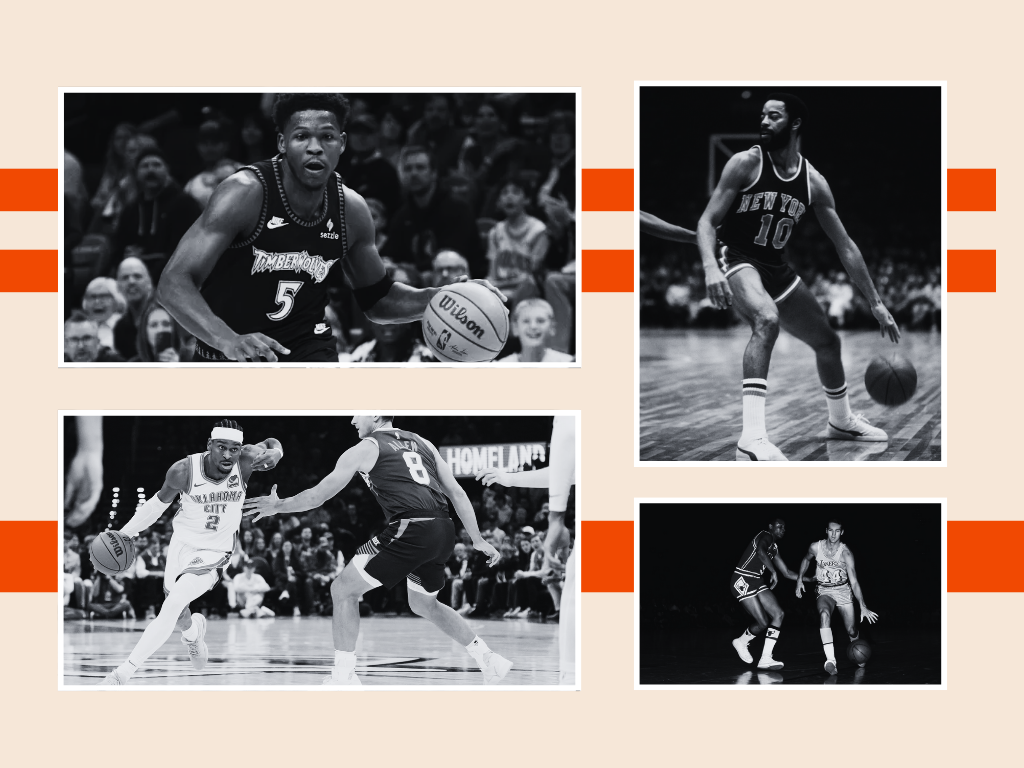
Recently, Golden State Warriors head coach Steve Kerr made some remarks about the concerning rise of soft tissue injuries in the NBA. Kerr mentions the increase in pace as a culprit, noting that “I think across the league everybody understands now it’s just easier to score now if you can beat (the other team) down the floor, get out in transition. But when everybody’s doing that, the game’s are much faster paced, and everyone has to cover out to 25 feet because everyone can shoot 3s.”
Kerr’s comments seem valid considering that this season has seen the highest pace since the 1988-89 season. Considering the game of basketball from the lens of the Jordan-era onward it is startling to think about how much has changed and how much faster play has gotten.
It is not however, the fastest era of play—that distinction belongs to the mid-70s and early 80s. But when we look around the NBA today, there are many facets of the game that are shockingly similar to the 1970s. We must wonder, are we reliving a remixed version of that era today?
Prioritizing Pace
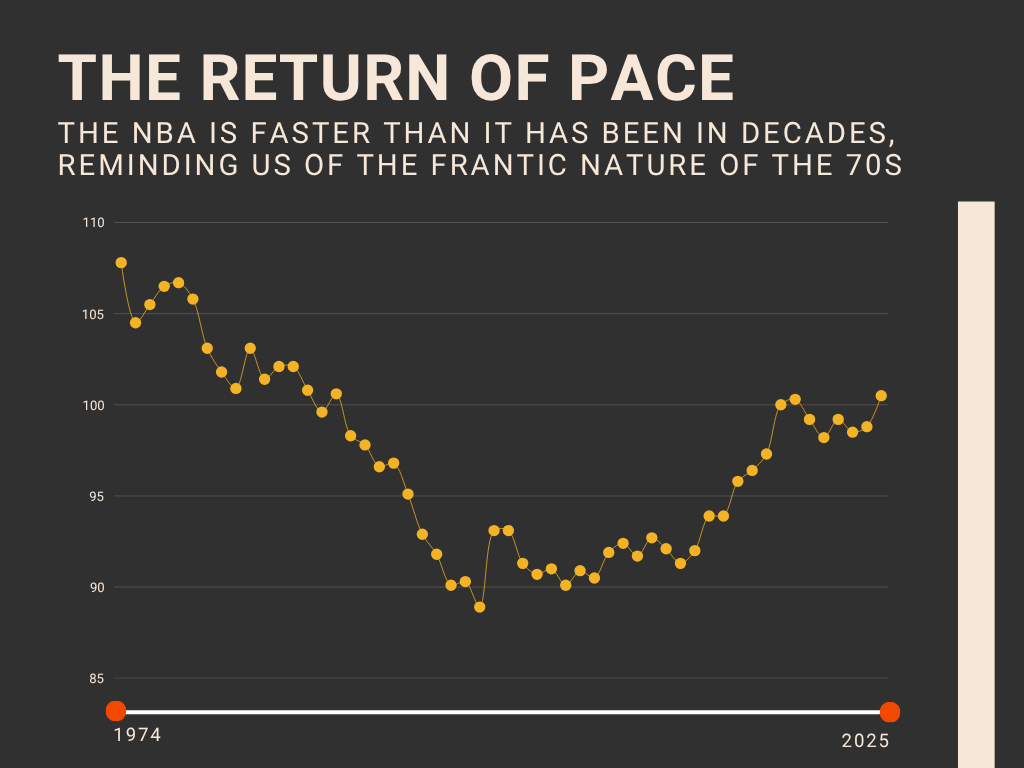
Pace is a statistic that is used to measure roughly how many possessions occur in a game. It was first used in the 1973-74 season. Up until the mid-80s pace was frequently over 100, and then at the end of the decade it slowed down. An increase in isolation play and set play offenses that created longer developing possessions, thus reducing the pace. Additionally, many of the stars of the era played a more deliberate style, which predicated slower pace.
That remained the case until 2018-19, when pace numbers began to creep up over 100 again. Today, teams try to create advantages and mismatches with spaced out offensive alignments, using a variety of screens and movement to create open shots (typically corner threes). This trend is rooted in rule changes that gave players more space on the perimeter—discouraging physical defense that defined much of the past eras. Faster play in that sense became a function of rule circumvention.
In the 1970s, pace was faster than it is today—but it was for a different reason. In the older days of the NBA, rules around dribbling were very strict. Players had to have their hand on top of the ball, dribbling with the palm was not allowed, and travelling was called at a frequent rate. To play offense in this era, passing became a must, with the fast break a key component to quickly get points. Just like today, players and coaches had to scheme around the limitations or possibilities presented by rule changes.
A League of Parity
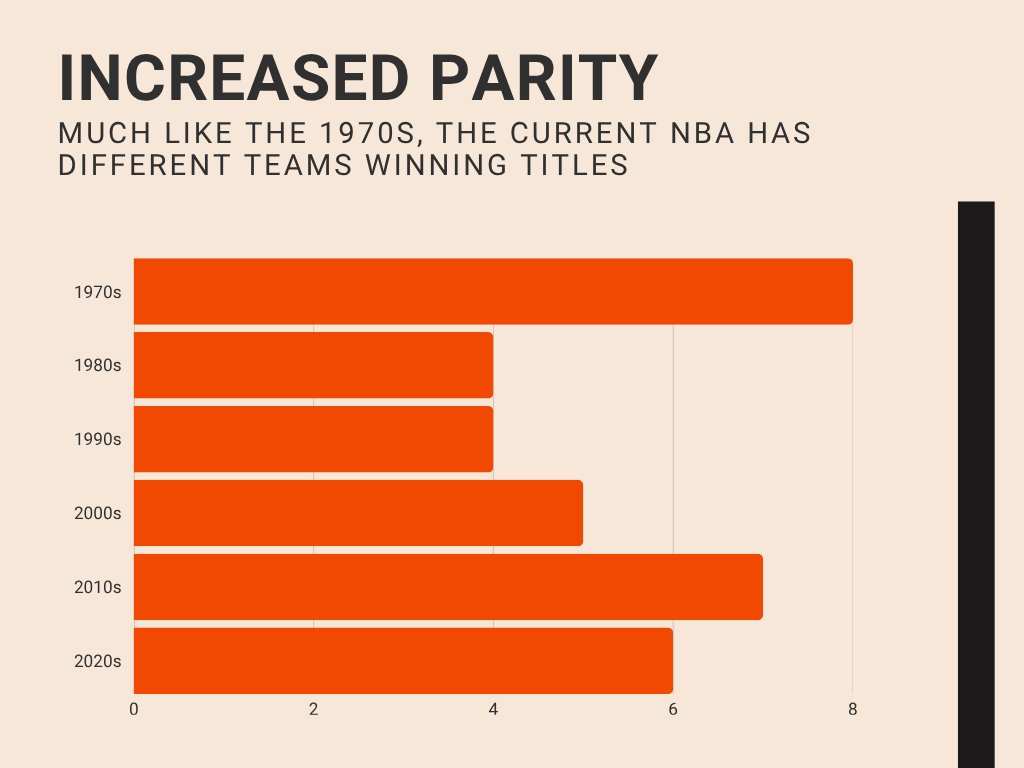
Many people often think of the NBA as a league defined by dynasties. We think of the Bill Russell and Bob Cousy Celtics, the Showtime Lakers, Jordan’s Bulls, or the Kobe and Shaq Lakers. While this is true it has not always been the case. During the 1970s, there were eight different teams that won titles. It was a decade that featured the only title wins for the Portland Trailblazers and Washington Wizards (then the Bullets).
The 70s featured a lot of good teams, but no team that was truly a dynastic entity in the way we think of other eras. There were great seasons with the likes of Clyde Frazier, Dave Cowens, Kareem Abdul-Jabbar, and Bill Walton. But it was an era where teams could rise through the ranks and emerge into the championship conversation.
This is not too dissimilar from the NBA today. Since 2019, we have had a different NBA champion in every season. Teams appear to be invincible, only to succumb to poor cap management or bad injury luck. In the 70s there was the talent distribution that came with the ABA merger in 1976, providing more talent to the NBA. This caused a landscape of parity where any team could get hot and win a title.
In today’s league, team rosters are stretched thinner due to salary cap restrictions in the current collective bargaining agreement (CBA) that makes retaining players harder than it has been since the dawn of free agency. Teams lose key role players and are forced to rely upon unproven rookies on value contracts. We have seen this take shape in the way that Milwaukee, Boston, and Denver have had to pivot a year removed from a championship because their salary cap situation became untenable.
Addiction & Ratings
Two issues that have come up recently as a problem for the NBA are the troubling gambling scandals surrounding coaches and players and the dip in TV ratings for nationally televised games. The low ratings have been well documented, with last season being the least watched NBA season since 2021. There are many reasons that this is happening. Watching the NBA in 2025 requires multiple streaming services, load management is wildly unpopular, and there are not many emerging stars that have crossover appeal in the way that the Kevin Durant, LeBron James, and Steph Curry generation did.
The 1970s also had a viewership problem, so much so that the NBA Finals were shown on tape delay. Fighting was more common in that era, which turned off many casual viewers. The league also had to navigate racial tensions, with the perception that it was a “Black league” which made many White viewers in the wake of the Civil Rights movement very uncomfortable, exposing the racism that was rampant at the time. That in addition to a lack of a magnetic superstar that could connect with the masses contributed to a lack of traction that the league experienced.
But the biggest issue in the 70s was rampant drug use. Many players abused cocaine during this time. Spencer Haywood was a well-documented cocaine user, which led to him being kicked off the Lakers during the NBA Finals. Knicks and Nets guard Michael Ray Richardson was banned from the league for his drug use. It is estimated that as much as 75% of the NBA in the 70s used cocaine.
Cocaine was a societal issue then, and the NBA was ensnared in it. That reality doesn’t seem all that different from the realities of gambling’s infiltration into the NBA today. Players like Jontay Porter and Terry Rozier have been implicated in scandals around prop betting. Portland Trail Blazers head coach Chauncey Billups has been involved in a conspiracy to commit wire fraud and money laundering for organized crime syndicates and has been alleged to have participated in illegal rigged poker games.
The scandals have caused many to call into question the ethics of the modern day NBA that willfully promotes gambling. The league today is losing a sense of its purity, much as it did in the 1970s. Both gambling and cocaine lead to addiction that can ruin lives, and the parallels are hard to ignore.
The NBA today has so much in common with the 1970s. Players are playing fast, parity is at an all-time high, the way we watch has been called into question, and addiction scandals have caused cracks beneath the surface. They say that history doesn’t repeat itself but it often rhymes. That certainly feels like the case for the NBA in the 2020s. It is up to us whether we view that as a positive or a negative.
Thanks for reading Deep Cover! This post is public so feel free to share it.