The NBA’s Second Screen Problem
While the NFL thrives and Hollywood adapts, basketball's relentless pace has forced the league into an uneasy compromise with our divided attention

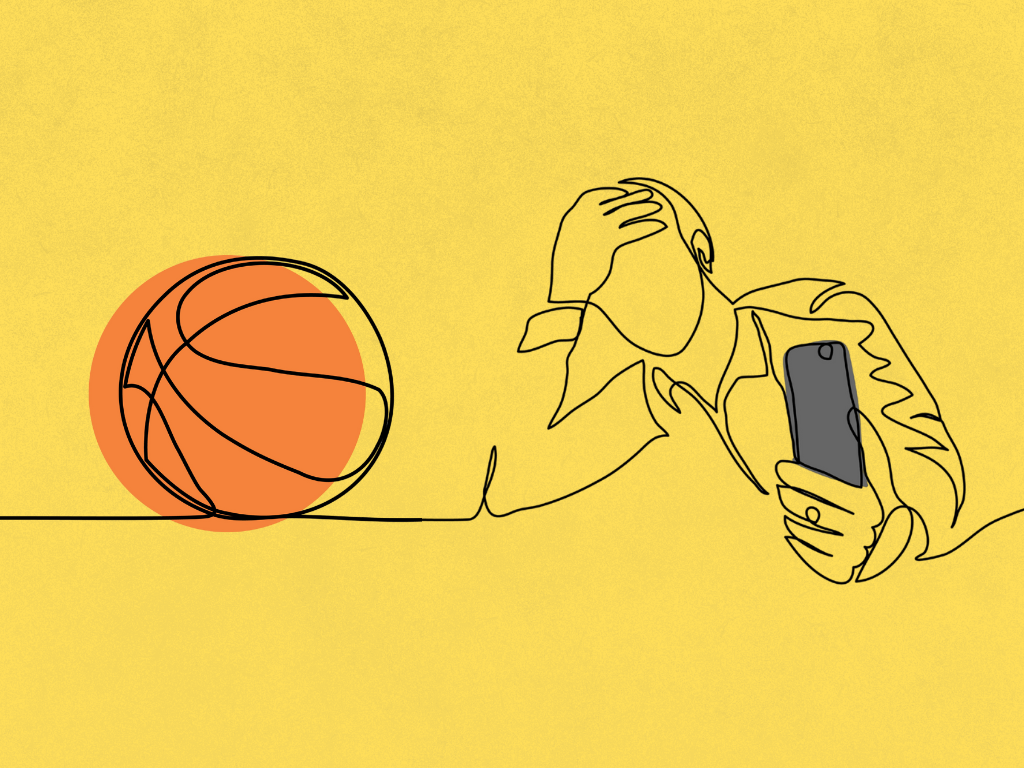
Imagine for a moment that you’re on your couch, watching a new movie that just came out on Netflix. As it starts, you get a text message from a friend. You answer it, but don’t pause the movie since it will be a quick reply. But then the variety of apps on your phone draw you in and then all of a sudden, you’re scrolling social media while you were supposed to be watching this movie. This is a phenomenon called second screen viewing, and it’s increasingly common.
So common, in fact, that studios like Netflix have shifted plot strategies to re-iterate pivotal moments three or four times, accounting for people scrolling apps on their phones while they watch. This was confirmed in a recent interview with Matt Damon and Ben Affleck, where the two actors outlined specific target points that they must hit—all designed to maximize on the limited attention span of the viewer.
TV has adapted to the changing habits of viewers, but second screen viewing doesn’t happen in a vacuum. It occurs throughout daily life, which is why there has been an uptick in digital detox devices—like minimalist phones and screen limiting devices. A particular entity that struggles with this development more than others is the NBA. The game is faster than ever, but full game watching has become rare because of the pull of the dopamine hit of the smartphone and the sports lack of a natural cue to call attention back to the action. It’s a growing issue for the league, and one that may not have a permanent fix.
The Structural Immunity of Football
The NBA isn’t the only sport that is impacted by second screen viewing, they all are. But the effects of it are not created equally. A sport that has been able to navigate this better than others is football, specifically the NFL.
The NFL is far and away the most watched television product in the United States. In 2024, 72 of the 100 most watched telecasts were NFL games—an indication of just how dominant the league has been in the attention economy. In the second screen viewing era, the NFL is uniquely positioned to retain consumer attention even with the ever-present distraction of the phone.
Structurally, football has very natural scroll windows. Commercial breaks in football are generally well-defined without much spontaneity. Viewers are trained to expect a break after a scoring play, a timeout, the two-minute warning, change of possession, and the end of a quarter. This means that they know when it’s safe to scroll on their phone.
Additionally, the time in between plays is also geared for quick bits of scrolling. In the 2025 regular season, NFL teams averaged a total of 122.5 plays run per game. Meaning that in the course of a three-hour game, fans experience 0.68 plays being run per minute.
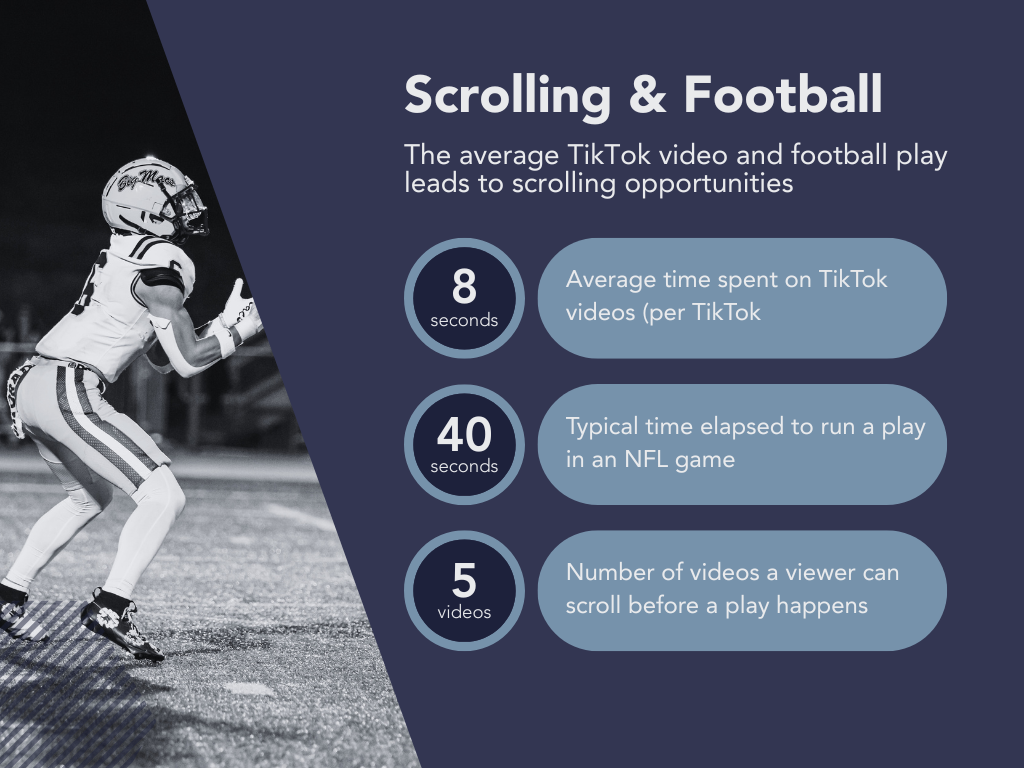
The NFL has a 40 second play clock that in most situations is used in its entirety. In between plays, this gives viewers 40 seconds where the team is getting into its alignment before they have to look at what is happening on the screen. This allows for some scrolling to occur before they focus back on the game. On top of that, quarterbacks have unique vocal cadences that are often caught on the field microphones—letting the viewer know that a play is about to happen.
Plays in the NFL typically don’t last for more than ten seconds, which means that the time required to be focused on the screen is relatively minimal. Football offers little pressure for extended focus if the viewer doesn’t want to commit to it. This extends to the frequency of games played. When compared to every other major American professional sport, the NFL plays the fewest games—reducing time commitment and creating a sense of urgency to watch. The NFL has directly benefited from this new user viewing behavior, which has further established its dominance. The NBA, by contrast, has not benefitted from this dynamic.
The NBA’s Two-Fold Problem

Basketball is an inherently fast-paced game. That pace has only increased in the last fifteen years. Teams today average around 100 possessions per game—up from 91.3 per game in 2012. Basketball also has 12 less minutes of game clock than football, meaning that each teams runs around 40 more plays in less time.
The time allowed for plays is also substantially less in basketball than football, where teams only have 24 seconds as opposed to 40 to run a play and get off a shot attempt. And unlike football, NBA teams often do not use the entirety of the time allotted before getting up an attempt.
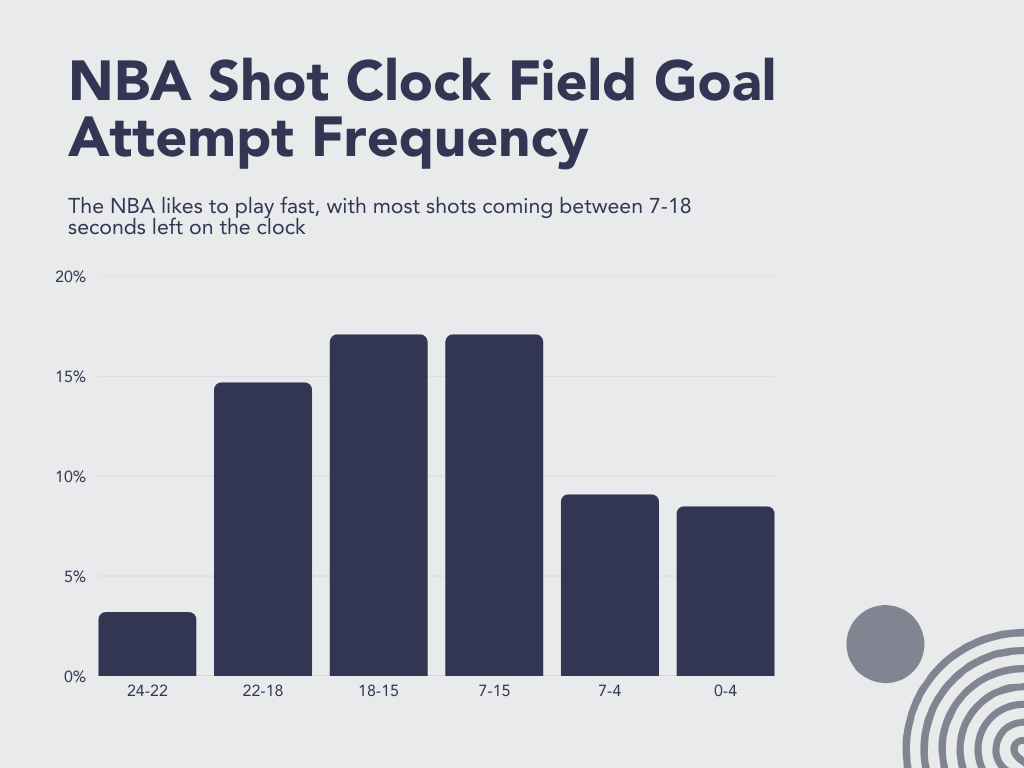
In fact, only 8.56% of shots in the NBA this season have been taken with four seconds or less on the shot clock. The bulk of the shots occur in the 7-18 second range, meaning that the typical NBA possession takes between 6-17 seconds of game clock as opposed to the 45 seconds that an NFL play can take.
Because of this pace, there are no true moments of safe escape to engage in second screen viewing. Call up cues like the snap cadence in football do not exist when watching basketball. In fact, with the rate of scoring in the league, it is incredibly likely that a 30 second glance of a phone or tablet could lead to the viewer missing a consequential 6-0 scoring run.
If you assume that there are 180 shots taken in the entirety of a basketball game (based on this year’s average of 89.9 field goal attempts per game per team), one minute of game action will net 3.75 field goal attempts. That could lead to scoring swings that cause lost context by looking away.
The NBA is typically on the forefront of these sorts of issues, and a few years ago recognized the changing viewer behavior. The conclusion that the league made was that people’s attention spans are dwindling and that many people don’t want to sit through the ebbs and flows of an entire game, especially in the regular season.
Their assumption was correct. Gloria Mark, PhD, did a study on our attention spans and found that since 2004, the time we are willing to spend on one screen has been rapidly diminishing. In 2004, we would stay on a single screen for two and a half minutes. In 2012, that reduced to 75 seconds, and today it is down to 47 seconds. Consider how quickly we are to swipe between videos on TikTok and Instagram Reels as proof of this dynamic.
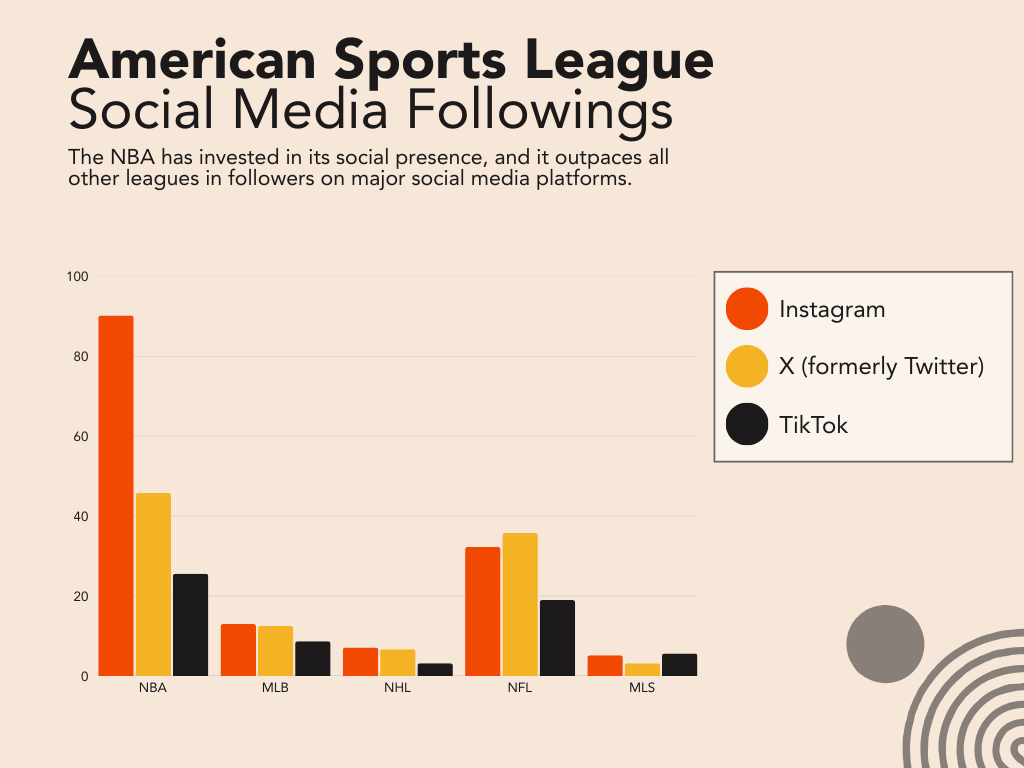
The NBA’s solution to this problem became to lean into the tendency through highlights. The benefit that the league has is that plays like alley-oops, step back threes, and crossovers are great pieces of bite-sized content. The pivot towards analytics in basketball has further played into this as teams started shooting more threes and increasing their rim attempts—lending to more highlight-worthy content.
Highlight-based social media accounts like House of Highlights became the norm and many viewers started to view 8-to-10-minute highlight packages from games as opposed to watching the full game. The result has been that the NBA is viewed as being incredibly adept at social content, and often at the forefront of any new technology.
The downside of this strategy is that many have started not to see the point of watching full games, especially during the marathon of the 82-game regular season. The sense of urgency that football enjoys is nowhere to be seen with the NBA, as a result. While the NFL benefits from a structural advantage to be suitable for second screen viewers, the NBA was forced into a strategy that drove people away from the game and into a different medium entirely.
Losing the Story

On the surface, this doesn’t seem all that bad. After all, people are still interacting with the league and its players. They are still aware of the superstar players and what they are good at. Players like Victor Wembanyama and Giannis Antetokounmpo are made for this version of the NBA because they are capable of such amazing athletic feats that translate incredibly well to vertical video on phones.
Consider last year’s Eastern Conference Finals Game 1 between the Knicks and the Pacers. The Knicks were in firm control of the game throughout before a collapse that led to the game being sent into overtime. The lasting image of that game that was widely circulated in highlights and social posts was the shot by Pacers guard Tyrese Haliburton that bounced high off the rim before dropping into the basket to force the game into overtime.
What is lost in the memory of that moment is that the Knicks failed to adjust to Aaron Nesmith in the fourth quarter as he hit three after three to bring the Pacers back into the game that allowed that Haliburton moment to happen. While the focus was on the shot and the subsequent choke celebration homage to Reggie Miller, what was lost was how the Knicks perimeter defense utterly collapsed in a big moment.
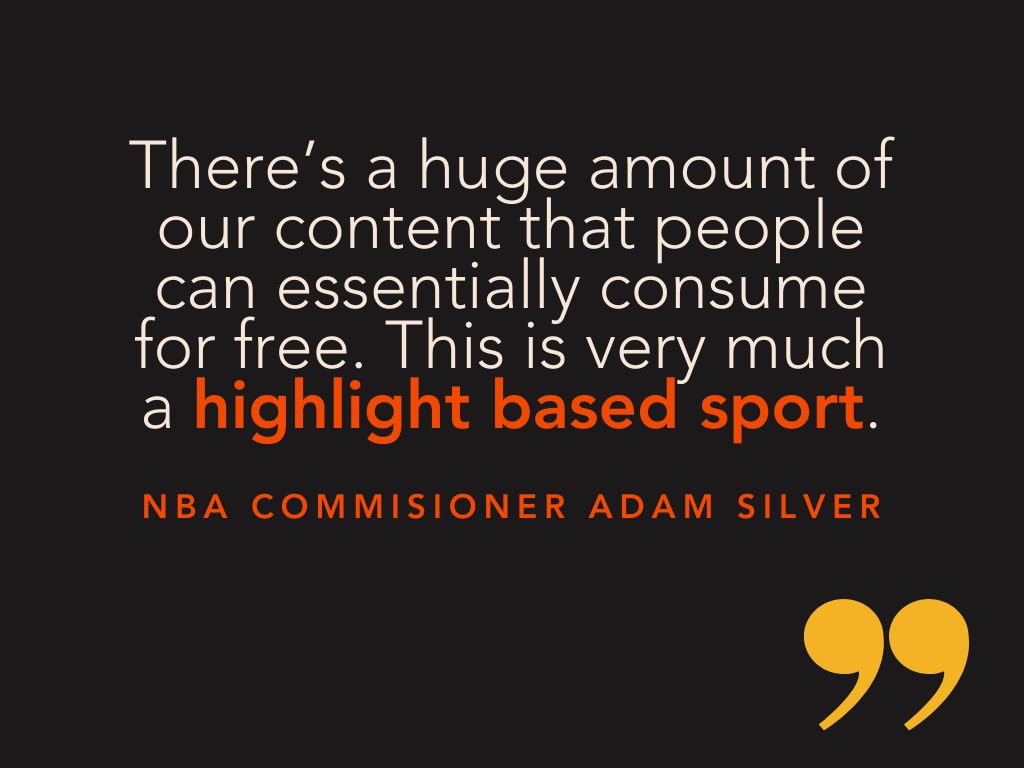
That is what is often missing in highlights, the flow and momentum of a game is disregarded in favor of the remarkable. It seems that the NBA has grown content with this, with commissioner Adam Silver previously remarking that the league is a highlight league.
But like so many other mediums, it feels that the nuance is lost. We may see a player make a game-winning shot and leave it at that. But what we disregard is the fact that the player had to overcome missing multiple shots before that point, eroding just how impressive their mental fortitude was to seek the moment and capture a moment of greatness laced with irrational confidence.
Film and television adapted the way scripts were written. The NFL has benefitted from a structural advantage that falls in line with the viewing habits of the modern consumer. The NBA, on the other end of the spectrum, is caught in the middle. There are basketball fans that still enjoy watching full games, but it seems that they are something of a dying breed—at least in the regular season.
The league made the decision to pivot into meeting people where they are, which is probably a sound business decision. Leaning into highlights more serves the purpose of reaching a younger mobile-first audience and reaches a demographic that may not have access to watch full games.
But it has changed the way that we consume basketball and in turn the way that we view the league’s product. There is a deeper story to moments and the games, but it seems that in a race to stay relevant with the habits of today we are losing acknowledgement of that. At this juncture, this appears to be the way forward. Perhaps it was all unavoidable and an inevitability. But as a longtime fan of the sport, I can’t help but be discouraged to see this level of distillation into a sport that has the potential to be filled with such incredible depth.
Thanks for reading Deep Cover! This post is public so feel free to share it.