The Next Openly Gay NBA Player Isn’t Coming Anytime Soon
Thirteen years after Jason Collins made history, the culture surrounding men's sports may be moving in the wrong direction

On May 6th, 2013, Jason Collins made history. He became the first professional male athlete in the major four American leagues to come out as gay. When Collins signed a ten-day contract with the Brooklyn Nets in the 2013-14 season, it was rightfully deemed monumental, a triumph for the gay community. Martina Navratilova, the legendary tennis champion who came out in 1980, called Collins coming out a game-changer and a challenge to one of the last bastions of homophobia. Collins passed away recently, before he could see another NBA player follow the trail that he paved.
A Gallup poll in 2023 found that 4.2% of American men identified as either gay or bisexual. If we were to equate that to the numbers of the NBA, statistically there should be between 15-20 gay or bi players in the league. Charles Barkley, in the wake of Collins’ passing, challenged the notion that there are no gay players in the league by saying:
“Anybody who think we ain’t got a bunch of gay players in all sports, they’re just stupid”
It forces us to wonder about why that is. Jason Collins set the precedent that it can be done and that a team will sign you. His fellow players even showed an acceptance when it was revealed that Kevin Garnett offered to procure Collins male entertainment in addition to female entertainment after a preseason trip in China. Where the issue becomes magnified is the way that society as a whole views homosexuality and gay men, a reality that is evident in the way that a player like Karl-Anthony Towns is discussed.
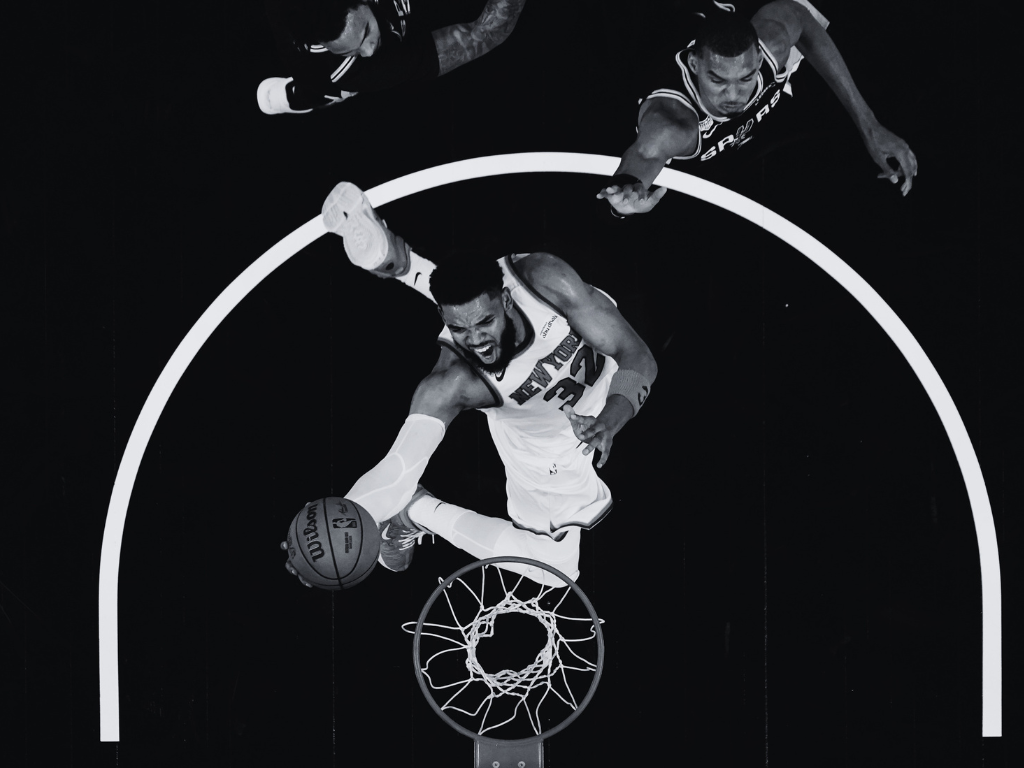
Towns has been a wildly successful NBA player. A number one overall pick that has made multiple deep playoff runs and is one of the best shooting big men we have ever seen. Towns is not gay and is engaged to model Jordyn Woods. But commentary about Towns has often evoked the thought that he is gay. The term “zesty” is often used to describe his evocative style, his shifting vocal tone, and quotes that make a mockery of what many perceive to be gay-presenting traits.
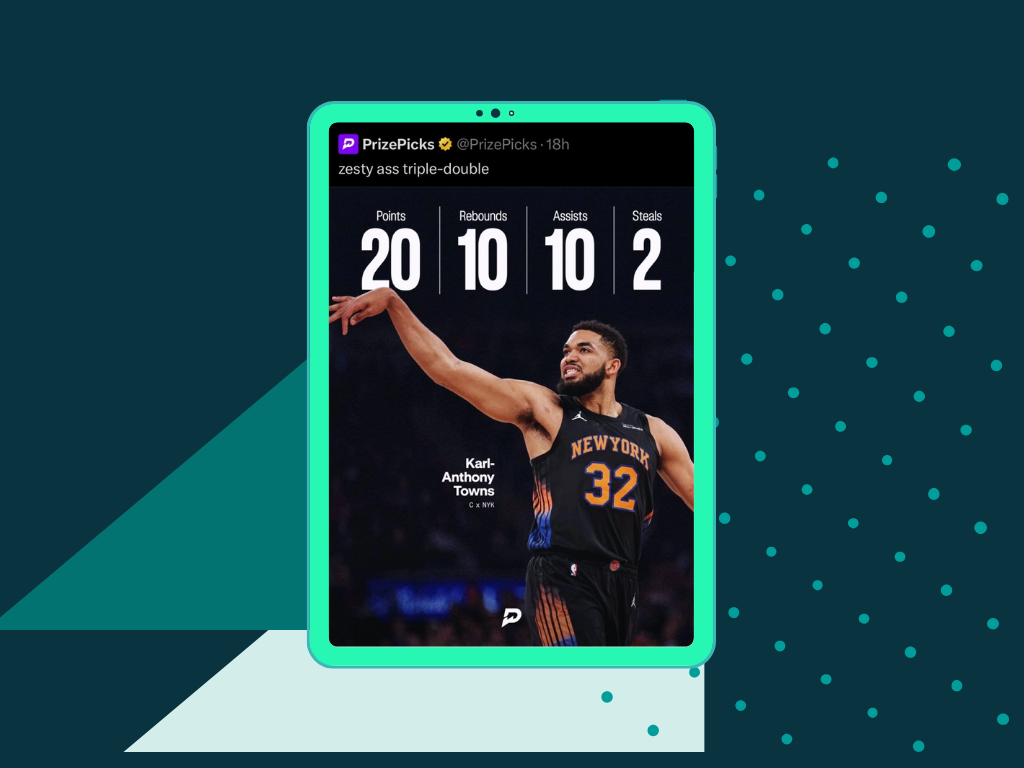
This has gone far beyond meme or troll accounts on X. PrizePicks, an approved daily fantasy provider of the NBA and multiple podcasts, has even leveraged the zesty term when highlighting a Town triple double and even used the term in conjunction with a promotion on his point totals in a playoff game. Many have continued to do this when it comes to Towns, and he isn’t alone. Thunder guard Jared McCain has also been criticized by many fans for partaking in TikTok dances and painting his nails. The message being sent by the loudest portion of the internet sports fandom is that basketball players are expected to offer a traditional sense of masculinity and that anything that doesn’t align with that will be mocked.
The NBA has always been a league that appeals to a younger demographic. The players are very young, the action is fast-paced, and the league is often at the forefront of societal trends. Gen-Z is the leagues fastest growing segment, one that has been catered to by a focus on digital content by the league and its players. That trend intersects with another one concerning Gen-Z men especially: they are exhibiting less tolerance to gay people versus previous generations. According to a 2024 Pew Research study, men born in the 2000s and beyond are less likely to believe that gay people should be allowed to marry and that homosexuality should be accepted in society than men born in the 1980s and 1990s.

As the NBA is being geared to an age bracket that is becoming increasingly homophobic, a clearer picture is being painted as to why the ridicule of Towns and others exists. The rejection of a different idea of masculinity aligns with the reality that many young men in this age demographic are prime targets of the manosphere. The online community that is focused on hyper-masculinity and anti-feminist views has seen increasing momentum in teenagers and men in their early 20s. Over half of Gen-Z men in the US have built a trust with manosphere and manosphere-adjacent creators. This content is focused on objectification, the stripping of women’s rights, and the return to an idea of male supremacy. That vision of the hyper-masculine and oftentimes toxic male image is projected in the way that athletes are viewed.

Consider for a moment how we view professional basketball players. We idolize them, buy their jerseys, follow them on social media, want to emulate them. They are much more present in the mind than players in other sports because you can pretend to be Anthony Edwards in your driveway, whereas emulating an NFL quarterback is not quite the same. They are tastemakers, connected with every brand and pop culture element that matters. Rappers want to be NBA players; they possess gifts that we covet like height. They are our superheroes in a world where Marvel and DC are fiction.
That reverence is often shaped by what we hold our values to be. We want to root for the player because they are great, because they are awe-inspiring, but also because we feel a shared ideology. If the ideology of a new generation of fans is that being the stoic strongman that never compromises with women, then they are likely to be disappointed by a player like Karl-Anthony Towns.
Towns has dramatic mannerisms on the court; he has had quotes like his now famous “after all that” that deviate from this expectation. He is engaged to someone very famous and is very outward in his affection towards her. When his family was ravaged by death during the COVID-19 pandemic he showed his emotion for all to see. When his father was hospitalized this season, he was open about what having his father means to him. Karl-Anthony Towns, time and time again, has showed us how much of a human he is. And that display of emotion is considered a weakness by anyone that subscribes to manosphere ideology.
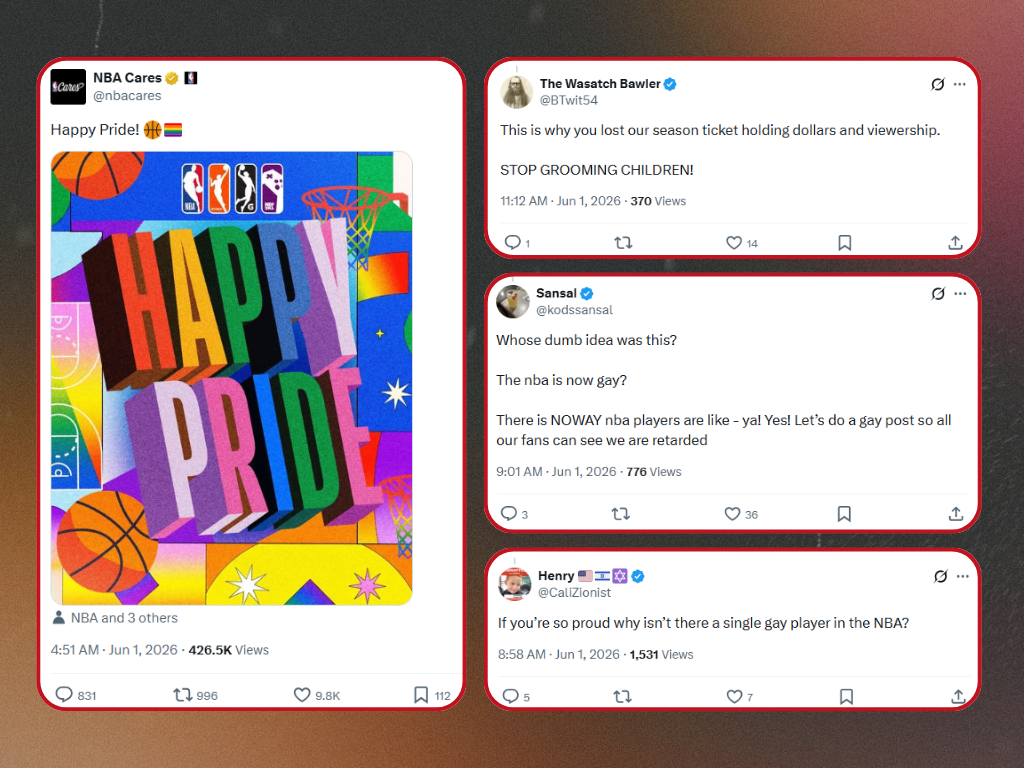
The way that Towns is received on social media, the way Jared McCain is talked about, are all indications of how poorly the next openly gay NBA player will be received. Professional male sports, it seems, is fast becoming the last refuge of homophobes. The NBA Cares account on X recently shared a “Happy Pride Month” post, something that has become the lowest of low bars for corporate acceptance of the LGBTQIA+ community. That has been bombarded with inflammatory rhetoric and accusations of grooming by fans on the platform. Sports it seems, is one of the few places that these individuals feel that they have a community.
This is an inherently male-dominated issue. The WNBA, by contrast, has long been viewed as one of the most queer-friendly leagues in the country. The same is true of the NWSL, which features 46 players that are openly out. This massive discrepancy reflects in the diverging paths in values on LGBTQIA+ rights between Gen-Z men and Gen-Z women. Nearly 80% of Gen-Z women support LGBTQIA+ rights and their rate of identifying as non-binary is triple the likelihood of Gen-Z men.
The message being sent by the NBA’s loudest fans is that this is not a place of acceptance, that there are expectations of how players should act. By projecting their homophobia onto Towns they have minimized a great player who has shown too much class to dignify the way he has been treated. The way they treat him and other players that don’t project the image of hyper-masculinity, or at the very least a quiet stoicism, is why we may not see another openly out NBA player for many years.
This reality is indicative of a country that has become more hostile to gay people as Christian nationalism has been on the rise. The reluctance of any player to step forward and the willingness to flagrantly make homophobic jokes is representative of how much work is left to be done when it comes to an acceptance of our heroes being gay. Jason Collins’ bravery in retrospect cannot be minimized. He knew the risks but understood the weight of coming forward. It’s an indictment of our current landscape that another player hasn’t felt comfortable enough to come out. And we are the ones to blame.
Thanks for reading Deep Cover! This post is public so feel free to share it.