
The Olivia Miles Conundrum


A spectacular rookie season has given the Minnesota Lynx exactly what every franchise wants, and forces them to answer a question sooner than they expected
The Minnesota Lynx are one of the best run organizations in the WNBA. The Lynx have won the second most games in the WNBA since 2020—behind only the Las Vegas Aces. Last season, the Lynx were 34-10, the best team in the Western Conference, ranked first in offensive and defensive rating, and had three All-Star players on the roster.
Yet with this embarrassment of riches, the Lynx got richer this season. In the 2024 WNBA Draft, the Chicago Sky traded up with Minnesota to be able to draft Angel Reese. A part of that trade was a pick swap in 2026, a pick swap that Minnesota was able to leverage to get the 2nd overall pick in the 2026 Draft. With that pick, the Lynx were able to draft Olivia Miles—a three-time AP All-American point guard from Notre Dame and TCU. Nearly midway through the WNBA season, Minnesota appears to have a franchise cornerstone and an ascending superstar that is reshaping their future in real time.

When people think of a “true” point guard, a point guard that is a great facilitator, they should think of Olivia Miles. In college, Miles led the conference in assists three times. She possesses a court vision and an understanding of angles that is incredibly rare for such a young player.
That skill has translated immediately to the next level, where she is sixth in the WNBA in assists. This has also translated into a high usage rate, where she ranks 12th in the league. Yet despite a rookie handling so much of the offensive load, the Lynx are still 15-4 and the betting favorites to win the title, an indication of how loaded this roster is, even with star player Napheesa Collier sidelined to start the year with an injury.
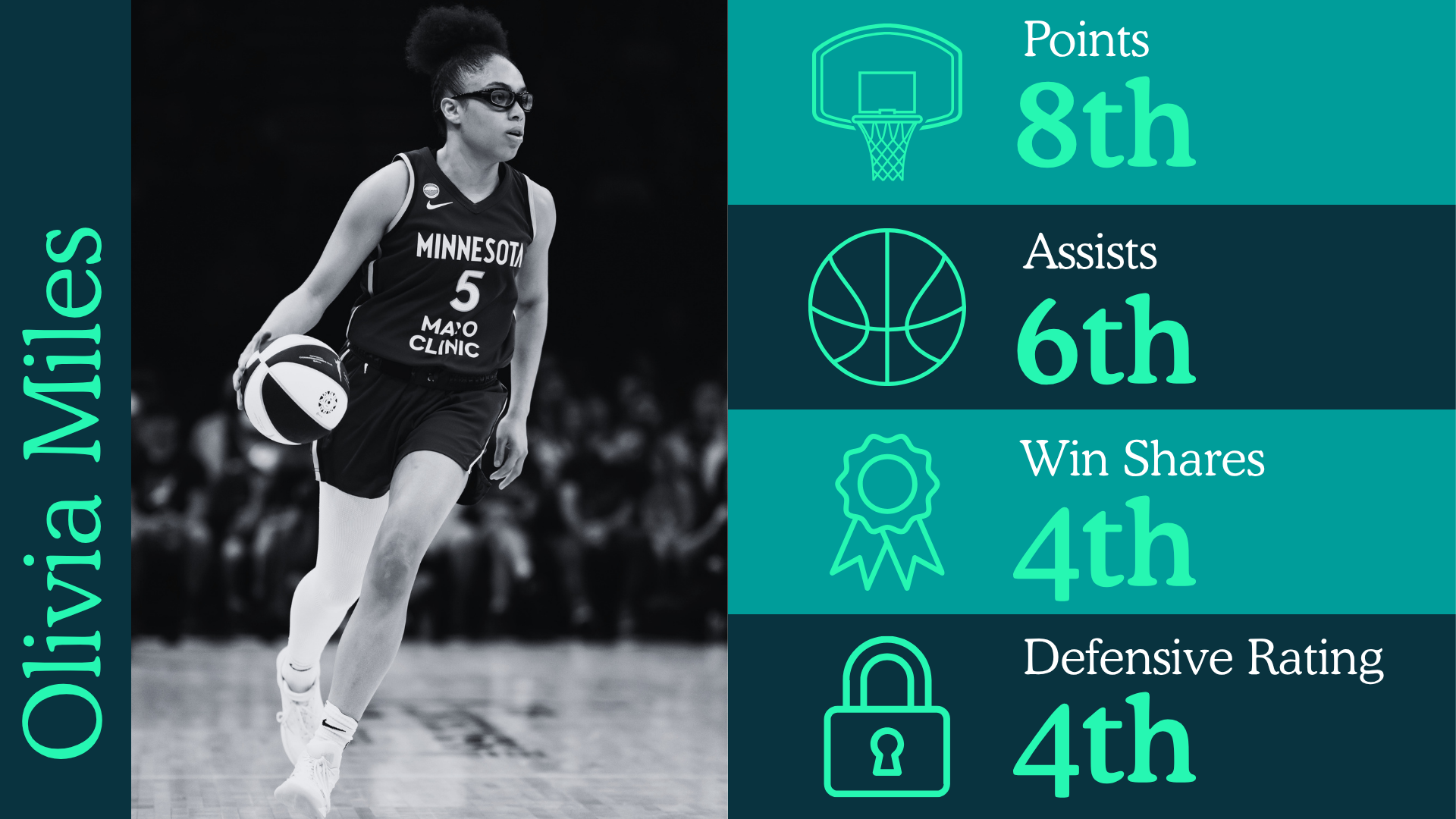
But where Miles has seemed to be a step ahead of any expectation is just how fluid of a scorer she has been immediately. In college, she developed more of a scoring package and that has carried over into the WNBA. She ranks tenth in points per game and has been incredibly efficient as a scorer, understanding her spots well.
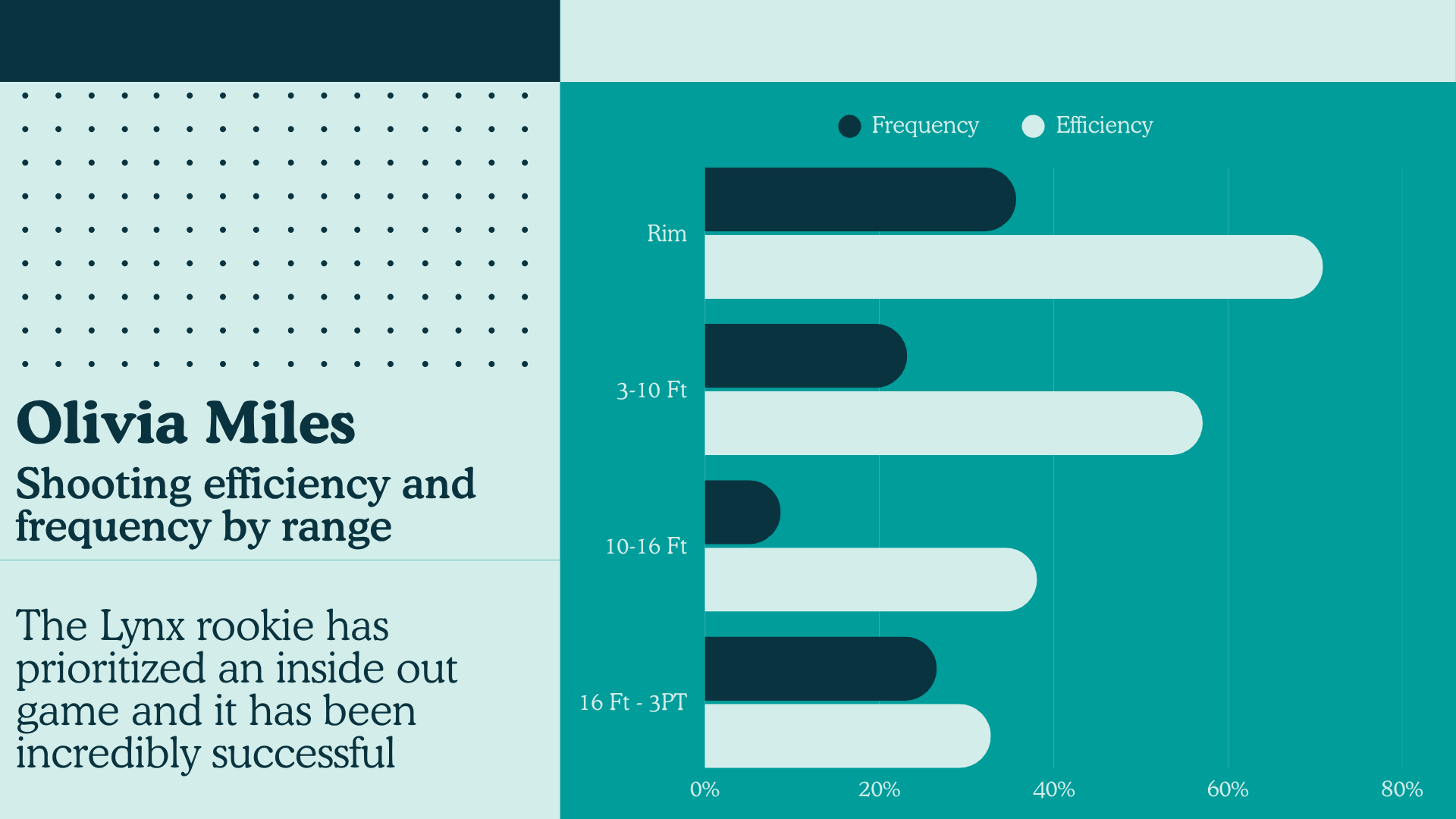
The majority of her shots (36.8%) have come at the rim, where she is shooting 70% this season. In the short mid-range zone she is shooting 57% and 33% from three. She has largely avoided long mid-range attempts (only 6% of her attempts), where she is only shooting 21.4%. Her PER (player efficiency rating) is the 15th best for a rookie since 2001, and in line with the numbers put up by players like Breanna Stewart, Nneka Ogwumike, and Tina Charles.
The mix of playmaking and scoring has led Minnesota to be third in offensive rating and first in defensive rating. Defensively, Miles is no slouch either—she ranks third in defensive win share, fourth in defensive rating, and has been impactful with a 2.3% steal rate and 2.7% block rate. Miles is also the second player in WNBA history to average over 18 points, 4 rebounds, and 5 assists per game under age 23—the first was Caitlin Clark. The difference is that, the Fever in Clark’s rookie season were an average team, finishing the year 20-20. Miles is doing this on a team with very real championship expectations and pressure.
As a rookie, Miles is currently fourth in MVP odds, looking to become the first rookie since Candace Parker in 2008 to be a rookie and win the award. The way she is playing, it’s not outside the realm of possibility that she could make this race interesting as the season moves along. What is so impressive about Miles’ start to her professional career is that she has been so effective and that the Lynx have been so good without their franchise player Napheesa Collier.
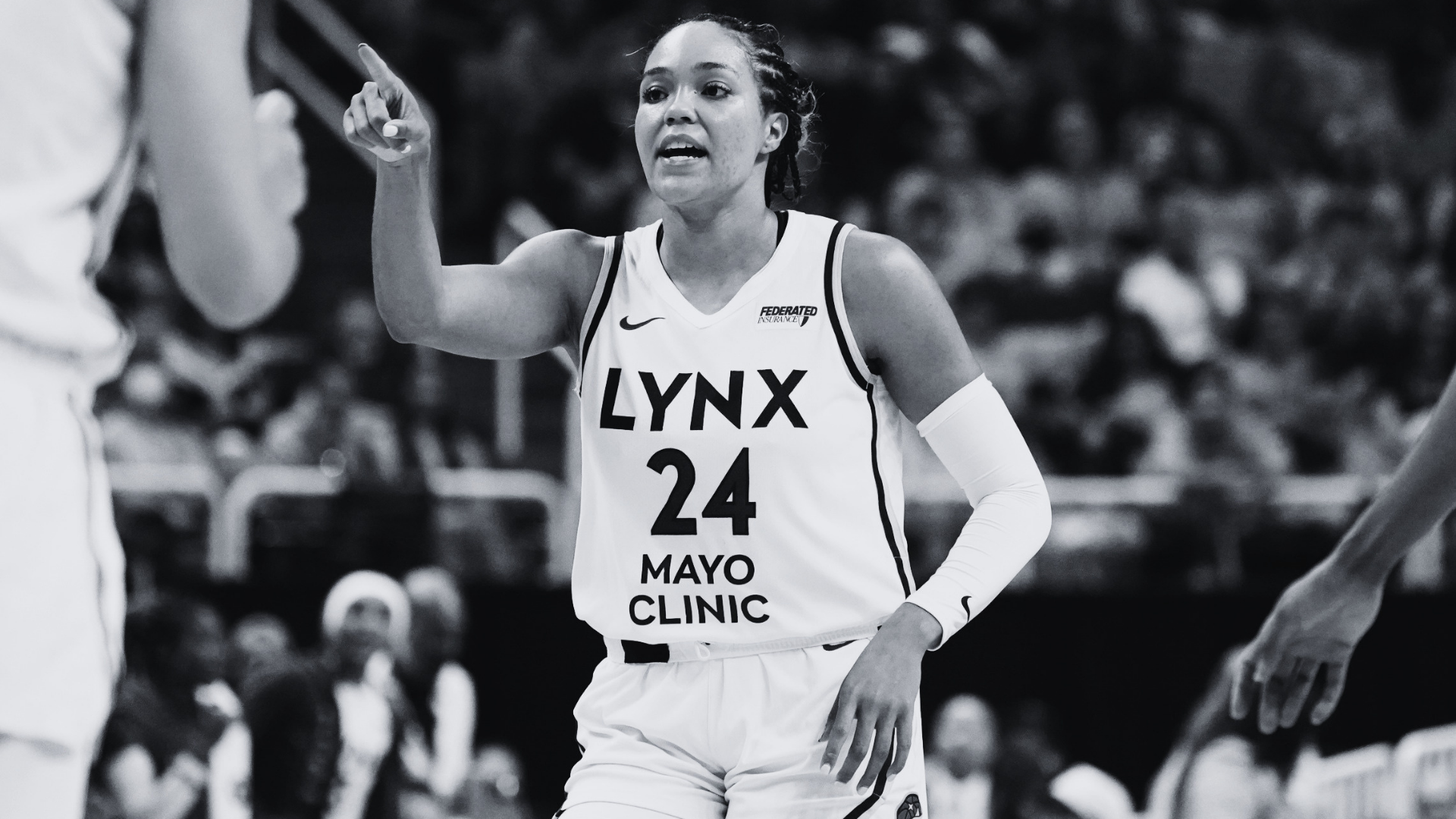
Collier has been sidelined this season with an ankle injury that she sustained last season in the playoffs. Collier’s resume is staggering. She won Defensive Player of the Year in 2024, has been in the top 4 in MVP voting three years in a row, and has made All-Defense and All-WNBA teams in each of the past three seasons. In that span, Collier is second in points, sixth in rebounds, and seventh in blocks per game. To say that missing her is a huge loss is a massive understatement.
And yet, her future in Minnesota remains uncertain. This off-season, following the signing of a new collective bargaining agreement that increased player salaries (amongst other things), Collier signed a one year supermax deal worth $1.4M. But her return has yet to happen and she is an unrestricted free agent this coming off-season. The Lynx being so successful without her and the emergence of Olivia Miles raises some questions. The chief among them if the Lynx should be prepared to be ready for a future without one of the league’s best players.
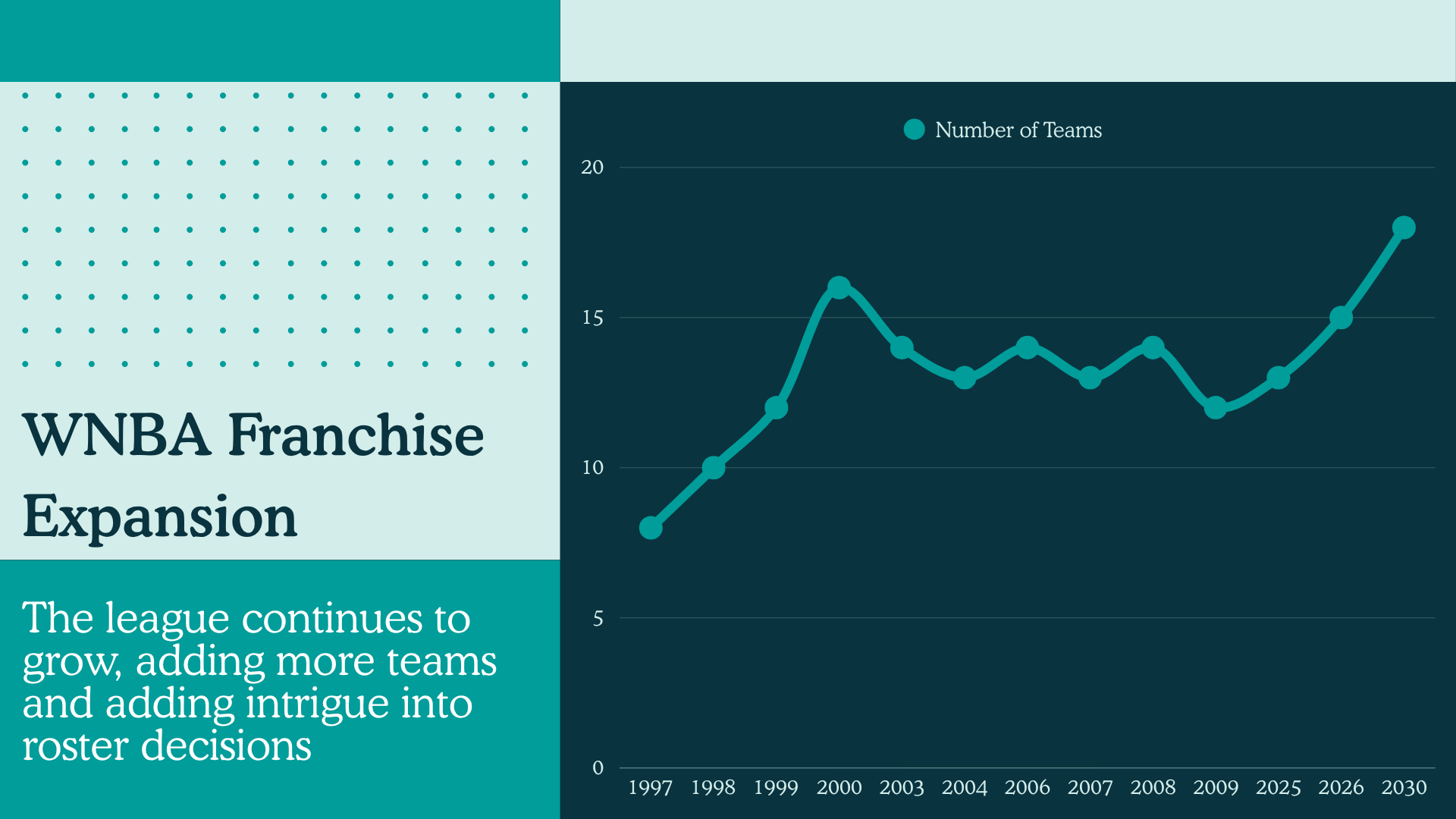
The WNBA is currently in the midst of a transformation, driven by the new CBA coupled with a rapidly expanding collection of teams. The league had 12 teams in 2024, and by 2030 they will be up to 18 teams. That’s a rapid distribution of talent, which gives elite players like Collier leverage in negotiations to explore different options by signing short-term deals. What the emergence of someone like Olivia Miles does, is offer the Lynx a bit of variance, a thought that there is a path forward even if they aren’t able to retain their superstar.
The Collier decision next off-season then becomes crucial for the team, the player, and the league-wide precedent. For the Lynx, they have an emergent young star that seems ready to take the reins while also having a superstar in the wings, leaving them in a situation where they are winning without true clarity on the path forward. For Collier, she decides how much leverage she wants to use in this new world and in the process defines how max player free agency will be handled in the league moving forward. It’s a balancing act that is made even more precarious because of the unknown that is the compatibility between Miles and Collier on the court.
It is all being made somewhat complex by the play of Miles and the absence of Collier. Miles has shouldered the load incredibly well, leading the team in scoring, assists, and free throw attempts. Re-integrating Collier poses some interesting challenges as well. Both she and Miles are high usage rate players, and there becomes a bit of a “there’s only one basketball” dilemma. Collier has regularly averaged a 28% usage rate the past few seasons, and that poses some strategic issues for Lynx head coach Cheryl Reeve. All these signs point to a potential changing of the guard in Minnesota sooner rather than later.

Minnesota has been able to seamlessly transition from one era to another. Since 2011, the team has only had two losing seasons, a remarkable feat of consistency and excellence—often defined by moving from one star player to the next. They have had iconic players like Collier, Maya Moore, and Sylvia Fowles. Olivia Miles seems primed to be the next player in that long lineage of great players.
There is still room for improvement of course. Miles, as good as she is as a passer, is still a bit turnover prone—averaging 3.4 turnovers per game, which is fourth highest in the league. Her three-point efficiency could also improve from the 33% that she is at currently. Her ceiling is seemingly limitless at moment. She has all the indications of being the next great do-it-all point guard in a league that is increasingly becoming elite at that position.
The numbers tell her story, but so does the eye test. Miles has a lethal first step, a devastating array of dribble moves that create space at will, and an elite finishing package at the rim. That on top of her next level court vision are a recipe for a superstar, a perennial All-WNBA sort of talent. Her production will only increase from here, which is a terrifying prospect for the rest of the WNBA. The Lynx drafted Olivia Miles hoping she would eventually become the face of their next era. They may now have to decide whether that era has already begun.