The Power of the Player
As southern states gerrymander and redistrict, Black athletes in the South are in a unique position to impact change more than ever before

In an interview with Vanity Fair, LSU head football coach Lane Kiffin said something about his time coaching Ole Miss that many of us have long suspected: it’s hard getting Black players to play for a school in Mississippi because of the school’s and the state’s long racist history. The comment comes at an interesting time as the NAACP has called for Black athletes to take a stand and stop committing to play college football and basketball in Southern states that have recently gerrymandered voting districts, leading to the elimination of majority minority voting districts. That call to action would send a powerful message, and it is indicative of both the power of sports and the agency that college athletes now have in today’s landscape.
Schools in the South did not start recruiting Black players as a sort of new moral conscience. They did it because their competition did it and they needed to compete. Most schools in the North and Midwest started integrating their football rosters by 1940. Of the states and schools mentioned by the NAACP, Arkansas was the first to add a Black player…in 1965 when it signed cornerback and tailback Darrell Brown.
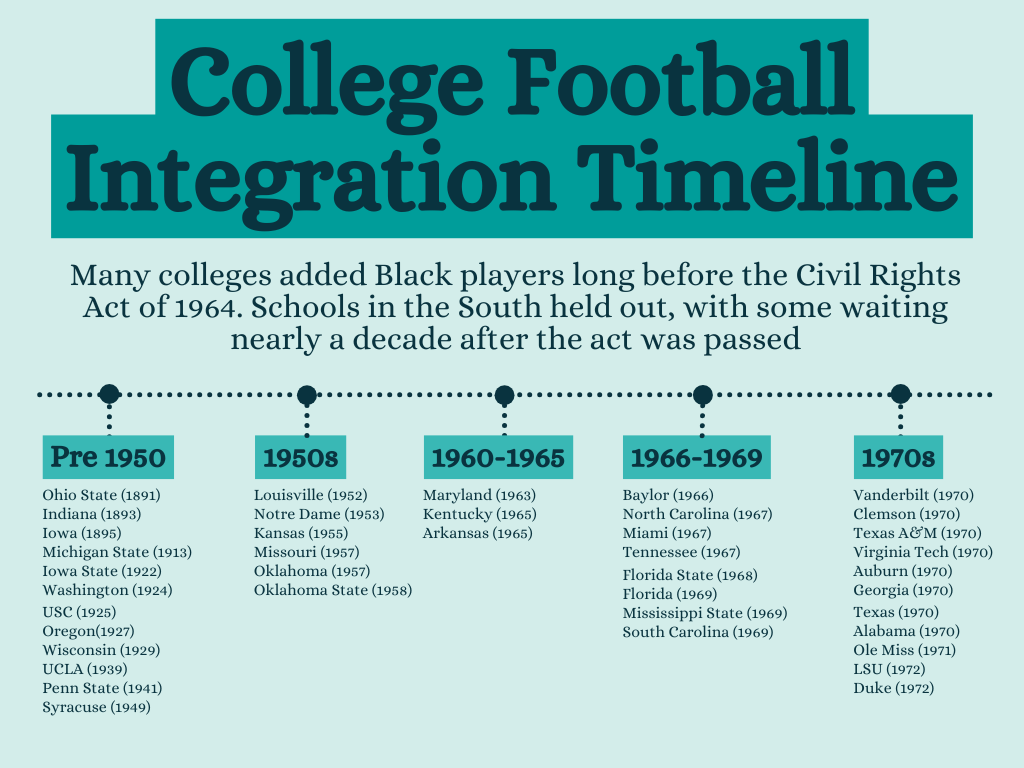
Clemson, Texas A&M, Auburn, Georgia, and Texas didn’t integrate their rosters until 1970. Ole Miss and Alabama didn’t do it until 1971 and LSU didn’t until 1972. This pattern is indicative of a region that was adamantly anti-Black to the point that they waited almost a decade after the Civil Rights Act of 1964 was passed to integrate their teams. This was a move made out of competitive necessity, and we are in a similar inflection point where player movement could dictate a changing of policy.
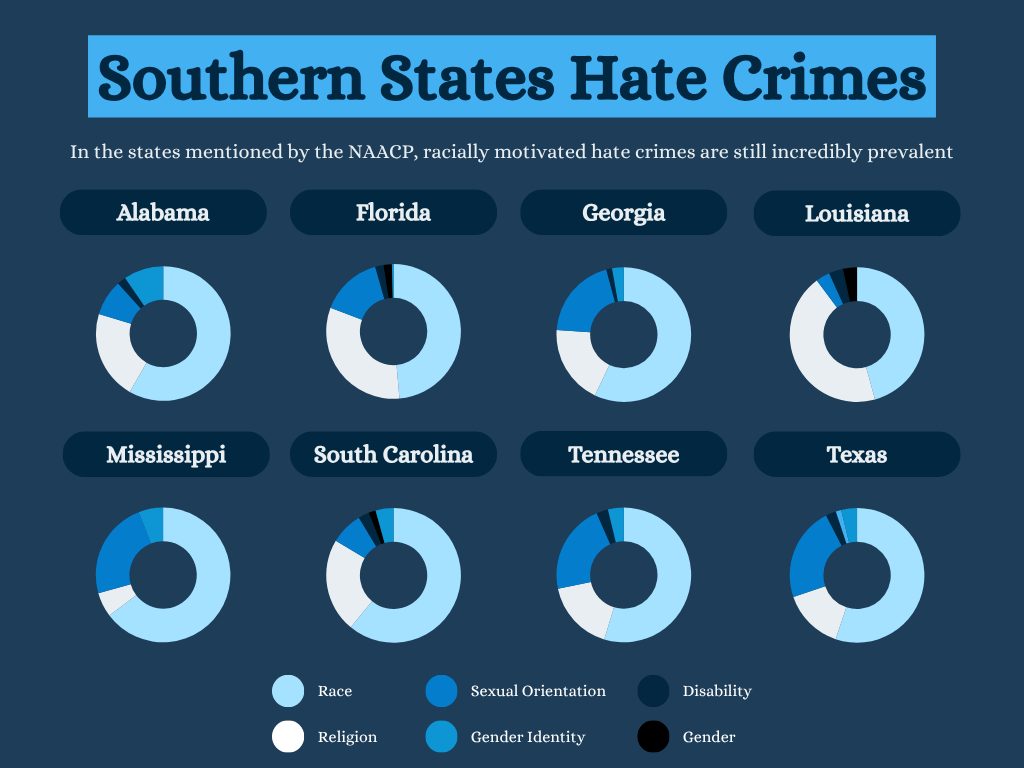
Racism, as can be evidenced by the gerrymandering, is still a big issue in the South. The region has long been defined by redlining and a lack of economic opportunity being given to Black families. As recently as 2023, over half of the hate crimes reported in Southern states were racially motivated—an indication of hostilities that still exist in the region. While the United States as a whole has limited the upward mobility of Black people and families, it feels especially louder in the South—particularly when the voice of Black voting districts is being taken off the board.
The predicament of the highly coveted athlete in this equation becomes a complicated one filled with allegiances and transactions. For decades, schools in the South said to elite Black players that they weren’t welcome—a carryover from the Jim Crow era. Those players were told to go to other regions or to play for an HBCU. That was the case until it became untenable to continue ignoring such a large percentage of the athlete pool. Those schools then dazzled recruits with their prestige, facilities, and resources.
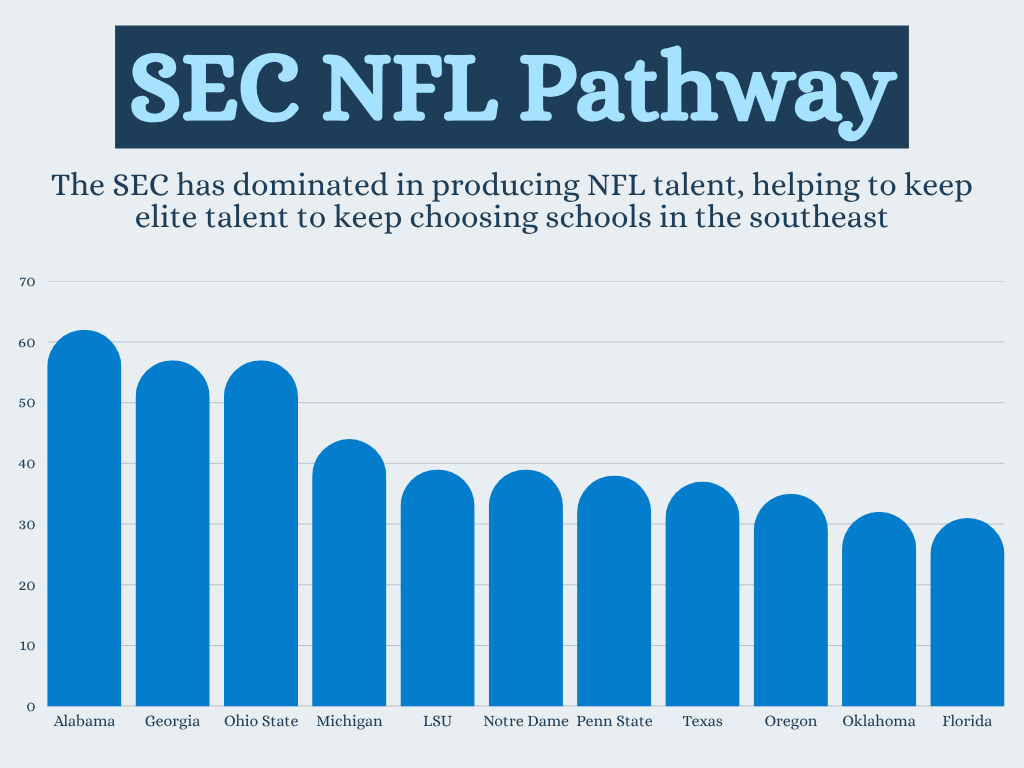
For top-end talent, schools in the South presented a pipeline to the NFL. Texas, Georgia, Alabama, and LSU have all been pro factories. Alabama, Georgia, and Texas rank in the top five in players currently in the NFL. Those schools for years have been able to convince recruits with a simple pitch: if you play here, we can get you to the NFL. Even a historically weak southern school like Mississippi State has 14 players in the league—the appeal is easy to see for a five-star recruit that has dreams of playing professionally. And for so many years, playing for a school in the SEC was the golden ticket to generational wealth and a fruitful career at the next level. But NIL deals have changed that calculus a bit.
For years, the equation for athletes with professional ambitions was to go to a big name school, make a name for yourself, and then get drafted and change your family’s life. Going through the college experience was often considered a rite of passage that was rewarded with a player’s first pro contract. Today, the reality is different. In a world of NIL, players have more agency than they ever have. They can shop their services around to the highest bidder. They can enter the transfer portal if they have a breakout year and are looking for a bigger payday. Some have even delayed going pro because the NIL rewards were so great. For the first time in their history, Black athletes from the South are both coveted and have a lot of leverage.
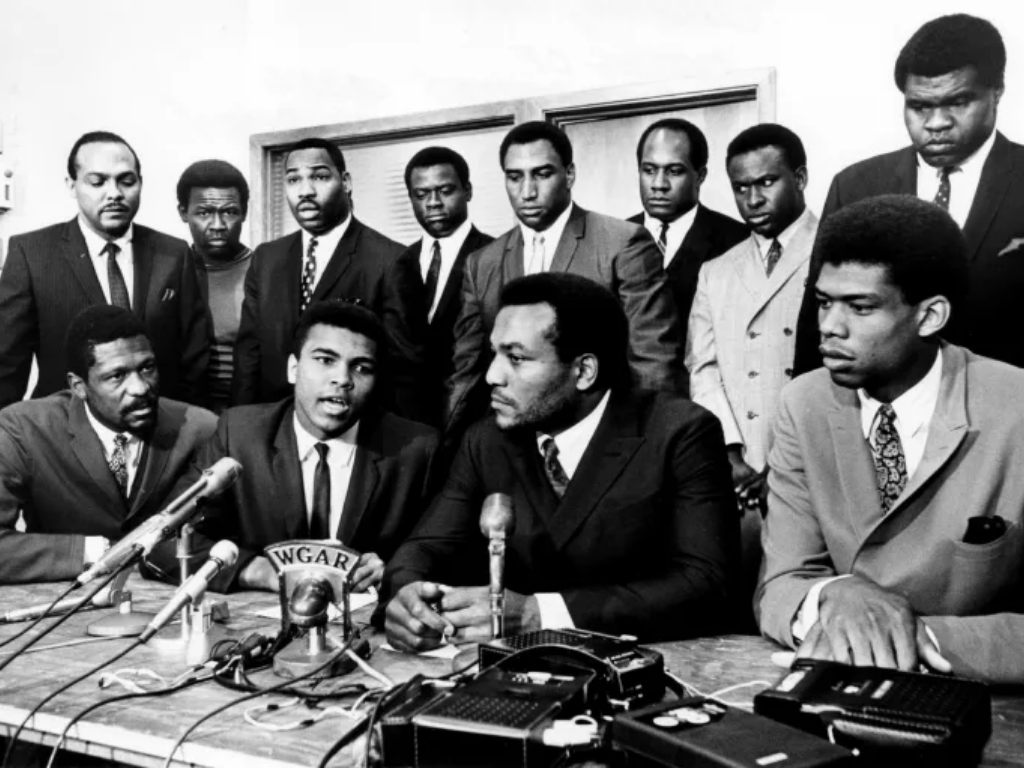
With that power comes a sense of responsibility—of what to do with that power. Despite many who clamor for sports to be separated from politics, the reality is that sports have always been political. Jackie Robinson breaking the color barrier in baseball, Black athletes in the 60s actively participating in the Civil Rights movement, NBA players boycotting games in lockstep with Black Lives Matter protests. These are all political actions by a group of people that recognized the cultural currency that they possessed and used their voice. Many have taken criticism for this—the blackballing of Colin Kaepernick, and calls for LeBron James to “shut up and dribble” come to mind among many others. In this world, however, Black college athletes in the South have been presented with an opportunity to make a statement.
But what would that look like? The NAACP suggests that players go the route of taking their talents to an HBCU, advocating that a player suggest going to Florida A&M as opposed to Florida or Florida State for example. This is a great idea, as athletics help to drive revenue for universities, and the talent above all else draws in that interest. Beyond that, players that choose to go that route could help to reinvigorate the appeal of HBCUs in the Black community, and tilt the axis of power in college football especially.
The issue is that HBCUs simply cannot compete in NIL spending, often ranking towards the bottom of college athletics revenue reports. And asking multiple five-star recruits to sacrifice their NIL paydays has to be viewed as a nonstarter. The anomaly to this was when Jackson State employed Deion Sanders and he was able to lure Travis Hunter from Florida State, an indication that HBCU’s can get a player or two with the right personality in place. The issue is that Deion Sanders-level personalities are quite uncommon.
The more realistic outcome is for those players to play for teams in states that have not redistricted to silence the Black vote. This would be a boon for schools like Michigan, Washington, USC, and others. It could also be a win for schools in the ACC that are in the Northeast—like Pittsburgh, Boston College, and Syracuse—that could leverage their states’ social standing to allow players to send a message while still reaping the benefits of NIL deals.
Players choosing those ACC schools would then need to weigh the exposure limitations that those schools provide, but they still present a viable option versus southern schools in the conference like Clemson. These other parts of the country are not perfect, but on this particular issue, players would be sending a message—and striking a cultural blow with even a small handful of five-star recruits spurning the SEC.
What this decision also presents is that top-tier athletes that choose to go the route of Big Ten schools gain advantages that they may not be considering immediately. Schools like UCLA, USC, Michigan, and Ohio State operate in the vicinity of massive media markets. That opens players up for the opportunity for more endorsements while enjoying the national footprint that the Big Ten currently possesses from a media coverage perspective that spans the LA, Chicago, and New York markets. These schools have also been successful NFL and NBA factories in their own right, so that appeal for Southern athletes is not lost either.
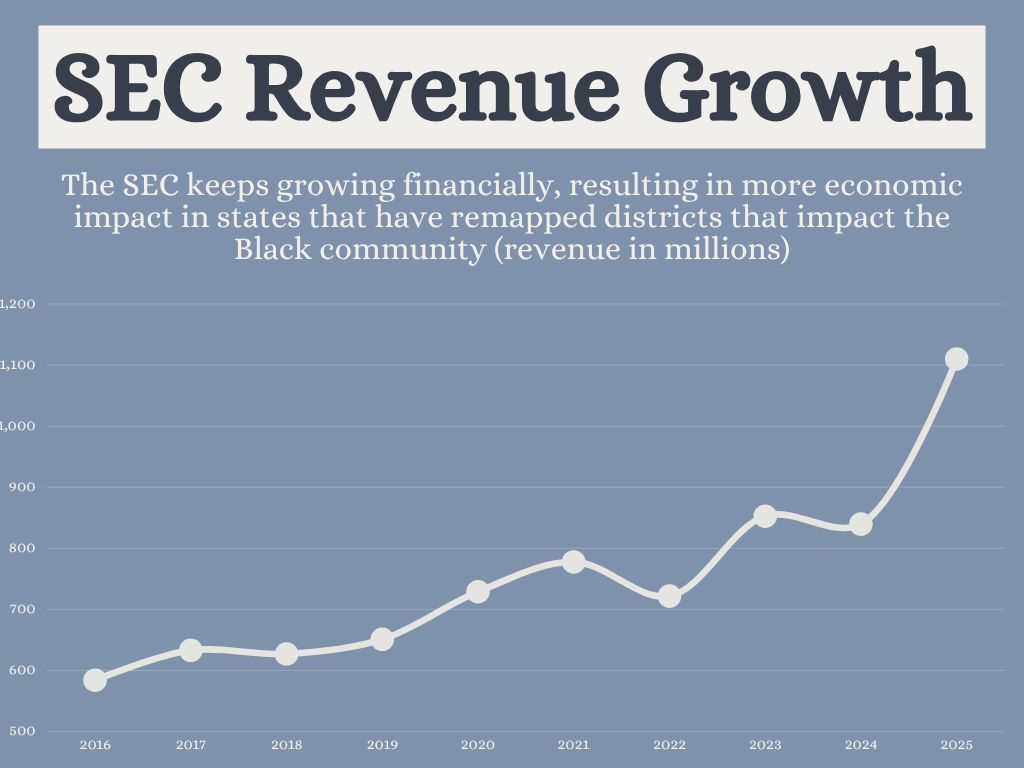
SEC athletics contribute over $1 billion annually to the economies of the states in the conference. Basketball and football fuel 85.7% of this revenue, making any sort of boycotts from basketball or football players massive. Consider the brands that are in this conference. South Carolina women’s basketball, Alabama football, Texas football, and Kentucky men’s basketball to name a few. If those schools start hemorrhaging talent, that makes a meaningful dent to local economies in the South. In addition, the SEC would potentially lose culturally. Schools that were once considered bedrocks of a sports culture would lose their prestige, which is just as damaging as the financial implications.
Athletes have the power to shift that landscape by establishing a trend. But will they? The financial implications are hard to ignore. Schools like LSU, Alabama, Texas, and Georgia have a lot of money to spend and will continue to be among the top spenders across both football and basketball.
While a player selecting Big 12, Big Ten, and ACC schools instead presents a stance, it also undoubtedly leaves money on the table—ten of the top 20 in NIL spend are in the SEC. That’s a sacrifice that needs to be considered. In addition, boycotting the SEC will be seen as a political act, which could jeopardize future endorsement opportunities. That financial reality is why it would take a few high-end recruits taking a stand at value positions such as a highly touted quarterback or a projected NBA lottery pick to make an impact. A complete sea change is not necessary to create these waves.
Athletes alone cannot impact a change, but the boycott of a few can send a very loud message, in particular from football players. Football in the South, particularly college football, is akin to a religion. Geographic animosities, rivalries, and pride are currency in the region. The spending on NIL for these schools is not an accident, they have deep booster and alumni bases that want to win on the field more than anything else. Players saying that their money is not enough to get them on the field could spark the sort of pressure that invokes change.
Beyond all of that, these states have signaled a message to Black voters that they don’t matter. That should strike at the soul of an athlete whose family is from one of these states. Many on the outside will lament that athletes are merely for hire entertainers, that they cannot affect real change. That grossly discounts the cultural impact of sports in modern American life. Athletes today have never had more power to shape public opinion through their NIL-based mobility and social media presence. They are media entities in their own right, and leveraging that reach is powerful. The question that remains is who will the first player be to roll the boulder off the mountain, and just how quickly the states will be forced to respond to mounting cultural pressure.