
The Quirky, Novel Joy of NBA Summer League
The NBA’s annual trek to Vegas is a weird throwback filled with endless optimism and hope
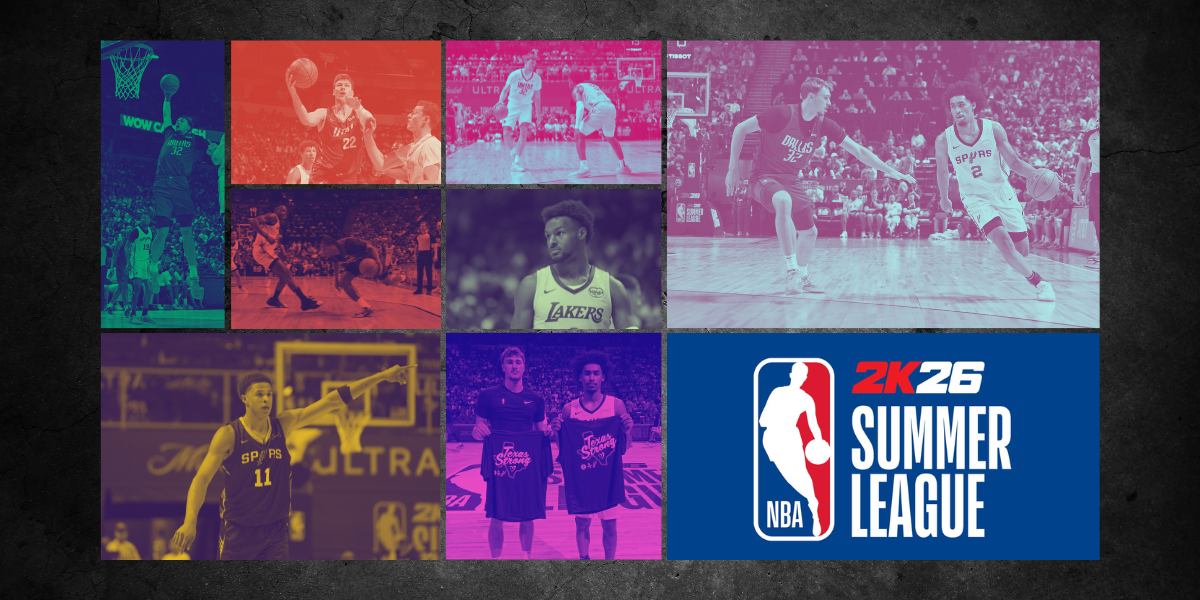
It’s July. Which means that the NBA world is making its annual pilgrimage to Las Vegas at the Thomas & Mack Center for the Summer League. This time of year is best described as a recovery period for the league. In the span of a couple of months, we had the playoffs, the NBA Draft, and NBA free agency. The Summer League is the final course of the NBA calendar meal before the next season begins in the fall.
Watching Summer League basketball is a unique experience. It’s a world where winning doesn’t matter, and efficiency is nice to have but not essential. An activity of watching your favorite team, with a roster with only a couple of names that you recognize and a bunch of players trying to put something on tape for their next opportunity. On some level, it shouldn’t even be televised. But if you’re a basketball junkie like me, it is wildly fascinating, requiring a different eye that is perpetually laser-focused on the future.
In the Eye of the Beholder
In Summer League, reality is whatever you make it to be. It exists as a barometer of what a player can become and small flashes of skills that you are hoping that they will show in the coming season. A point guard may have a game with nine turnovers, but you are willing to overlook that if they properly executed a fast break and hit a couple of pull up threes.
In these games, there are often players that are the focus point for teams. Typically, this is a highly drafted rookie (like Cooper Flagg or Ace Bailey) or a second-year player that figures to be an important part of a team’s rotation (like Ron Holland). As a result, these players are often featured heavily, initiating the offense and taking a lot of shots.
Nikola Topic was drafted by Oklahoma City last season but missed the entire season because he was rehabbing a knee injury. He figures to get some minutes this upcoming season for the Thunder. His time in Summer League is essentially to maximize his reps. In his first Summer League game he attempted 18 shots with a 29.1% usage rate. It’s highly unlikely that he will get that sort of volume on a team with Shai Gilgeous-Alexander, Chet Holmgren, and Jalen Williams. But OKC gets to see what he can do as a focal point so they can integrate him effectively into their offense.
For the Dallas Mavericks, there are only two players that truly matter to them at Summer League: top pick Cooper Flagg and point guard Ryan Nembhard. Flagg will be the new face of the franchise so they want to showcase what he can do, and Nembhard figures to be a part of the rotation next season so getting some floor time with him and Flagg is essential. It ultimately doesn’t matter that Flagg shot 23% from the field in a Summer League game, what is more important is the way he operates in the flow of the offense and the types of skills he presents. Therefore, a missed shot is irrelevant if he was able to create enough space for it to be considered a high-quality attempt.
The best advice to give during Summer League is to not get too high or too low on what we see. Kyle Filipowski scoring 32 points in 29 minutes is a great example of this. From the perspective of the Utah Jazz, this is ideal to see from their second-year center. He dominated lesser competition, which means that he is progressing as he should be as a young big in the NBA. It is also fair to never expect him to put up those sorts of numbers in an actual NBA game. What matters is that he could do it, which means everything to a young team like the Jazz.
Excelling in Summer League is also no indicator of future success. While elite players like Blake Griffin, John Wall, and Damian Lillard have won the Summer League MVP Award, less successful NBA players like Josh Selby, Randy Foye, and Glen Rice Jr have won it as well. More than anything, the Summer League offers basketball fans an opportunity to enter a fantasy land where everything is possible for their team’s young talent.
A Wide World of Possibility

Perhaps what makes Summer League resonate is that we live in a time where the highlight has never been more important. Seeing one amazing play in the context of a social media clip without any full game nuance can spread like wildfire. The Spurs’ Dylan Harper is a good example of this.
After sitting out the Spurs’ first Summer League game, the number two overall pick in the 2025 Draft played for 20 minutes against the Mavericks. His numbers weren’t prolific, going 5/12 for the field, 0/4 from three, with two assists. But the highlight that reverberated across the internet was his chase down block in transition. This play allowed Spurs fans to dream of his defensive upside.
For a team that already has Victor Wembanyama, the idea of Harper as a positive defensive entity to pair with their superstar is tantalizing. The potential two-way prowess of this duo will likely have Spurs fans dreaming of what their team will look like in a couple of seasons. This one play allows fans to have a baseline vision of their new point guard as an elite leaper that can contribute defensively as well as offensively. It offers them hope for what is to come.
Another example of hope derived from a Summer League highlight package comes from Portland Trailblazers draft pick Yang Hansen. Originally a maligned selection when it was made, at Summer League Hansen was initiating offense and making passes that reminded many of Nikola Jokic. Will Hansen turn into another Jokic? Probably not. But the idea is planted because of a few plays that he made in Summer League. For a Blazers fan base that is looking for their team to take the next step in their development, this is incredibly exciting.
Optimism is what is so enticing about the Summer League. Everything can be spun into a positive by a team’s fan base. For a team sport, it’s an oddly very individualistic event. Wins and losses don’t matter, but rather the display of upside is king. The overall basketball quality is objectively bad because there are so many players that aren’t up to snuff by NBA standards.
Perhaps the most interesting thing is how this showcase is one where the end goals of the players are so vastly different. There are top picks and rotation players trying to show what they can do and ultimately get more minutes in their secured spots. But there are also players that are trying to find their next team, and hopeful that a couple of moments that they put on tape will lead to an NBA tryout, a G League contract, or even interest from international clubs.
All of this happens in a sweaty gym where the basketball world converges for a couple of weeks. In the glamourized and commercialized world of professional basketball, this truly feels like a throwback. Where basketball minds are watching the games and trying to identify pieces to their eventual championship puzzle. It’s strange and somewhat disjointed but also exciting at the same time. The Summer League is quirky and sometimes unwatchable, yet I can never seem to take my eyes off of it.
Thanks for reading Deep Cover! This post is public so feel free to share it.