Victor Wembanyama & the Superstar Contrast
The Spurs star has ascended and, in the process, has shown us that he is the ultimate antithesis to his peers


The 2025-26 season will likely be remembered as the year of Victor Wembanyama. The Spurs superstar has taken over the collective fascination of the NBA, leading the Spurs to their best regular season since 2016-17—when the team finished with 61 wins and made it to the Western Conference Finals. Wembanyama has felt inevitable, a dominator of the league that is emerging before our eyes.
The result of this emergence, to the disdain of many, is the endless fascination that basketball media has had with him. It feels like every big-name NBA podcast and blog has featured Wembanyama in some form or another, talking about his track to greatness. Part of it is the unprecedented geometry flip that forces teams to reorient their strategies around. But on a deeper level, when looking at other MVP candidates this season, is that Wembanyama is the antithesis of what everyone laments about those other star players, making him refreshing and revolutionary.
Shai Gilgeous-Alexander & the Perception of the Craft
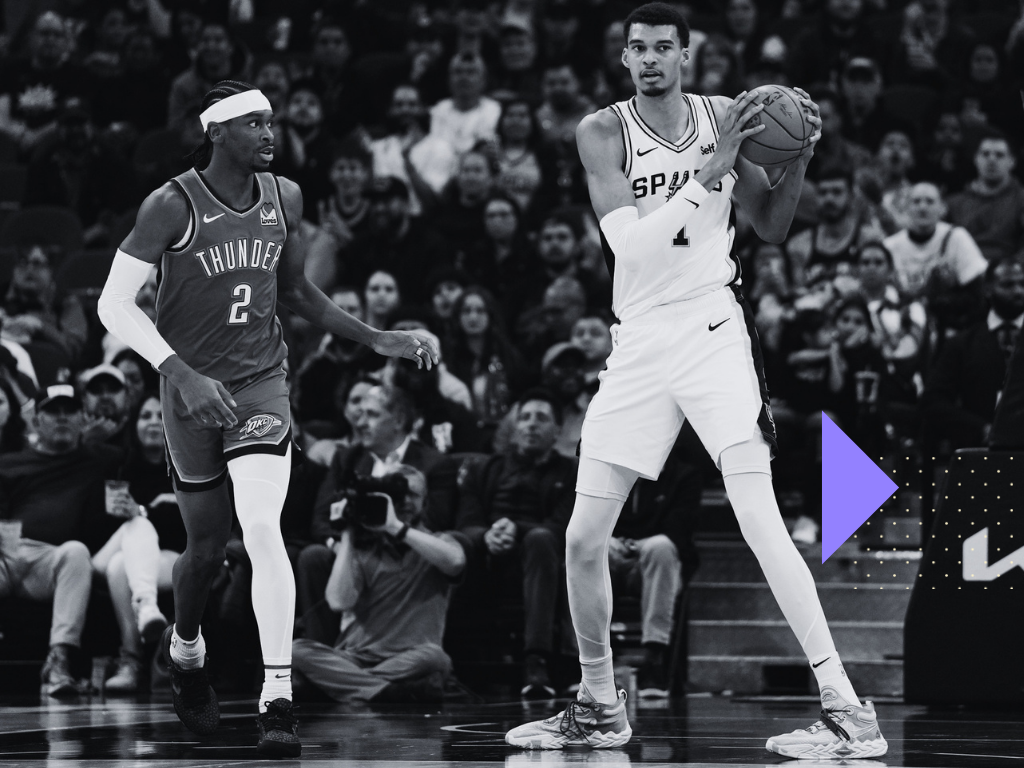
Wembanyama’s biggest obstacle to winning MVP this year will be overcoming the star that won the award last season—Oklahoma City Thunder point guard Shai Gilgeous-Alexander. Gilgeous-Alexander is having one of the most efficient shooting seasons ever for a guard. Since 1980, his 55.1% shooting from the field is the third highest for a guard with over 200 attempts in a season, trailing behind only Magic Johnson in 1984-85 and John Stockton in 1987-88. SGA is doing this at much higher volume as well, averaging nearly double the shot volume of Johnson and Stockton.
But in the midst of SGA’s great season where he finds himself atop MVP power rankings and his team is widely considered to be a title favorite, there is a growing frustration about him. Much like James Harden before him, critics have called SGA a “free throw merchant“—alluding to his ability to draw fouls at a high rate. The numbers back up these claims, as SGA leads the league in total free throws made and is second in total attempts and attempts per game to Luka Doncic.
Some call what Gilgeous-Alexander does craft, exploiting the parameters of the NBA’s rule framework to get fouls called. A lot of fans detest the practice, much as they have when Harden engaged in it at a historic level when he was in Houston. The counter to what some call “grift” basketball is “ethical” basketball, and Wembanyama is at the forefront of advocating for it.
Wembanyama has often called the Spurs an ethical basketball team—emphasizing that they play a more team-oriented style as opposed to heliocentric isolation-heavy styles that other star players employ. Wembanyama still gets to the line, where he averages 6.9 attempts per game with a 0.407 free throw rate (for comparison, Gilgeous-Alexander averages 9.3 attempts per game with a 0.473 free throw rate).
The distinction between the two is one of perception. People see highlights and viral clips of SGA flailing his arms and using his forearm to create separation on drives that lead to touch fouls. For Wembanyama, the number of these moments do not exist, since most of the structural advantages he possesses don’t necessitate a need to do so.
The result has been that Wembanyama has been positioned as a sort of anti-SGA, the rare superstar that doesn’t seek to get his points via the free throw line, and instead constantly seems to try and make the right basketball plays.
From a media palatability perspective, Wembanyama has been a bit of a dream. The coverage of SGA has often been complimentary of his accomplishments but regretful of the way that he gets some of his points (26% of SGA’s points this season have come from free throws). In Wembanyama they see a different approach and they find it refreshing.
The irony of this is that this is mostly a vibes assessment. SGA ranks sixth in percentage of points derived from free throws among players that have scored more than 1300 points this season. Wembanyama ranks 9th on that list. But because SGA gets to the line so much and has a reputation as a free throw merchant, there is a reverence to Wembanyama’s play style, which might impact this year’s MVP voting and beyond.
There seems to be an appetite for players that don’t resort to free throws as a means of generating points. It’s an interesting departure since 25 of the 70 MVP winners in NBA history have free throws accounting for at least 25% of their total points. Wembanyama is considered the antidote to that, which would explain why so many writers and podcasters have gravitated towards him over Gilgeous-Alexander in the way they talk about the league.
Luka Doncic & the Fatigue of Complaint
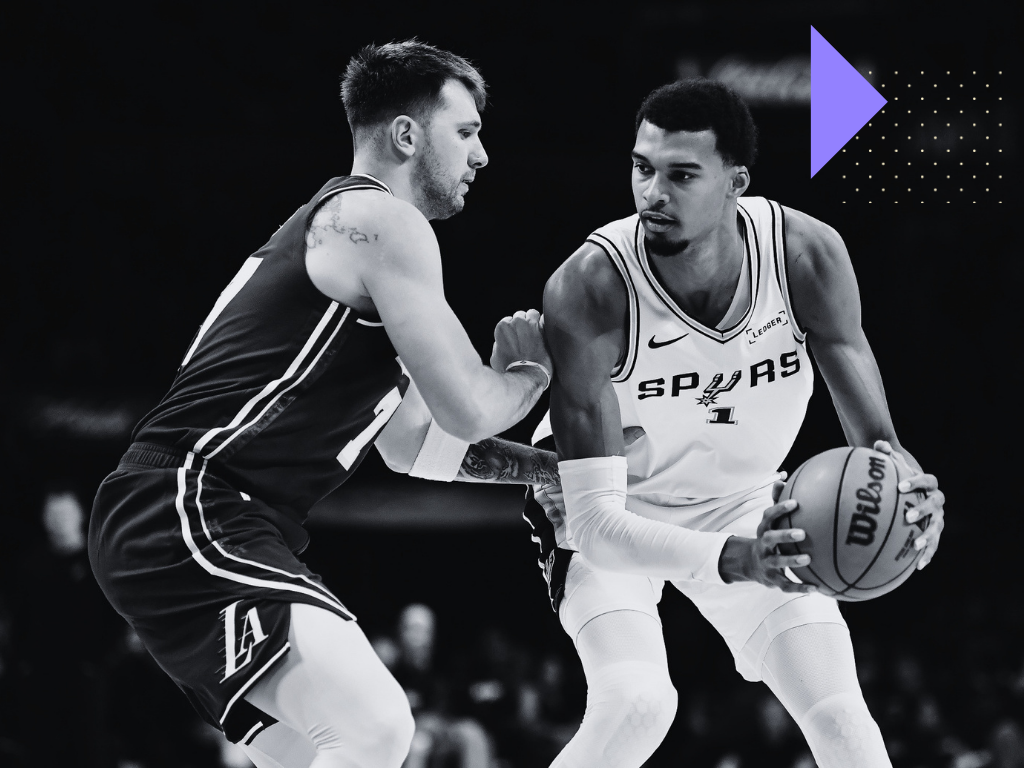
Luka Doncic is one of the most gifted offensive players that we have ever seen. A prolific scorer and passer, Doncic is the type of offensive hub that thrives in today’s NBA. Doncic is also a notorious complainer during games.
With 17 technical fouls this season, Doncic ranks second in the league in the category behind only Dillon Brooks who has 20. Doncic averages a technical foul every four games, a rate that should not be happening to a star player. But the propensity at which he is called for them is indicative of just how much he complains to referees about a missed call.
There has been much made of Doncic and his complaining, with many lamenting that the time he spends complaining hurts his team on the defensive end. It has reached a point where many analysts and fans have grown tired of the routine, tired of seeing such a great player constantly complain about officiating when he doesn’t get his way.
Once again, Wembanyama is the elixir to this. It’s very rare to see him complain about calls in as demonstrable a way as Doncic, despite the fact that the gameplan against him this season has been to get as physical with him as possible (authors note: it hasn’t worked). With that direct comparison there is a feeling of toughness when it comes to Wembanyama.
And toughness is something that we covet in our superstars. Part of Michael Jordan’s mythology comes from the fact that in order for him to elevate he had to withstand the punishment that came from the Detroit Pistons. That created a veneer of toughness that still defines his legacy today. We love players that can overcome the adversity and build up a resistance to physical and mental challenges.
In Doncic, comes a manifestation of what so many fans hate about NBA superstars: complaining and selling calls instead of just playing basketball. While it is an unfair critique of Doncic’s total game to be so reductive, there is an aesthetic unpleasantness to seeing a player pleading with a referee constantly, and that distaste has manifested into a widespread opinion that he plays an undesirable brand of basketball.
This is another area that has made Wembanyama a bit of a media darling this season. Last season during a game against the Clippers, Wembanyama was frustrated at a lack of calls and was asked about it after the game. Noting his frustration that led to a scuffle with Ivica Zubac, Wembanyama also said, “But for me, it doesn’t feel like it’s something that I should influence” and later adding that “It’s not my job to do politics”. In the sense of what we want a superstar player to say about the refs and act during the game, it was incredibly palatable.
There is a growing sense throughout the NBA that the way that players complain to officials is a bit out of hand and leads to a poor visual product. This is evidenced by the league average of 23.6 free throw attempts per team per game, which is the highest it’s been since 2010-11. Luka is a big part of that criticism, and with Wembanyama we are offered the opposite of that, leading to his wider appeal so early in his career.
Nikola Jokic & the Power of Intention
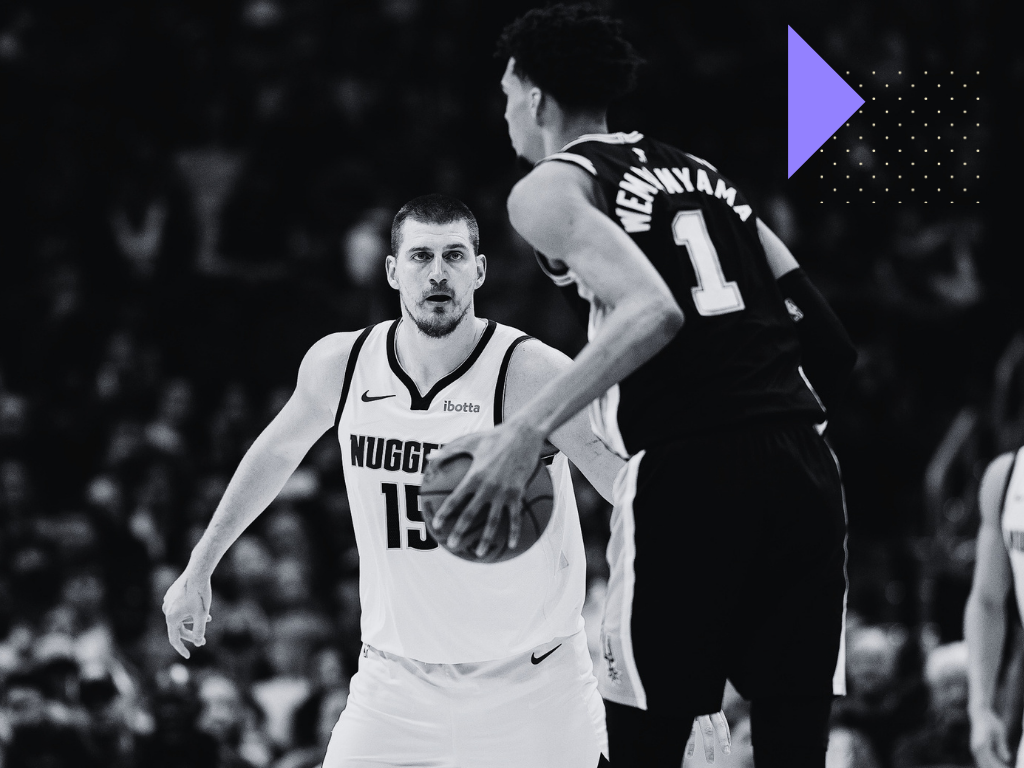
One of the longest running jokes in the NBA today centers around Nikola Jokic and his horses. After beating the Miami Heat in Game 5 of the NBA Finals in 2023 to secure his first title, Jokic was asked by Lisa Salters if he was looking forward to the championship parade. Jokic noted that he was excited to go home and that he wanted to get back to Serbia as soon as he can for a race that one of the horses that he owns was participating in.
The idea that Jokic likes his horses more than playing basketball has been accepted as truth for years at this point. For a while that was a novelty joke within NBA circles, and a bit refreshing versus the manic competitor archetype that was the norm dating back to the Michael Jordan era. But some of that has worn thin on some fans in recent years, almost a sense of being insulted that Jokic doesn’t have an outward obsession over the game.
The reality is that Jokic does care, because his actions on the court showcase that. But there is something to be said about a player that has a maniacal need to win. Victor Wembanyama has that gene in him, and it has made fans and pundits alike fall in love with his game.
Wembanyama takes every basketball competition seriously. He was determined to perform for his country in the Olympics. He actually tried to play competitive basketball during the All-Star Game. He took the In-Season Tournament seriously. His very real vitriol towards Chet Holmgren and the Oklahoma City Thunder is filled with the venom of competition and the desire to win.
At our core, we simply want basketball players that give a shit. People have mixed feelings about watching millionaires play each other in the interests of team owners that are billionaires. What makes those feelings ease a bit is seeing players that are obsessed with winning. It’s why Michael Jordan and Kobe Bryant have so many acolytes and fans, that sort of mentality resonates at the highest levels of athletic achievement.
What the rise of Nikola Jokic questioned was whether superstar apathy was okay, and Wembanyama is a reminder of what it looks like when uber competitiveness makes a comeback. People started to realize that they liked that sort of killer instinct in their athletes, which has made Wembanyama even that much more popular.
Victor Wembanyama is the perfect athlete for this generation of the NBA because in a league that is incredibly active on social media, he is the sort of player whose highlights make people stop doomscrolling for a second. He is shifting the way that teams have to defend big men and altering the way that teams attack the rim. He is changing the geometry of the basketball court in real time. By itself that’s a fascinating development, but the persona behind him has a deeper significance.
Everything that the elite players of this era do that annoys the NBA intelligentsia—flopping, apathy, complaining about officiating—is remedied by Wembanyama’s existence as a superstar in the league. That is significant. If the heir apparent to the title of best player in the NBA is doing it this way, then other players are sure to follow. There is an outsized appetite for a shift in the behavior of the star NBA player, and Victor Wembanyama is here to provide it.